Strzelce Opolskie
Strzelce Opolskie Castle stands as a significant historical monument in the town of Strzelce Opolskie, Poland. Originally constructed in the late 13th century, this castle played a crucial role in the region's defense and administration, evolving through centuries from a medieval stronghold to a Renaissance residence and later a neogothic palace. Today, it remains a poignant ruin, symbolizing the rich and turbulent history of Silesia.
The origins and medieval development
The history of Strzelce Opolskie dates back to the turn of the 10th and 11th centuries, when a small settlement emerged along an important trade route connecting Kraków, Bytom, and Wrocław. The strategic location fostered growth and necessitated fortifications. By the late 12th century, a wooden defensive stronghold or hunting lodge was established amidst dense forests, serving as a base for controlling trade and hunting activities.
After the destruction of the original wooden structure, likely by fire in 1273, a more durable stone castle was constructed around 1290. The earliest written mention of the castle appears in the Liber fundationis episcopatus Vratislaviensis circa 1305, where it is referred to as "Castrum Strelecense." This initial stone building was a compact rectangular limestone tower measuring approximately 16.1 by 13.9 meters, with walls nearly 2 meters thick, designed for robust defense.
In 1323, the castle became the seat of Duke Albert, ruler of the newly independent Duchy of Strzelce. Under his reign, the castle underwent significant renovations, including the construction of fortified walls and a moat, integrating the castle's southern wall into the town's defensive perimeter. These enhancements transformed the castle into a bastioned fortress, reflecting the military architectural trends of the High Medieval period.
Political shifts and architectural transformations
Following Duke Albert's death without heirs, the Duchy of Strzelce passed to the Piasts of Niemodlin and later to the Piasts of Opole, who held the castle until the extinction of their line in 1532. By the early 16th century, the castle had fallen into disrepair, retaining only two floors connected by wooden spiral staircases and a defensive moat surrounding the town.
In 1562, the castle entered a new phase under the ownership of imperial counselor Georg von Redern, who purchased the town and castle. Over the next three decades, extensive renovations were undertaken to rebuild the right wing and convert the fortress into an elegant Renaissance palace. The renovations included the addition of a shingled roof, vaulted halls such as the "hall on one pillar" featuring a central supporting column, and refined living quarters including a ladies' chamber and family treasury. These changes marked a shift from purely military functions to residential and representational purposes.
The 17th century saw the castle come under the ownership of the wealthy Colonna family, who maintained it until 1807. During their tenure, a chapel was added to the western wing, emphasizing the castle's role as a noble residence and religious center. The Colonnas contributed to the castle's social and economic significance in the region, with local residents providing services and rents to the estate.
Neogothic revival and 19th-century expansions
In the early 19th century, the castle was acquired by the Renard family, prominent industrialists of Upper Silesia. Count Andreas Maria Renard, a Saxon general and affluent landowner, undertook major remodeling between 1837 and 1840, transforming the castle into a neogothic palace. The renovations removed defensive features and introduced an irregular elongated layout centered around a rhomboid courtyard surrounded by two-story wings.
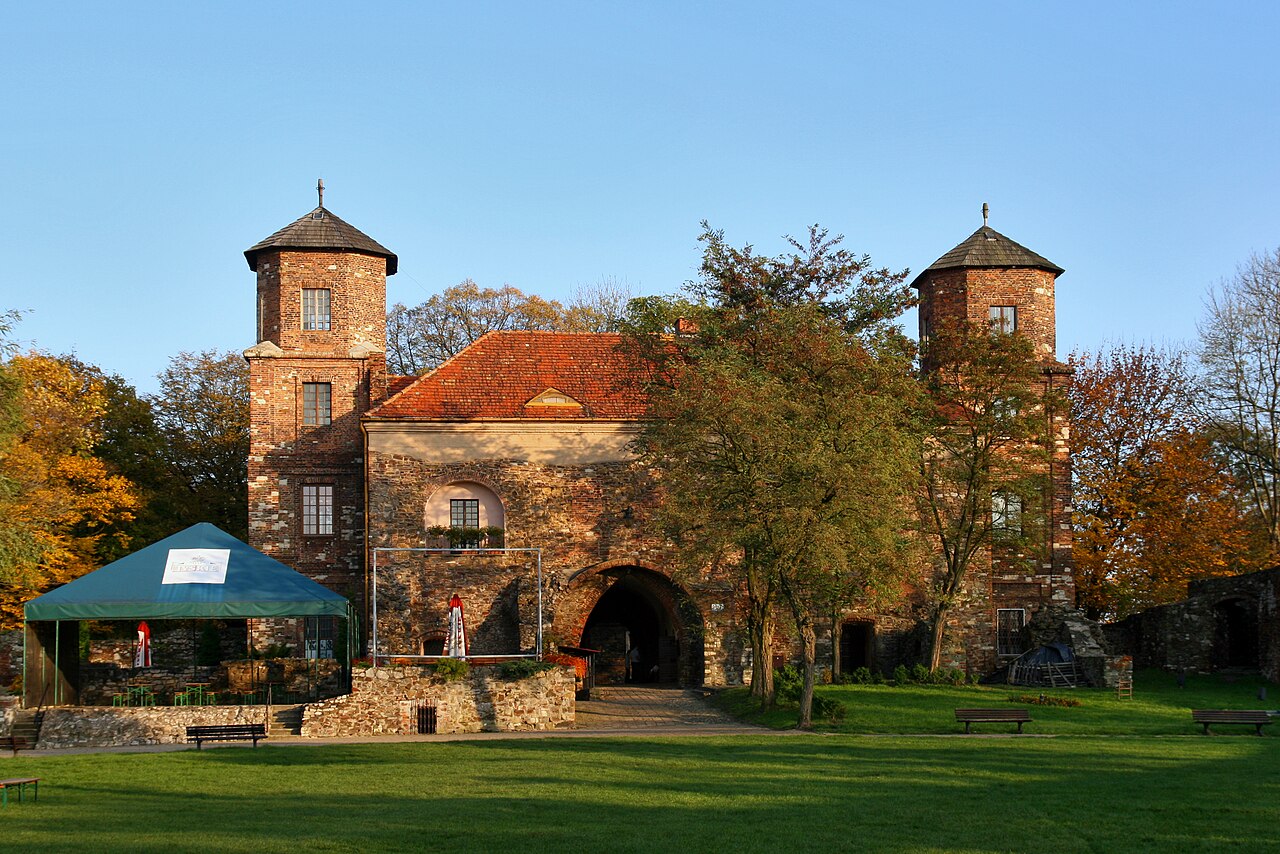
A distinctive feature was the addition of a tall tower with a three-arched gate facing north, providing both an imposing entrance and a panoramic view over the newly designed English landscape garden. This garden included specialized structures such as an orangery, pineapple house, pheasantry, a neoclassical temple inspired by ancient Greek architecture, and the ornamental Ischl tower, reflecting the 19th-century romantic fascination with landscape design and exotic plants.
The castle's interiors were richly appointed with salons named after their dominant colors, including wood, chestnut, red, blue, and white rooms. Decorative elements featured silver-plated pheasant motifs, leather-covered walls, and large gilded mirrors, illustrating the luxurious lifestyle of the Renard family.
Twentieth-century decline and wartime destruction
Ownership passed through several hands in the early 20th century, including Mortimer von Tschirschky, Karl von Brühl, Georg von Schlieffen, and finally the Castell family in 1932. The Castells modernized the castle with updated plumbing and bathrooms, maintaining it as a noble residence until the final days of World War II.
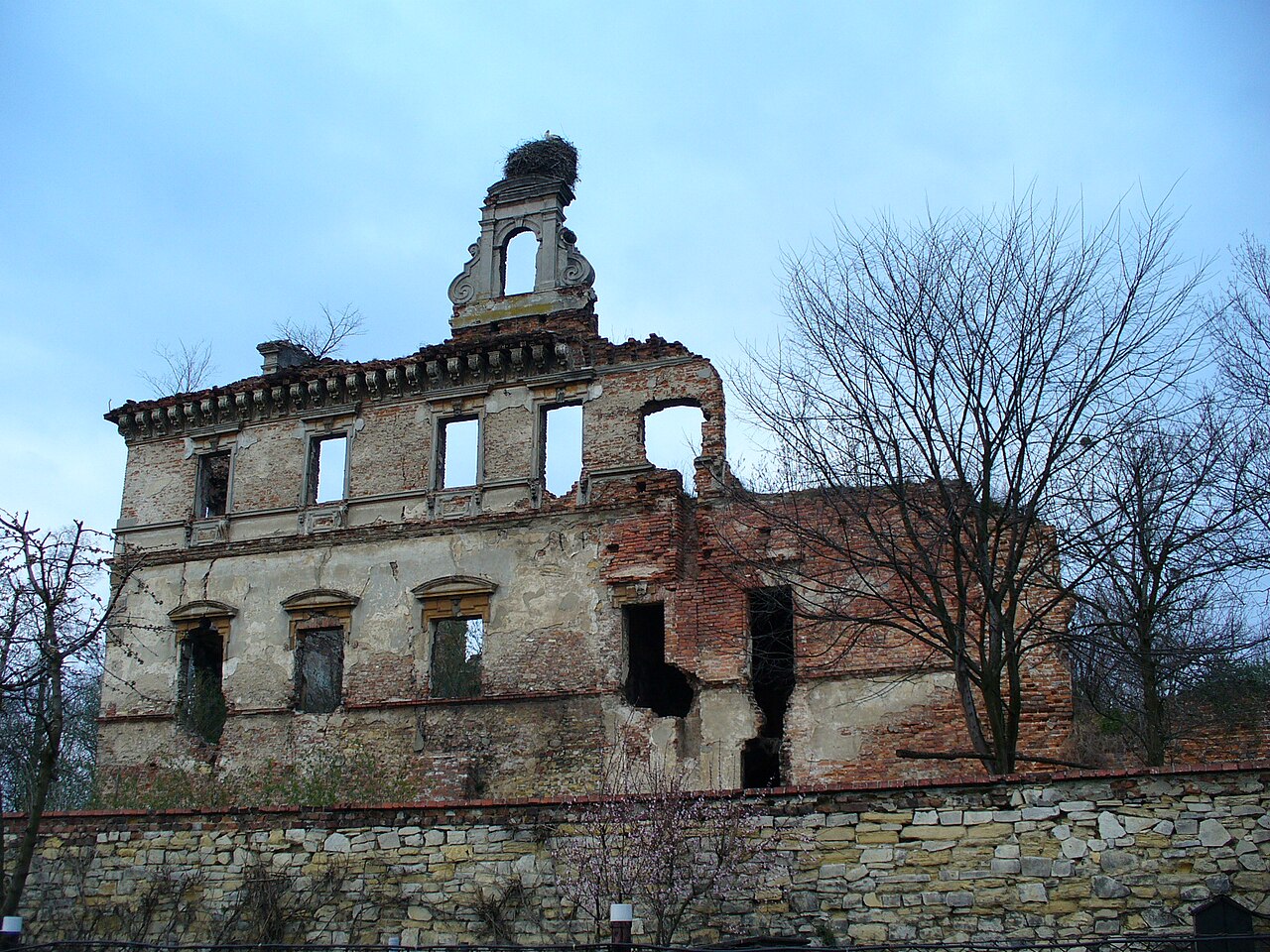
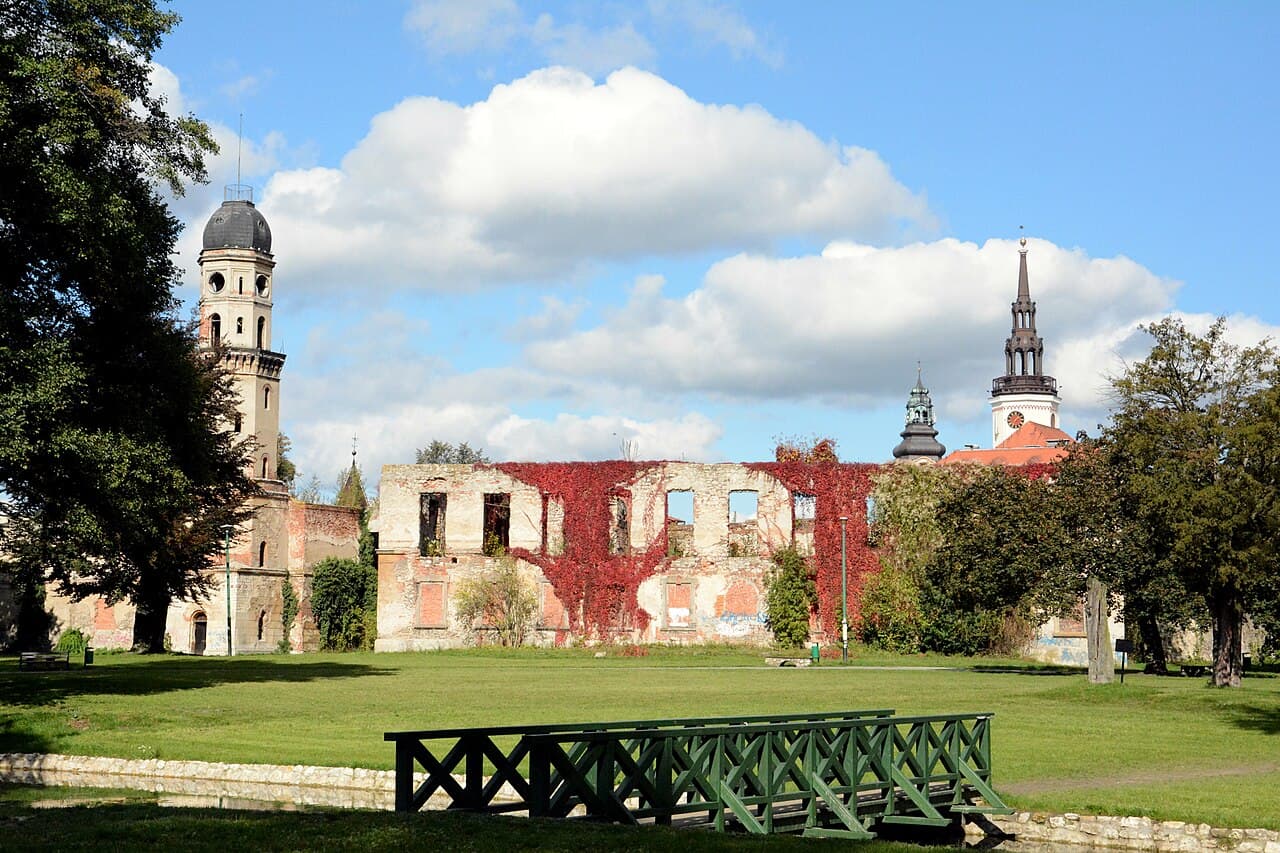
On January 21, 1945, Soviet troops set fire to the castle and much of the town during their retreat, causing extensive damage. The castle was largely destroyed by the fire, leaving only ruins behind. Today, only fragments remain, including parts of vaulted halls, the castle tower, and remnants of the Renaissance facade. The adjacent stable building survived intact, serving as a rare example of the estate's former grandeur.
Since the war, the castle has remained in private hands, with various restoration proposals made but not fully realized due to technical and heritage preservation challenges. The castle tower was renovated in 2018, preserving a vital link to the site's historical legacy.
Legends and cultural significance
Local folklore connects the castle to the mysterious death of Elizabeth, daughter of Duke Albert, who died in 1360. Legend holds that her ghost haunts the castle grounds. In the 19th century, a monument was erected in her honor, depicting her as Ceres, the Roman goddess of agriculture, symbolizing fertility and protection.
Strzelce Opolskie Castle remains a powerful emblem of the region's medieval heritage, Renaissance culture, and 19th-century romanticism. Its layered history reflects the political shifts, architectural trends, and social transformations of Silesia over seven centuries.
Frequently asked questions (FAQ)
- How do I get to Strzelce Opolskie Castle?
- Strzelce Opolskie Castle is located in the town of Strzelce Opolskie, Poland. You can reach it by car, with ample parking available nearby. Public transportation options, including buses and trains, also connect the castle to major cities in the region.
- What is the historical significance of Strzelce Opolskie Castle?
- Strzelce Opolskie Castle dates back to the medieval period and played a crucial role in the region's history, serving as a defensive stronghold. Its architecture reflects the changes in style over the centuries, showcasing influences from various periods. The castle is a testament to the area's rich heritage and is an important cultural landmark.
- When was Strzelce Opolskie Castle built?
- The construction of Strzelce Opolskie Castle began in the late 14th century, with significant modifications made in the following centuries. Originally built for defense, the castle evolved into a residence that reflects the architectural trends of its time. Today, visitors can admire both its historical structure and its beautiful surroundings.
- Can I visit Strzelce Opolskie Castle during the winter?
- Yes, Strzelce Opolskie Castle is open to visitors throughout the year, including winter months. However, it's advisable to check the opening hours in advance, as they may vary depending on the season. The winter landscape adds a unique charm to the castle, making it a picturesque destination.
- Why is Strzelce Opolskie Castle a popular tourist attraction?
- Strzelce Opolskie Castle attracts visitors due to its rich history, stunning architecture, and beautiful grounds. The castle's well-preserved structure offers a glimpse into medieval life, making it a fascinating site for history enthusiasts. Additionally, its location in a charming town enhances the overall visitor experience.
- Is it possible to take guided tours of the castle?
- Yes, guided tours are available at Strzelce Opolskie Castle, providing visitors with in-depth knowledge of its history and architecture. These tours are led by knowledgeable guides who share interesting stories and facts about the castle. Booking in advance is recommended, especially during peak tourist seasons.
- What are the ticket prices for visiting Strzelce Opolskie Castle?
- Ticket prices for Strzelce Opolskie Castle are generally affordable, making it accessible for a wide range of visitors. Discounts may be available for students, seniors, and groups. It's best to check the official website or contact the castle directly for the most up-to-date pricing information.
- What are the opening hours for Strzelce Opolskie Castle?
- Strzelce Opolskie Castle typically opens to visitors from late morning until early evening, but hours may vary by season. It's recommended to verify the current opening hours before your visit, especially around holidays. This ensures you have ample time to explore the castle and its grounds.
- Are there any nearby attractions to visit after touring the castle?
- Yes, there are several attractions near Strzelce Opolskie Castle, including beautiful parks, local museums, and historical sites in the town. Exploring the quaint streets of Strzelce Opolskie can also reveal charming cafes and shops. It's a great opportunity to immerse yourself in the local culture and history after your castle visit.
Photo gallery

Information
Website
Visit websiteSources & official resources
Verify the information above using these authoritative references.
Loading map...
Visitor reviews
No reviews yet. Been here? Write the first review and help other travelers!
Write the first reviewVisited this castle? Share your experience
Your review helps other travelers and adds first-hand knowledge to our encyclopedia.