Torre de la Malmuerta
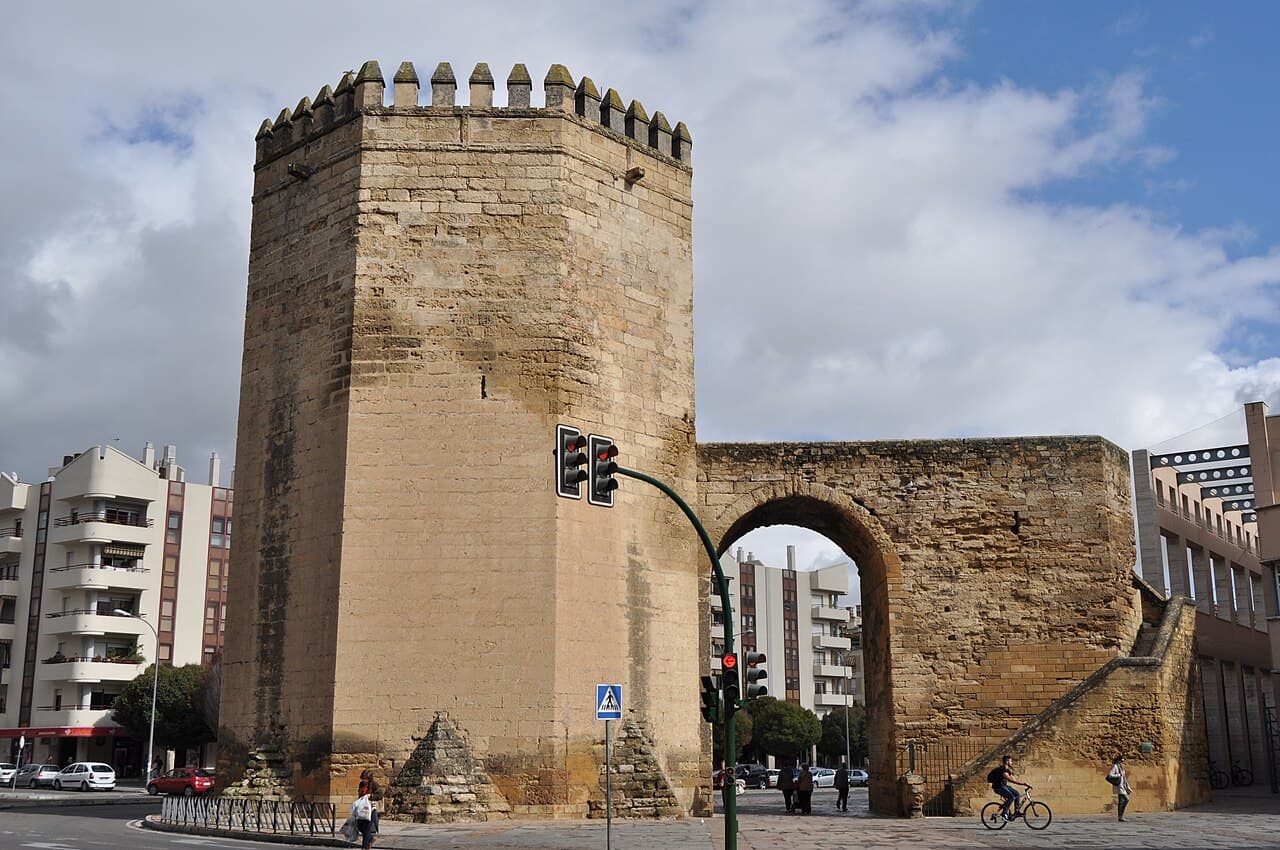
The Torre de la Malmuerta is a distinctive gate tower forming part of the historic Axerquía wall in Córdoba, Spain. Constructed between 1406 and 1408 by order of King Henry III of Castile, this albarrana tower was strategically built over a pre-existing Almohad defensive structure to strengthen the city's fortifications. Its primary function was to defend the gates of Rincón and Colodro, key access points in the medieval city walls.
The tower is notable for its octagonal plan, a design that enhanced its defensive capabilities by allowing better angles of fire and observation. Attached to the tower is an annexed arch, which integrates the structure into the surrounding fortifications and provides access to the adjacent walls. The tower's robust construction and unique shape exemplify the military architecture of the late medieval period in Spain.
Historical context and construction
The Torre de la Malmuerta was built during a period of consolidation for the Kingdom of Castile, following the Reconquista efforts to reclaim territory from Muslim rule. The decision to erect this tower on the site of an older Almohad fortification reflects the continuity and adaptation of defensive architecture in Córdoba. The 15th century saw significant urban and military development as Christian rulers sought to secure their holdings and protect urban centers against potential threats.
Its construction under King Henry III was part of a broader campaign to strengthen the city's defenses, particularly the Axerquía district, which was a vital area outside the main city walls. The tower's role as a gatehouse meant it controlled access and served as a checkpoint for those entering and leaving through the Rincón and Colodro gates.
Architectural features and defensive design
The tower's octagonal shape is relatively uncommon among medieval fortifications, which often favored rectangular or circular plans. This shape provided defenders with a wider range of angles to monitor and repel attackers. The structure's thick stone walls and elevated position made it difficult to assault directly.
The albarrana tower design, characterized by being detached or semi-detached from the main wall but connected by a bridge or arch, allowed defenders to cover the adjacent walls and gates from multiple vantage points. This architectural approach was typical in Iberian military constructions influenced by Islamic fortification techniques.
Inside, the tower featured multiple levels, including defensive platforms and chambers that could be used for garrison troops or as holding cells. Indeed, in later periods, the Torre de la Malmuerta was repurposed as a prison for nobles, indicating its secure and imposing nature.
Legend and cultural significance
The name Torre de la Malmuerta, which translates as "Tower of the Wrongly Dead Woman," originates from a local legend. According to the story, a woman was unjustly accused of adultery and killed by her husband at or near the tower. This tragic tale has become an enduring part of the tower's identity and adds a layer of cultural and historical intrigue to the site.
The tower remains a symbol of Córdoba's complex history, reflecting the city's layered past under Muslim and Christian rule, as well as its medieval military architecture. It is a significant heritage monument that attracts visitors interested in the history of fortifications and the stories embedded in the city's urban fabric.
Preservation and current status
The Torre de la Malmuerta is well preserved and stands as a prominent feature of Córdoba's historic walls. Its maintenance allows visitors to appreciate the architectural and historical significance of medieval fortifications in southern Spain. The tower is accessible to the public and often included in walking tours of Córdoba's historic center, offering insights into the city's defensive strategies and urban development during the late medieval period.
Its position within the Axerquía district highlights the importance of this area in Córdoba's medieval defense system. The tower's robust construction and distinctive design continue to draw the attention of historians, architects, and tourists alike.
Frequently asked questions (FAQ)
- What is the historical significance of the Torre de la Malmuerta?
- The Torre de la Malmuerta was built in the early 15th century to defend Córdoba's Axerquía district and key city gates, reflecting the military strategies of the late medieval period in Spain.
- Can visitors enter the Torre de la Malmuerta?
- Yes, the tower is well preserved and accessible to the public, often included in guided tours of Córdoba's historic center.
- What architectural style is the Torre de la Malmuerta?
- The tower features late medieval military architecture with an octagonal plan and albarrana tower design influenced by Islamic fortification techniques.
- Why is the tower called Torre de la Malmuerta?
- Its name means 'Tower of the Wrongly Dead Woman' and comes from a local legend about a woman falsely accused of adultery and killed there.
- When was the Torre de la Malmuerta built?
- It was constructed between 1406 and 1408 by order of King Henry III of Castile over an older Almohad structure.
Photo gallery

Information
Loading map...
Visitor reviews
No reviews yet. Been here? Write the first review and help other travelers!
Write the first reviewVisited this castle? Share your experience
Your review helps other travelers and adds first-hand knowledge to our encyclopedia.