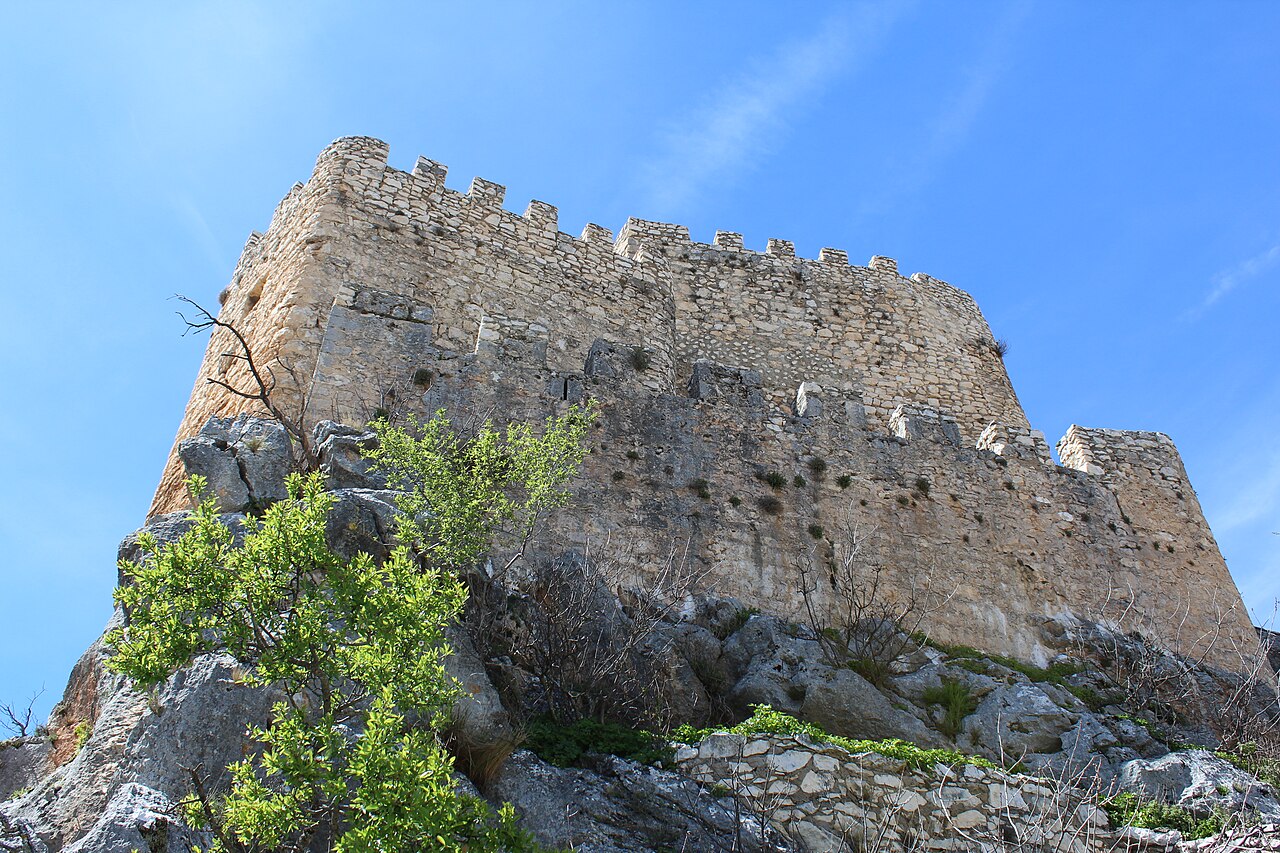
Torre de Cuadros
The Torre de Cuadros stands as a remarkable example of a medieval hill castle located in the municipality of Bedmar, in the province of Jaén, Spain. This circular watchtower is a surviving fragment of a once larger defensive complex constructed by Castilian forces during the Reconquista, the historic period when Christian kingdoms gradually reclaimed territory from Muslim rulers in the Iberian Peninsula.
The site of the Torre de Cuadros holds a layered history, with archaeological and documentary evidence suggesting its origins extend back to the Islamic period in Spain. Oral histories and local traditions indicate that the tower was erected atop an earlier Moorish fortification, possibly the "castiello" referenced in a 1260 document issued under the reign of Alfonso X of Castile. This continuity of military use underscores the strategic importance of the location through the 12th and 13th centuries, serving as a vital lookout and defensive post.
Further historical references by the 14th-century historian al-Jatib mention a place called "Qutrus", which may derive from the Latin "Quattuor" meaning "four," hinting at an even older settlement or fortification predating Christian control. This etymological clue aligns with the site's long-standing significance in regional defense and control.
Historical context and strategic importance
The existing structure of the Torre de Cuadros is believed to have been constructed in the early 14th century, shortly after the Christian conquest of the area. Its primary function was to secure a critical mountain passage through the Sierra Mágina and Almadén peaks, specifically the route leading to Cambil. Controlling this passage was essential for maintaining dominance over the region and monitoring movement between settlements.
The tower's significance is highlighted in the 1310 Treaty of Algeciras, an important agreement in which Nasr, the Nasrid ruler, ceded several strategic fortifications including the Castillo de Cuadros, Quesada, Bedmar, and Chunguín to the Christian king Fernando IV. This treaty marked a key moment in the consolidation of Christian power in Andalusia during the late medieval period.
By the late 16th century, the larger castle complex had mostly disappeared, with only the Torre de Cuadros remaining intact as recorded in the Relaciones surveys commissioned by Philip II. The tower thus stands as a solitary witness to the turbulent history of border defense and conquest in this frontier zone.
Architectural features and design
Structure and materials
The Torre de Cuadros is a circular tower approximately 6.37 meters in diameter and rising to a height of around 12 meters. The walls are notably thick, measuring about 1.6 meters, constructed to withstand siege and assault. The masonry combines ashlar stonework around key openings such as the entrance and arrow slits with rubble masonry in the main wall surfaces, reflecting a blend of defensive solidity and skilled craftsmanship.
Defensive apertures and access
The tower features three narrow arrow slits, recessed inward to allow defenders to shoot while minimizing exposure. These slits are strategically placed to cover approaches to the tower and the surrounding mountain passes. The main entrance is topped with a pointed vaulted arch, a characteristic element of medieval military architecture, providing both structural strength and an imposing gateway.
Internal layout and levels
Inside, the tower is divided into three levels. The ground floor forms a small chamber approximately 1.55 meters high, likely used for storage or as a cistern, although no waterproofing remains are evident. This chamber lacks windows or ventilation, emphasizing its utilitarian purpose.
The middle floor is accessible via the main entrance and contains an arrow slit covered by a vaulted ceiling. This level served as a defensive platform with natural light and protection. The upper floor originally had a hemispherical dome roof over a terrace, accessed by a combination of a wooden staircase and internal stairs embedded within the thick walls. This terrace allowed for surveillance and defense from an elevated position, with an additional arrow slit aligned with the one below.
External features and surrounding remains
Outside the southeastern entrance, remains of a small platform approximately seven square meters in size were found, likely enclosed by a low parapet wall. Adjacent to this platform is an extension or niche about eight meters on each side, possibly serving additional defensive or functional roles. Although restoration and terrain modifications have altered much of these features, they indicate the tower was part of a broader fortified complex with auxiliary defensive spaces.
The tower's role in regional defense and heritage
The Torre de Cuadros exemplifies a compact but effective medieval fortification designed for mountain pass control during the late medieval period. Its robust construction, strategic location, and multi-level design highlight its importance in the Castilian frontier defense system established during the Reconquista.
Today, the tower remains a significant cultural and historical landmark within the Bedmar region, symbolizing centuries of military history and the complex interactions between Christian and Muslim powers in medieval Spain. Its preservation as a well-preserved medieval watchtower offers valuable insights into medieval military architecture and the strategic use of natural terrain in fortification design.
Visitors to the Torre de Cuadros can appreciate not only its architectural features but also its historical context as part of the broader narrative of the Reconquista and the shaping of modern Spain's territorial boundaries.
Frequently asked questions (FAQ)
- How do I get to Torre de Cuadros?
- Torre de Cuadros is located in Bedmar, Andalusia, Spain. Visitors can reach the site by car or local transport from nearby towns such as Jaén. The tower is accessible via mountain paths, so appropriate footwear is recommended.
- What is the historical significance of Torre de Cuadros?
- Torre de Cuadros played a crucial role in the Christian Reconquista as a defensive watchtower controlling key mountain passes. It was part of the frontier defense system after the 1310 Treaty of Algeciras, marking the consolidation of Christian power in the region.
- Can I visit the interior of the tower?
- The tower's interior consists of three levels with narrow spaces and defensive features. While the site is well-preserved, interior access may be limited for safety reasons. Visitors should check local guidelines before planning a visit.
- When is the best time to visit Torre de Cuadros?
- The best time to visit is during spring and autumn when the weather is mild and the surrounding Sierra Mágina landscape is particularly scenic. Summers can be hot, and winters may be cold and less accessible.
- Are there any nearby attractions to combine with a visit to Torre de Cuadros?
- Nearby attractions include the Sierra Mágina Natural Park, the historic town of Bedmar, and other medieval sites in the province of Jaén, offering opportunities for hiking, cultural exploration, and nature appreciation.
Information
Loading map...
Visitor reviews
No reviews yet. Been here? Write the first review and help other travelers!
Write the first reviewVisited this castle? Share your experience
Your review helps other travelers and adds first-hand knowledge to our encyclopedia.