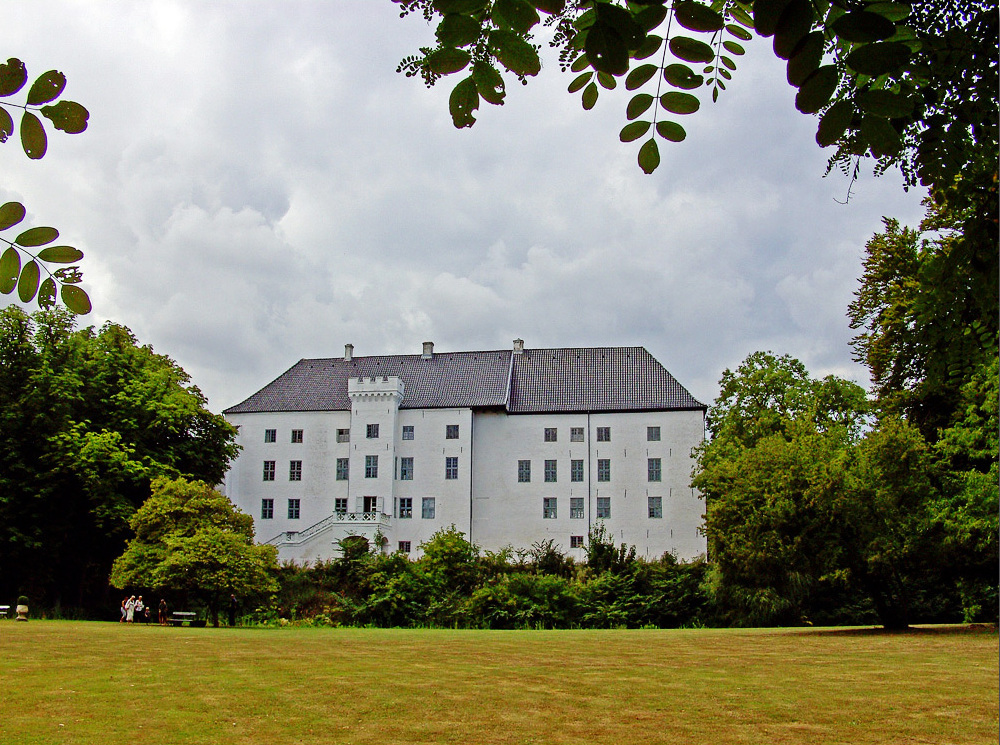
Torbenfeldt Castle
Torbenfeldt Castle is a historic estate located in Mørkøv, Denmark, known for its distinctive Renaissance architecture and centuries-long noble lineage. The castle's name possibly derives from Torben Nielsen (died 1310), who was connected by marriage to the family of the prominent medieval noble Marsk Stig. First documented in 1377, the estate has passed through the hands of several influential Danish noble families, including the Moltke, Gøye, and Brahe families, each contributing to its architectural and cultural heritage.
Historical ownership and royal connections
In 1668, the estate was acquired by King Frederick III, who renamed it Frydendal. The king's death in 1670 led to his son, Prince George, exchanging the property with Christoffer Parsberg in 1671 for another estate at Jungshoved, Vordingborg. Parsberg, an important figure in Denmark's central administration, was elevated to the rank of count the same year but died shortly thereafter. Following Parsberg's death, Torbenfeldt changed hands among various noble families until Christian Rosenkilde Treschow acquired it in 1873. The estate has remained in the Treschow family since, and in 1906, the original name Torbenfeldt was restored.
Architectural evolution and features
The castle's main structure is a three-winged building situated on an artificial island in a small lake, a defensive feature typical of Renaissance manors in Denmark. The south wing contains elements dating back to the 15th century, though it underwent significant alterations and was expanded with a tower in the 1650s. The eastern gate wing, constructed in 1577, exemplifies Renaissance design but was adapted in 1755 to suit changing tastes or functional needs. The north wing dates from 1767, except for a corner tower added during the comprehensive restoration in 1906 by architect C. M. Smidt.
Defensive and stylistic elements
The castle's location on an artificial island provided natural protection, complemented by water defenses common in Danish Renaissance estates. The combination of wings around a courtyard reflects the typical manor layout of the period. The tower additions in the south wing and the north wing's corner tower blend functional defensive architecture with the aesthetic preferences of their respective eras. The 1906 restoration carefully preserved these historical layers while updating the complex for modern use.
Surrounding estate and cultural context
Close to the castle lies Frydendal Church, historically linked to the estate and serving as a local religious center. The estate's long history and architectural evolution reflect broader trends in Danish noble residences, from medieval origins through Renaissance expansion to modern restoration efforts. The Treschow family's stewardship since the 19th century has ensured the preservation of Torbenfeldt as a significant cultural landmark in the Region Zealand.
Landscape and setting
The castle is set within a landscape typical of Danish noble estates, featuring a moat-like lake that enhances both its defense and aesthetic appeal. The artificial island setting not only provided security but also created a picturesque environment that has been maintained through careful landscaping and conservation efforts.
Legacy and current status
Today, Torbenfeldt Castle stands as a well-preserved example of a Renaissance manor with architectural elements spanning from the 15th century to the early 20th century. Its continuous ownership by prominent families and its location in Mørkøv contribute to its historical importance. The castle remains privately owned by the Treschow family, who have maintained its condition and historical integrity through ongoing preservation.
Torbenfeldt Castle's architectural complexity, historical associations, and scenic setting make it a notable site for those interested in Danish noble estates and Renaissance architecture.
Frequently asked questions (FAQ)
- How do I get to Torbenfeldt Castle?
- Torbenfeldt Castle is located in Mørkøv, Denmark, and can be easily accessed by car or public transport. If you are driving, the castle is well-signposted and has parking facilities available for visitors.
- What is the historical significance of Torbenfeldt Castle?
- Torbenfeldt Castle dates back to the late 16th century and is an important example of Danish renaissance architecture. It has played a significant role in local history and has been associated with various noble families over the centuries.
- When was Torbenfeldt Castle built?
- Construction of Torbenfeldt Castle began in 1597 and was completed in 1607. The castle has undergone several renovations since its original construction, preserving its historical charm while adapting to modern needs.
- Can I take guided tours of Torbenfeldt Castle?
- Yes, guided tours are available at Torbenfeldt Castle, providing visitors with in-depth insights into its history and architecture. It is recommended to check the official website for tour schedules and availability before your visit.
- Why is Torbenfeldt Castle famous?
- Torbenfeldt Castle is renowned for its stunning renaissance architecture and beautifully landscaped gardens. Additionally, its rich history and connection to Danish nobility make it a fascinating site for history enthusiasts.
- Is it possible to host events at Torbenfeldt Castle?
- Yes, Torbenfeldt Castle offers facilities for hosting events such as weddings, corporate gatherings, and private parties. Interested parties should contact the castle administration for details on availability and services.
- What are the opening hours for Torbenfeldt Castle?
- Torbenfeldt Castle is typically open to visitors from April to October, with specific opening hours varying by season. It's advisable to check the official website for the most current information regarding hours and any potential closures.
- What are the ticket prices for visiting Torbenfeldt Castle?
- Ticket prices for Torbenfeldt Castle vary based on age and group size, with discounts often available for children and seniors. For the most accurate pricing, please refer to the castle's official website or contact the visitor center directly.
- What is the best time to visit Torbenfeldt Castle?
- The best time to visit Torbenfeldt Castle is during the spring and summer months when the gardens are in full bloom and the weather is generally pleasant for outdoor exploration. Additionally, many events and activities are organized during this period, enhancing the visitor experience.
- Are there any nearby attractions to Torbenfeldt Castle?
- Yes, there are several attractions near Torbenfeldt Castle, including beautiful nature trails, local museums, and historical sites. Exploring the surrounding area can provide a fuller experience of the rich culture and history of Mørkøv and its vicinity.
Information
Loading map...
Visitor reviews
No reviews yet. Been here? Write the first review and help other travelers!
Write the first reviewVisited this castle? Share your experience
Your review helps other travelers and adds first-hand knowledge to our encyclopedia.