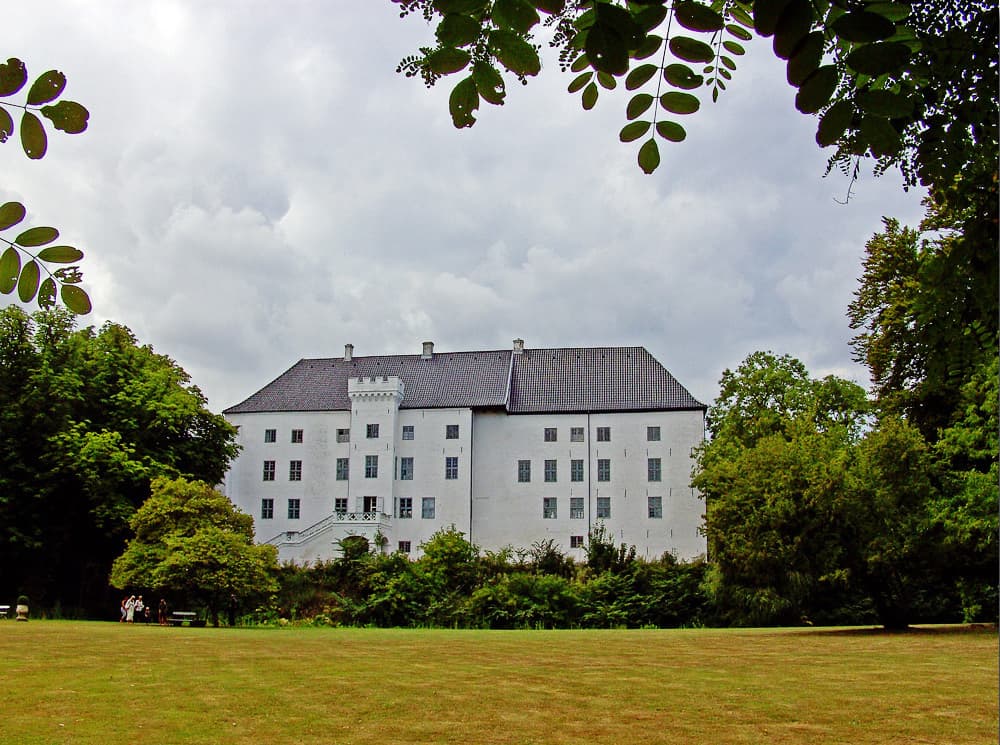
Dragsholm Castle
Dragsholm Castle stands as one of the oldest secular buildings in Denmark, located in Hørve, Zealand. Originally constructed around 1215 by the Bishop of Roskilde, the castle began its life as a grand palace before evolving into a formidable fortress. Its strategic location and robust construction made it a critical stronghold in Danish history, particularly during the turbulent Count's Feud (1534–1536), where it was the only castle on Zealand to withstand the siege by Count Christoffer's forces.
Medieval origins and fortification
The initial structure of Dragsholm Castle reflected the architectural and defensive needs of the early 13th century. Built as a bishop's palace, it was soon fortified with thick walls, towers, and a moat to withstand military threats. The castle's transformation from a residence to a fortress was driven by the political instability of the period, including frequent conflicts between the crown, nobility, and church authorities.
The castle's medieval fortifications included a large northeast tower that later housed prison cells. These cells were uniquely equipped with amenities such as toilets and windows, with conditions varying according to the prisoner's status and crimes. This adaptation reflects the castle's evolving role from a noble residence to a detention center for high-profile prisoners.
Role during the count's feud and the reformation
During the Count's Feud, a war of succession that engulfed Denmark from 1534 to 1536, Dragsholm Castle's defenses proved impregnable. Its successful resistance made it a symbol of royal authority and military strength. Following the conflict and the Danish Reformation, the castle came under the control of the Danish Crown.
From 1536 to 1664, Dragsholm Castle served as a prison for noble and ecclesiastical prisoners. The treatment of inmates varied widely, reflecting their social rank and the severity of their offenses. This period of incarceration is a significant chapter in the castle's history, illustrating the intersection of justice, politics, and power in early modern Denmark.
Notable prisoners and historical figures
Among the most famous prisoners held at Dragsholm was James Hepburn, the fourth Earl of Bothwell. Bothwell was a controversial figure known for his tumultuous personal life and political intrigues. He was the third husband of Mary, Queen of Scots and was widely suspected of involvement in the murder of her previous husband, Lord Darnley. Bothwell's imprisonment at Dragsholm followed the political fallout from these events, including the Battle of Carberry Hill, which marked a turning point in Scottish history.
Architectural evolution and restoration
After the wars against Sweden under Charles X Gustav, Dragsholm Castle suffered damage, including an attempted explosion. The castle fell into ruin until it was granted to Heinrich Müller, a grocer who initiated restoration efforts. In 1694, the castle was sold to the nobleman Frederik Christian Adeler, who rebuilt it in the Baroque style that largely defines its appearance today.
The Adeler family left a lasting imprint on the estate, including contributions to regional development such as the drainage of the Lammefjord. The castle remained in their possession until 1932, after which it passed to the Central Land Board and was eventually sold to J.F. Bøttger.
Throughout the 20th century, Dragsholm Castle underwent several restorations. Notably, after World War I, the interiors were redesigned in a Late Romantic style, which still characterizes the castle's salons and ballrooms. Recent renovations have focused on modernizing the castle for use as a hotel and restaurant while preserving its historical and architectural integrity.
Current status and visitor experience
Today, Dragsholm Castle is a well-preserved Renaissance castle that offers visitors a unique glimpse into Denmark's medieval and early modern history. Its blend of architectural styles—from medieval fortifications to Baroque grandeur and Late Romantic interiors—makes it a fascinating destination for history enthusiasts and tourists alike.
The castle operates as a hotel and restaurant, with guest rooms that have been refurbished to combine modern comfort with historical ambiance. Additional accommodations have been added in the former porter's lodge across the moat, enhancing the visitor experience.
Dragsholm Castle's rich history, architectural significance, and scenic location in Zealand continue to attract visitors interested in exploring Denmark's cultural heritage.
Frequently asked questions (FAQ)
- How do I get to Dragsholm Castle?
- Dragsholm Castle is located in Hørve, Denmark, and can be reached by car or public transport. If driving, the castle is approximately 1.5 hours from Copenhagen, with ample parking available on site. For public transport, check local bus schedules that connect to Hørve.
- What is the historical significance of Dragsholm Castle?
- Dragsholm Castle dates back to the 12th century and is one of the oldest castles in Denmark. It has served various purposes throughout its history, including as a royal residence and a prison. Today, it stands as a testament to Denmark's rich history and architectural evolution.
- When was Dragsholm Castle built?
- Construction of Dragsholm Castle began in the late 12th century, with significant expansions and renovations occurring in the following centuries. The castle showcases a blend of architectural styles, reflecting its long history and the various phases of its development. Its current structure largely dates back to the Renaissance period.
- Can I take a guided tour of the castle?
- Yes, guided tours are available at Dragsholm Castle, providing visitors with insights into its fascinating history and architectural features. Tours typically run during the peak tourist season, and it's advisable to book in advance to secure your spot. Check the castle's official website for specific tour schedules and details.
- Why is Dragsholm Castle famous for its ghosts?
- Dragsholm Castle is known for its rich collection of ghost stories and legends, making it a popular destination for those intrigued by the supernatural. The castle is said to be haunted by several spirits, including a white lady, which adds an air of mystery and intrigue to its historical narrative. Visitors often enjoy exploring these ghostly tales during their visit.
- Is it possible to stay overnight at Dragsholm Castle?
- Yes, Dragsholm Castle offers accommodation options for those wishing to experience a night in this historical setting. The castle features unique rooms that blend modern comforts with historical charm, providing a memorable stay. Reservations are recommended, especially during peak seasons.
- What are the opening hours of Dragsholm Castle?
- Dragsholm Castle is typically open to visitors from March to October, with varying hours depending on the season. It’s best to check the official website for the most current opening hours and any special closures. Guided tours usually have set times, so plan your visit accordingly.
- What are the ticket prices for visiting Dragsholm Castle?
- Ticket prices for Dragsholm Castle vary based on age and whether you are joining a guided tour. Generally, entrance fees are modest, and discounts may be available for children, seniors, and groups. It is advisable to purchase tickets in advance, especially during busy seasons.
- What nearby attractions can I visit while at Dragsholm Castle?
- While visiting Dragsholm Castle, you can explore the beautiful surrounding landscapes, including the scenic Dragsholm Park. Additionally, the nearby town of Hørve offers quaint shops and cafes. Other attractions in the region include local beaches and the charming village of Odsherred.
Photo gallery

Information
Website
Visit websiteSources & official resources
Verify the information above using these authoritative references.
Loading map...
Visitor reviews
No reviews yet. Been here? Write the first review and help other travelers!
Write the first reviewVisited this castle? Share your experience
Your review helps other travelers and adds first-hand knowledge to our encyclopedia.



