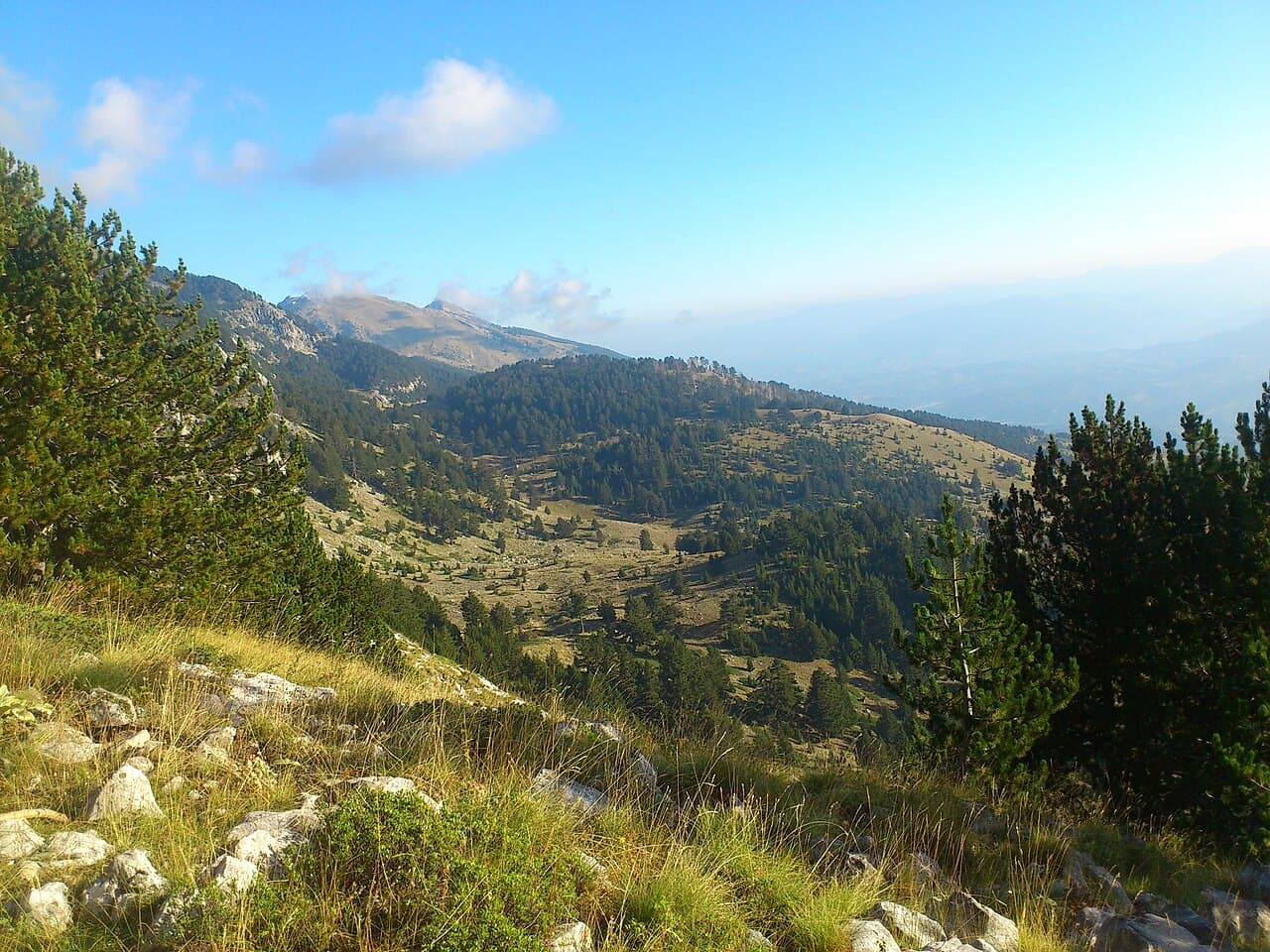
Tomornitsa — Albania castle

Tomornitsa

Tomornitsa hill castle in Albania
Ruins
Tomornitsa is a notable hill castle located in Albania, representing a significant example of medieval fortification in the region. Positioned strategically on elevated terrain, the castle's location provided natural defensive advantages, a common feature for hill castles designed to oversee and control surrounding areas. Though the exact city or precise coordinates remain undocumented, Tomornitsa's presence contributes to the understanding of Albania's medieval military architecture and regional history.

Historical context and significance

The origins of Tomornitsa castle trace back to the medieval period, a time when fortifications were essential for defense against invasions and local conflicts. Hill castles like Tomornitsa were typically constructed to serve as strongholds for local rulers or military commanders, offering protection and control over key routes. While specific historical records about Tomornitsa are scarce, its architectural typology aligns with the strategic needs of the High to Late Medieval eras in the Balkans, when territorial disputes and Ottoman incursions shaped the landscape.

Architectural features and construction

Tomornitsa exemplifies typical hill castle architecture, utilizing the natural topography to enhance its defensive capabilities. The castle likely features stone curtain walls adapted to the uneven hillside, with battlements and possibly towers positioned to maximize visibility and defense. The construction techniques would have involved locally sourced stone and mortar, characteristic of medieval Albanian fortifications.

While detailed descriptions of Tomornitsa's internal structures are unavailable, hill castles of this type often included a keep or donjon as the central stronghold, surrounded by various courtyards, gates, and possibly residential quarters for the garrison. The castle's layout would have been designed to withstand sieges and provide a secure refuge for inhabitants.

Preservation and current condition

The current condition of Tomornitsa is not extensively documented, but hill castles in Albania often exist as ruins or partially preserved sites due to centuries of exposure and historical conflicts. Preservation efforts in the region vary, and many such castles remain archaeological sites that offer valuable insights into medieval fortification techniques and regional history.

Tomornitsa in the context of Albanian heritage

Tomornitsa contributes to Albania's rich tapestry of medieval castles, which reflect the country's complex history of conquest, resistance, and cultural exchange. Castles like Tomornitsa are important for understanding the military strategies and architectural advancements of the period. They also serve as cultural landmarks that attract interest from historians, archaeologists, and visitors interested in the medieval heritage of the Balkans.

Visiting Tomornitsa

Due to limited documentation and accessibility, visiting Tomornitsa may require local guidance and preparation. Prospective visitors should research current access conditions and any preservation measures in place. Exploring such castles offers a glimpse into the medieval past and the strategic importance of hilltop fortifications in Albania.

Frequently asked questions (FAQ)

What is the historical significance of Tomornitsa castle?
Tomornitsa castle is a medieval hill castle in Albania that served as a strategic defensive stronghold during the High to Late Medieval periods, reflecting regional military architecture.
Can I visit Tomornitsa castle today?
Tomornitsa is generally in ruins and may have limited accessibility. Visitors should check local conditions and seek guidance for safe exploration.
What architectural features characterize Tomornitsa?
Tomornitsa features typical hill castle elements such as stone curtain walls, battlements, and possibly a central keep, adapted to the hillside terrain for defense.

Photo gallery

Tomornitsa
Click to view

Photo by Ditty ch4•CC BY-SA 4.0

1 photo • Click any image to view in full screen

Information

Hill Castle

Loading map...

Visitor reviews

No reviews yet. Been here? Write the first review and help other travelers!

Write the first review

Visited this castle? Share your experience

Your review helps other travelers and adds first-hand knowledge to our encyclopedia.
Write a review

(5/5)

0/2000 characters

Your review will be visible after admin approval

Nearby castles

13.9 km
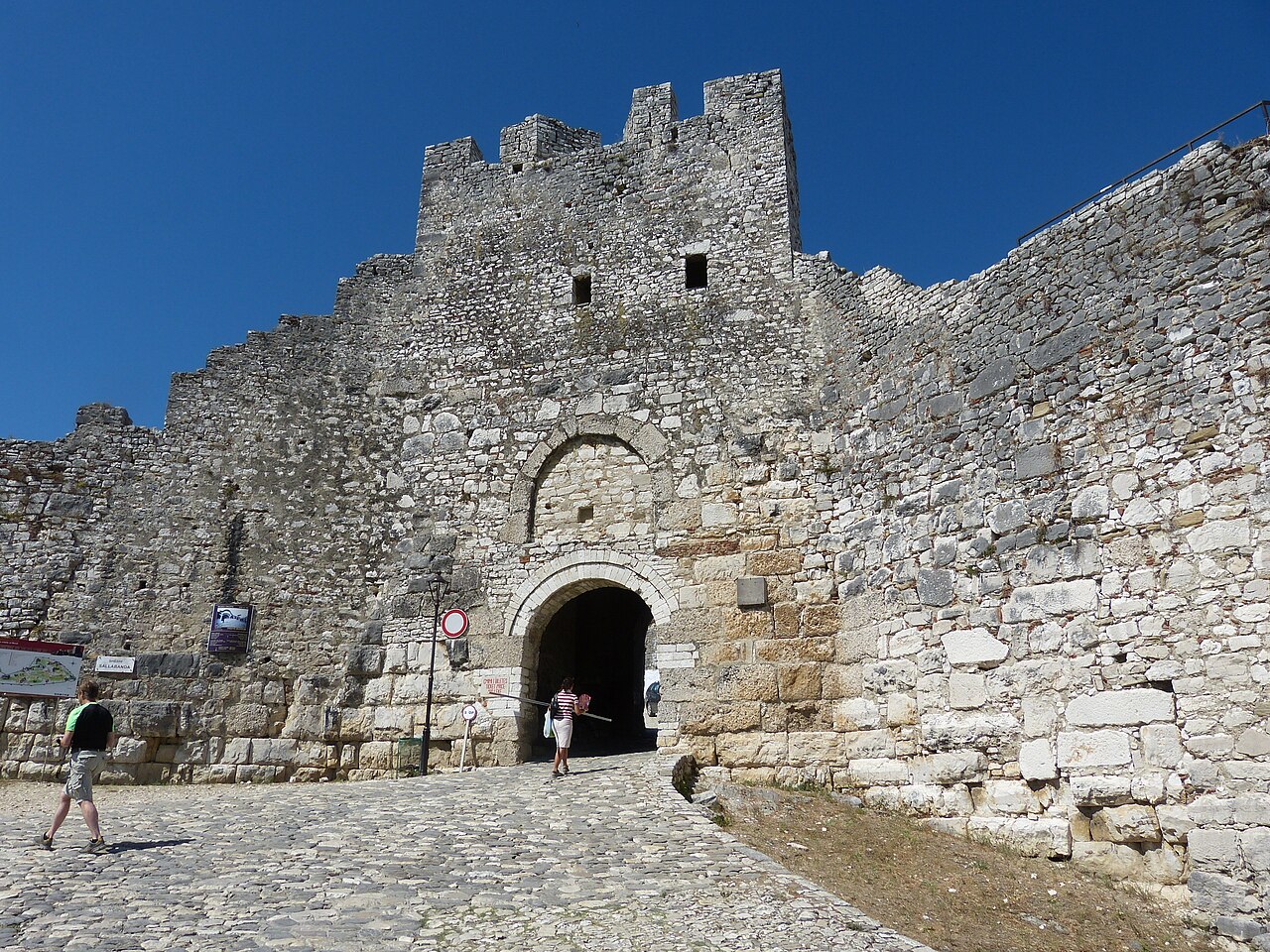
Berat Castle — Albania castle

Berat Castle

Berat, Albania

Berat Castle, known locally as Kalaja e Beratit, is a significant historic fortress located in the town of Berat, Albania. This bastioned fortress occupies a strategic position on a rocky hill overlooking the town and the river Osum. The castle's origins trace back to a proto-urban settlement dating from the 5th century BC, reflecting its long-standing importance in the region's defense and settlement patterns. The site first gained prominence as a fortified location known as Albanorum Oppidum, which was destroyed by Roman forces in 200 BC. The fortification was later rebuilt and its walls were notably strengthened during the early 5th century AD under the rule of Roman Emperor Theodosius II. This enhancement aimed to protect the area from barbarian invasions during a turbulent period in the Balkans. Byzantine rebuilding and medieval development Significant reconstruction occurred during the reign of Byzantine Emperor Justinian I (527-565 AD), who undertook extensive fortification projects across the empire, including Berat Castle. The castle saw further rebuilding in the early 13th century under the Byzantine Despot of Epirus, Michael I Komnenos Doukas, a cousin of Emperor Isaac II Angelos. During this period, the castle was known as Bellagrad, meaning "white city" in Slavic languages, reflecting its prominence. In 1280-1281, the castle and town endured a prolonged siege by troops of the Angevin Kingdom of Sicily, which ultimately failed to capture it. The castle's defenses were robust enough to withstand this assault, demonstrating its strategic military value in the medieval period. The citadel and later medieval history By the mid-14th century, the castle was controlled by John Komnenos Asen, Despot of Valona, of Bulgarian noble descent. It is likely during his tenure that the inner citadel, a fortified core within the castle complex, was constructed. This inner citadel added an additional layer of defense and administrative function within the fortress. Ottoman period and modifications Berat Castle fell under Ottoman control in 1417. Despite Ottoman occupation, the fortress remained a contested site; notably, in 1455, forces from the League of Lëzhë, led by the Albanian national hero Skanderbeg, unsuccessfully besieged the castle. The Ottomans reinforced the castle's fortifications in 1768 to maintain their hold on this strategic location. In the early 19th century, several towers were added by Ali Pasha of Ioannina, an autonomous Ottoman Albanian ruler. These additions reflect the continued military importance of the castle during this period. The castle was also the site of multiple successful sieges by Albanian insurgents in the 1830s, highlighting its role in regional conflicts during Ottoman decline. Architectural features and layout The castle complex today primarily reflects the architectural styles and construction phases from the 13th century and Ottoman periods. It features a single main gate on the northern side, which includes a fortified courtyard with two gates providing layered defense. There are also three smaller entrances, which allowed controlled access to the castle district. Inside the castle walls lies a small settlement known as the castle district, which contains Ottoman-era residences, several Byzantine churches, and a small mosque. The western part of the castle district houses the inner citadel, consisting of an inner castle surrounded by an outer courtyard. The outer courtyard served as quarters for the Ottoman garrison and includes a mosque. A large cistern within the inner castle provided water storage, essential for withstanding sieges. Religious and cultural heritage Berat Castle is notable for its concentration of religious buildings, particularly Byzantine-era Albanian Orthodox churches dating mainly from the 13th century. Historically, the fortress housed around 20 churches, reflecting the Christian population that lived within its walls. Only one mosque was present during the Ottoman period, intended for the garrison's use. Many churches have suffered damage over time, but several remain preserved as cultural monuments. The castle and its surrounding historic town are recognized as a UNESCO World Heritage Site, underscoring their cultural and architectural significance. The castle's preservation allows visitors to explore a unique blend of medieval Byzantine and Ottoman architecture and history. Visiting Berat Castle today The castle is freely accessible to the public and offers panoramic views of the town of Berat and the Osum river valley. Its location on a rocky hill at an elevation of approximately 214 meters provides a commanding vantage point. Visitors can explore the castle district's narrow streets, historic churches, and Ottoman houses, gaining insight into the area's layered history. Berat Castle's combination of medieval fortifications, religious monuments, and Ottoman residential buildings makes it a compelling destination for those interested in Balkan history and architecture. The historic town beneath the castle hill also offers a rich cultural experience with its traditional architecture and museums.

Early Medieval (5th–10th c.)
Details
44.3 km

Këlcyrë Saray

Këlcyrë, Albania

Këlcyrë Saray, locally known as Sarajet e Ali Bej Këlcyrës, is a historically significant fortified palace-residence located near the town of Këlcyrë in the Gjirokastër county of Albania. Perched halfway up the steep slope of Trebeshinë Mountain, this site occupies a strategic and visually commanding position overlooking the surrounding landscape. Although often mistaken for a castle due to its imposing ruins, Këlcyrë Saray was not a traditional medieval fortress but rather a fortified palace constructed in the 19th century. It was founded by the prominent Albanian Ottoman ruler Ali Pasha of Ioannina, who exercised considerable autonomy and quasi-independence within the Ottoman Empire during his reign. The palace served as a residence and administrative center for local rulers aligned with Ali Pasha's authority. The historical context of Këlcyrë Saray The location of Këlcyrë Saray is closely linked to the older Këlcyrë Castle, whose ruins stand high above the palace on the mountain. This older castle dates back to Illyrian times, indicating the long-standing strategic importance of this site. Originally, the lords of Këlcyrë resided in this ancient fortress. However, following Ali Pasha's conquest of the castle in 1796, the local rulers were compelled to relocate down the slope to the newly established saray. After the move, these local rulers became beys under Ottoman service and adopted the name of the location, initially Këlcyra, which later evolved into Klissura. The palace thus symbolized the transformation of local power structures under Ottoman influence, reflecting the shift from medieval fortress-based rule to more modern administrative residences. Architectural features and construction Këlcyrë Saray was built as a fortified palace rather than a military fortress, which is evident in its architectural design and layout. Unlike traditional castles designed primarily for defense, the saray combined residential and administrative functions with defensive elements suitable for the unstable political climate of the time. The palace was constructed in the 19th century, a period marked by the gradual decline of Ottoman power in the Balkans and the rise of local autonomy movements. The structure likely featured thick stone walls, limited defensive battlements, and enclosed courtyards that provided security while maintaining the comfort expected of a noble residence. Its position on the mountain slope offered natural protection and commanding views for surveillance of the surrounding area. Events leading to the saray's destruction The turbulent history of the region in the early 20th century had a direct impact on the fate of Këlcyrë Saray. Following Albania's declaration of independence in 1912 during the First Balkan War, the country experienced significant instability. In 1914, southern Albania was occupied by Greek forces amidst the chaos of World War I. When Greek troops arrived in Këlcyrë in April 1914, they issued an ultimatum to Veli Bey of Këlcyra, demanding submission within 48 hours under threat of destruction. Veli Bey refused to accept their rule, resulting in the saray being set on fire and reduced to ruins. Since that time, the saray has remained in a ruined state, a poignant reminder of the region's complex and often violent history. Access and current condition Today, Këlcyrë Saray stands as a ruined but accessible site, attracting visitors interested in the history of Ottoman-era Albania and the legacy of Ali Pasha. The ruins offer a dramatic setting on the mountain slope, though the original castle ruins above remain difficult to access safely, especially in adverse weather conditions. The site provides valuable insight into the architectural and political transitions of the 19th century in this part of the Balkans. Visitors can explore the remains freely, appreciating the blend of residential and defensive features that characterized the saray. Its location also offers panoramic views, linking the natural landscape with the historical narrative of the area.

Modern (19th–20th c.)
Details
45.4 km

Tepelenë Castle

Tepelenë, Albania

Tepelenë Castle, locally known as Kalaja e Tepelenës, stands prominently on a hill overlooking the confluence of the Drino and Vjosë rivers in the town of Tepelenë, Albania. This hill castle occupies a strategic location that has commanded the surrounding valley for centuries, reflecting the area's enduring military and political significance. The origins of the fortress trace back to the 7th century, likely built during the Byzantine period. Although detailed records from this early era are scarce, the site was first documented in 1482 when Ottoman Sultan Bayezid II visited the existing castle. This original fortress, probably Byzantine in origin, was destroyed in 1492 during conflicts involving Albanian and Venetian insurgents resisting Ottoman expansion. The Ottomans subsequently constructed a smaller garrison castle nearby, utilizing the ruins of the earlier fortification as building material. Medieval and ottoman history of tepelenë castle Throughout the 15th and 16th centuries, Tepelenë Castle played a pivotal role in regional power struggles. Ottoman tax registers from 1520 reveal a mixed community of Christian and Muslim families residing in Tepelenë, alongside a castle garrison of over 180 soldiers, underscoring its military importance. The fortress was a focal point during local rebellions, as evidenced in 1670 when the Ottoman traveler Evliya Çelebi described Tepelenë as a modest settlement with a garrison of approximately 100 soldiers and noted the rebellious nature of surrounding villages. Strategic significance and local resistance The castle's location at the junction of two rivers made it a key defensive and administrative site. Despite Ottoman control, the persistent resistance from local communities shaped the fortress's history. The absence of amenities such as hammams or caravanserais in the 17th century highlighted Tepelenë's relative isolation and the ongoing tensions in the region. Ali pasha's transformation of the fortress The most transformative period in the castle's history came under Ali Pasha of Tepelenë, an Albanian Ottoman ruler known for his autonomous governance in the late 18th and early 19th centuries. Taking control of Tepelenë in 1789, Ali Pasha initiated extensive expansions of the fortress, incorporating the older Ottoman castle within a much larger and more formidable complex. His construction efforts, largely completed by the early 1800s, included thick defensive walls up to five meters wide and polygonal towers that enhanced the fortress's military capabilities. Architectural features of ali pasha's fortress Ali Pasha's fortress covered approximately four hectares and featured three main gates, including the eastern "Vizier Gate," distinguished by a Greek-language inscription dated 1819. The fortress's walls, built using the Cloisonné masonry technique, remain standing to heights of around ten meters. Three polygonal towers at the southeast, southwest, and northwest corners survive intact, exemplifying the robust defensive design of the period. Within the expanded fortress, the earlier Ottoman castle was repurposed as a storage area. The complex also housed soldier quarters, magazines for weapons and supplies, religious buildings, and a prison. Although Ali Pasha's palace within the castle no longer exists, it was historically significant as the site where the English poet Lord Byron visited in 1809, drawing Western attention to Ali Pasha's rule. Destruction and preservation The town of Tepelenë and Ali Pasha's palace suffered devastating damage during a 1920 earthquake. Additionally, the fortress endured plundering by Greek irregular forces in the early 20th century and sustained damage during both World Wars. Despite these challenges, significant portions of the fortress walls, gates, and towers have survived, offering valuable insights into the site's layered history. Today, Tepelenë Castle is freely accessible and forms part of a quiet residential neighborhood within its walls. Visitors can enjoy panoramic views of the Vjosë valley and explore the remains of this imposing fortress. A notable feature near the castle is a rickety hanging footbridge spanning the Vjosë river, providing a unique vantage point and connection to the surrounding landscape. Architectural details and construction techniques The fortress's walls showcase the Cloisonné technique, where stone blocks are framed with bricks to create decorative and structurally sound masonry. Two nearly intact circular towers from the original Ottoman castle stand about five meters high with diameters close to ten meters, illustrating medieval defensive architecture. Remnants of a minaret from a former mosque within the castle grounds highlight the site's religious significance during Ottoman times. Fortress layout and defensive structures The older Ottoman castle measured approximately 56 by 40 meters and was enclosed by walls about 350 meters in length. It featured two gates on the northern and eastern sides, parts of which remain visible today. Ali Pasha's expansion multiplied the fortress's size and defensive complexity, adapting it to the evolving military technologies and political realities of the early 19th century. Cultural significance and legacy Tepelenë Castle stands as a testament to the region's turbulent history and the legacy of Ali Pasha, whose rule left a lasting imprint on southern Albania. The fortress symbolizes the blend of Byzantine origins, Ottoman military architecture, and early modern Albanian power. A monument dedicated to Ali Pasha near the fortress's main entrance commemorates his influence and the castle's role as one of his two headquarters alongside Ioannina. Visitors to Tepelenë Castle not only experience a remarkable historic fortress but also gain insight into the complex cultural and political narratives that shaped the Balkans over centuries. The castle's enduring presence offers a tangible connection to Albania's medieval past and its Ottoman heritage, making it a significant site for both history enthusiasts and cultural tourists.

Early Medieval (5th–10th c.)
Details

