Berat Castle
Berat Castle, known locally as Kalaja e Beratit, is a significant historic fortress located in the town of Berat, Albania. This bastioned fortress occupies a strategic position on a rocky hill overlooking the town and the river Osum. The castle's origins trace back to a proto-urban settlement dating from the 5th century BC, reflecting its long-standing importance in the region's defense and settlement patterns.
The site first gained prominence as a fortified location known as Albanorum Oppidum, which was destroyed by Roman forces in 200 BC. The fortification was later rebuilt and its walls were notably strengthened during the early 5th century AD under the rule of Roman Emperor Theodosius II. This enhancement aimed to protect the area from barbarian invasions during a turbulent period in the Balkans.
Byzantine rebuilding and medieval development
Significant reconstruction occurred during the reign of Byzantine Emperor Justinian I (527-565 AD), who undertook extensive fortification projects across the empire, including Berat Castle. The castle saw further rebuilding in the early 13th century under the Byzantine Despot of Epirus, Michael I Komnenos Doukas, a cousin of Emperor Isaac II Angelos. During this period, the castle was known as Bellagrad, meaning "white city" in Slavic languages, reflecting its prominence.
In 1280-1281, the castle and town endured a prolonged siege by troops of the Angevin Kingdom of Sicily, which ultimately failed to capture it. The castle's defenses were robust enough to withstand this assault, demonstrating its strategic military value in the medieval period.
The citadel and later medieval history
By the mid-14th century, the castle was controlled by John Komnenos Asen, Despot of Valona, of Bulgarian noble descent. It is likely during his tenure that the inner citadel, a fortified core within the castle complex, was constructed. This inner citadel added an additional layer of defense and administrative function within the fortress.
Ottoman period and modifications
Berat Castle fell under Ottoman control in 1417. Despite Ottoman occupation, the fortress remained a contested site; notably, in 1455, forces from the League of Lëzhë, led by the Albanian national hero Skanderbeg, unsuccessfully besieged the castle. The Ottomans reinforced the castle's fortifications in 1768 to maintain their hold on this strategic location.
In the early 19th century, several towers were added by Ali Pasha of Ioannina, an autonomous Ottoman Albanian ruler. These additions reflect the continued military importance of the castle during this period. The castle was also the site of multiple successful sieges by Albanian insurgents in the 1830s, highlighting its role in regional conflicts during Ottoman decline.
Architectural features and layout
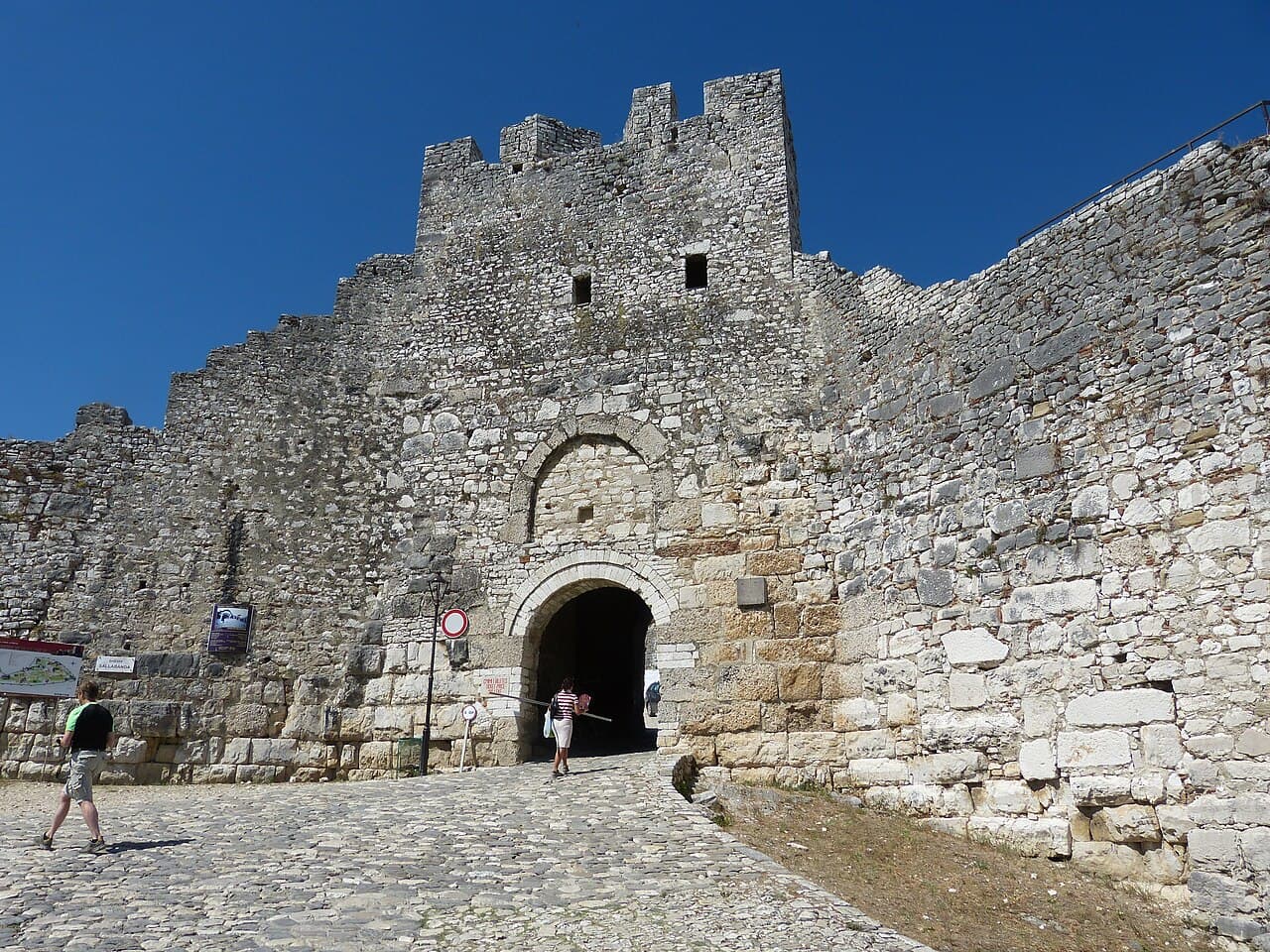
The castle complex today primarily reflects the architectural styles and construction phases from the 13th century and Ottoman periods. It features a single main gate on the northern side, which includes a fortified courtyard with two gates providing layered defense. There are also three smaller entrances, which allowed controlled access to the castle district.
Inside the castle walls lies a small settlement known as the castle district, which contains Ottoman-era residences, several Byzantine churches, and a small mosque. The western part of the castle district houses the inner citadel, consisting of an inner castle surrounded by an outer courtyard. The outer courtyard served as quarters for the Ottoman garrison and includes a mosque. A large cistern within the inner castle provided water storage, essential for withstanding sieges.
Religious and cultural heritage
Berat Castle is notable for its concentration of religious buildings, particularly Byzantine-era Albanian Orthodox churches dating mainly from the 13th century. Historically, the fortress housed around 20 churches, reflecting the Christian population that lived within its walls. Only one mosque was present during the Ottoman period, intended for the garrison's use. Many churches have suffered damage over time, but several remain preserved as cultural monuments.
The castle and its surrounding historic town are recognized as a UNESCO World Heritage Site, underscoring their cultural and architectural significance. The castle's preservation allows visitors to explore a unique blend of medieval Byzantine and Ottoman architecture and history.
Visiting Berat Castle today
The castle is freely accessible to the public and offers panoramic views of the town of Berat and the Osum river valley. Its location on a rocky hill at an elevation of approximately 214 meters provides a commanding vantage point. Visitors can explore the castle district's narrow streets, historic churches, and Ottoman houses, gaining insight into the area's layered history.
Berat Castle's combination of medieval fortifications, religious monuments, and Ottoman residential buildings makes it a compelling destination for those interested in Balkan history and architecture. The historic town beneath the castle hill also offers a rich cultural experience with its traditional architecture and museums.
Frequently asked questions (FAQ)
- How do I get to Berat Castle?
- Berat Castle is located in the city of Berat, Albania, and is easily accessible by car, bus, or on foot from the city center. If you are driving, there are parking areas nearby, but be prepared for some uphill walking to reach the entrance of the castle.
- What is the historical significance of Berat Castle?
- Berat Castle, also known as Kalivo, dates back to the 4th century BC and is a UNESCO World Heritage site. It is notable for its well-preserved Byzantine architecture and its role in the defense of the city throughout various historical periods.
- When was Berat Castle built?
- The origins of Berat Castle can be traced back to the 4th century BC, with significant expansions and renovations occurring during the Byzantine and Ottoman periods. Its strategic location has made it a vital fortress throughout history, showcasing layers of architectural influences.
- Can I visit Berat Castle at any time?
- Yes, Berat Castle is open to visitors year-round, but it's best to check specific opening hours as they may vary seasonally. Generally, the castle is open from early morning until sunset, allowing ample time for exploration.
- Why is Berat Castle an important architectural site?
- Berat Castle is celebrated for its unique blend of architectural styles, including Byzantine, Ottoman, and medieval influences. The castle's walls and structures exhibit exceptional craftsmanship, offering insight into the region's diverse historical narrative and cultural heritage.
- Is it possible to take guided tours of Berat Castle?
- Yes, guided tours are available and highly recommended for a more enriching experience. Knowledgeable guides can provide in-depth information about the castle's history, architecture, and significance, ensuring you don't miss any important details.
- What are the ticket prices for visiting Berat Castle?
- The entrance fee for Berat Castle is quite affordable, typically around 200 Albanian Lek for adults, with discounts available for students and children. It's a worthwhile investment considering the extensive history and stunning views the castle offers.
- What is the best time to visit Berat Castle?
- The best time to visit Berat Castle is during the spring and fall when the weather is mild and pleasant. This timing not only enhances your experience but also allows you to enjoy fewer crowds compared to the peak summer months.
- Are there any nearby attractions to visit after Berat Castle?
- Yes, after visiting Berat Castle, you can explore the charming old town of Mangalem, the Ethnographic Museum, and the iconic Lead Mosque. These attractions offer a deeper understanding of Berat's rich culture and history.
Photo gallery

Information
Loading map...
Visitor reviews
No reviews yet. Been here? Write the first review and help other travelers!
Write the first reviewVisited this castle? Share your experience
Your review helps other travelers and adds first-hand knowledge to our encyclopedia.