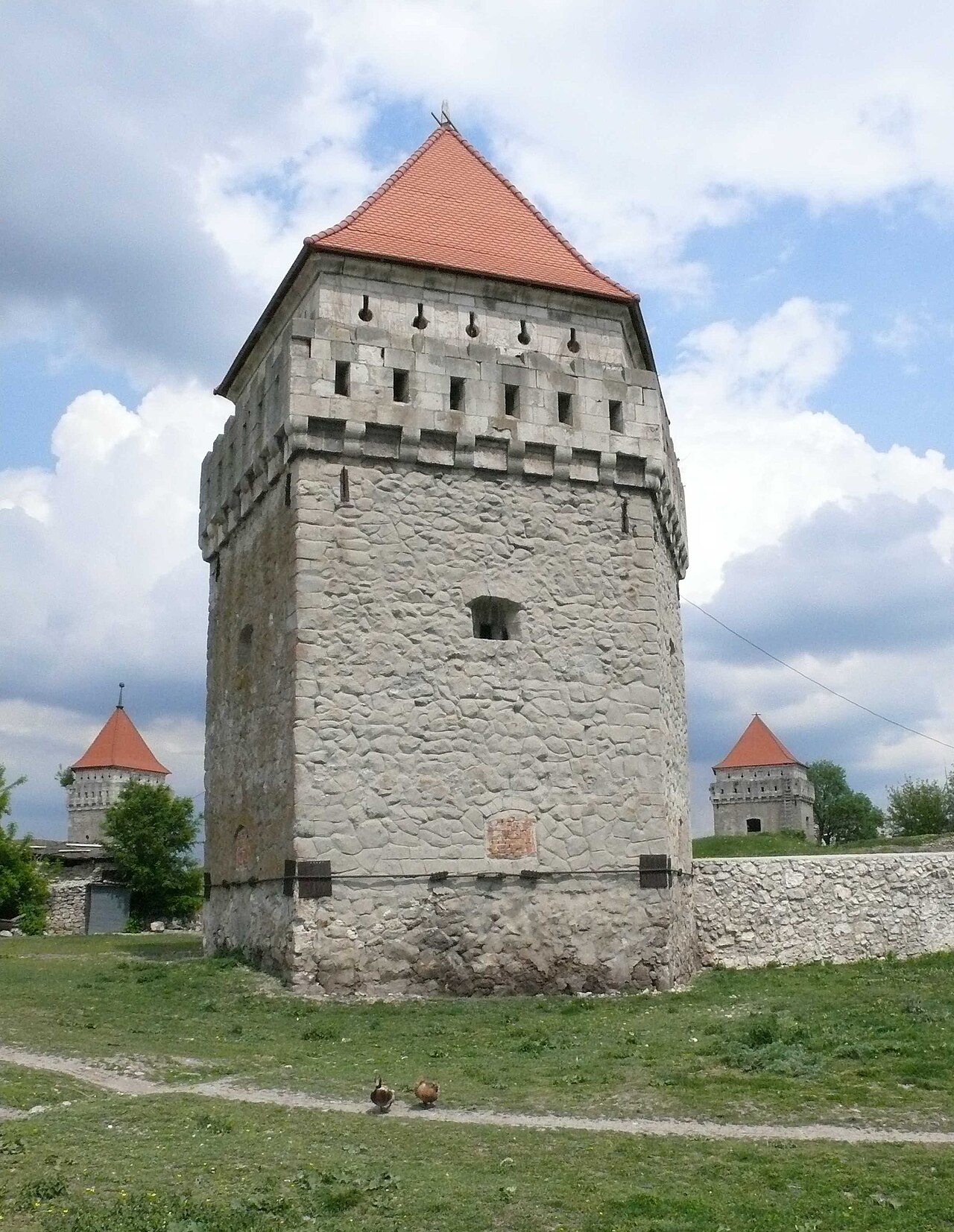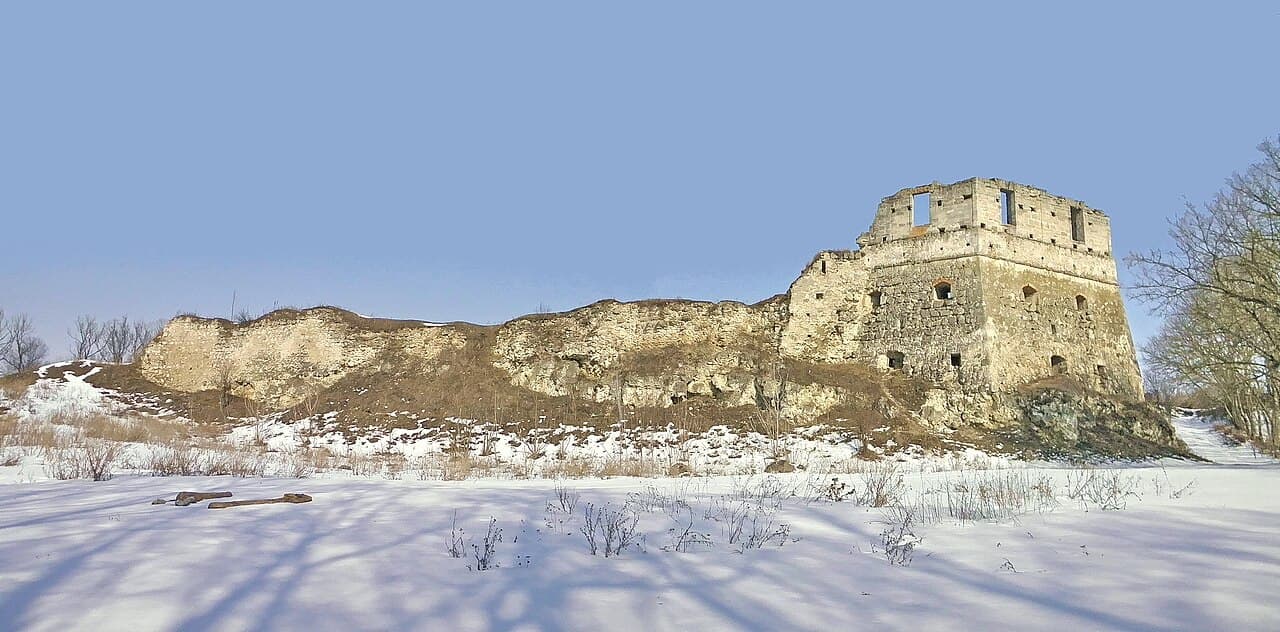
Toky Castle — Ukraine castle

Toky Castle

Toky Castle in Ternopil Oblast, Ukraine
Renaissance (15th–17th c.)

Toky Castle (Ukrainian: Токівський замок, romanized: Tokivs'jyi zamok) is a notable Renaissance hill castle situated in the village of Toky, within the Ternopil Oblast of western Ukraine. Constructed in the 16th century, this castle occupies a strategic position on a prominent stone hill that forms a peninsula, surrounded on three sides by a pond created from an old channel of the Zbruch River. This natural moat provided a significant defensive advantage during the castle's active use in the Renaissance period.

Historical context and significance

The castle was built during a time of frequent military conflicts and shifting borders in Eastern Europe, particularly in the region that was then part of the Polish–Lithuanian Commonwealth. The 16th century Renaissance was a period of architectural transition, and Toky Castle reflects the adaptation of Renaissance defensive features combined with medieval fortification principles. Its location in Ternopil Oblast placed it near important trade routes and borderlands, making it a valuable stronghold for local nobility and military forces.

Architectural features and layout

Toky Castle is classified as a hill castle due to its elevated position on a natural stone hill, which enhances its defensive capabilities. The castle's design incorporates typical Renaissance elements, including fortified walls adapted to the terrain and surrounded by water on three sides, forming a natural moat. This water barrier, derived from the old channel of the Zbruch River, was crucial for defense against invaders.

The castle complex likely included residential quarters, defensive towers, and a gatehouse controlling access to the peninsula. While the exact details of the internal layout are less documented, the castle's preservation as a local architectural monument indicates the presence of significant structural remains that showcase Renaissance military architecture adapted to local conditions.

Defensive structures

The castle's hilltop position combined with the surrounding pond created a formidable defense system. The stone hill provided natural elevation, allowing defenders to monitor and repel approaching forces effectively. The water moat impeded direct assaults on the walls, a common Renaissance defensive strategy that enhanced the castle's security.

Materials and construction techniques

Constructed primarily from local stone, Toky Castle's walls and foundations demonstrate the masonry skills of the period. The use of stone not only ensured durability but also contributed to the castle's imposing appearance. The Renaissance influence may be observed in the castle's proportions and any surviving decorative elements, although the primary focus remained on defense.

Current condition and preservation

Today, Toky Castle is recognized as an architectural monument of local importance in Ukraine. Its condition is generally described as partially preserved, with some structural elements remaining intact while others have suffered from the passage of time and historical conflicts. The castle's ruins continue to attract visitors interested in the region's history and architectural heritage.

Efforts to preserve and study Toky Castle contribute to understanding the Renaissance military architecture in Western Ukraine. The site offers valuable insights into the defensive strategies employed in the borderlands of the Polish–Lithuanian Commonwealth and the adaptation of Renaissance styles in a local context.

Visiting Toky Castle

Visitors to Toky Castle can explore the scenic surroundings of the stone hill and the pond, which highlight the castle's strategic setting. While the castle is not fully restored, the remaining structures provide a tangible connection to the region's past. The site is accessible from the village of Toky, and its status as a protected monument ensures ongoing interest in its conservation.

The castle's location in Ternopil Oblast also makes it a point of interest for travelers exploring the historical landscapes of western Ukraine, including nearby castles and cultural landmarks.

Frequently asked questions (FAQ)

How do I get to Toky Castle?
Toky Castle is located in the heart of Ukraine, easily accessible by car or public transport. The nearest major city is Lviv, from where you can take a bus or train to reach the castle. Local signage will guide you to the castle once you arrive in the vicinity.
What is the historical significance of Toky Castle?
Toky Castle dates back to the 14th century and has played a crucial role in the region's defense against invasions. It reflects the architectural styles of various periods, showcasing the rich history of the area. The castle is a symbol of Ukrainian heritage and attracts history enthusiasts from around the world.
When was Toky Castle built?
Toky Castle was constructed in the late 1300s, during a time of significant political turmoil and territorial conflicts in Ukraine. Over the years, it has undergone several renovations and restorations, preserving its historical essence while adapting to modern needs. Its longevity is a testament to the skill of its builders and the importance of its strategic location.
Can I visit Toky Castle year-round?
Yes, Toky Castle is open to visitors year-round, although hours may vary by season. It’s advisable to check the official website or contact the visitor center for the most up-to-date information on opening hours. Be sure to dress appropriately for the weather, especially during the colder months.
Why is Toky Castle a popular tourist attraction?
Toky Castle is popular for its stunning architecture, rich history, and picturesque surroundings. Visitors are drawn to its unique blend of medieval and Renaissance styles, along with the beautiful landscapes that frame the castle. Guided tours offer in-depth insights into its past, making it a must-visit destination for history lovers.
Is it possible to explore the interior of Toky Castle?
Yes, visitors can explore the interior of Toky Castle, including various rooms that showcase artifacts and exhibits related to its history. Guided tours are available, providing detailed information about the castle's significance and architecture. Be sure to take advantage of these tours for a more enriching experience.
What are the ticket prices for Toky Castle?
Ticket prices for Toky Castle are quite reasonable, with discounts available for students and seniors. Children under a certain age may enter for free, making it an affordable outing for families. Check the official website for the most current pricing and any special promotions.
What are the best times to visit Toky Castle?
The best times to visit Toky Castle are during the spring and autumn months when the weather is mild and the surrounding landscapes are particularly beautiful. Summer can be busy with tourists, while winter offers a unique charm with snow-covered scenery. Planning your visit during weekdays may also help you avoid larger crowds.
Are there any nearby attractions to visit along with Toky Castle?
Yes, there are several nearby attractions to explore, including local museums and parks that highlight the region's culture and history. The charming town surrounding the castle also offers quaint shops and cafes, perfect for a leisurely afternoon. Consider extending your visit to enjoy a full day of exploration in the area.

Photo gallery

Toky Castle
Click to view

Photo by Andrii bondarenko•CC BY-SA 3.0

1 photo • Click any image to view in full screen

Information

Hill Castle

Loading map...

Visitor reviews

No reviews yet. Been here? Write the first review and help other travelers!

Write the first review

Visited this castle? Share your experience

Your review helps other travelers and adds first-hand knowledge to our encyclopedia.
Write a review

(5/5)

0/2000 characters

Your review will be visible after admin approval

Nearby castles

31.8 km
Zbarazh Castle — Ukraine castle

Zbarazh Castle

Zbarazh, Ukraine

Zbarazh Castle stands as a remarkable example of early 17th-century military architecture in Ukraine, embodying the sophisticated European "palazzo in fortezza" concept that integrates a noble residence within a fortified stronghold. Located in the town of Zbarazh, the castle occupies a strategic defensive position on Zamkova Hill, surrounded by natural barriers including marshes, forests, ponds, and the steep banks of the Hnizna River. This site has witnessed centuries of turbulent history, evolving from a wooden fortress into a stone bastion fortress designed to withstand the era's advancing artillery warfare. Early fortifications and historical context The origins of Zbarazh Castle trace back to the late 14th century, when the Ruthenian princes established a wooden stronghold on the site known as Kniazha Hora or Prince's Hill. Founded in 1393 by Prince Dmytro Koribut, this initial fortification was constructed primarily of wood and earthworks. Its location was chosen for natural defensive advantages, yet it faced repeated destruction during raids by the Crimean Tatars in 1474 and again in 1598. These attacks underscored the region's vulnerability to incursions from the steppe and highlighted the need for a more resilient fortress. Construction of the stone fortress (1626–1631) The transformation of Zbarazh Castle into a stone fortress began in the early 17th century under the patronage of Krzysztof Zbaraski, a notable Polish nobleman. Between 1626 and 1631, the castle was rebuilt as a modern bastion fortress, reflecting the latest European military architectural principles aimed at resisting artillery sieges. The design was crafted by the renowned Italian architect Vincenzo Scamozzi, whose treatise on universal architecture influenced many fortifications of the period. Construction was overseen by Venetian military engineer Andrea del Aqua, with probable contributions from Dutch engineer Henryk van Peene. The resulting structure featured a square plan enclosing a rectangular courtyard where the noble palace was situated. The palace itself is a two-story masonry building combining simplified Renaissance style with early Baroque elements. Its plastered walls are adorned with rusticated stonework at the corners, topped by a gabled roof. The entrance is marked by a balcony supported on stone consoles, aligned axially with the gatehouse to create a formal and imposing approach. Fortifications and defensive features Zbarazh Castle's fortifications include four pentagonal bastions at each corner, partially preserved up to the height of the connecting curtain walls. These bastions were connected by tunnels allowing defenders to move safely during attacks. The castle walls are robust, approximately 175 centimeters thick on the second floor and 105 centimeters at the basement level, constructed from hewn sandstone with a sturdy stone base and brick upper sections. Casemated curtain walls with steep vertical slopes, known as escarpments, protect the walls and are characteristic of 17th-century bastion fortresses designed to withstand artillery fire. Surrounding the castle is a broad moat about 40 meters wide, filled with water supplied by an intricate hydraulic system. Beyond the moat, defensive earthworks include a large rampart approximately 23 meters wide and a tall escarped bulwark rising about 12 meters, reinforcing the castle’s defenses on its most vulnerable sides. These extensive earthworks, combined with the natural terrain, made Zbarazh Castle a formidable defensive position in its time. Historical significance and military engagements Throughout its history, Zbarazh Castle played a crucial role in the defense of the region within the Polish–Lithuanian Commonwealth. Initially held by the Zbaraski family, the castle later passed to the influential Wiśniowiecki family, notably under Jeremi Wiśniowiecki, a powerful magnate and military leader. One of the castle’s most significant military tests came during the Cossack uprising of 1649, led by Bohdan Khmelnytsky. The castle endured a prolonged siege by Cossack forces allied with Crimean Tatars, demonstrating its strategic importance and the effectiveness of its fortifications. Later, in 1675, the fortress was captured and burned by Ottoman and Tatar forces commanded by Ibrahim Shishman Pasha, leading to severe damage and marking the decline of its military function. Post-military history and restoration efforts Following the destruction in the late 17th century, Zbarazh Castle gradually transitioned from a military fortress to a noble residence and palace. It remained in aristocratic hands, eventually belonging to the Potocki family until the mid-19th century. During this period, the site saw a shift in use, including the establishment of a sugar factory managed by General Bem, reflecting changing economic and social conditions. In 1896, a fire damaged the castle palace, and during the interwar period of the 1920s and 1930s, Polish reserve officers initiated reconstruction efforts with plans to convert the castle into an educational gymnasium. However, these plans were interrupted by the outbreak of World War II. Under Soviet control, the castle’s dark cellars were repurposed by the NKVD as prison cells, where many prisoners suffered and died. Their remains were clandestinely disposed of in the castle’s well, which was later sealed with concrete. After Ukraine gained independence in the early 1990s, local communities recovered and respectfully reburied these remains. Modern preservation and museum function Since 1994, Zbarazh Castle has functioned as a local history museum and forms part of the State Historic Architectural Reserve of Zbarazh. It became central to the National Reserve of castles of Ternopil Oblast in 2005. Extensive restoration projects have been undertaken to preserve the castle’s structural integrity and historical character. A full restoration was completed in 2019, followed by repairs to the entrance bridge and inner moat walls between 2021 and 2022. Today, the castle hosts exhibitions featuring archaeological artifacts from the Paleolithic era through the Bronze and Iron Ages, including items from the Trypillian culture and the medieval Kyivan Rus’ period. The museum’s collections also include numismatic items, paper currency, ethnographic materials, sacred art, folk crafts, and works by local artists such as Volodymyr Lipyichuk and Taras Levkiv. These holdings, totaling approximately 50,000 items, offer a comprehensive view of the region’s cultural and historical heritage. Architectural highlights and interior features The castle’s interior courtyard once housed the noble palace, a two-story building blending Renaissance and early Baroque architectural styles. The palace’s plastered walls feature rusticated stonework at the corners, and the gabled roof adds a distinctive silhouette to the structure. The axial alignment of the palace entrance with the gatehouse creates a formal and imposing approach to the complex. Within the castle, arched chambers now serve as exhibition halls, displaying collections of historical arms and wooden sculptures crafted by students of the renowned sculptor Ivan Pinzel. A reconstructed torture chamber in the castle’s damp cellars includes working replicas of period instruments, such as a "witch’s chair" used approximately 300 years ago, illustrating the darker aspects of the castle’s history. Strategic location and natural defenses Strategically positioned on Zamkova Hill, the castle benefits from natural defenses including marshy terrain, forests, and water bodies that surround it on multiple sides. The steep riverbanks of the Hnizna River and a deep ravine further protect the site, complementing the man-made fortifications. This combination of natural and constructed defenses made Zbarazh Castle a formidable stronghold against invaders during its peak. Cultural significance and heritage value Zbarazh Castle stands as a testament to the military and architectural ingenuity of the early 17th century in Eastern Europe. Its preservation and transformation into a museum ensure that the castle remains a vital cultural monument, reflecting the complex history of the region. The castle’s role in significant historical events, its architectural features, and its extensive collections contribute to its status as a key heritage site in Ukraine.

Late Medieval (14th–15th c.)
Details
32 km
Skalat Castle — Ukraine castle

Skalat Castle

, Ukraine

Skalat Castle (Ukrainian: Скалатський замок, romanized: Skalats'kyi zamok) is a historic hill castle situated in the town of Skalat, within the Ternopil Raion of Ternopil Oblast, Ukraine. Constructed around 1630, this castle stands as a significant example of Renaissance military architecture in the region. It was commissioned by Krzysztof Wichrowski, the swordbearer of Halych, a notable noble and military figure of the time. Recognized as an architectural monument of national importance, Skalat Castle reflects the turbulent history and strategic significance of the area during the 17th century. Historical background and construction The castle was erected in the early 17th century amid a period marked by frequent conflicts and shifting political powers in Eastern Europe. The region was then part of the Polish-Lithuanian Commonwealth, and the castle served both as a noble residence and a defensive stronghold. Its founder, Krzysztof Wichrowski, was a prominent member of the local aristocracy, entrusted with the defense of the Halych region, which was vulnerable to incursions from neighboring powers and Cossack uprisings. Skalat Castle's construction reflects the Renaissance style adapted for military purposes, with thick walls and bastions designed to withstand artillery attacks. Its strategic location on a hill provided natural defense advantages, allowing for surveillance over the surrounding landscape and early warning of approaching enemies. Architectural features Fortifications and layout The castle is characterized by its robust fortifications typical of Renaissance military architecture. It features a compact rectangular plan surrounded by thick stone walls. The walls were reinforced with bastions at the corners, which allowed defenders to cover all approaches with crossfire. The main entrance was protected by a gatehouse and possibly a drawbridge, common defensive elements of the time. Towers and defensive structures Skalat Castle includes several towers, which served both as lookout points and defensive positions. These towers were integrated into the curtain walls and provided elevated vantage points for archers and artillery. The castle's elevated position on a hill further enhanced the effectiveness of these towers. Residential and functional spaces Inside the walls, the castle contained living quarters, storage rooms, and possibly a chapel, as was customary in noble residences of the period. The interiors, while primarily functional, would have included elements reflecting the Renaissance aesthetic, such as decorative stonework and modest ornamental details, though the emphasis remained on defense. Historical significance and later history Throughout its history, Skalat Castle witnessed numerous military engagements, especially during the Cossack uprisings and the wars involving the Polish-Lithuanian Commonwealth. Its fortifications were tested during these conflicts, and the castle changed hands multiple times. Despite damage sustained in various sieges, the castle remained a symbol of regional power and resilience. In later centuries, as military technology evolved and political borders shifted, the castle's defensive role diminished. It gradually fell into disrepair but retained its status as a cultural and historical landmark. Today, it is recognized by Ukraine as a monument of national importance, reflecting its architectural and historical value. Preservation and current condition Currently, Skalat Castle is classified as partially preserved. While some sections of the original walls and towers remain intact, other parts have suffered from centuries of neglect and damage. Efforts have been made to stabilize and preserve the remaining structures to prevent further deterioration. The castle is accessible to visitors interested in exploring its ruins and learning about its history. Its location in the picturesque landscape of Ternopil Oblast adds to its appeal as a destination for cultural tourism and historical study. Visiting Skalat Castle Visitors to Skalat Castle can explore the remnants of its fortifications and enjoy panoramic views from the hilltop. The site offers insight into 17th-century Renaissance military architecture and the complex history of the region. While facilities may be limited due to its ruinous state, the castle remains an important cultural heritage site in Ukraine.

Renaissance (15th–17th c.)
Details
34.3 km
Staryi Zbarazh Castle — Ukraine castle

Staryi Zbarazh Castle

, Ukraine

Staryi Zbarazh Castle (Ukrainian: Старозбаразька фортеця, romanized: Starozbaraz'ka fortetsia) is a historic late-medieval castle located in Ukraine, constructed in the 15th century by Kniaz Kaributas. Perched on a high rock, this fortress served as a strategic defensive structure during a turbulent period of regional conflicts and power struggles in Eastern Europe. Historical context and significance The castle was built during the late medieval period, a time marked by frequent military confrontations and shifting borders in the territories that now constitute modern Ukraine. Kniaz Kaributas, a notable nobleman of Lithuanian descent and member of the Gediminid dynasty, established the fortress as part of efforts to secure his domains against invasions and raids. Staryi Zbarazh Castle played a role in the defense of the region against various adversaries, including the Crimean Tatars and other forces. Its position on a high rock provided a natural advantage, allowing defenders to observe and repel attackers from a commanding vantage point. Architectural features and layout The castle's design reflects typical late medieval military architecture with adaptations to the local terrain. Built primarily of stone, the fortress incorporated thick defensive walls and towers that enhanced its protective capabilities. The elevated rocky site itself functioned as a natural fortification, reducing the need for extensive artificial defenses on some sides. Although now in ruins, archaeological studies have revealed the castle's original layout, including the remains of curtain walls, defensive towers, and residential quarters. The fortress likely included a courtyard and essential facilities such as storage rooms and possibly a chapel, common features in castles of this period. Decline and current condition Over subsequent centuries, Staryi Zbarazh Castle fell into disuse and decay, particularly as military technology and political circumstances evolved, rendering such fortresses less critical. The site today is classified as archaeological ruins, with preservation efforts focused on protecting what remains of the stone structures and the surrounding landscape. Despite its ruined state, the castle remains an important cultural and historical monument in Ukraine, attracting scholars and visitors interested in medieval fortifications and regional history. Visiting and cultural importance While the castle is not fully restored, it offers a valuable glimpse into the medieval defensive architecture of the region. Visitors can explore the ruins and appreciate the strategic location that once made Staryi Zbarazh a formidable stronghold. The site is recognized as a cultural heritage monument of national importance, highlighting its role in Ukraine's historical narrative. Information on visiting hours and access may be limited due to the site's condition and preservation status, so prospective visitors should seek local guidance.

Late Medieval (14th–15th c.)
Details