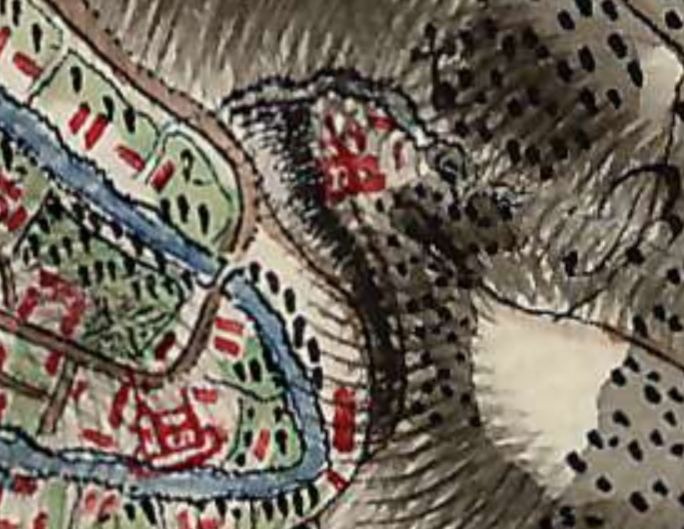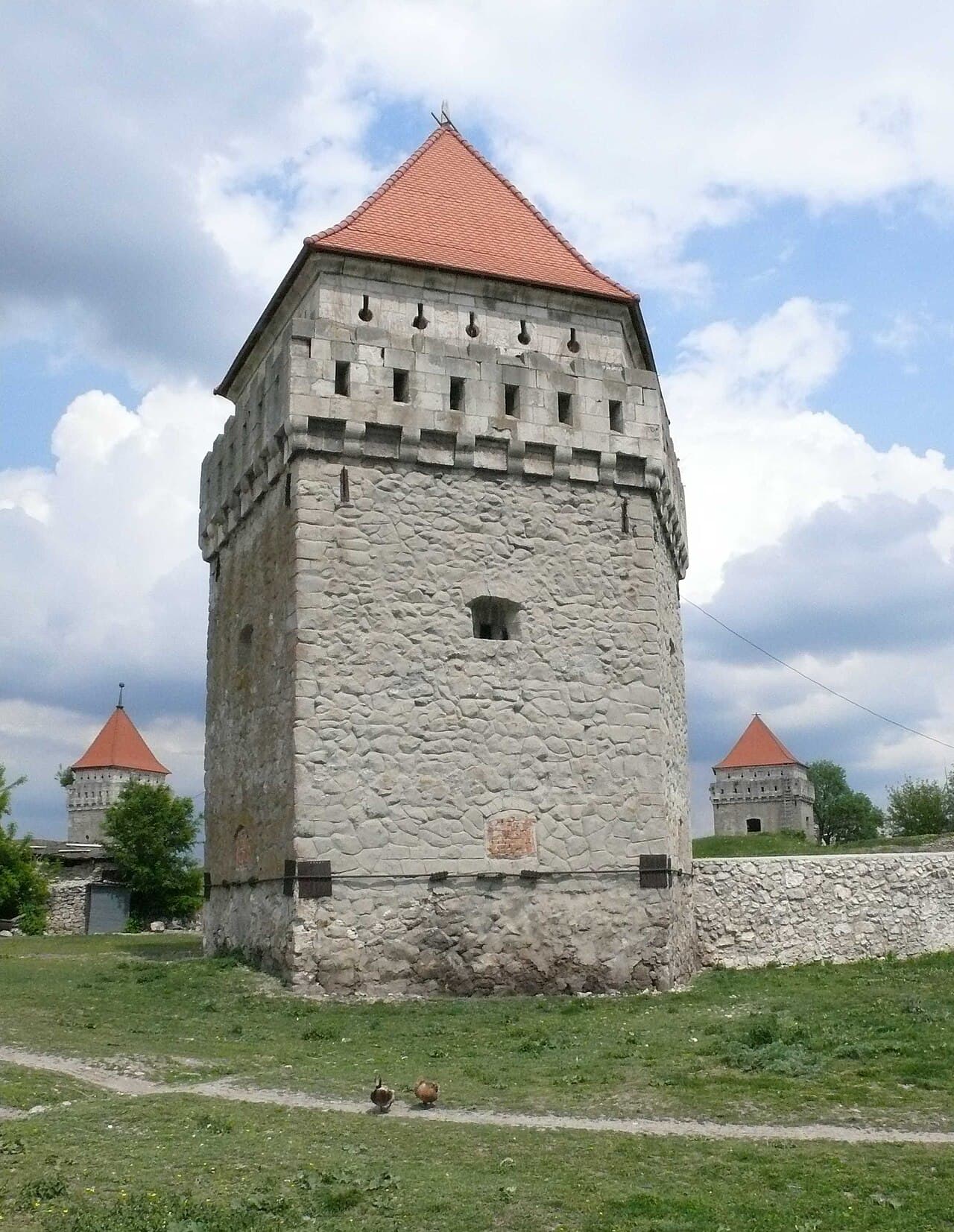
Skalat Castle — Ukraine castle

Skalat Castle

Skalat Castle in Ternopil Oblast, Ukraine
Renaissance (15th–17th c.)

Skalat Castle (Ukrainian: Скалатський замок, romanized: Skalats'kyi zamok) is a historic hill castle situated in the town of Skalat, within the Ternopil Raion of Ternopil Oblast, Ukraine. Constructed around 1630, this castle stands as a significant example of Renaissance military architecture in the region. It was commissioned by Krzysztof Wichrowski, the swordbearer of Halych, a notable noble and military figure of the time. Recognized as an architectural monument of national importance, Skalat Castle reflects the turbulent history and strategic significance of the area during the 17th century.

Historical background and construction

The castle was erected in the early 17th century amid a period marked by frequent conflicts and shifting political powers in Eastern Europe. The region was then part of the Polish-Lithuanian Commonwealth, and the castle served both as a noble residence and a defensive stronghold. Its founder, Krzysztof Wichrowski, was a prominent member of the local aristocracy, entrusted with the defense of the Halych region, which was vulnerable to incursions from neighboring powers and Cossack uprisings.

Skalat Castle's construction reflects the Renaissance style adapted for military purposes, with thick walls and bastions designed to withstand artillery attacks. Its strategic location on a hill provided natural defense advantages, allowing for surveillance over the surrounding landscape and early warning of approaching enemies.

Architectural features

Fortifications and layout

The castle is characterized by its robust fortifications typical of Renaissance military architecture. It features a compact rectangular plan surrounded by thick stone walls. The walls were reinforced with bastions at the corners, which allowed defenders to cover all approaches with crossfire. The main entrance was protected by a gatehouse and possibly a drawbridge, common defensive elements of the time.

Towers and defensive structures

Skalat Castle includes several towers, which served both as lookout points and defensive positions. These towers were integrated into the curtain walls and provided elevated vantage points for archers and artillery. The castle's elevated position on a hill further enhanced the effectiveness of these towers.

Residential and functional spaces

Inside the walls, the castle contained living quarters, storage rooms, and possibly a chapel, as was customary in noble residences of the period. The interiors, while primarily functional, would have included elements reflecting the Renaissance aesthetic, such as decorative stonework and modest ornamental details, though the emphasis remained on defense.

Historical significance and later history

Throughout its history, Skalat Castle witnessed numerous military engagements, especially during the Cossack uprisings and the wars involving the Polish-Lithuanian Commonwealth. Its fortifications were tested during these conflicts, and the castle changed hands multiple times. Despite damage sustained in various sieges, the castle remained a symbol of regional power and resilience.

In later centuries, as military technology evolved and political borders shifted, the castle's defensive role diminished. It gradually fell into disrepair but retained its status as a cultural and historical landmark. Today, it is recognized by Ukraine as a monument of national importance, reflecting its architectural and historical value.

Preservation and current condition

Currently, Skalat Castle is classified as partially preserved. While some sections of the original walls and towers remain intact, other parts have suffered from centuries of neglect and damage. Efforts have been made to stabilize and preserve the remaining structures to prevent further deterioration.

The castle is accessible to visitors interested in exploring its ruins and learning about its history. Its location in the picturesque landscape of Ternopil Oblast adds to its appeal as a destination for cultural tourism and historical study.

Visiting Skalat Castle

Visitors to Skalat Castle can explore the remnants of its fortifications and enjoy panoramic views from the hilltop. The site offers insight into 17th-century Renaissance military architecture and the complex history of the region. While facilities may be limited due to its ruinous state, the castle remains an important cultural heritage site in Ukraine.

Frequently asked questions (FAQ)

How do I get to Skalat Castle?
Skalat Castle is located in the Ternopil region of Ukraine. You can reach it by taking a bus or train to the nearest town, Skalat, and then walking a short distance to the castle grounds. Local taxis are also available for convenience.
What is the historical significance of Skalat Castle?
Skalat Castle dates back to the 15th century and served as a key defensive structure in the region. It played a crucial role in protecting the area from invasions and has witnessed various historical events over the centuries. Today, it stands as a symbol of the rich heritage of Ukraine.
When was Skalat Castle built?
Skalat Castle was constructed in the late 15th century, with significant renovations and expansions occurring in the following centuries. Its architecture reflects the medieval styles of the time, showcasing the importance of fortifications in that era. The castle continues to be a point of interest for historians and visitors alike.
Can I explore the interior of Skalat Castle?
Access to the interior of Skalat Castle may be limited, as it is primarily an open-air historical site. Visitors can wander around the grounds and explore the castle's exterior, which offers stunning views of the surrounding landscape. Guided tours may provide additional insights into its history.
Why is Skalat Castle a popular tourist destination?
Skalat Castle attracts visitors due to its impressive medieval architecture and rich historical background. The picturesque setting and the castle's dramatic ruins make it a perfect spot for photography and exploration. Additionally, its proximity to other historical sites enhances its appeal to tourists.
Is it possible to visit Skalat Castle year-round?
Yes, Skalat Castle is open to visitors year-round, but the best time to visit is during the spring and summer months when the weather is pleasant. During winter, access may be more challenging due to weather conditions, but the scenic views can be quite magical. Always check local conditions before planning your visit.
What are the opening hours and ticket prices for Skalat Castle?
Skalat Castle typically opens from 9 AM to 6 PM during the main tourist season, but hours may vary in the off-season. Admission is usually free, but donations to help with maintenance are appreciated. Always verify current information before your visit to ensure an enjoyable experience.
What nearby attractions can I visit while in Skalat?
While visiting Skalat Castle, you can also explore the charming town of Skalat, which features local shops and cafes. Nearby attractions include other historical sites, such as the nearby ruins of Zbarazh Castle and the picturesque landscapes of the Ternopil region. These sites provide a comprehensive experience of the area's history and natural beauty.

Photo gallery

Skalat Castle
Click to view

Photo by Plf16•CC BY 3.0

1 photo • Click any image to view in full screen

Information

Hill Castle

Loading map...

Visitor reviews

No reviews yet. Been here? Write the first review and help other travelers!

Write the first review

Visited this castle? Share your experience

Your review helps other travelers and adds first-hand knowledge to our encyclopedia.
Write a review

(5/5)

0/2000 characters

Your review will be visible after admin approval

Nearby castles

9.6 km
Hrymailiv Castle — Ukraine castle

Hrymailiv Castle

Hrymailiv, Ukraine

Hrymailiv Castle (Ukrainian: Гримайлівський замок, romanized: Hrymailivs'kyi zamok) is a notable Renaissance hill castle located in the village of Hrymailiv within the Ternopil Oblast of western Ukraine. Constructed in the 17th century, this castle represents an important architectural monument of local significance, reflecting the defensive and residential styles of its period. Historical background and ownership The origins of Hrymailiv Castle trace back to the late 16th century when the estate was under the possession of the Ludzicki family, bearers of the Grzymala coat of arms. This noble family commissioned the construction of the castle as a fortified residence, a common practice among the Polish-Lithuanian Commonwealth nobility to secure their holdings and assert their status. Throughout its history, the castle served both defensive and administrative functions, overseeing the surrounding lands and protecting the local population from incursions. Its strategic location on a hill provided a natural advantage for surveillance and defense. Architectural features and style Hrymailiv Castle exemplifies Renaissance architectural principles adapted to a military hill castle setting. The castle's design integrates both fortification elements and comfortable living quarters, characteristic of noble residences of the era. Key architectural features include thick defensive walls, remnants of towers or bastions that would have allowed for effective defense, and a layout that maximizes the hilltop terrain for protection. The castle likely included a courtyard, residential chambers, and service buildings arranged to support both defense and daily life. While the castle has undergone changes and deterioration over the centuries, surviving elements still reflect the Renaissance influence in masonry techniques and structural organization. Significance in regional history As a local architectural monument, Hrymailiv Castle holds cultural and historical importance for the Ternopil region. It illustrates the patterns of noble landownership and defense in western Ukraine during the early modern period. The castle's presence marks the historical influence of Polish nobility in the area, especially during the time when the region was part of the Polish-Lithuanian Commonwealth. Its endurance through various political changes highlights its role as a symbol of regional heritage. Current condition and preservation Today, Hrymailiv Castle is recognized as a monument of local importance, though it is not fully preserved. The structure exists in a partially preserved state, with some walls and architectural elements remaining visible. Restoration efforts have been limited, and the castle primarily stands as a historical ruin. Visitors to the site can observe the castle's layout and remaining defensive features, offering insight into Renaissance military architecture adapted to the Ukrainian landscape. Visiting information and cultural impact While not a major tourist destination, Hrymailiv Castle attracts visitors interested in Ukrainian history and Renaissance architecture. Its location in the rural setting of Ternopil Oblast makes it accessible for those exploring the region's cultural heritage. The castle contributes to local identity and serves as a point of interest for educational and heritage preservation activities. Efforts to promote awareness of such monuments support the broader appreciation of Ukraine's diverse historical architecture.

Renaissance (15th–17th c.)
Details
24.3 km

Terebovlia Castle

Terebovlia, Ukraine

Terebovlia Castle stands as a prominent historic fortress located in the town of Terebovlia, Ukraine. This hill castle has witnessed centuries of military, political, and cultural transformations, reflecting the turbulent history of the region. Originally established by the East Slavic peoples during the early medieval period, the castle's strategic location on the edge of the Gniezny canyon near the Seret River provided natural defenses that were enhanced by successive layers of fortifications. The earliest fortification at Terebovlia dates back to the 9th and 10th centuries. This initial stronghold was primarily constructed of wood, featuring multiple defensive layers designed to protect the emerging Principality of Terebovlia. Within the wooden fortress stood a notable stone church, a rare feature that underscored the site's religious and cultural significance during the early medieval era. The fortress was built under the rule of Prince Vasylko Rostyslavych, a descendant of the renowned ruler Yaroslav the Wise, whose lineage shaped the political landscape of the region. Following Vasylko's death in 1124, Terebovlia became part of the Principality of Halych and later the Halych-Volhynia principality. The castle briefly regained independence under Vladimir Igorevich before suffering destruction during the Mongol invasion led by Batu Khan in 1241. Medieval reconstruction and polish influence After a period of decline, the fortress underwent significant transformation in the 14th century when Polish King Casimir III the Great initiated a comprehensive rebuilding program between approximately 1340 and 1360. This reconstruction marked a pivotal shift from wooden to stone fortifications, with walls constructed of stone measuring between one and two meters thick. The new design substantially improved the castle's defensive capabilities against increasingly sophisticated siege tactics. Further expansion occurred in 1534 under the supervision of Kraków castellan Andrzej Tęczyński, reflecting ongoing efforts to bolster the fortress amid persistent threats from Tatar raiders during the 15th and 16th centuries. 17th-century rebuilding and military significance The most extensive rebuilding took place in the 1630s under the direction of starosta Aleksander Bałaban. This phase resulted in the imposing stone fortress whose ruins remain visible today. The reconstructed walls were remarkably thick, ranging from 3.5 to 5 meters, and reached heights of up to 18 meters, demonstrating the advanced military architecture of the period. The castle's entrance was strategically designed to enhance security, located approximately three meters above ground level and accessible only via a removable wooden platform, a defensive feature intended to prevent enemy access during attacks. During the mid-17th century, Terebovlia Castle played a key role in regional conflicts. It was briefly captured by Cossack forces in 1648 during the Khmelnytsky Uprising but was soon returned to Polish control following an armistice. The fortress served as a crucial defensive bastion against repeated incursions by Cossack, Turkish, and Tatar armies. Its strategic importance was further highlighted during the Polish–Ottoman War of 1672–1676, when it functioned as a vital border stronghold after the partition of Podolia by the Ottoman Empire in 1671. Notably, in 1675, the castle successfully withstood a siege by a large Ottoman-Tatar force commanded by Pasha Ibrahim Shyshman, forcing the attackers to withdraw. Architectural features and defensive design The ruins of Terebovlia Castle today offer valuable insights into its 17th-century military architecture. The fortress was constructed with massive stone walls designed to absorb and repel artillery fire, a reflection of evolving warfare technologies. The elevated entrance gate, accessible only by a removable wooden platform, exemplifies the castle's layered defense strategy. Beneath the original wooden fortress lay cellars and underground chambers, which were part of a complex system of storage and refuge. Archaeological studies have revealed that the earliest fortress incorporated multiple defensive lines, emphasizing the importance of layered protection in medieval fortifications. Although the castle did not feature a traditional well, water was supplied through an ingenious system of underground channels and reservoirs, ensuring the garrison's survival during prolonged sieges. The natural topography, including steep canyon cliffs and proximity to the Seret River, further augmented the castle's defensibility. Remnants and cultural legacy Today, only the lower sections of the strong walls remain, standing as fragmentary yet compelling evidence of the castle's historic prominence. These ruins convey the story of centuries marked by adaptation to changing military needs and persistent conflict in this borderland region. Adjacent to the castle site is a monument dedicated to Zofia Chrzanowska, commemorating her connection to the castle and its enduring cultural memory. Terebovlia Castle remains a significant heritage site in Ukraine, attracting historians, archaeologists, and tourists interested in medieval military architecture and Eastern European history. Its layered history from an early wooden stronghold to a formidable stone fortress encapsulates the dynamic political and military developments of the region over nearly a millennium.

Early Medieval (5th–10th c.)
Details
26 km
Strusiv Castle — Ukraine castle

Strusiv Castle

Strusiv, Ukraine

Strusiv Castle (Ukrainian: Струсівський замок, romanized: Strusivs'kyi zamok) is a historic hill castle located in the village of Strusiv, within the Ternopil Oblast of western Ukraine. This castle represents a significant example of medieval defensive architecture in the region, constructed primarily to protect the local population and control strategic routes during turbulent periods of the Late Medieval era. Historical background and significance The origins of Strusiv Castle date back to the 16th century, a time marked by frequent conflicts and shifting borders in Eastern Europe. The castle was established as a fortified residence and military stronghold by the noble Strus family, who were influential landowners in the region. Their name is directly associated with the castle, which served both as a symbol of their power and as a practical defense against invasions and raids. Throughout its history, the castle played a role in regional defense during the numerous wars that affected the area, including conflicts involving the Polish-Lithuanian Commonwealth and the Ottoman Empire. Its strategic location on a hill provided a vantage point to monitor approaching enemies and coordinate defense efforts. Architectural features and layout Strusiv Castle is classified as a hill castle, built atop elevated terrain to maximize natural defensive advantages. The castle's design reflects typical Late Medieval fortification principles, including thick stone walls, battlements, and defensive towers. The elevated position allowed defenders to observe the surrounding countryside and control access routes. The castle complex originally included a central keep or donjon, surrounded by curtain walls and several defensive towers. These towers were positioned to cover all approaches, enabling crossfire against attackers. The walls were constructed from locally sourced stone, providing robust protection against siege weaponry of the period. Within the walls, the castle contained residential quarters, storage facilities, and a chapel, serving both military and domestic functions. The courtyard was likely used for training soldiers and hosting gatherings. Later history and current condition Over the centuries, Strusiv Castle experienced periods of decline, especially as military technology evolved and the region's political landscape changed. By the modern era, the castle fell into disuse and suffered damage from neglect and natural decay. Today, the castle remains as partially preserved ruins. Some sections of the walls and towers are still visible, allowing visitors to appreciate the scale and defensive design of the original structure. Archaeological efforts have helped to document the site and preserve its historical significance. The castle is an important cultural heritage site for the Ternopil Oblast and attracts visitors interested in medieval history and architecture. Efforts to maintain and protect the ruins continue, emphasizing the castle's role in the region's historical narrative. Visiting Strusiv Castle Visitors to Strusiv Castle can explore the ruins and enjoy panoramic views of the surrounding landscape from the hilltop location. The site offers insight into medieval fortification techniques and the lifestyle of noble families in western Ukraine during the Late Medieval period. While facilities at the site are limited due to its ruinous state, the castle's historical ambiance and scenic setting make it a worthwhile destination for history enthusiasts and tourists exploring the Ternopil region. Nearby attractions The village of Strusiv and the wider Ternopil Oblast region feature several other historical sites, including churches, monasteries, and other castles, providing a rich cultural itinerary for visitors.

Late Medieval (14th–15th c.)
Details