
Tokushima Castle
Tokushima Castle, located in the heart of Tokushima City on Shikoku Island, Japan, is a significant example of a late-medieval hill castle with a rich historical legacy and distinctive architectural features. Originally built in 1385 by Hosokawa Yoriyuki as Inoyama Castle, it occupies a strategic position atop a 62-meter hill called Inoyama, providing commanding views of the surrounding area and serving as a military and administrative center for centuries. The castle's history is deeply intertwined with the ruling clans of the region and the political shifts during the turbulent Sengoku and Edo periods.
Early history and strategic importance
The castle's origins date back to the late 14th century, when Hosokawa Yoriyuki established the initial fortifications. This period was marked by frequent conflicts among feudal lords vying for control over provinces, making hilltop castles like Tokushima essential for defense and governance. After the Toyotomi clan consolidated power over Shikoku in the late 16th century, Hachisuka Iemasa was appointed lord of Awa Province (modern-day Tokushima Prefecture). Initially headquartered at Ichinomiya Castle, Iemasa soon found that location inconvenient for effective administration and relocated to Tokushima Castle in 1585. Under his leadership, the castle's fortifications were significantly expanded and modernized to meet the demands of the era.
Architectural layout and design
Tokushima Castle is a classic example of a renkaku-style hilltop castle, characterized by multiple baileys arranged on the hillside to optimize defense and functionality. The main sections include the Honmaru (Main Bailey), Higashi Ninomaru (Eastern Second Bailey), Nishi Ninomaru (Western Second Bailey), and Nishi Sannomaru (Western Third Bailey) at the summit. At the base of the hill lie additional baileys such as Nishinomaru Yashiki, Baba, Goten, and Miki Bailey, which supported the castle's operations and housed retainers and administrative offices.
The original castle keep (tenshu) was constructed in the Honmaru but was later dismantled. In the early Edo Period, a new three-storey keep was built in the Higashi Ninomaru, notably without the traditional stone foundation (tenshudai) common in other Japanese castles. This architectural choice distinguishes Tokushima Castle from many contemporaries and reflects evolving castle design philosophies during the Edo era.
Defensive features and fortifications
The castle's defensive system included extensive stone walls, moats, and strategically placed gates. One of the most famous gates was the Washimon (Washi Gate) located in the Miki Bailey, which survived until World War II before being destroyed in an air raid in 1945. The Washimon was faithfully reconstructed in 1989 to commemorate Tokushima City's centenary, preserving a vital link to the castle's historical fabric.
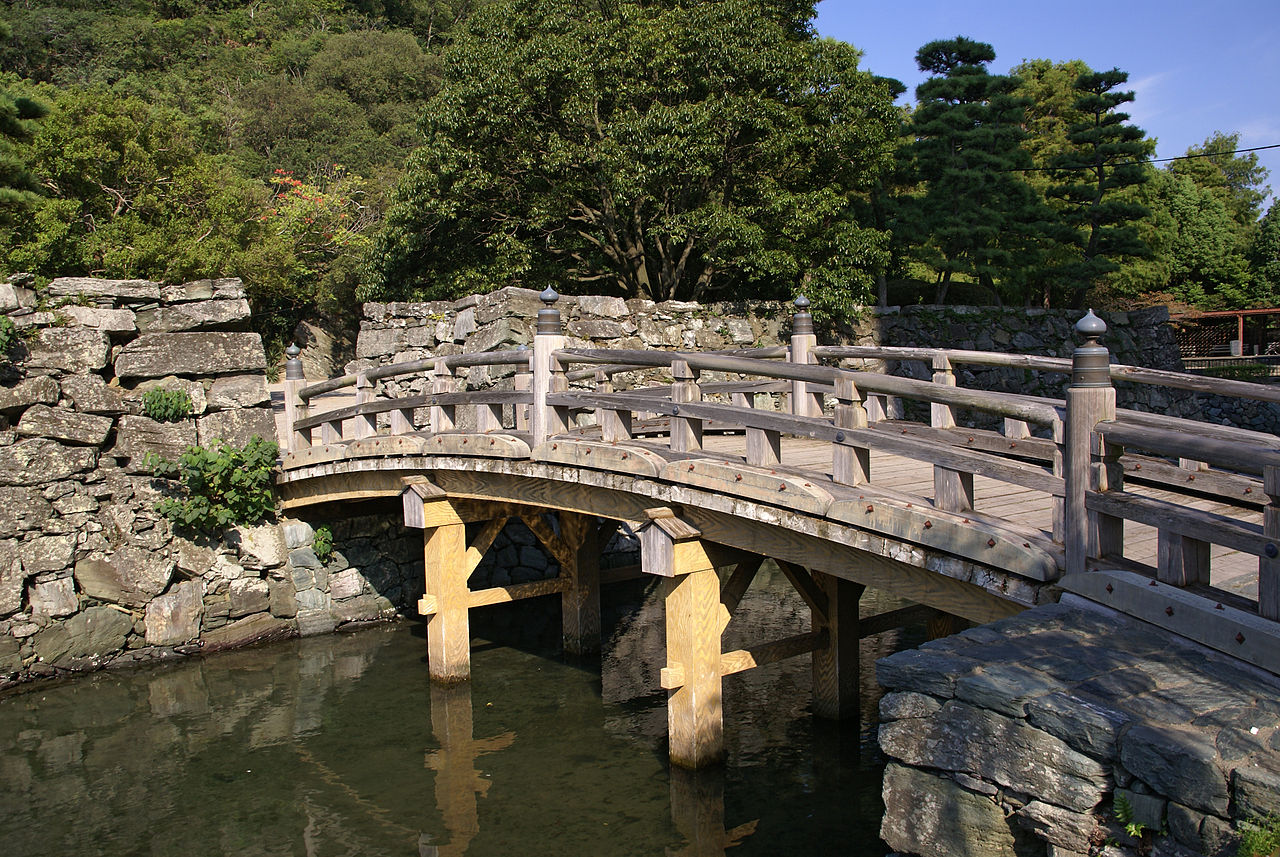
Photo by 663highland • CC BY 2.5
Tokushima castle in the edo and meiji periods
During the Edo Period, Tokushima Castle served as the seat of the Hachisuka clan, who ruled the Awa Province under the Tokugawa shogunate. The castle was not only a military stronghold but also a symbol of the clan's authority and governance. Its location within Tokushima City made it a central hub for political and cultural activities.
With the advent of the Meiji Restoration and the subsequent abolition of the feudal system, many castles across Japan were dismantled or repurposed. Tokushima Castle was demolished in 1875, marking the end of its military function. Despite this, some structures and the castle grounds remained, allowing for partial preservation and later restoration efforts.
Modern preservation and cultural significance
Today, Tokushima Castle is classified as partially preserved, with several remnants of its original fortifications and baileys still visible. The castle grounds have been transformed into a public park, renowned for its spectacular cherry blossom displays in spring, attracting visitors from across Japan and beyond. Its proximity to major transport hubs, such as the JR Tokushima Station and the Highway Bus Terminal, makes it easily accessible for tourists.
The castle's historical and architectural importance is recognized as a cultural asset, reflecting the feudal heritage of Tokushima and the broader Shikoku region. The reconstructed Washimon gate serves as a poignant reminder of the castle's past and the resilience of local heritage through periods of conflict and modernization.
Visitor experience and attractions
Visitors to Tokushima Castle can explore the extensive castle grounds, which include walking paths through the various baileys and gardens. Informational signage and guided tours provide insight into the castle's history, architectural features, and the lives of the samurai who once inhabited it. The site is especially popular during the cherry blossom season, when the grounds are adorned with vibrant pink blooms, creating a picturesque setting that combines natural beauty with historical ambiance.
Nearby attractions include the Tokushima City Museum and the Awa Odori Kaikan, which celebrate the region's cultural heritage. The castle park often hosts seasonal festivals and events, further enriching the visitor experience and connecting the community with its historical roots.
Frequently asked questions (FAQ)
- How do I get to Tokushima Castle from JR Tokushima Station?
- Tokushima Castle is about a 10-minute walk from JR Tokushima Station, making it easily accessible on foot for visitors arriving by train.
- What is the best time to visit Tokushima Castle?
- The best time to visit Tokushima Castle is during the spring cherry blossom season, when the castle grounds are covered with vibrant pink blooms, offering a spectacular and picturesque experience.
- Is Tokushima Castle open to the public?
- Yes, the castle grounds are open to the public as a park. Visitors can explore the baileys, gardens, and reconstructed Washimon gate, enjoying the historical ambiance and natural beauty.
- Can I see any original structures of Tokushima Castle?
- Most original structures were lost, but the castle grounds retain some fortification remnants. The Washimon gate was destroyed in WWII but rebuilt in 1989 as a faithful reconstruction.
- Are there guided tours available at Tokushima Castle?
- Guided tours and informational signage are available to help visitors understand the castle's history, architecture, and significance, enhancing the educational experience.
Photo gallery

Information
Opening hours
Tokushima Castle Museum 9:30 to 5:00. Closed on Mondays and days following public holidays. The castle ruins / castle park is open 24/7.
Website
Visit websiteSources & official resources
Verify the information above using these authoritative references.
Loading map...
Visitor reviews
No reviews yet. Been here? Write the first review and help other travelers!
Write the first reviewVisited this castle? Share your experience
Your review helps other travelers and adds first-hand knowledge to our encyclopedia.