Tiversk Fort
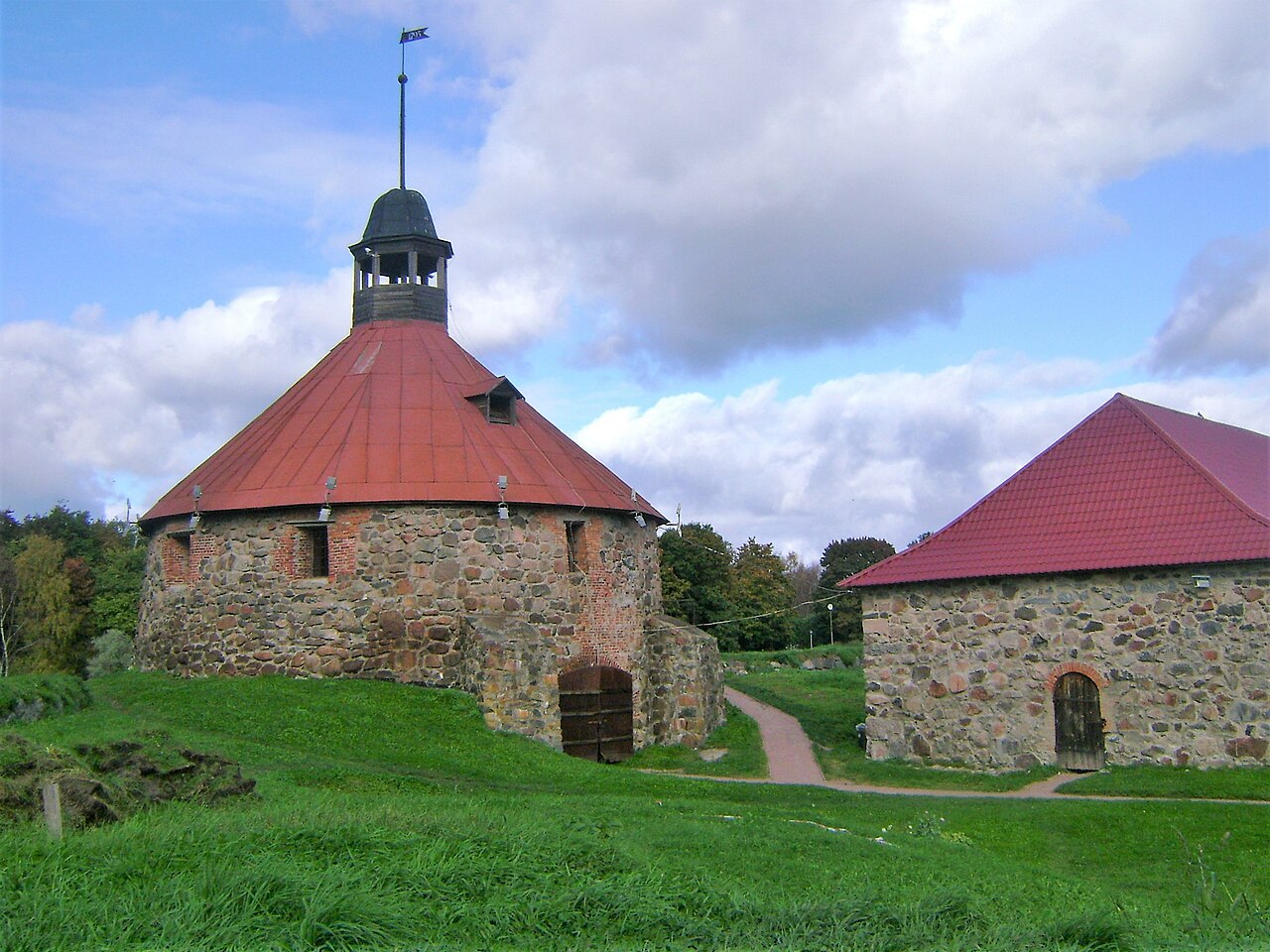
Tiversk Fort, also known as Tiversky gorodok and in Finnish as Tiurinlinna, is a significant medieval Russian fortified settlement located on an island in the River Vuoksi within the Leningrad Oblast of the Russian Federation. The fortification is notable for its strategic position and robust defensive structures, which played a crucial role in the border conflicts between the Novgorod Republic and Sweden during the late medieval period.
Historical significance and geopolitical context
The fort rose to prominence around 1323, coinciding with the signing of the Treaty of Nöteborg, which established the border between the Novgorod Republic and the Kingdom of Sweden in the immediate vicinity of the fort. This treaty marked a pivotal moment in the region's history, as Tiversk became a frontier fortress guarding Novgorod's western borders. The settlement is first mentioned in the Nikon Chronicle in 1404, when it was granted as an appanage to Prince Yury of Smolensk, reflecting its continued strategic and political importance.
However, the fort's prominence was challenged during the ongoing Swedish-Novgorodian Wars. In 1411, just seven years after its mention in the chronicles, Tiversk was sacked and destroyed by Swedish forces. This event underscores the turbulent nature of the borderlands during the late medieval period and the fort's role as a contested military site.
Architectural features and archaeological findings
The fort's layout stretched approximately 215 to 300 meters in length and 40 to 56 meters in width, encompassing a compact fortified area on the island. The defensive ramparts and stone walls were remarkably thick, ranging from 4.5 to 7 meters, indicating the fort's robust construction designed to withstand sieges and attacks.
Archaeological excavations have revealed that the majority of the fort's remains date from the end of the 13th century to the beginning of the 15th century. These findings align with the fort's documented period of activity and destruction. Notably, some remnants date back even earlier, to the 10th to early 12th centuries, suggesting that the site had been occupied or fortified in earlier periods, possibly serving as a precursor settlement or defensive position.
The archaeological work at Tiversk began in the mid-19th century, with the site first identified and described by Jacob Groot in 1847. Subsequent excavations were conducted between 1888 and 1891 by a team including Hjalmar Appelgren, Theodor Schwindt, and Alfred Hackman. Further investigations took place in 1971 under Anatoly Kirpichnikov and from 1971 to 1974 by Svetlana Kochkurkina. These extensive archaeological efforts have provided valuable insights into the fort's construction, occupation, and eventual destruction.
Among the most remarkable discoveries was a treasure trove uncovered in 1890 containing Arabic silver coins dating from the 13th to 15th centuries. This find highlights the fort's involvement in long-distance trade networks and the cultural exchanges occurring in the medieval period.
Defensive design and strategic location
Tiversk's location on an island in the River Vuoksi provided a natural defensive advantage, with water barriers protecting it on multiple sides. The thick stone walls and ramparts further enhanced its defensibility. The fort likely featured typical medieval defensive elements such as towers, gates, and battlements, though specific architectural details are limited due to the ruinous state of the site.
The settlement served as a military stronghold and administrative center, controlling river traffic and monitoring movements along the border. Its size and fortifications suggest it was a significant regional power base during its peak.
Legacy and preservation
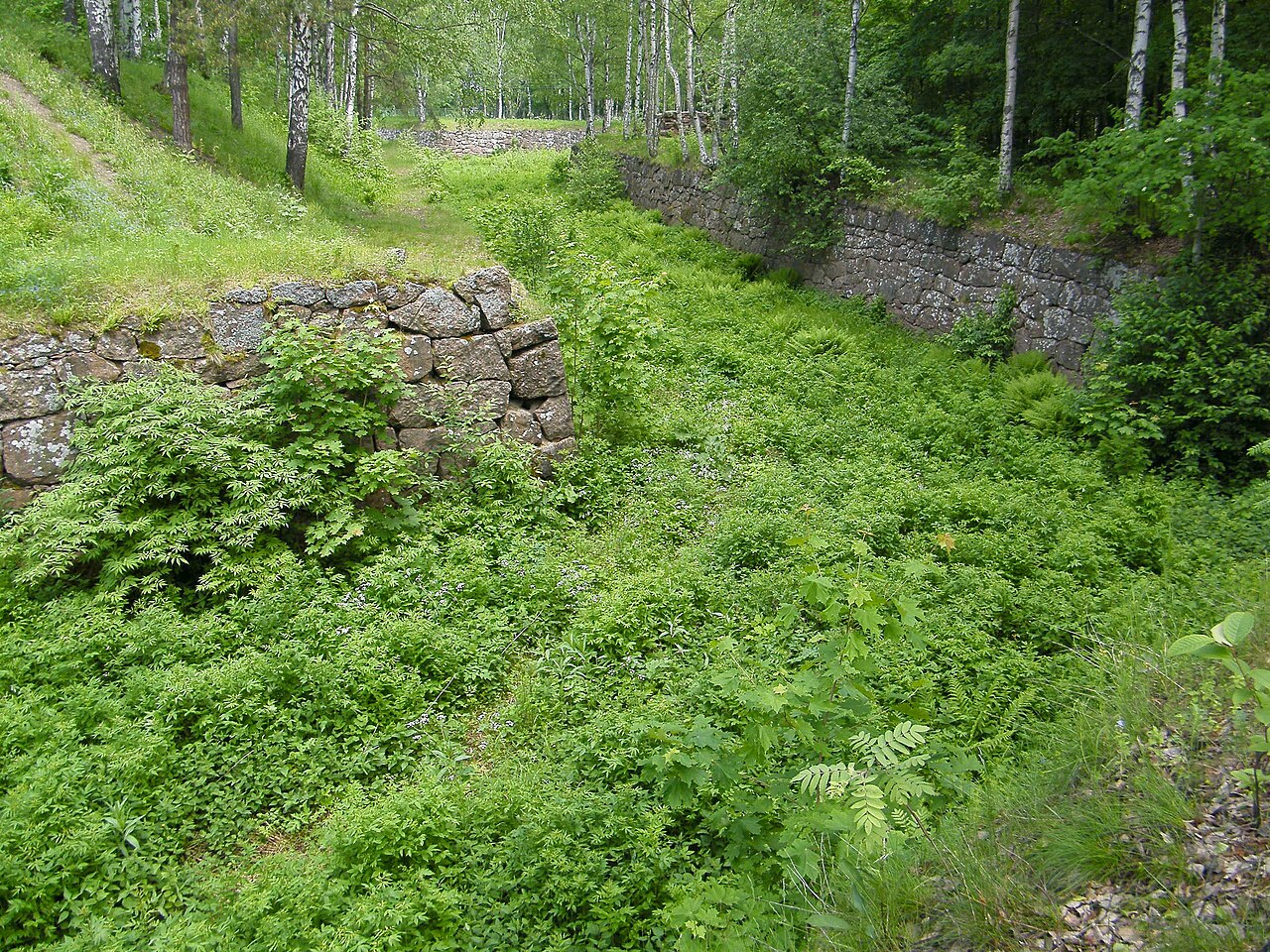
Today, Tiversk exists primarily as an archaeological site, with remnants of its stone walls and ramparts still visible. The site offers valuable insights into the military architecture and geopolitical dynamics of the late medieval period in northwestern Russia. Preservation efforts and archaeological research continue to shed light on its historical role and construction techniques.
Tiversk's history reflects the complex interactions between the Novgorod Republic and Sweden, and its ruins stand as a testament to the turbulent border conflicts of the era. The site remains an important cultural heritage location within the Leningrad Oblast, attracting scholars and visitors interested in medieval Russian history and fortifications.
Frequently asked questions (FAQ)
- What is the historical significance of Tiversk fort?
- Tiversk fort was a key medieval fortified settlement on the Novgorod-Swedish border established by the Treaty of Nöteborg in 1323, playing a strategic role in regional conflicts.
- When was Tiversk fort built and destroyed?
- The fort was built around 1323 and was destroyed in 1411 during the Swedish-Novgorodian Wars, after being granted to Prince Yury of Smolensk in 1404.
- What architectural features characterize Tiversk fort?
- Tiversk featured thick stone walls and ramparts ranging from 4.5 to 7 meters in thickness, situated on an island in the River Vuoksi, utilizing natural water defenses.
- Can visitors see the remains of Tiversk fort today?
- Yes, Tiversk is preserved as an archaeological site with visible remnants of its stone walls and ramparts, although it exists mainly in ruins.
- What notable archaeological finds have been discovered at Tiversk?
- Excavations uncovered a treasure trove of 13th-15th century Arabic silver coins, indicating the fort's involvement in medieval trade networks.
Information
Loading map...
Visitor reviews
No reviews yet. Been here? Write the first review and help other travelers!
Write the first reviewVisited this castle? Share your experience
Your review helps other travelers and adds first-hand knowledge to our encyclopedia.