Korela Fortress
Korela Fortress, located in the town of Priozersk in Leningrad Oblast, Russia, is a significant medieval stronghold with a rich history spanning several centuries. Originally founded by the Karelians, who named the site Käkisalmi, the fortress was first mentioned in a Novgorodian chronicle of 1143 as Korela. Archaeological excavations have uncovered layers dating back to the 12th century, confirming its early medieval origins.
The fortress occupies a strategic position on the Karelian Isthmus, controlling key routes between the Baltic Sea and inland Russia. Its location made it a contested site among regional powers, including the Novgorod Republic, Sweden, Lithuania, and Muscovy. Over the centuries, Korela Fortress witnessed numerous sieges, reconstructions, and changes in sovereignty, reflecting the turbulent history of the region.
Early history and karelian origins
The earliest known inhabitants of the Korela site were the Karelians, a Finno-Ugric people who established a settlement called Käkisalmi. The fortress was first documented in 1143, marking it as an important defensive and administrative center in the high medieval period. Initially, the fortress was constructed primarily from wood, typical of early medieval fortifications in the region.
Novgorod republic and early stone fortifications
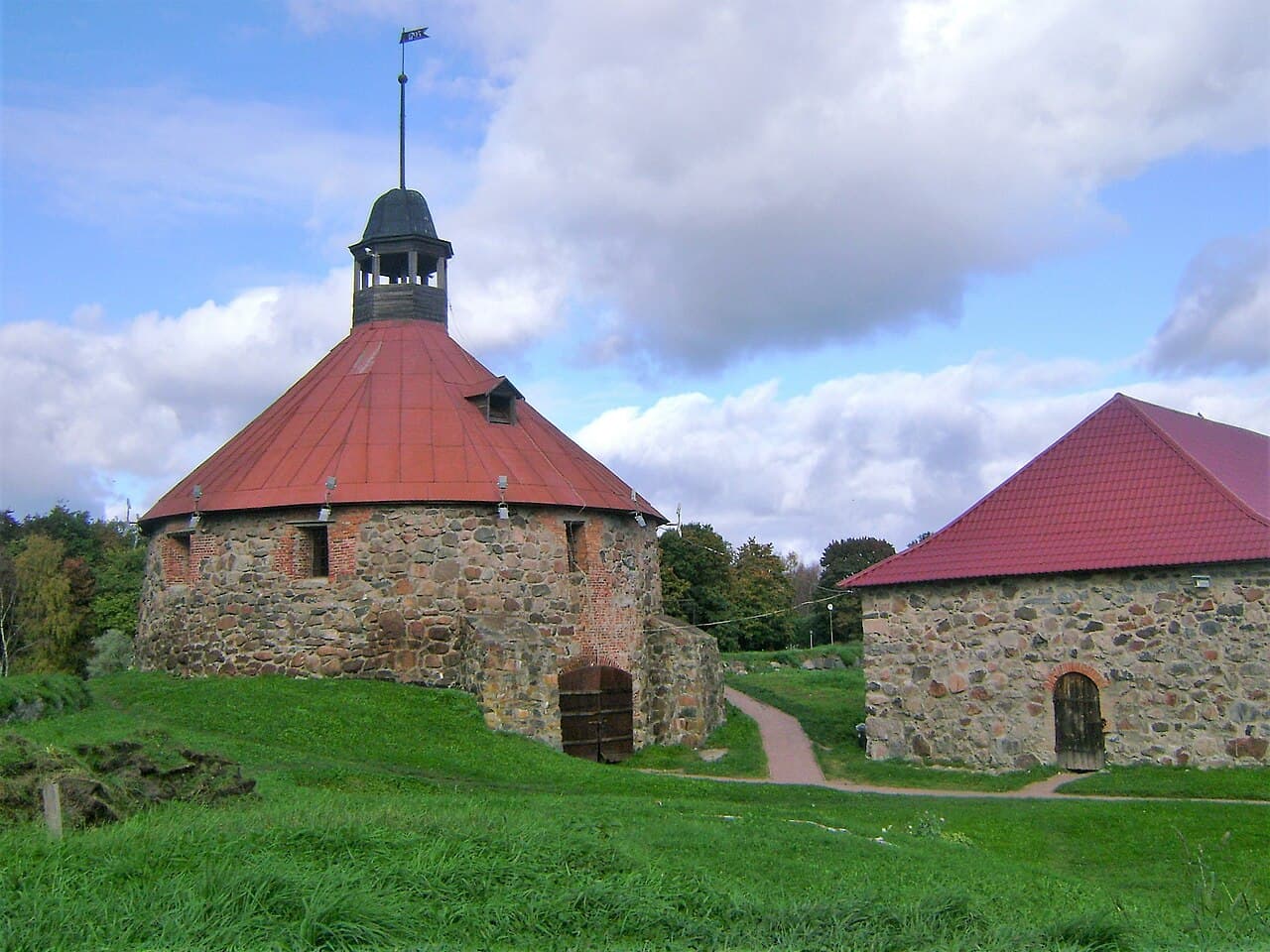
By the 14th century, Korela had come under the control of the Novgorod Republic. Following a destructive fire in 1360 that razed the original wooden fortress, the Novgorodians rebuilt Korela using stone, a significant upgrade that enhanced its defensive capabilities. The new stone bastions and towers, constructed in 1364, reflected the evolving military architecture of the time and represented a transition from wooden fortifications to more durable stone structures.
Conflicts and shifting allegiances
The fortress was a focal point during the Swedish-Novgorodian wars. In 1314, a small Karelian force briefly captured Korela from Novgorod representatives, inviting Swedish forces to hold the fortress as a defense against Novgorod. However, Novgorod swiftly reconquered Korela, reaffirming its control. The Treaty of Nöteborg in 1323 officially confirmed Korela as part of Novgorod's territory, stabilizing the border between Novgorod and Sweden for a time.
Lithuanian and galitzine influence
In the 1330s, the Novgorod Republic granted Korela and the surrounding Votian fifth, including other fortresses like Oreshek and Ladoga, to Duke Narimantas of Lithuania. This transfer marked a period of Lithuanian influence in the region. Korela was inherited by Narimantas' son, Patrikas, who became the progenitor of the Galitzine princely clan, a notable noble family in Russian history.
Patrikas' administration faced local opposition, leading to complaints from the burghers in 1384. Consequently, Patrikas exchanged Korela for other territories, such as Ladoga and Russa. Despite this, he maintained control over lands in Ingria and Karelia until at least 1397. By 1408, Patrikas and his sons had relocated to Moscow under the protection of Grand Prince Vasili I, indicating the shifting political landscape of the time.
Swedish control and bastion fortifications
Sweden seized Korela in 1580 during its expansionist campaigns. The Swedes undertook significant reconstruction of the fortress, adapting it to the Western European bastion fortification style. This style was characterized by angled bastions designed to better withstand artillery attacks, marking a major transformation from its medieval origins.
The Treaty of Teusina in 1595 required Sweden to return Korela to Russia, which was carried out in 1597. However, during the Ingrian War beginning in 1610, Swedish forces under King Gustavus Adolphus reinforced their control over Korela and the surrounding region. The fortress became a key military asset during this period of conflict between Sweden and Russia.
The de la gardie campaign and peace of stolbova
During Russia's Time of Troubles, Korela was promised by Tsar Vasily IV to the Swedish commander Jacob De la Gardie as part of the Swedish De la Gardie Campaign, which aimed to aid Russia against the Polish-Lithuanian Commonwealth. Following the campaign, Korela was incorporated into Sweden as Kexholms län under the Peace of Stolbova in 1617, solidifying Swedish sovereignty over the fortress for the next century.
Russian recapture and later uses
Peter the Great captured Korela during the Great Northern War, ending Swedish control. Under Russian rule, the fortress's military importance declined, and by the mid-18th century, Korela was repurposed as a political prison within the Russian Empire. Notably, some participants of the Decembrist Revolt of 1825 were imprisoned here, linking the fortress to significant moments in Russian political history.
Architectural features and fortifications
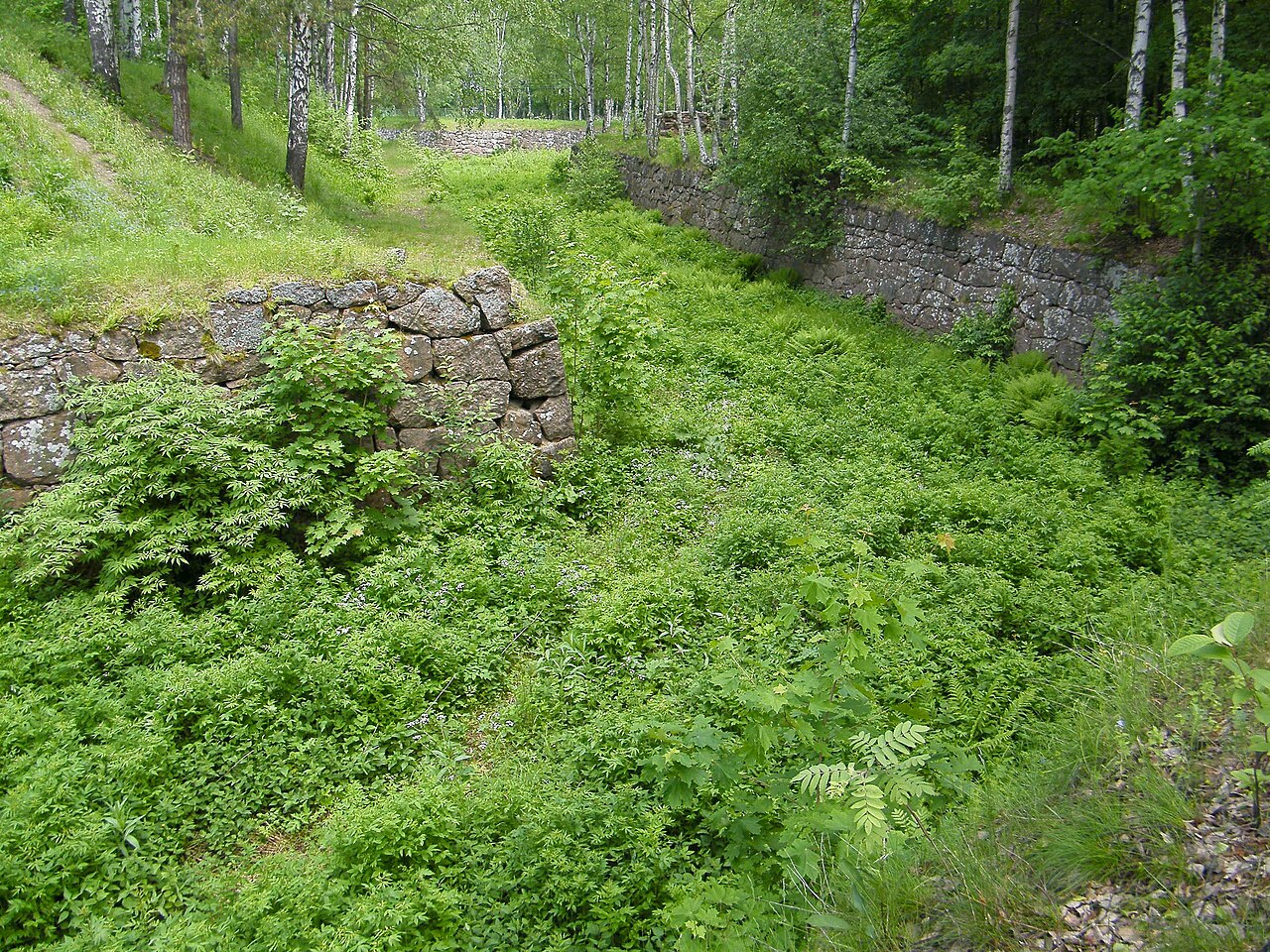
Korela Fortress exemplifies the evolution of medieval military architecture in Northern Europe. Its original wooden structures gave way to stone bastions and towers in the 14th century, reflecting the defensive needs of the Novgorod Republic. The later Swedish modifications introduced bastioned fortifications, with angled walls and bastions designed to deflect cannon fire and improve fields of fire for defenders.
The fortress complex includes multiple defensive layers, such as thick stone curtain walls, bastions at key angles, gatehouses, and towers. These features illustrate the adaptation of medieval fortresses to the advent of gunpowder weaponry. The surviving structures provide valuable insights into the military engineering techniques of the late medieval and early modern periods.
Cultural and historical significance
Korela Fortress holds a prominent place in the history of the Karelian Isthmus and the broader Baltic region. It witnessed the shifting tides of power among Novgorod, Sweden, Lithuania, and Russia, serving as a military, administrative, and political center. The fortress's role in various treaties and wars highlights its strategic importance.
Today, Korela Fortress is recognized as a cultural heritage monument in Russia. Its ruins and preserved sections attract historians, architects, and tourists interested in medieval fortifications and the complex history of Northern Europe. The site offers a tangible connection to the region's past conflicts, alliances, and architectural developments.
Visiting korela fortress
Visitors to Korela Fortress can explore the remains of its stone walls, bastions, and towers. The fortress's location in Priozersk makes it accessible for those interested in history and architecture. Guided tours often provide detailed accounts of the fortress's construction phases, historical events, and architectural features.
The site also hosts cultural events and exhibitions that celebrate the heritage of the Karelian Isthmus. Efforts to preserve and restore parts of the fortress continue, ensuring that Korela remains an important landmark for future generations.
Frequently asked questions (FAQ)
- When was Korela Fortress originally built?
- Korela Fortress was first mentioned in historical records in 1143, with archaeological evidence confirming its 12th-century origins.
- What architectural styles are visible at Korela Fortress?
- The fortress features medieval stone bastions and towers from the 14th century and later Swedish bastioned fortifications from the late 16th century.
- How did the fortress change under Swedish control?
- After Sweden seized Korela in 1580, they rebuilt the fortress following Western European bastion fortification principles to improve its defense against artillery.
- Is Korela Fortress open to visitors?
- Yes, Korela Fortress is open to visitors and includes guided tours that explain its history and architectural features.
- What role did Korela Fortress play in regional conflicts?
- Korela was a strategic military site contested by Novgorod, Sweden, Lithuania, and Russia, playing key roles in wars such as the Swedish-Novgorodian wars and the Great Northern War.
Photo gallery

Information
Current owner
State museum
Loading map...
Visitor reviews
No reviews yet. Been here? Write the first review and help other travelers!
Write the first reviewVisited this castle? Share your experience
Your review helps other travelers and adds first-hand knowledge to our encyclopedia.