Tilos Castle
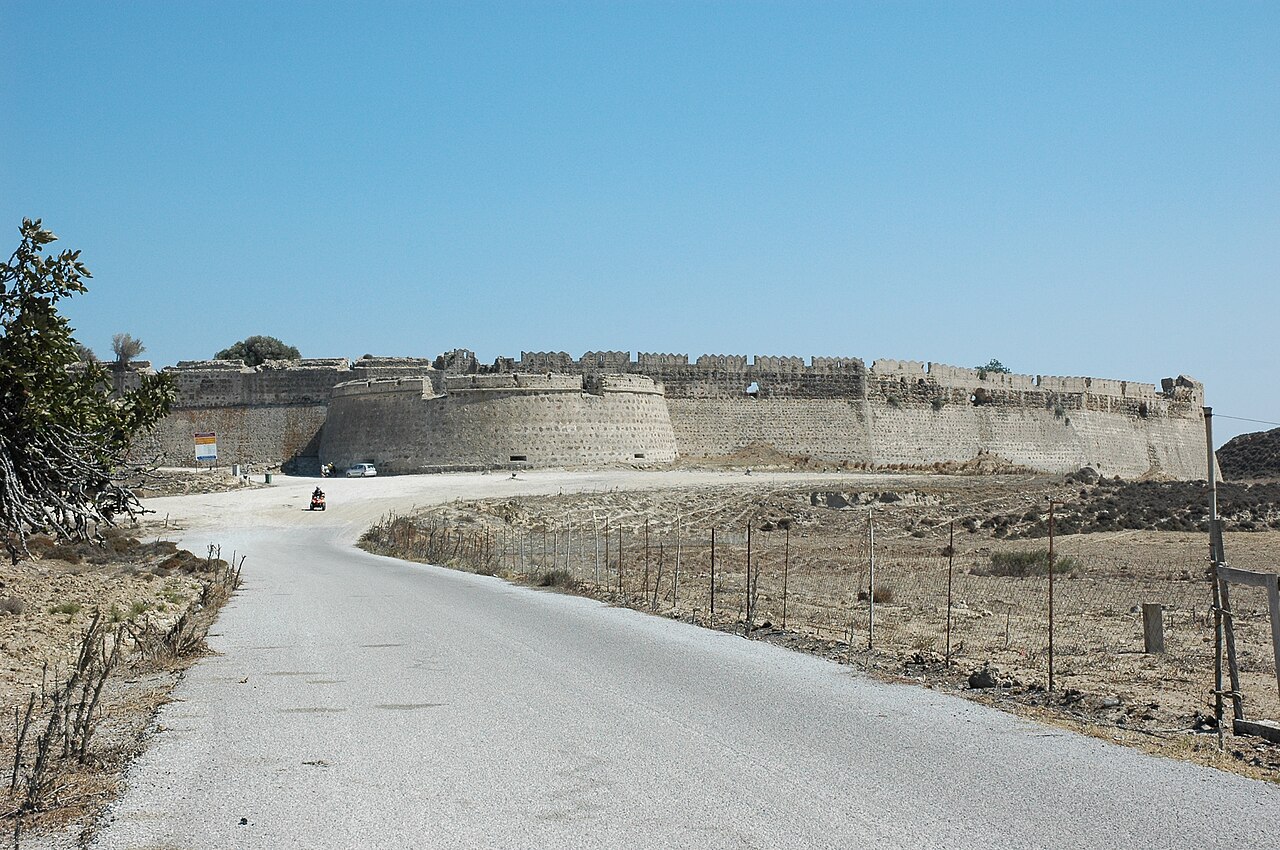
Tilos Castle is a significant medieval fortress located on the Greek island of Tilos, positioned strategically north of Megalo Chorio, the island's capital village. Constructed in the 14th century by the Knights of Saint John during the late Byzantine period, the castle was designed to serve both defensive and residential purposes. Its elevated position atop a hill provides commanding views over the bay of Agios Antonios, making it not only a stronghold but also a scenic vantage point. Visitors to the castle in the late afternoon are often rewarded with some of the island's most stunning sunsets, highlighting the site's natural beauty alongside its historical significance.
Historical context and strategic importance
The castle was built during a period when piracy was rampant across the Aegean Sea, posing a constant threat to island communities. To protect inhabitants from these dangers, the castle's walls enclosed an entire village, offering refuge and security. This fortified settlement was essential for the island's survival and stability during the Middle Ages. It was not until the suppression of piracy in the 18th century that many residents began moving down from the hilltop fortress to establish homes closer to the foothills, signaling a shift in the island's settlement patterns.
Architectural features and layout
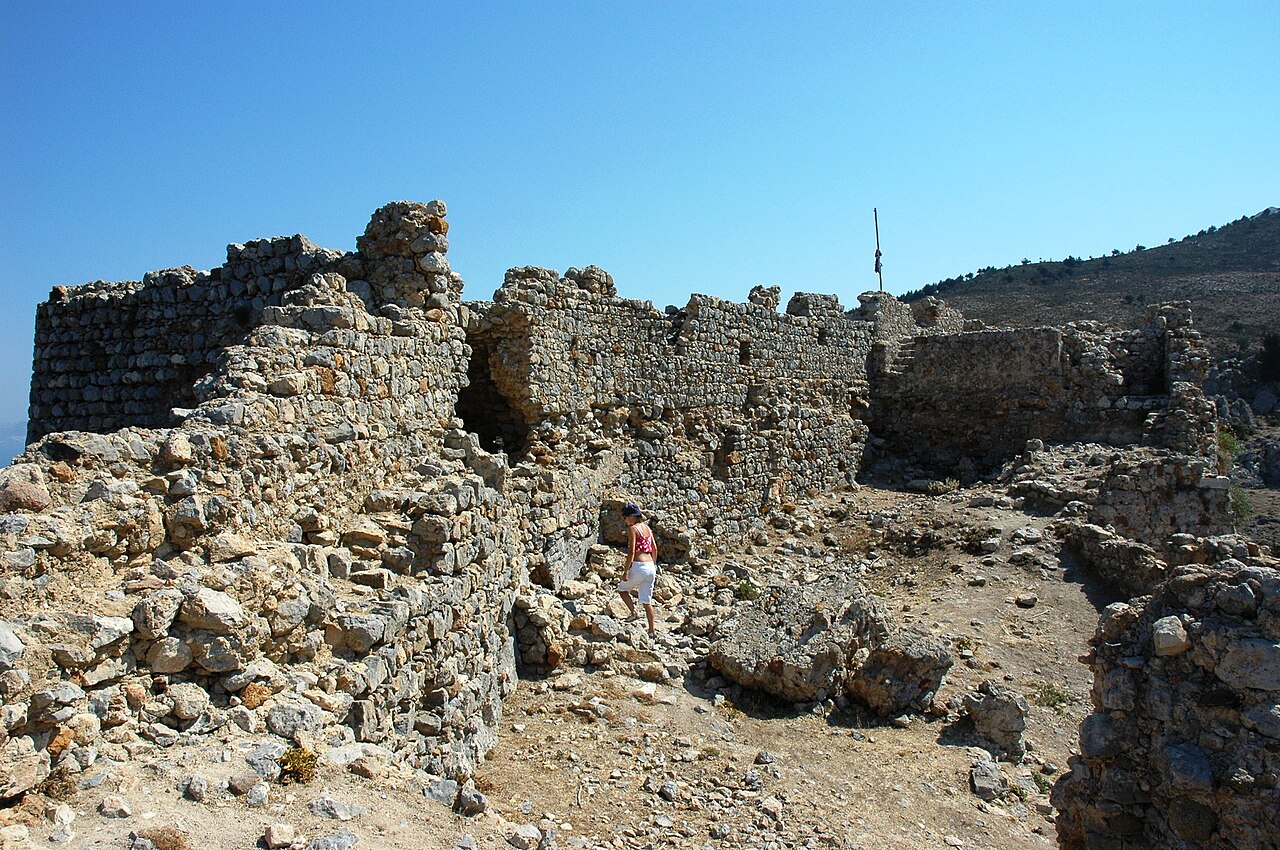
Tilos Castle originally had a triangular ground plan, a design that maximized defensive capabilities by minimizing blind spots and allowing for efficient surveillance of the surrounding landscape. While much of the original structure has been lost to time, key remnants remain, including substantial external walls that outline the fortress's former extent. Within these walls, visitors can find ruins from both ancient and medieval periods, including cisterns used to collect and store rainwater, which was vital for sustaining the castle's inhabitants during sieges or dry seasons.
Religious structures within the castle
One notable feature within the castle complex is the church of Archangel Michael, constructed during the post-Byzantine period. Although now in ruins, the church once served as a spiritual center for the castle's residents. Some of its 14th-15th century frescoes remain visible, offering valuable insights into the religious art and iconography of the time. The presence of this church highlights the integration of religious life within the fortified settlement.
Earlier historical layers: Hellenistic foundations
The castle and its church were built atop the remains of a Hellenistic acropolis, evidencing the site's long-standing strategic and cultural importance. Archaeological findings indicate that this acropolis included a temple dedicated to the gods Apollo and Athena. This layering of historical periods illustrates the continuity of human occupation and the evolving use of the site from ancient religious purposes to medieval military defense.
Nearby fortifications and archaeological sites
To the east of Tilos Castle lie the ruins of the Messaria fortress, constructed around 1366 by the same Knights of Saint John. This fortress was strategically built to guard the road leading to the island's fertile plains, underscoring the importance of controlling agricultural resources and internal communication routes. The Messaria fortress features massive walls enclosing the remains of several buildings and a small church, whose walls are adorned with frescoes that reflect the artistic styles of the period.
Close to the Messaria fortress are remains of a Byzantine settlement and several small chapels dating back to the 13th century. These chapels also contain frescoes, providing a rich tapestry of religious and cultural life on Tilos during the Byzantine era.
Charkadio Cave and paleontological significance
Above the Messaria fortress lies the Charkadio Cave, a site of remarkable paleontological importance. In 1971, fossils of a pygmy elephant were discovered here, linking the area not only to human history but also to prehistoric fauna. This adds an additional layer of scientific interest to the region surrounding Tilos Castle.
Preservation and current condition
Today, Tilos Castle is classified as partially preserved. While only fragments of the original structures survive, including the external walls, cisterns, and church ruins, these remains provide valuable insights into the castle's original form and function. The site is accessible to visitors who can explore the ruins and enjoy panoramic views of the island and sea.
Efforts to maintain and protect the castle and its associated archaeological sites continue, recognizing their importance to Greece's cultural heritage and the history of the Aegean islands. The combination of medieval military architecture, religious art, and ancient foundations makes Tilos Castle a noteworthy destination for those interested in the layered history of this region.
Frequently asked questions (FAQ)
- What is the historical significance of Tilos Castle?
- Tilos Castle, built in the 15th century by the Knights of St. John, played a crucial role in the defense of the island against pirates and invaders. Its strategic location offered a commanding view of the surrounding sea, making it an essential stronghold during medieval times. Today, it stands as a testament to the island's rich history and architectural heritage.
- When was Tilos Castle constructed?
- Tilos Castle was constructed in the 15th century, specifically around 1470. The castle was part of a series of fortifications built by the Knights of St. John as they sought to protect their territories in the Dodecanese Islands. Its construction reflects the military architectural styles of the period.
- Can I visit Tilos Castle?
- Yes, Tilos Castle is open to visitors, allowing you to explore its impressive ruins and enjoy stunning views of the surrounding landscape. The castle is accessible via a short hike from the main town of Tilos, making it a popular stop for tourists interested in history and scenic views.
- What are the opening hours for Tilos Castle?
- Tilos Castle is generally open to visitors year-round, but it is advisable to check for any seasonal changes in opening hours. Typically, the castle can be visited during daylight hours, and early mornings or late afternoons are ideal for avoiding crowds and enjoying the best lighting for photographs.
- Is it possible to access Tilos Castle by public transport?
- Accessing Tilos Castle by public transport is limited, as the island has minimal public transport options. Most visitors opt to hike from the main town, which is a scenic and enjoyable journey. Renting a bike or taking a taxi can also be viable options for reaching the castle.
- What is the best time to visit Tilos Castle?
- The best time to visit Tilos Castle is during the spring (April to June) or fall (September to October) when the weather is mild and pleasant for outdoor exploration. Summer can be quite hot, making the hike to the castle more challenging. Additionally, visiting during the shoulder seasons allows you to avoid larger tourist crowds.
- Are there any nearby attractions to visit after Tilos Castle?
- Yes, after visiting Tilos Castle, you can explore the charming village of Tilos, known for its traditional architecture and local shops. The nearby beaches, such as Livadia and Eristos, offer beautiful spots for relaxation and swimming. Additionally, hiking trails on the island provide opportunities to enjoy Tilos's natural beauty.
- What are the ticket prices for Tilos Castle?
- There is no entrance fee to visit Tilos Castle, making it an accessible attraction for all visitors. However, donations to help with the preservation of the site are often appreciated. Be sure to check for any special events or guided tours that may have associated costs.
Information
Loading map...
Visitor reviews
No reviews yet. Been here? Write the first review and help other travelers!
Write the first reviewVisited this castle? Share your experience
Your review helps other travelers and adds first-hand knowledge to our encyclopedia.