Thomaston Castle Ruins
Thomaston Castle is a medieval fortress located just west of Maybole in South Ayrshire, Scotland. This castle, dating back to the 13th century, retains much of its original medieval character despite centuries of weathering and partial ruin. It was originally constructed for Thomas Bruce, a nephew of the renowned King Robert the Bruce, placing the site within the sphere of Scotland's royal and noble history during the High Medieval period.
The castle's early history is closely tied to the Bruce family and subsequent noble lineages, reflecting the complex social and political networks of medieval Scotland. In the early 16th century, ownership transferred to the Corries of Kelwood, who undertook significant expansions, including the addition of a residential tower. This development signaled a shift from purely defensive architecture to more comfortable noble living quarters, characteristic of the evolving needs of Scottish aristocracy during the Renaissance period.
Historical background and ownership lineage
Thomaston Castle was initially built in the 13th century for Thomas Bruce, linking it to one of Scotland's most famous royal families. The Bruce family played a pivotal role in Scotland's struggle for independence, and their estates, including Thomaston, were symbols of their power and influence.
During the early 1500s, the castle came under the ownership of the Corries of Kelwood. This family enhanced the castle's residential capabilities by adding a tower house, a common feature in Scottish noble estates of the period. The tower house provided both defense and domestic comfort, reflecting the dual purpose of such buildings during the late medieval and early Renaissance periods.
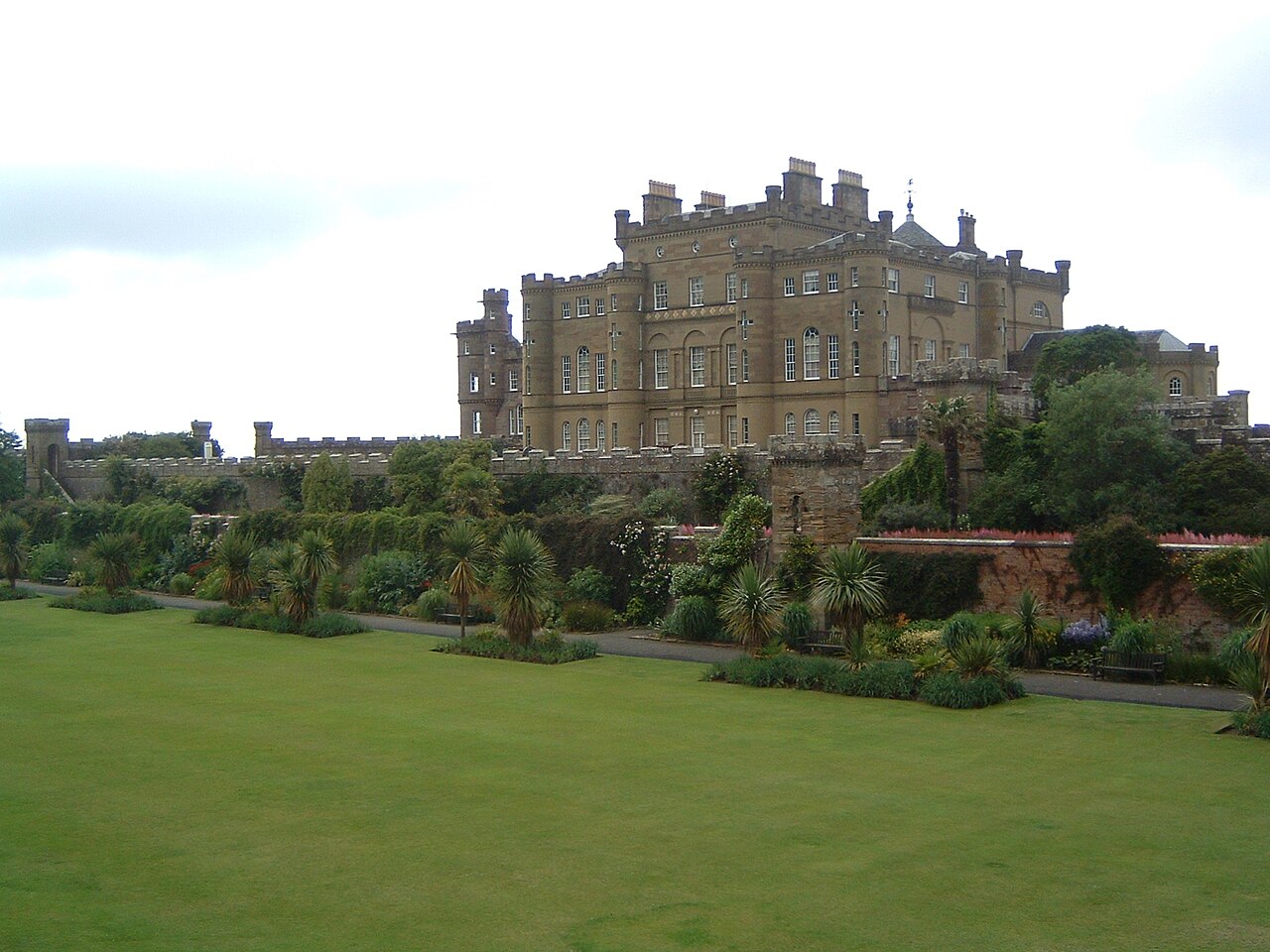
By the 17th century, specifically around 1632, the castle passed to the MacIlvaine family through marriage. Alan McIlvaine, born in Ayrshire in 1500, was an early member of this family known for supplying wine to the nearby Earls Kennedy, owners of the famous Culzean Castle. This connection illustrates the intertwined economic and social relationships among Scottish noble families.
The castle remained occupied until approximately 1800, after which it was abandoned as a residence. Its decline reflects broader changes in Scottish society, where many medieval castles lost their strategic importance and were replaced by more modern homes.
Architectural features and layout
Site and defensive elements
Situated atop a natural hill, Thomaston Castle benefits from a commanding vantage point over the surrounding landscape. The site is surrounded by a natural ditch, likely formed by the terrain rather than human excavation, enhancing its defensive position. This natural topography was typical for hill castles of the medieval period, providing both protection and visibility.
The tower house and structural remains
The most prominent surviving structure is a largely 16th-century L-shaped tower house rising three stories high. This building features a long main block oriented southwest to northeast, with a shorter wing extending northwest to southeast. Nestled in the inner corner of these wings on the southern side is a rectangular stair tower, which provided access to the castle's entrance and connected the floors internally.
The tower house's battlements include a parapet supported by corbelled stones known as kraagstenen. These stones project outward to support the walkway along the walls' tops, allowing defenders to patrol and defend the castle effectively. The castle's internal layout once included a passageway from the ground floor of the southern wing to an enclosed courtyard, which served as a central outdoor space within the castle's footprint.
Later modifications and current condition
In the latter half of the 20th century, a hay barn was erected on the northern side of the castle grounds, marking a transition to agricultural use. Additionally, a modern house has been constructed within the castle's boundaries, blending contemporary architecture with the medieval ruins.
Today, Thomaston Castle stands in a ruined state, with portions of the masonry regularly collapsing into the courtyard. Despite this, the site is protected as a Scheduled Monument, recognizing its cultural and historical significance within Scotland's medieval heritage.
Cultural significance and preservation
As a castle associated with the Bruce family and later prominent Scottish noble families, Thomaston Castle holds an important place in the region's history. Its architectural features offer insight into the evolution of Scottish castle design from purely defensive structures to more comfortable noble residences.
The castle's protection as a Scheduled Monument ensures ongoing preservation efforts, although its ruined condition requires careful management to prevent further deterioration. The juxtaposition of medieval ruins with modern agricultural and residential buildings illustrates the changing uses of historic sites over time.
Visiting information and accessibility
Thomaston Castle is accessible to visitors interested in medieval Scottish history and architecture. While the ruins are not fully restored, they provide a tangible connection to Scotland's past. Visitors should exercise caution around unstable masonry and respect the site's protected status.
The castle's location near Maybole makes it a convenient stop for those exploring South Ayrshire's rich heritage, including nearby landmarks such as Culzean Castle. The blend of natural landscape and historic architecture offers a compelling experience for history enthusiasts and casual tourists alike.
Frequently asked questions (FAQ)
- How do I get to Thomaston Castle Ruins?
- Thomaston Castle Ruins are located in Maybole, United Kingdom. You can reach the site by car via the A77 or by taking a train to Maybole station, followed by a short walk to the ruins. Public transport options are available, but checking local schedules is recommended for the best routes.
- What is the historical significance of Thomaston Castle Ruins?
- Thomaston Castle, built in the 15th century, holds great historical significance as it was a stronghold for the Kennedy family. The ruins reflect the turbulent history of Scotland, including conflicts during the Wars of Scottish Independence. Today, it serves as a reminder of medieval architecture and Scottish heritage.
- When was Thomaston Castle built?
- Thomaston Castle was constructed in the late 15th century, around the year 1450. It was designed as a fortified residence and showcases the architectural style of the period. Its construction marked an important era in the development of Scottish castles.
- Can I explore the ruins of Thomaston Castle?
- Yes, visitors can explore the ruins of Thomaston Castle. While some areas may be restricted for safety reasons, the site provides ample opportunity to walk around and appreciate its historical architecture. Make sure to wear suitable footwear as the terrain can be uneven.
- Why is Thomaston Castle a popular tourist attraction?
- Thomaston Castle is popular among tourists for its rich history and stunning views of the surrounding landscape. The site offers a glimpse into Scotland's medieval past, making it a fascinating destination for history enthusiasts. Additionally, the picturesque scenery makes it a great spot for photography.
- Is it possible to visit Thomaston Castle year-round?
- Yes, Thomaston Castle is open to visitors throughout the year. However, the best time to visit is during the spring and summer months when the weather is milder and the grounds are more accessible. Always check for any seasonal events or maintenance closures before planning your visit.
- What are the opening hours for Thomaston Castle Ruins?
- Thomaston Castle Ruins are typically open from dawn until dusk, allowing visitors ample time to explore the site. However, it’s advisable to check the local visitor information for any changes to opening hours, especially during holidays or special events. Guided tours may have specific times, so it's good to confirm in advance.
- Are there any ticket prices for visiting Thomaston Castle?
- Entrance to Thomaston Castle Ruins is generally free, making it an accessible attraction for all visitors. However, if you wish to take part in guided tours or special events, there may be a nominal fee. Always verify current pricing before your visit for any updates.
- What nearby attractions can I visit after Thomaston Castle?
- After visiting Thomaston Castle, you can explore nearby attractions such as Maybole's historic town center, which features charming shops and cafes. Additionally, the beautiful Culzean Castle and Country Park is just a short drive away, offering stunning coastal views and expansive grounds to enjoy. Plan your itinerary to make the most of your visit to the area.
Information
Loading map...
Visitor reviews
No reviews yet. Been here? Write the first review and help other travelers!
Write the first reviewVisited this castle? Share your experience
Your review helps other travelers and adds first-hand knowledge to our encyclopedia.