Baltersan Castle

Baltersan Castle near Maybole, Scotland
Maybole, Scotland, United Kingdom
Renaissance (15th–17th c.)
Ruins

Baltersan Castle is a ruined Renaissance-era L-plan tower house located near Maybole in Scotland. The castle stands on a site originally occupied by Baltersan House, which was owned by Egidia Blair, Lady Row, who died in 1530. Following her death, the original house was demolished, but her tomb remains visible at the nearby Crossraguel Abbey. Lady Row's will, which survives to this day, reveals her role as a generous benefactor to the Abbey, as well as to her relatives, friends, and neighbors.

The existing tower house was constructed in 1584, as indicated by the inscription above the door. It was built by John Kennedy of Pennyglen, near Maybole, and his wife, Margaret Cathcart. This places the castle firmly within the Renaissance period of Scottish architecture, characterized by a blend of defensive features and domestic comfort.

Architectural features and layout

The castle is a three-storey structure with an additional attic and garret, designed in the distinctive L-plan configuration common in Scottish tower houses of the late 16th century. Its walls are notably thick, measuring approximately 1.2 meters, providing substantial defense against attacks.

The ground floor is vaulted, a typical feature that enhanced the structural strength and fire resistance of the building. The castle also features ashlar turrets located at the northwestern and southeastern angles. These turrets are equipped with gun loops, small openings designed for the use of firearms, reflecting the evolving military technology of the period.

Defensive elements

The gun loops embedded in the turrets allowed defenders to fire upon attackers while remaining protected. The L-plan design itself provided overlapping fields of fire and reduced blind spots, making the castle more defensible. Thick stone walls and the vaulted ground floor further enhanced its ability to withstand sieges.

Historical ownership and significance

After its construction by the Kennedys, Baltersan Castle remained in their possession for several generations. In 1721, ownership transferred to Captain Hugh Arbuthnot, a cousin of John Kennedy of Baltersan. By the mid-18th century, the castle was abandoned and has remained a ruin since.

The castle's history is closely tied to the local nobility and their shifting fortunes during the turbulent centuries of Scottish history. Its proximity to Crossraguel Abbey also connects it to the broader religious and cultural heritage of the region.

Current condition and preservation

Today, Baltersan Castle stands as a ruined tower house, with much of its original structure still visible. The thick walls, vaulted ground floor, and ashlar turrets remain prominent features despite the passage of centuries. The site is an important example of Scottish Renaissance military architecture and offers valuable insight into the lifestyle and defensive needs of the period.

Visitor information and cultural importance

Though in ruins, Baltersan Castle attracts visitors interested in Scottish history and architecture. Its location near Maybole makes it accessible for those exploring the rich heritage of southwestern Scotland. The castle's connection to notable historical figures and its architectural features make it a significant site for study and tourism.

Frequently asked questions (FAQ)

How do I get to Baltersan Castle?
Baltersan Castle is located in Maybole, United Kingdom. You can reach it by car via the A77 road, and there are public transport options available from nearby towns. It's advisable to check local bus schedules for the most convenient routes.
What is the historical significance of Baltersan Castle?
Baltersan Castle dates back to the 16th century and is known for its impressive architecture and historical connections to the Scottish nobility. It played a significant role in the local history and showcases the evolution of castle design in Scotland. The castle is a fine example of the defensive structures that were typical during its time.
When was Baltersan Castle built?
Baltersan Castle was constructed in the early 1500s, around 1540. It has undergone various renovations and restorations over the centuries, preserving its historical features while adapting to modern needs. This timeline illustrates the castle's enduring legacy in Scottish history.
Can I visit Baltersan Castle?
Yes, Baltersan Castle is open to visitors, but it's recommended to check ahead for specific visiting hours and days. Guided tours are often available, providing insights into the castle's history and architecture. Be sure to book in advance, especially during peak tourist seasons.
Why is Baltersan Castle an important architectural site?
Baltersan Castle is notable for its unique architectural style that reflects the Scottish Renaissance period. The intricate stonework and design elements showcase the craftsmanship of the era, making it a valuable site for both historical and architectural studies. Its preservation allows visitors to appreciate Scotland's rich cultural heritage.
Is it possible to hold events at Baltersan Castle?
Yes, Baltersan Castle offers facilities for private events, including weddings and corporate gatherings. The picturesque setting and historical ambiance make it a popular choice for special occasions. It's advisable to contact the castle management for specific details and booking options.
What are the opening hours for Baltersan Castle?
Baltersan Castle typically opens for visitors from 10 AM to 5 PM, but these hours may vary seasonally. It's best to check the official website or contact the castle for the most accurate and up-to-date information. Planning your visit around these hours will enhance your experience.
What are the ticket prices for Baltersan Castle?
Ticket prices for Baltersan Castle vary depending on the season and type of tour. Generally, adult tickets are priced around £10, with discounts available for children and seniors. Be sure to check for any special promotions or group rates when planning your visit.
What nearby attractions can I visit while in Maybole?
While in Maybole, you can explore other historical sites such as the nearby Culzean Castle and the beautiful coastline of Ayrshire. The town also offers charming local shops and eateries that reflect the region's culture. Combining these attractions with your visit to Baltersan Castle makes for a well-rounded experience.

Information

Tower House

Loading map...

Visitor reviews

No reviews yet. Been here? Write the first review and help other travelers!

Write the first review

Visited this castle? Share your experience

Your review helps other travelers and adds first-hand knowledge to our encyclopedia.
Write a review

(5/5)

0/2000 characters

Your review will be visible after admin approval

Nearby castles

2.3 km
Culzean Castle — United Kingdom castle

Culzean Castle

Maybole, United Kingdom

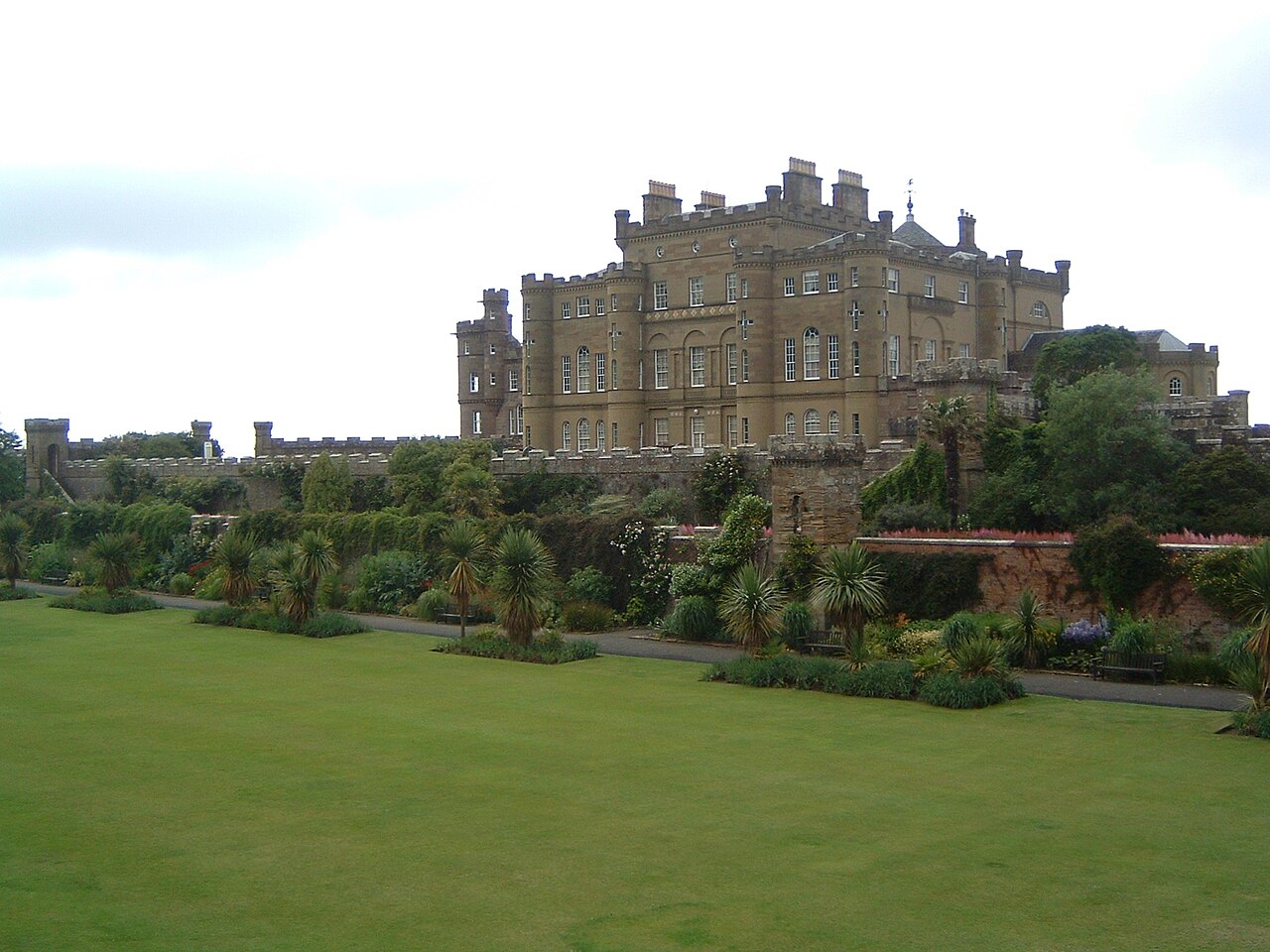
Culzean Castle is a magnificent 18th-century castle perched dramatically on a rocky cliff overlooking the Firth of Clyde near Maybole on the Ayrshire coast of Scotland. This iconic hill castle is renowned for its distinctive L-plan design and the masterful architectural work of Robert Adam, who transformed the castle between 1777 and 1792 into a grand country house for the 10th Earl of Cassillis, the chief of the powerful Clan Kennedy. The castle stands as a testament to post-Renaissance architecture in Scotland, blending fortified elements with elegant residential features. Its location on a clifftop affords sweeping views across the sea, emphasizing its strategic and aesthetic significance. Culzean Castle is enveloped by the expansive Culzean Castle Country Park, which spans approximately 600 acres of lush countryside, woodland trails, and landscaped gardens, offering visitors a rich experience of nature and heritage. Architectural features and design by robert adam The transformation of Culzean Castle under Robert Adam is one of the finest examples of 18th-century Scottish architecture. Adam’s design replaced an earlier, more modest structure known as the House of Cove or Coif Castle, which had origins dating back to the late 14th century. The new castle was conceived as an elegant residence that retained defensive characteristics typical of Scottish castles but emphasized comfort and grandeur. The castle’s L-shaped layout incorporates a large drum tower housing a spectacular circular saloon that offers panoramic views of the Firth of Clyde. This room is decorated with Ionic and Corinthian columns and serves as a centerpiece of Adam’s interior design. Adjacent to this is a grand oval staircase, considered a masterpiece of craftsmanship, which connects the castle’s floors with graceful curves and ornate detailing. The castle contains a suite of well-appointed apartments, including formal reception rooms and private chambers, all reflecting the neoclassical elegance favored by Adam. The interiors feature fine collections of period furniture, paintings, and decorative arts, enhancing the castle’s historic ambiance. Supporting estate structures and grounds The castle estate includes several notable ancillary buildings and features. To the north lies a bay with the remains of a historic Gas House complex, which supplied town gas to the castle until 1940. This complex comprises the gas manager’s house—now an exhibition space dedicated to William Murdoch, a pioneer of gas engineering—the Retort House, and the remnants of a gasometer. The extensive grounds feature a walled garden, built on the site of the former home of Scipio Kennedy, an enslaved African brought to the estate in the 18th century. The park also contains Victorian greenhouses, a pagoda, ice houses, and scenic walking trails that lead through forested areas and along the coastline. Historical significance and clan kennedy heritage Culzean Castle has been associated with the Kennedy family since the 14th century, serving as the seat of the Earls of Cassillis and the chiefs of Clan Kennedy. The castle's history reflects the rise of this powerful Scottish family and their influence in Ayrshire and beyond. In the late 18th century, around 1794, the Ayrshire Yeomanry cavalry regiment was formed at Culzean Castle by the Earl of Cassillis, linking the site to Scotland’s military heritage. The regiment returned in 1961 to receive its first guidon, underscoring the castle’s ongoing ceremonial importance. The castle remained in the Kennedy family until 1945, when it was gifted to the National Trust for Scotland. This transfer included a unique provision that the top-floor apartment be reserved for General Dwight D. Eisenhower in recognition of his leadership as Supreme Commander of the Allied Forces in Europe during the Second World War. Eisenhower visited Culzean Castle multiple times, including during his presidency of the United States, and the apartment is now available as a holiday rental. Cultural and ghostly lore Adding to its allure, Culzean Castle is reputed to be haunted by at least seven spirits, including a piper and a servant girl. These ghost stories contribute to the castle’s rich tapestry of folklore and attract visitors interested in the paranormal alongside history and architecture. Modern preservation and visitor experience The castle underwent a significant refurbishment in 2011, funded by a legacy from American philanthropist William Lindsay. This restoration enhanced the castle’s structural integrity and visitor facilities, ensuring its preservation for future generations. Today, Culzean Castle and its country park are managed by the National Trust for Scotland and are open to the public. Visitors can explore the castle’s interiors through guided tours highlighting Robert Adam’s architectural achievements, the grand oval staircase, and the collection of historic furnishings. The extensive grounds offer opportunities for walking, wildlife observation, and discovering hidden features such as sea caves accessible during summer months. The estate’s diverse attractions include the armoury, which displays weapons from the West Lowland Fencible Regiment, and a propeller from a plane flown by Leefe Robinson in 1916, linking the castle to military history beyond Scotland. Admission is free for members of the National Trust for Scotland, making Culzean Castle a popular destination for both domestic and international tourists seeking a blend of history, architecture, and natural beauty on Scotland’s west coast.

Post-Renaissance (17th–18th c.)
Details
4.3 km

Thomaston Castle Ruins

Maybole, United Kingdom

Thomaston Castle is a medieval fortress located just west of Maybole in South Ayrshire, Scotland. This castle, dating back to the 13th century, retains much of its original medieval character despite centuries of weathering and partial ruin. It was originally constructed for Thomas Bruce, a nephew of the renowned King Robert the Bruce, placing the site within the sphere of Scotland's royal and noble history during the High Medieval period. The castle's early history is closely tied to the Bruce family and subsequent noble lineages, reflecting the complex social and political networks of medieval Scotland. In the early 16th century, ownership transferred to the Corries of Kelwood, who undertook significant expansions, including the addition of a residential tower. This development signaled a shift from purely defensive architecture to more comfortable noble living quarters, characteristic of the evolving needs of Scottish aristocracy during the Renaissance period. Historical background and ownership lineage Thomaston Castle was initially built in the 13th century for Thomas Bruce, linking it to one of Scotland's most famous royal families. The Bruce family played a pivotal role in Scotland's struggle for independence, and their estates, including Thomaston, were symbols of their power and influence. During the early 1500s, the castle came under the ownership of the Corries of Kelwood. This family enhanced the castle's residential capabilities by adding a tower house, a common feature in Scottish noble estates of the period. The tower house provided both defense and domestic comfort, reflecting the dual purpose of such buildings during the late medieval and early Renaissance periods. By the 17th century, specifically around 1632, the castle passed to the MacIlvaine family through marriage. Alan McIlvaine, born in Ayrshire in 1500, was an early member of this family known for supplying wine to the nearby Earls Kennedy, owners of the famous Culzean Castle. This connection illustrates the intertwined economic and social relationships among Scottish noble families. The castle remained occupied until approximately 1800, after which it was abandoned as a residence. Its decline reflects broader changes in Scottish society, where many medieval castles lost their strategic importance and were replaced by more modern homes. Architectural features and layout Site and defensive elements Situated atop a natural hill, Thomaston Castle benefits from a commanding vantage point over the surrounding landscape. The site is surrounded by a natural ditch, likely formed by the terrain rather than human excavation, enhancing its defensive position. This natural topography was typical for hill castles of the medieval period, providing both protection and visibility. The tower house and structural remains The most prominent surviving structure is a largely 16th-century L-shaped tower house rising three stories high. This building features a long main block oriented southwest to northeast, with a shorter wing extending northwest to southeast. Nestled in the inner corner of these wings on the southern side is a rectangular stair tower, which provided access to the castle's entrance and connected the floors internally. The tower house's battlements include a parapet supported by corbelled stones known as kraagstenen. These stones project outward to support the walkway along the walls' tops, allowing defenders to patrol and defend the castle effectively. The castle's internal layout once included a passageway from the ground floor of the southern wing to an enclosed courtyard, which served as a central outdoor space within the castle's footprint. Later modifications and current condition In the latter half of the 20th century, a hay barn was erected on the northern side of the castle grounds, marking a transition to agricultural use. Additionally, a modern house has been constructed within the castle's boundaries, blending contemporary architecture with the medieval ruins. Today, Thomaston Castle stands in a ruined state, with portions of the masonry regularly collapsing into the courtyard. Despite this, the site is protected as a Scheduled Monument, recognizing its cultural and historical significance within Scotland's medieval heritage. Cultural significance and preservation As a castle associated with the Bruce family and later prominent Scottish noble families, Thomaston Castle holds an important place in the region's history. Its architectural features offer insight into the evolution of Scottish castle design from purely defensive structures to more comfortable noble residences. The castle's protection as a Scheduled Monument ensures ongoing preservation efforts, although its ruined condition requires careful management to prevent further deterioration. The juxtaposition of medieval ruins with modern agricultural and residential buildings illustrates the changing uses of historic sites over time. Visiting information and accessibility Thomaston Castle is accessible to visitors interested in medieval Scottish history and architecture. While the ruins are not fully restored, they provide a tangible connection to Scotland's past. Visitors should exercise caution around unstable masonry and respect the site's protected status. The castle's location near Maybole makes it a convenient stop for those exploring South Ayrshire's rich heritage, including nearby landmarks such as Culzean Castle. The blend of natural landscape and historic architecture offers a compelling experience for history enthusiasts and casual tourists alike.

High Medieval (11th–13th c.)
Details
6.7 km

Dalquharran Castle

Dailly, United Kingdom

Dalquharran Castle stands as a remarkable example of Georgian architecture and the legacy of the renowned Scottish architect Robert Adam. Located near the village of Dailly in South Ayrshire, Scotland, this historic mansion was completed around 1790 for Thomas Kennedy of Dunure, a member of the influential Kennedy family. The castle replaced an earlier medieval fortress and has since witnessed centuries of Scottish history, architectural evolution, and changing fortunes. Its grand design and classical elegance reflect the tastes and ambitions of the Scottish nobility during the post-Renaissance period. Historical background and family lineage The site of Dalquharran Castle originally hosted a medieval stronghold first recorded in 1474 under the lordship of Gilbert Kennedy. This early castle began as a fortified rectangular keep, typical of defensive residences of the late medieval period. Over time, the castle was expanded in the late 17th century, around 1679, to become a more comfortable stately home, reflecting the changing needs and tastes of its noble occupants. In the late 1600s, the estate was acquired by Sir Thomas Kennedy of Kirkhill, then the Lord Provost of Edinburgh. His son, Thomas Kennedy of Dunure, inherited the property and commissioned the construction of the new mansion designed by Robert Adam. This transition marked a shift from a medieval fortress to a grand country house embodying Georgian classical style. The Kennedy family maintained ownership for several generations. In the late 19th century, the castle was enlarged by Francis Thomas Romilly Kennedy to accommodate his large family, demonstrating the estate's continued importance. The castle also hosted notable figures such as H. H. Asquith, the British Prime Minister, in the early 20th century. Architectural design and features Robert Adam's classical vision Dalquharran Castle exemplifies the architectural genius of Robert Adam, one of Scotland's most celebrated architects. The mansion is arranged symmetrically around a central entrance hall, which features a top-lit spiral staircase reminiscent of Adam's design at Culzean Castle. This staircase serves as a dramatic focal point and allows natural light to illuminate the interior. The building rises four stories, with bedchambers occupying the upper floors and service areas located in the basement. The interiors were decorated in a refined classical style, with elegant proportions and intricate detailing that highlight Adam's neoclassical influences. Distinctive architectural elements A notable feature is the round bastion turret on the south front, which houses a drawing room on the ground floor and a library above. These rooms offer commanding views over the Girvan Water river valley. The east wing contains a large oval dining room, providing an impressive space for entertaining guests. To the north of the mansion, a long, low stable range extends, connected to the main building by screen walls with gateways. This arrangement creates a formal forecourt, enhancing the estate's grandeur. Several smaller lodges, built with simpler architectural detailing, are symmetrically arranged around the courtyard and were likely constructed shortly after Adam's death. Later history and decline Dalquharran Castle remained a family residence until the 20th century. In the 1930s, the Kennedy family sold the estate to a timber merchant. From 1936 to 1939, the castle was leased to the Scottish Youth Hostel Association. During the Second World War, it served as a refuge for the Glasgow Deaf and Dumb Institution, which was evacuated from the city for safety. Post-war, the castle was occupied by John Stewart, a produce merchant who farmed the estate. However, the large size and maintenance costs made the property increasingly difficult to sustain. In 1967, the removal of the lead roof was a pivotal moment that led to rapid deterioration. This action, taken to avoid local property rates, exposed the interior to the elements, causing the collapse of floors and ceilings. Today, the castle stands as a ruin with its interiors in total decay. Safety concerns have led to the prohibition of entry, but the remaining structure continues to display the elegance of Adam's design and the historical significance of the Kennedy estate. Old Dalquharran Castle ruins Approximately 300 meters southeast of the newer mansion lie the remains of the old Dalquharran Castle. This earlier fortress, originally a rectangular keep, was expanded in the 17th century to form a more elaborate residence. The ruins include significant standing walls and buried archaeological remains that offer insight into the site's medieval defensive architecture. The old castle was scheduled as an ancient monument in 1935, recognizing its historical and archaeological importance. Though abandoned around 1800, the ruins remain a testament to the estate's long history and evolution from a fortified stronghold to a classical mansion. Preservation status and cultural significance Dalquharran Castle is designated as a category A listed building, highlighting its national importance as an architectural and historic monument. Despite its current state of ruin, the castle is a valuable example of Robert Adam's neoclassical style and the social history of the Scottish nobility. Various redevelopment plans, including proposals to convert the castle into a hotel and leisure complex, have been considered since the 1990s but have not materialized. The estate, including both the old and new castles and surrounding farmland, was placed on the market in 2019, reflecting ongoing interest in preserving this heritage site. Visiting and exploring Dalquharran Castle While the interior of Dalquharran Castle is unsafe for visitors, the exterior and the surrounding estate offer a fascinating glimpse into Scotland's architectural and noble past. The ruins of the old castle nearby provide additional historical context and a tangible connection to the region's medieval heritage. Visitors interested in Scottish history, architecture, and the legacy of Robert Adam will find Dalquharran Castle a compelling site. Its dramatic setting near the Girvan Water and its classical design elements make it a significant cultural landmark in South Ayrshire.

Post-Renaissance (17th–18th c.)
Details

