The 'Cradle of Biochemistry'
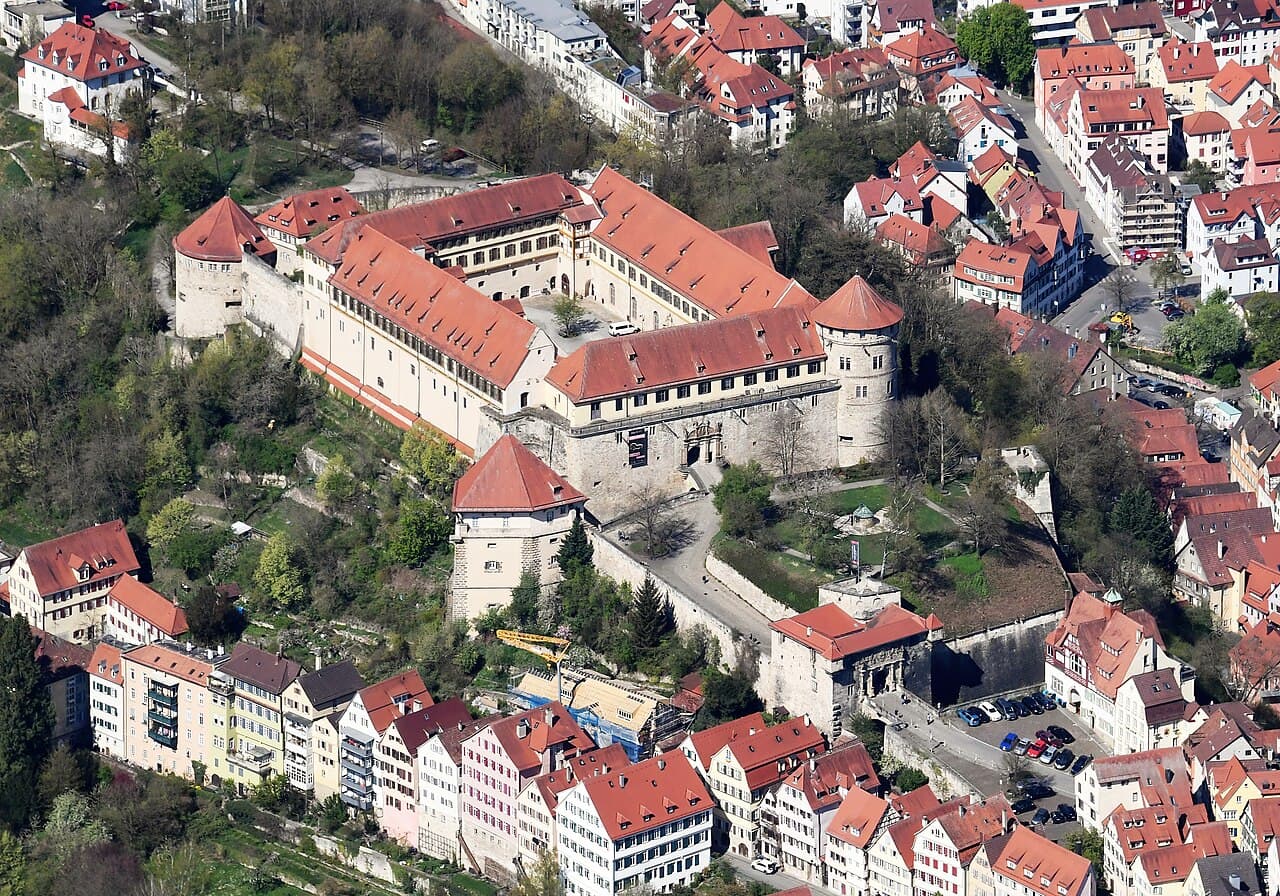
Hohentübingen Castle stands majestically atop the 372-meter high Spitzberg hill overlooking the historic city of Tübingen in Baden-Württemberg, Germany. This imposing renaissance castle with its four wings and distinctive round tower is not only an architectural landmark but also a cradle of scientific discovery, particularly in the field of biochemistry. The castle’s rich history, architectural evolution, and its unique role as a hub for early biochemical research make it a fascinating destination for visitors interested in both medieval heritage and scientific innovation.
Historical background and architectural evolution
The earliest documented mention of a castle on the site dates back to 1078, referring to a medieval fortress that served as the seat of the rulers of Tübingen. These rulers, elevated to the status of Counts Palatine in the 12th century, inhabited the castle until 1342 when it was sold to the Counts of Württemberg. Under Württemberg ownership, the castle's significance as a ducal residence began to wane in the 16th century as political and residential preferences shifted.
The existing structure is predominantly a renaissance construction, characterized by its four wings arranged around a central courtyard and a prominent round tower. The castle’s architecture reflects the transition from medieval fortification to a more comfortable noble residence, incorporating elements typical of the renaissance period. Its robust walls, elegant façades, and strategic hilltop location underscore its role both as a defensive stronghold and a symbol of regional power.
Hohentübingen castle as a center of academic and scientific advancement
From the mid-18th century onwards, Hohentübingen Castle increasingly served academic purposes. The University of Tübingen began acquiring rooms within the castle, culminating in the transfer of full ownership in 1816 by King Wilhelm I of Württemberg. This marked a pivotal transformation of the castle from a noble residence to an academic institution.
The castle housed the university’s extensive library collection of nearly 60,000 volumes in the hall of knights. Moreover, the castle’s old kitchen was repurposed as a chemistry laboratory, famously known as the "cradle of biochemistry". This laboratory was the site of groundbreaking research by Friedrich Miescher, who in 1869 isolated "nuclein" — the substance now understood to be nucleic acids RNA and DNA. This discovery laid the foundation for modern molecular biology and medicine.
Further scientific use included an astronomical observatory located in the castle’s northeast tower, highlighting the castle’s multifunctional role in advancing knowledge across disciplines.
The schlosslabor and museum collections
The Schlosslabor within the castle's old kitchen remains a unique collection of 19th-century scientific apparatuses, chemical compounds, and related objects that document the early history of biochemistry. The centerpiece of this collection is the original test tube containing a sample of pure nuclein extracted by Miescher, a priceless relic of scientific heritage.
Today, the castle serves as a museum housing a diverse range of collections from the university’s departments of Cultural Studies and Archaeology. Visitors can explore exhibits spanning prehistory, classical archaeology, Egyptology, ancient oriental studies, numismatics, and ethnology. The museum also features a replica collection of famous Greek and Roman sculptures, providing a comprehensive cultural and historical experience.
The castle’s east and north wings, along with the pentagonal museum tower, display these collections. A tunnel behind the courtyard fountain leads visitors through the west wing to the Schänzle (a small entrenchment), offering views of the castle’s western moats, colloquially known as the "rabbit hole".
Architectural features and preservation
Hohentübingen Castle exemplifies renaissance architecture with its harmonious four-winged layout and defensive round tower. The castle’s hilltop position provided strategic advantage and commanding views over Tübingen and the surrounding landscape.
The castle underwent a thorough renovation between 1979 and 1994, ensuring the preservation of its structural integrity and adapting its interiors for modern museum and academic use. Today, it stands as a well-preserved monument that bridges medieval fortification, renaissance elegance, and scientific heritage.
Visiting hohentübingen castle
Visitors to Hohentübingen Castle can enjoy a rich cultural experience combining architectural grandeur with scientific history. The museum’s extensive permanent exhibitions and special displays provide insight into the castle’s multifaceted past and its role in pioneering biochemical research.
The castle’s location on Spitzberg hill offers scenic views of the city of Tübingen and the Neckar valley, making it a favored destination for tourists and scholars alike.
Frequently asked questions about hohentübingen castle
- What is the significance of the "cradle of biochemistry" at Hohentübingen Castle? It refers to the castle’s old kitchen where Friedrich Miescher isolated nuclein in 1869, marking a foundational moment in molecular biology.
- When was Hohentübingen Castle built? The castle's origins date back to at least 1078, with the current renaissance structure mainly developed during the 16th century.
- Can visitors see the original nuclein sample? Yes, the Schlosslabor exhibition includes the original test tube containing nuclein extracted by Miescher.
- Is the castle accessible year-round? Visiting hours vary seasonally; it is best to check the official museum website for current opening times.
- What other collections are housed in the castle museum? The museum features collections in archaeology, Egyptology, ethnology, numismatics, and a replica collection of classical sculptures.
- How is the castle preserved today? After extensive renovations from 1979 to 1994, the castle is well-preserved and functions as both a museum and university facility.
Frequently asked questions (FAQ)
- What is the historical significance of the 'Cradle of Biochemistry'?
- The 'Cradle of Biochemistry' is renowned for its pivotal role in the development of biochemistry as a scientific discipline. It is closely associated with notable figures like Friedrich Miescher, who discovered nucleic acids here, laying the foundation for modern genetics.
- When was the 'Cradle of Biochemistry' established?
- The castle was established in the late 15th century and has undergone various renovations over the centuries. Its significance grew in the 19th century when it became a center for biochemistry research.
- Can I visit the 'Cradle of Biochemistry'?
- Yes, the 'Cradle of Biochemistry' is open to the public, allowing visitors to explore its historical architecture and learn about its scientific contributions. Guided tours are available, providing a deeper insight into its history and significance.
- What are the opening hours for the 'Cradle of Biochemistry'?
- The castle is typically open to visitors from 9 AM to 5 PM, Tuesday through Sunday. It is advisable to check the official website for any seasonal variations or public holidays that may affect these hours.
- Is it possible to access the 'Cradle of Biochemistry' with public transportation?
- Yes, the castle is easily accessible by public transportation, including buses and trains, with the nearest station just a short walk away. This makes it convenient for visitors traveling from nearby cities.
- What are the ticket prices for visiting the 'Cradle of Biochemistry'?
- Ticket prices are generally affordable, with discounts available for students and seniors. Children under a certain age may enter for free, making it a great family-friendly destination.
- When is the best time to visit the 'Cradle of Biochemistry'?
- The best time to visit is during the spring and early autumn when the weather is pleasant, and the gardens surrounding the castle are in full bloom. Additionally, visiting during weekdays can help avoid larger crowds.
- What nearby attractions can I explore after visiting the 'Cradle of Biochemistry'?
- After exploring the 'Cradle of Biochemistry', visitors can enjoy nearby attractions such as the Tübingen Old Town, the Eberhard Karls University, and the beautiful Neckar River. These sites offer a rich cultural experience and scenic views.
Photo gallery

Information
Website
Visit websiteSources & official resources
Verify the information above using these authoritative references.
Loading map...
Visitor reviews
No reviews yet. Been here? Write the first review and help other travelers!
Write the first reviewVisited this castle? Share your experience
Your review helps other travelers and adds first-hand knowledge to our encyclopedia.


