Tharandt Castle Ruin
Tharandt Castle ruin, located in the town of Tharandt, Germany, is a remarkable example of a high medieval hill castle with a layered history spanning over eight centuries. Built around 1206 by Margrave Dietrich of Meissen, the castle was strategically positioned on a mountain spur overlooking the town to serve as a formidable border fortress against the neighboring Counts of Dohna. Its commanding location between the rivers Schloitzbach and Wilde Weißeritz provided natural defenses, making it a stronghold of regional importance throughout the 13th to 15th centuries.
The castle's early history is marked by conflict and resilience. It was first destroyed by fire in 1224 during a military campaign led by Landgrave Ludwig IV of Thuringia but was rebuilt between 1240 and 1256 under the direction of Margrave Heinrich the Illustrious. At the height of its power in the late 14th century, extensive fortifications transformed Tharandt into one of the strongest castles in the region, serving as the administrative center of the Amt Tharandt. The castle's military significance waned after the Dohna feud (1385-1402), which diminished the power of the rival counts and altered the political landscape.
Historical significance and ownership
Throughout its history, Tharandt Castle was closely linked to important regional figures and events. In the early 15th century, it played a defensive role during the Hussite invasions of 1429, safeguarding electoral documents and valuables due to its reputation as a strong fortress. The castle also became a residence for Duchess Sidonie of Bohemia, daughter of King George of Poděbrady, who lived there permanently from 1500 until her death in 1510. Her marriage to Duke Albert of Saxony at the castle in 1464 symbolized a significant treaty that shaped the Saxon-Bohemian border, which remains largely unchanged today.
After Sidonie's death, the castle was gradually abandoned and dismantled. Its stone and architectural elements were repurposed for nearby constructions, including the Grillenburg hunting lodge. The administrative functions moved to Grillenburg in 1558, and by the late 16th century, the castle had lost its military and residential functions entirely. The site was further damaged by lightning in 1568 and systematically stripped of roofing and stonework for reuse in other buildings.
Architectural features and layout
Tharandt Castle was designed as a classic spur castle with two main sections: the upper castle (Oberburg) and the lower castle (Unterburg). The original entrance was located in the lower castle area, which now corresponds to the site of the mountain church Zum Heiligen Kreuz, built between 1626 and 1629 using stones from the castle ruins. This church incorporates medieval architectural elements, including a Romanesque sandstone portal reminiscent of the prestigious Freiberg Cathedral's Golden Gate.
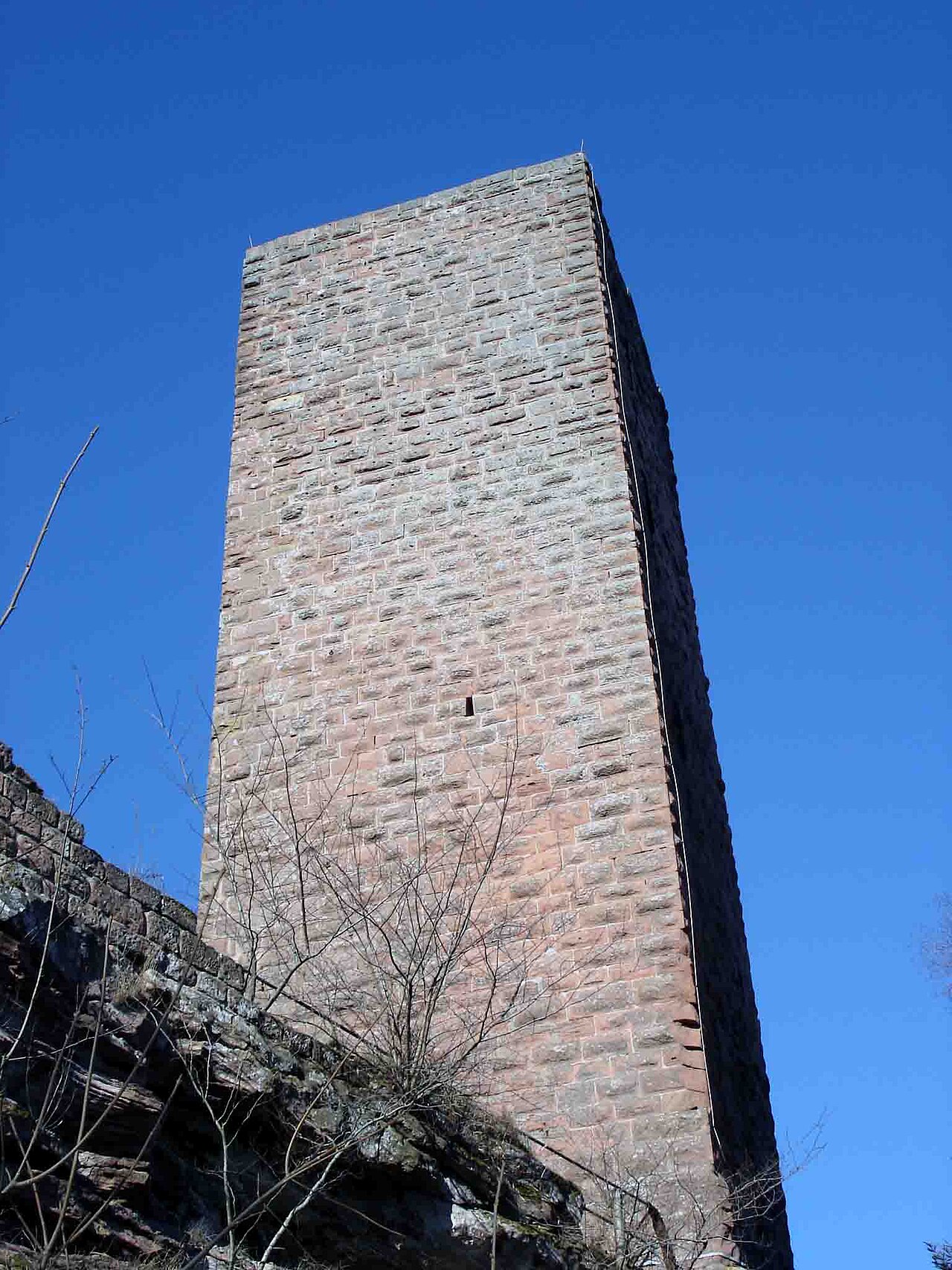
The upper castle housed the palas (main residential building) and an adjoining tower. During the late 15th century transformation under Duchess Sidonie, a new gate with a drawbridge and a bastion were added to accommodate horse-drawn vehicles and enhance fortifications around the moat. Despite its strong defenses, the castle notably lacked a well, which posed logistical challenges during sieges.
Defensive structures and fortifications
The castle's fortifications evolved significantly over time. By the end of the 14th century, it was considered one of the most strongly fortified castles in the region. The addition of bastions and a moat reflected advancements in military architecture adapting to the increasing use of firearms in the 15th century. The castle maintained a well-armed garrison and was equipped with firearms by 1436, underscoring its military importance during turbulent times.
Decline and romantic rediscovery
Following its abandonment in the early 16th century, the castle fell into ruin. The gradual dismantling and reuse of its materials contributed to its decline. However, the ruins gained renewed attention during the Romantic period of the late 18th and early 19th centuries. The site was landscaped to enhance its picturesque qualities, with vaults filled in and trees planted to create a romantic atmosphere that attracted renowned artists such as Ludwig Richter, Caspar David Friedrich, and Carl Blechen.
In the 19th century, the nearby Schloss Tharandt was constructed between 1858 and 1861 initially as a sculptor's studio and later remodeled in a Moorish-Oriental Tudor style by architect Michael Jérôme Graf Leszczyc-Sumiński. This residential castle complements the medieval ruins, reflecting the layered architectural heritage of the area.
Modern preservation and cultural use
Since the mid-1970s, archaeological excavations and conservation efforts have focused on stabilizing and preserving the ruins of Tharandt Castle. A significant restoration project began in 2013, supported by regional foundations and cultural partnerships with Czech towns connected to Duchess Sidonie's heritage. These efforts have improved visitor access and structural safety.
Today, the castle ruins serve as a cultural and historical landmark, hosting medieval markets, guided tours, and summer events. The open-air theater on the upper castle grounds adds to the site's community engagement. Visitors can explore the remains of the palas, the tower, and the lower castle integrated into the mountain church. The site offers a tangible connection to the region's medieval past and its evolving role through centuries of conflict, residence, and romantic appreciation.
Tharandt Castle ruin stands as a testament to the resilience of medieval architecture and the rich history of the Saxony region. Its rugged ruins invite visitors to imagine the lives of knights, duchesses, and soldiers who once inhabited this strategic stronghold, making it a compelling destination for history enthusiasts and casual visitors alike.
Frequently asked questions (FAQ)
- When was Tharandt Castle originally built and by whom?
- Tharandt Castle was originally built around 1206 by Margrave Dietrich of Meissen as a defensive fortress against neighboring rivals.
- What is the current condition of Tharandt Castle?
- Tharandt Castle is currently in ruins, with significant remains of the palas, tower, and lower castle integrated into a mountain church.
- Can visitors explore the ruins of Tharandt Castle?
- Yes, visitors can freely explore the castle ruins, including the upper castle remains and the mountain church built on the lower castle site.
- What historical events is Tharandt Castle known for?
- The castle is known for its role in regional conflicts such as the Dohna feud, the Hussite invasions, and as the residence of Duchess Sidonie of Bohemia.
- How did the Romantic period influence Tharandt Castle?
- During the Romantic period, the ruins were landscaped and became a popular subject for artists, enhancing its cultural significance.
- Is there any connection between Tharandt Castle and the nearby Schloss Tharandt?
- Yes, Schloss Tharandt was built in the 19th century near the castle ruins and reflects a different architectural style, complementing the medieval site.
- Are there any special events held at Tharandt Castle ruins?
- The ruins host medieval markets, guided tours, and summer cultural events, including an open-air theater on the upper castle grounds.
Information
Current owner
Private owner
Loading map...
Visitor reviews
No reviews yet. Been here? Write the first review and help other travelers!
Write the first reviewVisited this castle? Share your experience
Your review helps other travelers and adds first-hand knowledge to our encyclopedia.