Teylingen Castle
Teylingen Castle, also known locally as Kasteel Teylingen, is a remarkable medieval ruin situated near the village of Sassenheim in the province of South Holland, Netherlands. This castle stands as a significant example of a high medieval circular water castle, dating back to the early 13th century. Originally constructed around 1250 by Lord Dirk van Teylingen, it was strategically positioned to guard the vital north-south route and the important Rhine dike, serving as a defensive stronghold and a noble residence.
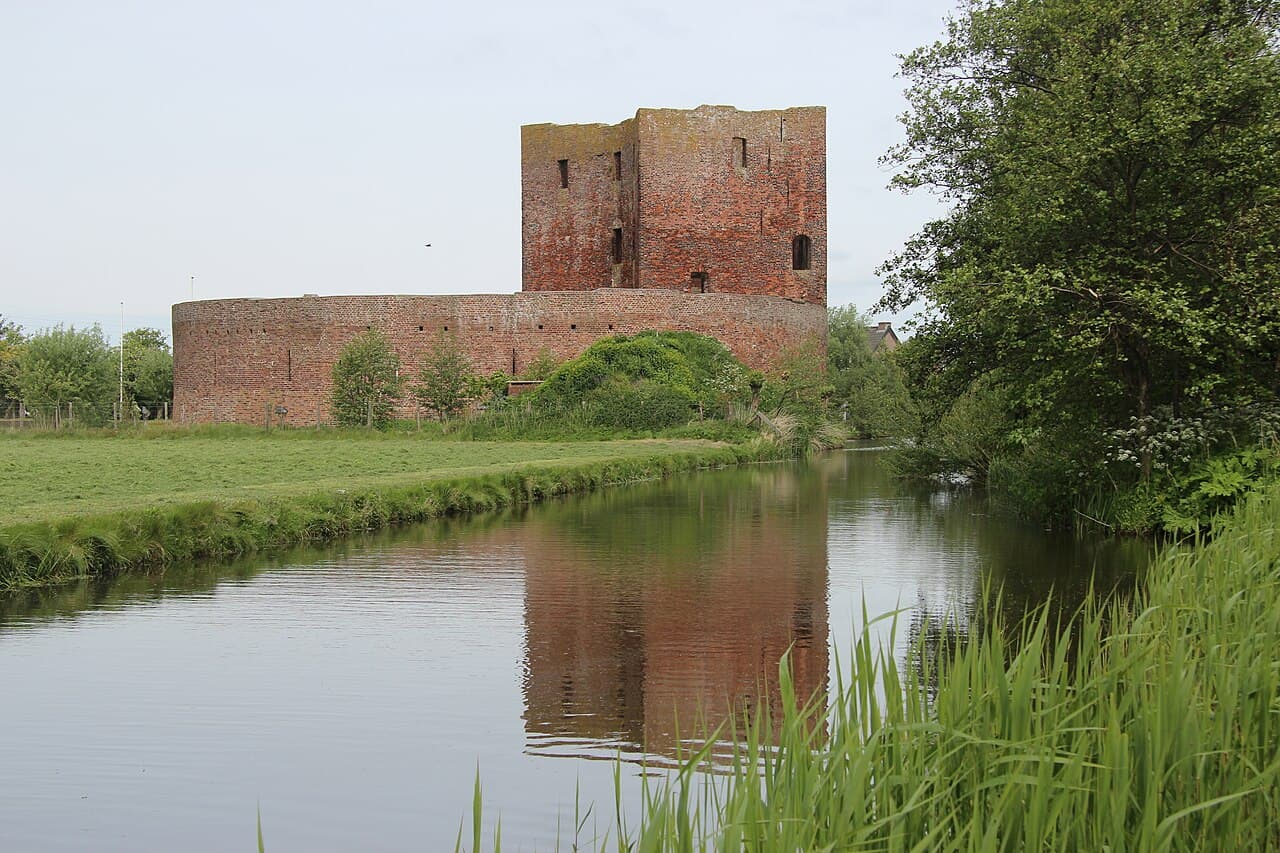
The castle's defining architectural feature is its circular curtain wall, approximately 37 meters in diameter, built with thick stone walls supported by internal buttresses. These buttresses uphold a series of arches that carry the chemin de ronde, a defensive wall walk enabling guards to patrol the perimeter. Integral to the curtain wall is the donjon (keep), a tall fortified tower that served as the last line of defense and a symbol of lordly power. The entire complex was surrounded by a water-filled moat, enhancing its defensive capabilities and classifying it as a classic water castle.
Historical significance and ownership
The castle was originally the seat of the noble Van Teylingen family, ancestors to the Van Brederode family, and played a crucial role in regional defense and administration. In 1282, following the death of the last direct heir, the estate reverted to the Counts of Holland. Subsequently, the castle transitioned from a feudal residence to a forester's castle and hunting lodge, overseeing the management of surrounding woodlands and game.
One of the castle's most notable residents was Jacqueline, Countess of Hainaut (Jacoba of Bavaria), who lived in the castle during her final years and died there in 1436. She was married to Frank van Borssele, the first stadtholder of Holland, who also resided at Teylingen. Their association with the castle adds significant historical and cultural value to the site.
Architectural evolution and restoration
The castle underwent several phases of repair and alteration. Early 14th-century records show repairs in 1337 and 1338 under the stewardship of appointed foresters. During the Eighty Years' War (1568–1648), particularly between 1572 and 1574, Teylingen Castle sustained heavy damage due to military actions. Restoration efforts began in 1605, including rebuilding the residential tower and constructing a more comfortable residence by 1614.
However, a devastating fire in 1676 destroyed the roof of the keep, after which the castle gradually fell into disrepair. Despite this, the castle continued to serve as a forester's residence until the late 18th century. The castle's lands and buildings were nationalized in 1795 but sold with the condition that the ruins, including the keep and curtain wall, remain intact.
In the 19th century, the castle changed hands between private owners, including two squires named Van Teylingen, before being donated back to the Dutch state in 1888. Since then, the ruins have been under state ownership and managed by the Rijksgebouwendienst, the government agency responsible for historic buildings.
Current condition and conservation efforts
Today, Teylingen Castle exists primarily as well-preserved ruins. The surviving structures include the consolidated ring wall and the remains of the donjon, which is still partially surrounded by water. The moat, once partly filled in, was excavated and restored in the late 20th century, returning the castle's defensive water features to their historical state.
The Slot Teylingen Foundation, established in 1975, has played a pivotal role in the castle's preservation and public engagement. This foundation, along with other heritage organizations, has worked to make the ruins a vibrant part of the surrounding Bulb Area, a region known for its horticultural significance. Restoration projects have included reconstructing the entrance bridge and maintaining the structural integrity of the ruins.
Archaeological excavations at the site have uncovered artifacts such as the distinctive Jacobakanntjes drinking vessels, named after Countess Jacoba of Bavaria. These findings provide valuable insight into the castle's medieval domestic life and its notable inhabitants.
Visiting teyligen castle today
The castle is accessible to visitors by appointment, offering a unique opportunity to explore one of the most beautiful and historically rich castle ruins in the Netherlands. Its picturesque setting, combined with the evocative remains of medieval fortifications, makes it a compelling destination for history enthusiasts, architecture lovers, and cultural tourists alike.
Teylingen Castle stands as a testament to the medieval heritage of South Holland, illustrating the evolution of castle architecture from a defensive stronghold to a noble residence and forester's lodge. Its preservation as a national monument ensures that this emblematic site continues to educate and inspire future generations.
Frequently asked questions (FAQ)
- What is the historical significance of Teylingen Castle?
- Teylingen Castle, dating back to the 13th century, is a prime example of medieval architecture in the Netherlands. It served as a residence for noble families and played a strategic role in regional conflicts, making it an important landmark in Dutch history.
- When was Teylingen Castle built?
- Construction of Teylingen Castle began around 1250 and was completed in the late 13th century. It has undergone various renovations and restorations over the centuries, reflecting the architectural styles of different periods.
- Can I visit Teylingen Castle?
- Yes, Teylingen Castle is open to visitors, offering guided tours and educational programs. It’s advisable to check the official website for current visiting hours and any special events that may be taking place during your visit.
- What are the opening hours of Teylingen Castle?
- Teylingen Castle is typically open to the public from Wednesday to Sunday, with varying hours depending on the season. For the most accurate and updated information, it is best to visit the castle's official site before planning your trip.
- Is Teylingen Castle accessible for visitors with disabilities?
- Yes, Teylingen Castle strives to be accessible to all visitors. Specific facilities are available to assist those with mobility challenges, but it is recommended to contact the castle staff in advance to ensure a smooth visit.
- What is the best time to visit Teylingen Castle?
- The best time to visit Teylingen Castle is during the spring and summer months when the weather is pleasant and gardens are in full bloom. Additionally, various events and activities are often scheduled during this period, enhancing the visitor experience.
- Are there any nearby attractions to visit after Teylingen Castle?
- Yes, the area surrounding Teylingen Castle offers several attractions, including the picturesque town of Sassenheim and the nearby Keukenhof Gardens, famous for its stunning tulip displays. Visitors can easily plan a full day exploring the rich culture and natural beauty of the region.
- How much are the ticket prices for Teylingen Castle?
- Ticket prices for Teylingen Castle are generally modest, with discounts available for children, students, and seniors. Check the official website for the latest pricing and any special offers or family packages that may be available.

Information
Sources & official resources
Verify the information above using these authoritative references.
Loading map...
Visitor reviews
No reviews yet. Been here? Write the first review and help other travelers!
Write the first reviewVisited this castle? Share your experience
Your review helps other travelers and adds first-hand knowledge to our encyclopedia.