Huys Dever
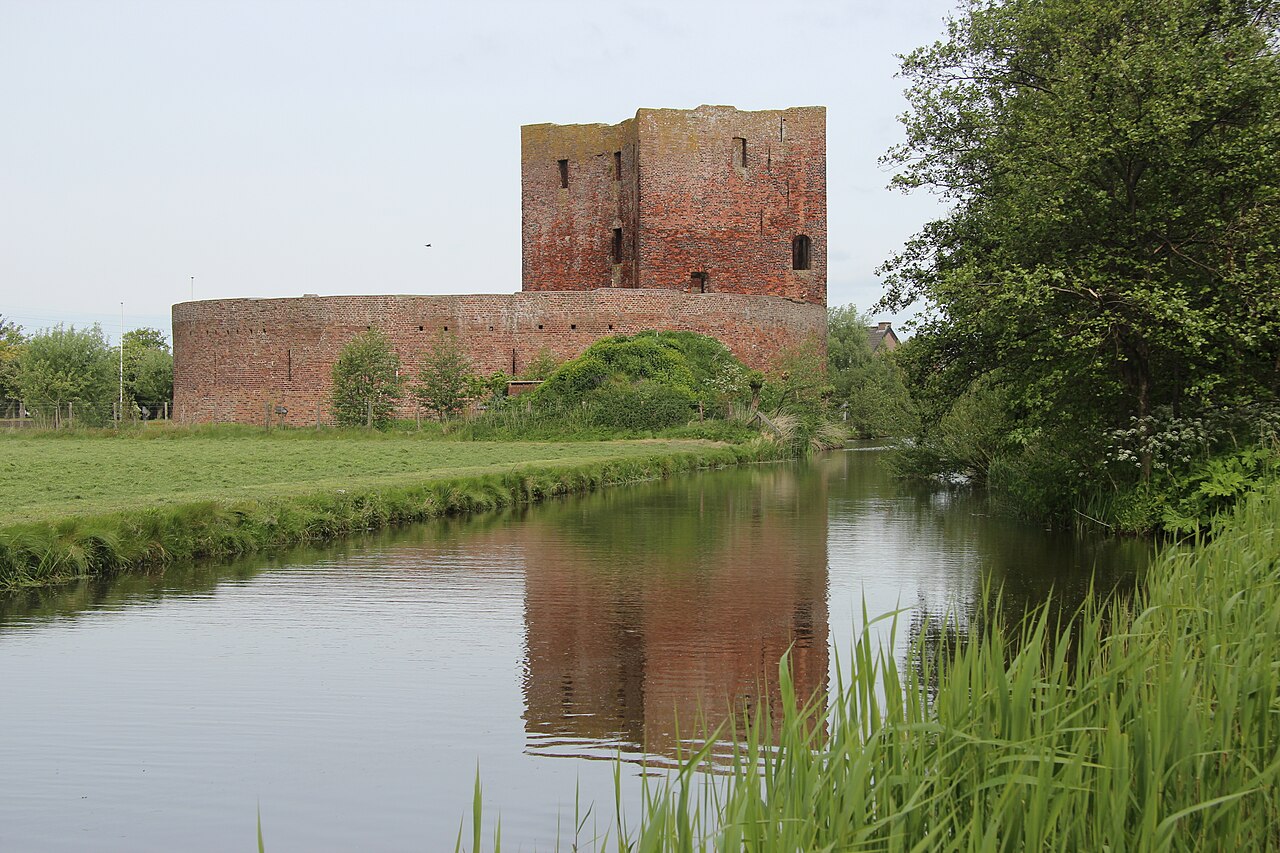
Huys Dever is a remarkable example of a late medieval hill castle located in Lisse, South Holland, Netherlands. Built shortly after 1375 by Reinier Dever, a nobleman from an established Holland family, the castle originally served as a fortified stronghold on the edge of the Lisser Poel lake, which has since been drained to create polder land. This D-shaped donjon is among the few surviving medieval fortified towers in Holland, showcasing the defensive architectural style of the period.
Historical background and ownership
The castle was constructed in the 14th century during the late medieval period, a time characterized by the building of fortified residences for nobility in the region. The Dever family, who held land granted by Count Floris V, maintained ownership until the early 15th century. Reinier Dever, who lived from 1370 to 1417, was the castle's first notable resident. Subsequently, the property passed to the van Haeften family, including figures such as Gijsbrecht and Clara van Haeften.
By the late 17th century, the castle was owned by Willem de Wael van Vronesteyn, the last noble to reside there until 1699. Around 1580, a small house was added to the castle's rounded front, which was later expanded between 1630 and 1634 into a larger manor house. This manor eventually exceeded the original donjon in size and was occupied until approximately 1750, after which the castle was abandoned.
Following abandonment, the castle fell into disrepair. The roof of the tower collapsed in 1862, and the interior was left exposed to the elements. The castle's decline was exacerbated by stone removal and neglect, leading to partial foundation collapses in 1848. The original owners, who were Catholic, relocated to Roermond and later Germany around 1700. After World War II, the Dutch government confiscated the property as enemy German possession and sold it to the municipality of Lisse in 1949 for a nominal sum.
Architectural features and layout
Huys Dever is a D-shaped donjon with four floors. The castle's basement walls are approximately two meters thick, tapering to about 1.6 meters in the upper chapel hall. The foundations extend more than three meters deep, resting on a sandy base that provides stability. The rear wall of the donjon is flat and faced the former Lisser Poel swamp, while the other walls curve in a horseshoe shape about two meters wide.
The castle was originally surrounded by a moat with two bridges serving as access points. Archaeological excavations in the moat area have uncovered various artifacts that are now displayed in the on-site museum housed within the castle. The 16th and 17th-century additions include a small house attached to the rounded front of the donjon, which was expanded into a large manor house surpassing the original tower in size.
By the 19th century, the castle had lost all its wooden structures, and its windows and doors were broken. Vegetation overgrew the walls, further contributing to its ruinous state. Restoration efforts beginning in 1973 rebuilt the roof using carpentry techniques characteristic of the 16th century, restoring the castle's silhouette.
Interior spaces
The interior of Huys Dever contains a knight's hall located at the rear of the building, a fully intact cellar, an upper hall, and an attic that now serves as the museum space. The thick walls and compact design reflect the defensive needs of the period, while the later expansions demonstrate the transition towards more comfortable noble residences.
Restoration and current status
Restoration of the castle began in 1973 and was completed by 1978, when Huys Dever was reopened to the public. Further work on the castle's forecourt took place between 1988 and 2000, enhancing visitor access and the site's presentation. A drawbridge was added in 2003, reinstating an authentic medieval feature and improving the castle's historical ambiance.
Today, Huys Dever is recognized as a rijksmonument, a national heritage site in the Netherlands, due to its well-preserved late medieval architecture and historical significance. It houses a small archaeological museum with artifacts excavated from its former moat, providing visitors with insights into the castle's past and the region's medieval history.
Significance in Dutch medieval heritage
Huys Dever stands out as one of the few surviving examples of a medieval donjon in the Netherlands. Its preservation offers a rare glimpse into the defensive architecture and noble life of the late 14th century. The castle's evolution from a fortified tower to a manor house complex reflects broader trends in Dutch noble residences and land use, particularly the transformation of the surrounding landscape from lake to polder.
The castle's archaeological finds and museum contribute to understanding the local history of Lisse and the development of South Holland. Its restoration and maintenance underscore the importance of preserving medieval structures as cultural and educational resources.
Frequently asked questions (FAQ)
- What are the visiting hours for Huys Dever castle?
- Huys Dever castle is typically open to visitors during specific hours, which can vary seasonally. It is advisable to check the official website or contact the Municipality of Lisse for the most current visiting times.
- Is Huys Dever castle accessible to people with mobility issues?
- The castle's historic structure and restoration efforts have made some areas accessible, but due to its medieval architecture and multiple floors, full accessibility may be limited. Visitors with mobility concerns should inquire in advance.
- What can visitors expect to see at the Huys Dever museum?
- The museum inside Huys Dever displays archaeological artifacts excavated from the castle's former moat, including pottery, tools, and medieval objects that illustrate the daily life and history of the castle and its inhabitants.
- When was Huys Dever castle originally built?
- Huys Dever castle was built shortly after 1375 during the late medieval period by Reinier Dever, a nobleman from an old Holland family.
- Can I visit the restored drawbridge at Huys Dever?
- Yes, the drawbridge was added in 2003 as part of restoration efforts and is a notable feature that visitors can see when touring the castle grounds.
Photo gallery

Information
Sources & official resources
Verify the information above using these authoritative references.
Loading map...
Visitor reviews
No reviews yet. Been here? Write the first review and help other travelers!
Write the first reviewVisited this castle? Share your experience
Your review helps other travelers and adds first-hand knowledge to our encyclopedia.