Dever Castle

Dever Castle: medieval keep and renaissance country mansion in South Holland
Late Medieval (14th–15th c.)
Restored

Dever Castle, locally known as 't Huys Dever, is a remarkable historic site located in Lisse, within the province of South Holland in the Netherlands. This castle stands as a testament to medieval military architecture and Renaissance adaptation, offering visitors a glimpse into centuries of Dutch history. Originally constructed as a fortified keep, it evolved into a country mansion before falling into ruin and later undergoing restoration to preserve its heritage.

Medieval origins and strategic location

The core of Dever Castle is a medieval keep built circa 1375 by Reinier De Ever, a knight and vassal under Albrecht van Beieren, the Count of Holland, Zeeland, and Hainaut. The castle's location was strategically chosen on the border of the old dunes and the swampy inland, near the shores of the Lisser Poel lake, which was connected to the larger Haarlemmermeer lake. This placement provided both defensive advantages and control over local waterways.

Originally, the castle comprised a stone keep and an adjacent bailey, both surrounded by a broad moat. The moat and defensive walls underscored its primary function as a fortified stronghold during the Late Medieval period. The keep itself was a typical example of medieval military architecture, designed for defense and residence.

Renaissance transformation and decline

In the 16th century, Dever Castle underwent significant changes reflecting the shift from purely military functions to residential comfort. A small extension was constructed against the round side of the keep, which led to the filling in of the moat between the keep and the bailey. This extension was later enlarged, transforming the castle into a Renaissance country mansion. The original medieval tower was concealed from view at the back of this new structure.

The castle remained inhabited until the 1750s, after which it was abandoned for nearly a century. In 1848, the 16th-century extension collapsed, and over the following decade, most of the castle except the tower was dismantled by locals scavenging building materials. The tower itself lost its roof during a storm in 1862, yet its thick walls endured both natural and human attempts at destruction.

Restoration and modern use

Ownership of the castle remains transferred to the Dutch State in 1945, who then sold it to the municipality of Lisse for a nominal fee. By the time restoration efforts began in 1973, the castle was in a state of severe disrepair. All timber elements were gone, windows and doorways were eroded, and vegetation had taken root on the walls. Only the cellar remained roofed.

The restoration included reconstructing the roof in the style of 16th-century carpentry, restoring the tower's silhouette and structural integrity. In 1978, Dever Castle was opened to the public. In 1989, the foundations of the 16th and 17th-century extensions were raised slightly above ground level to reveal the original ground plan of the complex, enhancing visitor understanding of the castle's historical layout.

Architectural features and cultural significance

Dever Castle is a prime example of a keep that transitioned from a medieval fortress to a Renaissance residence. The original stone keep exhibits characteristics of Late Medieval defensive architecture, including thick walls and limited openings for protection. The later extensions showcase Renaissance influences, emphasizing comfort and aesthetics over military utility.

The castle was once situated on the edge of the Lisser Poel, a lake that has since been reclaimed and poldered, along with the nearby Haarlemmermeer lake, dramatically altering the landscape and the castle's immediate environment. This geographical transformation contributed to the castle's decline as a strategic residence.

Today, Dever Castle houses a small archaeological museum featuring artifacts excavated from the former moat and surrounding areas, offering insights into the daily life and history of its inhabitants. It has been designated a significant rijksmonument for its early medieval remains, highlighting its importance in Dutch cultural heritage.

Visiting Dever Castle

Visitors to Dever Castle can explore the restored tower and the archaeological displays, gaining an understanding of medieval and Renaissance architecture and the castle's historical context within the Netherlands. The site provides a unique opportunity to witness the evolution of a fortified structure adapting to changing times and landscapes.

The castle's location in Lisse, a town known for its proximity to the famous Keukenhof gardens and the bulb-growing region, makes it an attractive destination for tourists interested in Dutch history and culture.

Frequently asked questions (FAQ)

How do I get to Dever Castle from the nearest train station?
Dever Castle is easily accessible from Lisse's train station, located just a short bus ride away. You can take a local bus or a taxi directly to the castle, making it convenient for visitors arriving by public transport.
What is the historical significance of Dever Castle?
Dever Castle is a remarkable example of medieval architecture in the Netherlands, dating back to the 14th century. It played a crucial role in the region's defense and has a rich history that reflects the local culture and heritage.
When was Dever Castle built?
Construction of Dever Castle began in the late 1300s and continued into the early 1400s. Its design and fortifications are representative of the architectural style of that period, highlighting its importance as a defensive structure.
Can I take a guided tour of Dever Castle?
Yes, guided tours are available at Dever Castle, offering visitors deeper insights into its history and architecture. It's recommended to book in advance, especially during peak tourist seasons, to ensure a spot on the tour.
Why is Dever Castle a popular tourist attraction?
Dever Castle attracts visitors due to its stunning architecture, beautiful gardens, and rich historical narrative. It provides a unique glimpse into the past and is surrounded by picturesque landscapes, making it a perfect destination for history enthusiasts and nature lovers alike.
Is it possible to visit Dever Castle with children?
Absolutely! Dever Castle is family-friendly and offers various activities suitable for children. The castle grounds provide plenty of space for exploration, and educational tours can engage younger visitors in the area's history.
What are the opening hours for Dever Castle?
Dever Castle is open to visitors from 10 AM to 6 PM during the peak season, which runs from April to October. In the off-peak season, the hours may vary, so it's best to check the official website before your visit.
What are the ticket prices for visiting Dever Castle?
Ticket prices for Dever Castle are reasonably priced, with discounts available for children, students, and seniors. Family packages are also offered, making it an affordable outing for all ages.
What is the best time to visit Dever Castle?
The best time to visit Dever Castle is during the spring and early autumn when the weather is mild and the gardens are in full bloom. Additionally, visiting during weekdays can help avoid the larger crowds that typically gather on weekends.
Are there any nearby attractions to visit after Dever Castle?
Yes, there are several attractions near Dever Castle, including the beautiful Keukenhof Gardens and the charming town of Lisse itself. Both locations offer a delightful experience and are perfect for complementing your visit to the castle.

Information

Keep / Donjon

Address

Heereweg 349a, Netherlands

Sources & official resources

Verify the information above using these authoritative references.

Loading map...

Visitor reviews

No reviews yet. Been here? Write the first review and help other travelers!

Write the first review

Visited this castle? Share your experience

Your review helps other travelers and adds first-hand knowledge to our encyclopedia.
Write a review

(5/5)

0/2000 characters

Your review will be visible after admin approval

Nearby castles

1.4 km
Huys Dever — Netherlands castle

Huys Dever

Lisse, Netherlands

Huys Dever is a remarkable example of a late medieval hill castle located in Lisse, South Holland, Netherlands. Built shortly after 1375 by Reinier Dever, a nobleman from an established Holland family, the castle originally served as a fortified stronghold on the edge of the Lisser Poel lake, which has since been drained to create polder land. This D-shaped donjon is among the few surviving medieval fortified towers in Holland, showcasing the defensive architectural style of the period. Historical background and ownership The castle was constructed in the 14th century during the late medieval period, a time characterized by the building of fortified residences for nobility in the region. The Dever family, who held land granted by Count Floris V, maintained ownership until the early 15th century. Reinier Dever, who lived from 1370 to 1417, was the castle's first notable resident. Subsequently, the property passed to the van Haeften family, including figures such as Gijsbrecht and Clara van Haeften. By the late 17th century, the castle was owned by Willem de Wael van Vronesteyn, the last noble to reside there until 1699. Around 1580, a small house was added to the castle's rounded front, which was later expanded between 1630 and 1634 into a larger manor house. This manor eventually exceeded the original donjon in size and was occupied until approximately 1750, after which the castle was abandoned. Following abandonment, the castle fell into disrepair. The roof of the tower collapsed in 1862, and the interior was left exposed to the elements. The castle's decline was exacerbated by stone removal and neglect, leading to partial foundation collapses in 1848. The original owners, who were Catholic, relocated to Roermond and later Germany around 1700. After World War II, the Dutch government confiscated the property as enemy German possession and sold it to the municipality of Lisse in 1949 for a nominal sum. Architectural features and layout Huys Dever is a D-shaped donjon with four floors. The castle's basement walls are approximately two meters thick, tapering to about 1.6 meters in the upper chapel hall. The foundations extend more than three meters deep, resting on a sandy base that provides stability. The rear wall of the donjon is flat and faced the former Lisser Poel swamp, while the other walls curve in a horseshoe shape about two meters wide. The castle was originally surrounded by a moat with two bridges serving as access points. Archaeological excavations in the moat area have uncovered various artifacts that are now displayed in the on-site museum housed within the castle. The 16th and 17th-century additions include a small house attached to the rounded front of the donjon, which was expanded into a large manor house surpassing the original tower in size. By the 19th century, the castle had lost all its wooden structures, and its windows and doors were broken. Vegetation overgrew the walls, further contributing to its ruinous state. Restoration efforts beginning in 1973 rebuilt the roof using carpentry techniques characteristic of the 16th century, restoring the castle's silhouette. Interior spaces The interior of Huys Dever contains a knight's hall located at the rear of the building, a fully intact cellar, an upper hall, and an attic that now serves as the museum space. The thick walls and compact design reflect the defensive needs of the period, while the later expansions demonstrate the transition towards more comfortable noble residences. Restoration and current status Restoration of the castle began in 1973 and was completed by 1978, when Huys Dever was reopened to the public. Further work on the castle's forecourt took place between 1988 and 2000, enhancing visitor access and the site's presentation. A drawbridge was added in 2003, reinstating an authentic medieval feature and improving the castle's historical ambiance. Today, Huys Dever is recognized as a rijksmonument, a national heritage site in the Netherlands, due to its well-preserved late medieval architecture and historical significance. It houses a small archaeological museum with artifacts excavated from its former moat, providing visitors with insights into the castle's past and the region's medieval history. Significance in Dutch medieval heritage Huys Dever stands out as one of the few surviving examples of a medieval donjon in the Netherlands. Its preservation offers a rare glimpse into the defensive architecture and noble life of the late 14th century. The castle's evolution from a fortified tower to a manor house complex reflects broader trends in Dutch noble residences and land use, particularly the transformation of the surrounding landscape from lake to polder. The castle's archaeological finds and museum contribute to understanding the local history of Lisse and the development of South Holland. Its restoration and maintenance underscore the importance of preserving medieval structures as cultural and educational resources.

Late Medieval (14th–15th c.)
Details
2.2 km
Castle Keukenhof — Netherlands castle

Castle Keukenhof

, Netherlands

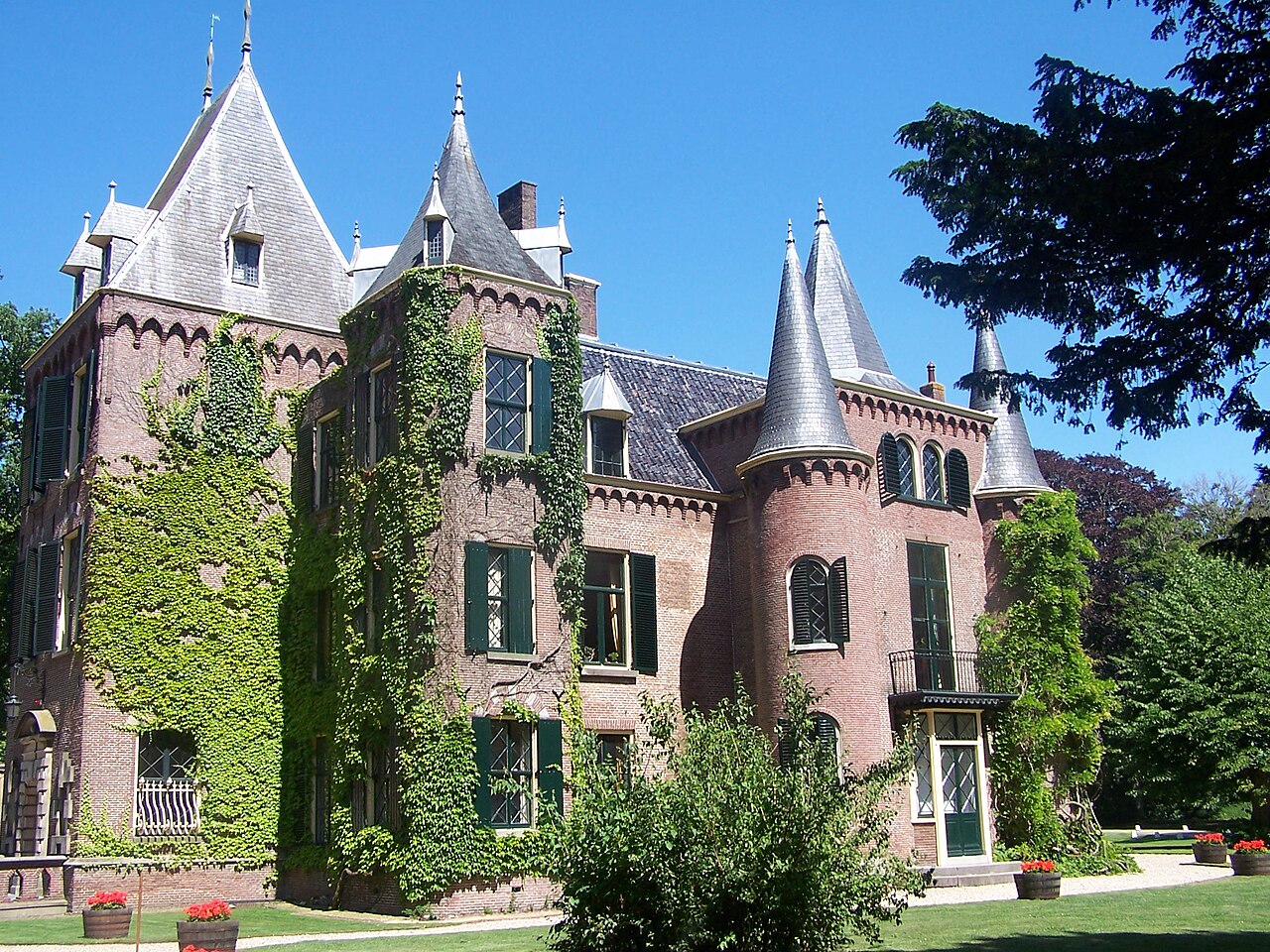
Castle Keukenhof is a notable example of a Renaissance hill castle located in the Netherlands. Constructed in the 17th century, it reflects the architectural and cultural shifts of the Renaissance period in Dutch history. Unlike many medieval fortresses, Castle Keukenhof was designed more as a stately residence and symbol of prestige rather than a purely defensive stronghold. Historical context and origins The castle's origins date back to the early 1600s, a time when the Netherlands was experiencing significant growth in wealth and influence due to its maritime trade and burgeoning Golden Age. The construction of Castle Keukenhof coincided with a period of relative peace and prosperity, allowing for the development of elegant country estates rather than fortified military structures. It is believed that the castle was originally built as a manor house on a small hill, which gave it the classification of a hill castle. The elevated position provided a commanding view of the surrounding landscape, a common feature for residences of the aristocracy seeking both status and security. Architectural features and style Castle Keukenhof embodies the Renaissance architectural style, characterized by symmetry, proportion, and the use of classical elements such as pilasters, pediments, and ornamental stonework. The castle's façade likely features large windows to allow ample natural light, a departure from the narrow openings typical of medieval fortifications. The layout typically includes a central main building flanked by wings, creating a balanced and harmonious composition. The use of brick and natural stone reflects regional building materials common in Dutch Renaissance architecture. The castle grounds historically included formal gardens, reflecting Renaissance ideals of order and beauty. These gardens were designed to complement the architecture and provide leisure spaces for the castle's inhabitants. Function and cultural significance While Castle Keukenhof was not primarily a military fortress, its hilltop location and sturdy construction provided a degree of protection. The castle served as a residence for wealthy families and functioned as a symbol of their social status and power during the Dutch Golden Age. Over the centuries, the castle has been part of the region's cultural heritage, representing the transition from medieval fortifications to Renaissance country estates. It also contributes to the historical narrative of Dutch aristocratic life and architectural evolution. Current condition and preservation The castle is generally considered well preserved, maintaining much of its original Renaissance character. Efforts have been made to conserve its structural integrity and architectural details, ensuring that visitors can appreciate its historical and aesthetic value. Today, Castle Keukenhof may be accessible to the public, offering tours and events that highlight its history and architectural significance. The surrounding gardens continue to be an important feature, attracting visitors interested in both history and horticulture. Visiting castle keukenhof Visitors to Castle Keukenhof can explore its elegant halls, admire the Renaissance architectural details, and enjoy the beautifully maintained gardens. The castle provides insight into 17th-century Dutch aristocratic life and the cultural context of the Renaissance period in the Netherlands. Seasonal events and guided tours enhance the visitor experience, making it a valuable destination for those interested in history, architecture, and landscape design.

Renaissance (15th–17th c.)
Details
2.8 km
Teylingen Castle — Netherlands castle

Teylingen Castle

Sassenheim, Netherlands

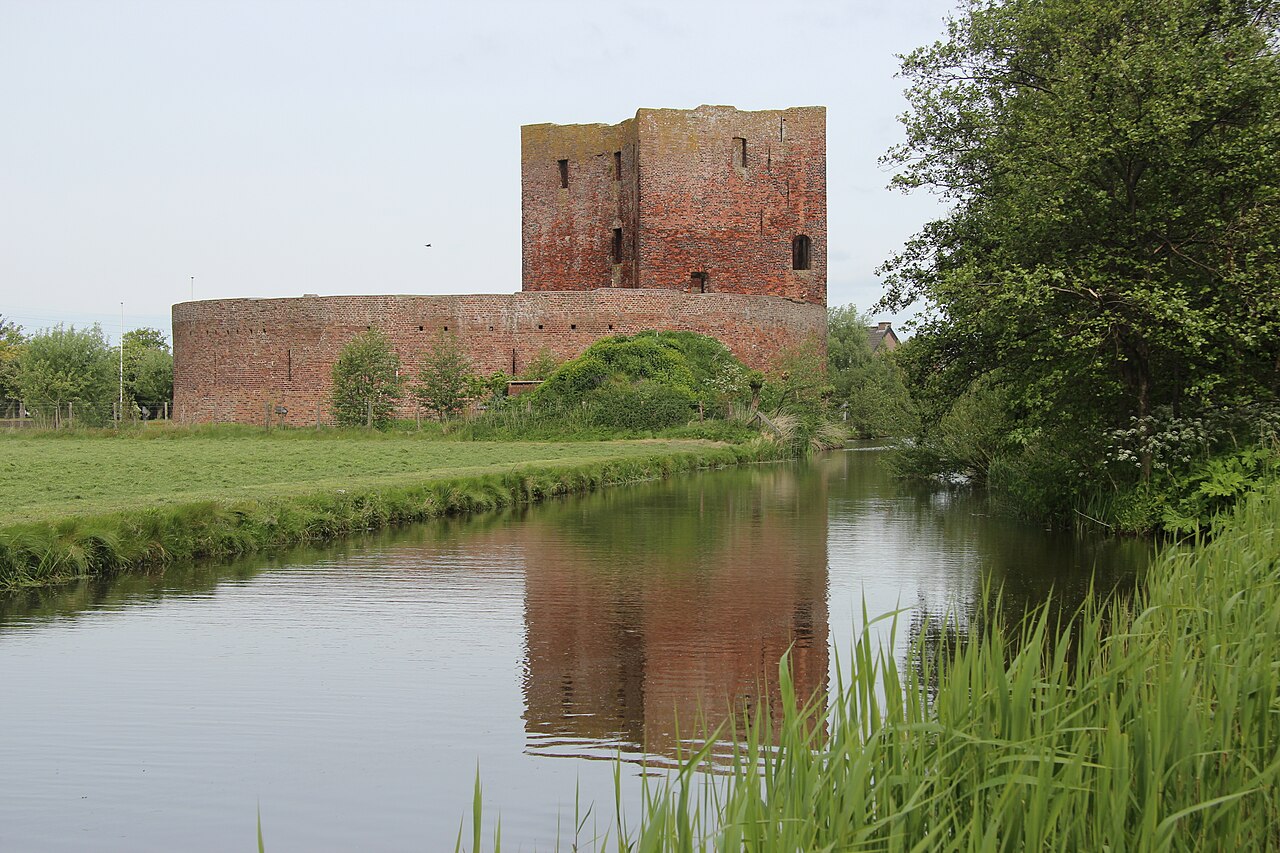
Teylingen Castle, also known locally as Kasteel Teylingen, is a remarkable medieval ruin situated near the village of Sassenheim in the province of South Holland, Netherlands. This castle stands as a significant example of a high medieval circular water castle, dating back to the early 13th century. Originally constructed around 1250 by Lord Dirk van Teylingen, it was strategically positioned to guard the vital north-south route and the important Rhine dike, serving as a defensive stronghold and a noble residence.The castle's defining architectural feature is its circular curtain wall, approximately 37 meters in diameter, built with thick stone walls supported by internal buttresses. These buttresses uphold a series of arches that carry the chemin de ronde, a defensive wall walk enabling guards to patrol the perimeter. Integral to the curtain wall is the donjon (keep), a tall fortified tower that served as the last line of defense and a symbol of lordly power. The entire complex was surrounded by a water-filled moat, enhancing its defensive capabilities and classifying it as a classic water castle.Historical significance and ownershipThe castle was originally the seat of the noble Van Teylingen family, ancestors to the Van Brederode family, and played a crucial role in regional defense and administration. In 1282, following the death of the last direct heir, the estate reverted to the Counts of Holland. Subsequently, the castle transitioned from a feudal residence to a forester's castle and hunting lodge, overseeing the management of surrounding woodlands and game.One of the castle's most notable residents was Jacqueline, Countess of Hainaut (Jacoba of Bavaria), who lived in the castle during her final years and died there in 1436. She was married to Frank van Borssele, the first stadtholder of Holland, who also resided at Teylingen. Their association with the castle adds significant historical and cultural value to the site.Architectural evolution and restorationThe castle underwent several phases of repair and alteration. Early 14th-century records show repairs in 1337 and 1338 under the stewardship of appointed foresters. During the Eighty Years' War (1568–1648), particularly between 1572 and 1574, Teylingen Castle sustained heavy damage due to military actions. Restoration efforts began in 1605, including rebuilding the residential tower and constructing a more comfortable residence by 1614.However, a devastating fire in 1676 destroyed the roof of the keep, after which the castle gradually fell into disrepair. Despite this, the castle continued to serve as a forester's residence until the late 18th century. The castle's lands and buildings were nationalized in 1795 but sold with the condition that the ruins, including the keep and curtain wall, remain intact.In the 19th century, the castle changed hands between private owners, including two squires named Van Teylingen, before being donated back to the Dutch state in 1888. Since then, the ruins have been under state ownership and managed by the Rijksgebouwendienst, the government agency responsible for historic buildings.Current condition and conservation effortsToday, Teylingen Castle exists primarily as well-preserved ruins. The surviving structures include the consolidated ring wall and the remains of the donjon, which is still partially surrounded by water. The moat, once partly filled in, was excavated and restored in the late 20th century, returning the castle's defensive water features to their historical state.The Slot Teylingen Foundation, established in 1975, has played a pivotal role in the castle's preservation and public engagement. This foundation, along with other heritage organizations, has worked to make the ruins a vibrant part of the surrounding Bulb Area, a region known for its horticultural significance. Restoration projects have included reconstructing the entrance bridge and maintaining the structural integrity of the ruins.Archaeological excavations at the site have uncovered artifacts such as the distinctive Jacobakanntjes drinking vessels, named after Countess Jacoba of Bavaria. These findings provide valuable insight into the castle's medieval domestic life and its notable inhabitants.Visiting teyligen castle todayThe castle is accessible to visitors by appointment, offering a unique opportunity to explore one of the most beautiful and historically rich castle ruins in the Netherlands. Its picturesque setting, combined with the evocative remains of medieval fortifications, makes it a compelling destination for history enthusiasts, architecture lovers, and cultural tourists alike.Teylingen Castle stands as a testament to the medieval heritage of South Holland, illustrating the evolution of castle architecture from a defensive stronghold to a noble residence and forester's lodge. Its preservation as a national monument ensures that this emblematic site continues to educate and inspire future generations.

High Medieval (11th–13th c.)
Details