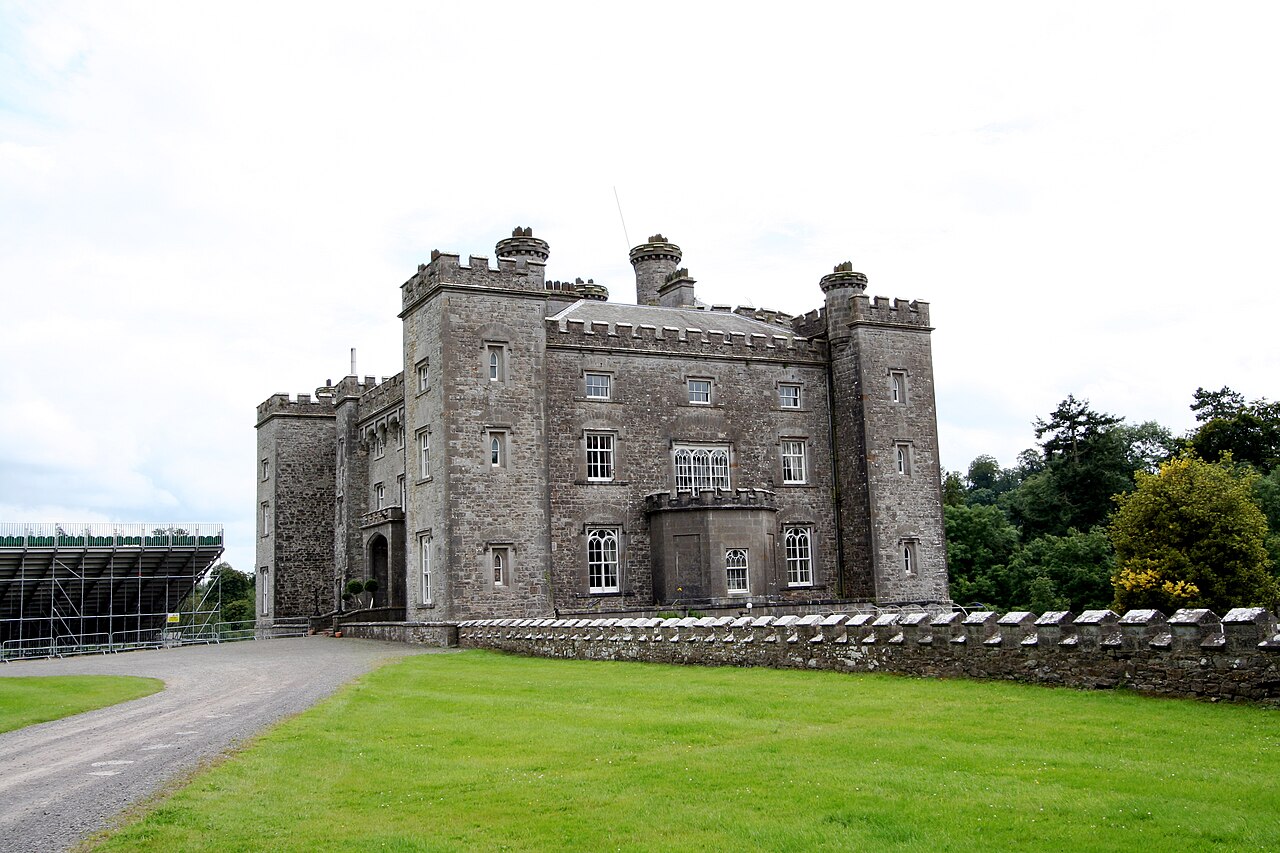
Termonfeckin Castle
Termonfeckin Castle stands as a significant historical monument in Ireland, embodying a rich heritage that spans from early Christian times through the late medieval period. Originally established as a religious site, the location evolved over centuries into a fortified stone castle, reflecting the turbulent history and architectural developments of the region.
The origins of the site trace back to the 7th century when Saint Fechin Fora founded a monastery, marking the beginning of Christian religious activity at Termonfeckin. This early monastic community played a vital role in the spiritual and cultural life of the area. The monastery endured numerous attacks, including a notable Viking raid in 1013 and an assault by the Irish clan Uí Críchán Fáinne in 1025. Further conflict arose in 1149 when raiders from the Kingdom of Brega devastated the settlement, illustrating the site's strategic vulnerability during the medieval era.
In the 12th century, the religious character of Termonfeckin was renewed with the establishment of an Augustinian monastery. Initially serving male religious members, it later accommodated a female community, demonstrating the evolving ecclesiastical functions of the site. The monastery's religious use ceased in 1540 following the dissolution of monasteries ordered by King Henry VIII during the Reformation, a transformative period for Irish religious institutions.
The construction and architecture of Termonfeckin Castle
The castle itself was constructed in the 15th century during the late medieval period, representing a shift from purely religious to fortified military architecture. It is a rectangular stone fortress rising three stories high, showcasing typical defensive features of the era. The castle's walls are punctuated with arrow slits designed to allow defenders to fire upon attackers while remaining protected.
Access to the interior is granted through an arched entrance, a common architectural element in medieval fortifications that provided both structural strength and controlled entry. The fortress is further defended by two watchtowers positioned at the north and south corners, offering elevated vantage points for surveillance and defense.
Unique architectural features
Within the castle, a spiral staircase remains in the northeast corner, providing vertical access between floors and to the roof. This staircase leads to a notably unusual stepped roof design, which is uncommon among contemporary castles of the period. The interior also features a delicate stone vault on the second floor, remarkable for its thin construction that indicates advanced masonry skills.
The third-floor room is roofed using a technique reminiscent of Neolithic megalithic construction seen at Newgrange, employing a corbelled roofing method. This architectural choice suggests a continuity or revival of ancient building practices within medieval Irish architecture, adding a unique cultural dimension to the castle's design.
Another distinctive feature is the castle's triangular stone-framed windows. These windows are not only visually striking but also served defensive purposes by allowing light and air into the interior while minimizing vulnerability to attack.
Historical events and later developments
Termonfeckin Castle suffered damage during the 1641 Irish rebellion amid the Cromwellian conquest of Ireland. Following this, restoration efforts were led by Captain Brabazon, who stabilized the structure and preserved its defensive capabilities.
Nearby stood Primacy Castle, the residence of the Archbishop of Armagh, which housed notable figures such as Richard Craig and James Ussher in the early to mid-17th century. This castle was destroyed during the 1641 conflict and demolished in 1830, removing a significant ecclesiastical stronghold from the landscape.
Religious and cultural legacy
Adjacent to Termonfeckin Castle lies Saint Fechan’s cemetery, home to a 9th-century High Cross richly decorated with religious iconography. The east face of the cross depicts a winged figure above the crucifixion scene, while the west face shows Christ in glory. The remainder of the cross is adorned with intricate Celtic geometric patterns, reflecting the artistic traditions of early medieval Ireland.
An inscription on a nearby stone invokes Ultan and Duach as the makers of the cross, providing a rare historical link to the artisans responsible for this masterpiece. This monument underscores the site's longstanding religious significance and its role in the cultural heritage of the region.
Post-medieval use and preservation
In the 18th century, the building known as An Grianán was constructed near the castle site. It holds the distinction of being Ireland’s first adult education establishment and later served as a horticultural college. This continued use of the area for educational purposes highlights the site's ongoing importance beyond its medieval origins.
Today, Termonfeckin Castle remains in a partially preserved state. While some sections of the original structure survive, others are incomplete, offering valuable insight into the design and function of smaller medieval strongholds in Ireland. The combination of fortified elements and unique construction techniques makes it a noteworthy example of late medieval military architecture.
The proximity of the 9th-century High Cross and other religious artifacts enriches the historical narrative of the site, illustrating a layered history that encompasses early Christian monasticism, medieval fortification, and later educational and cultural developments.
Frequently asked questions (FAQ)
- When was Termonfeckin Castle originally established and by whom?
- Termonfeckin Castle's site was originally established as a monastery in the 7th century by Saint Fechin Fora, marking the beginning of its religious significance.
- What are some unique architectural features of Termonfeckin Castle?
- The castle features a rectangular stone fortress design with triangular stone-framed windows, a delicate stone vault on the second floor, a spiral staircase leading to an unusual stepped roof, and a third-floor corbelled roof inspired by Neolithic construction.
- What historical events affected Termonfeckin Castle during the 17th century?
- The castle was damaged during the 1641 Irish rebellion and subsequently restored by Captain Brabazon. Nearby Primacy Castle, residence of the Archbishop of Armagh, was destroyed in the same conflict and demolished in 1830.
- What is the significance of the 9th-century High Cross near Termonfeckin Castle?
- The High Cross is richly decorated with religious imagery including a winged figure above the crucifixion and Christ in glory, adorned with Celtic geometric patterns. An inscription links it to the makers Ultan and Duach, highlighting its cultural and historical importance.
- Is Termonfeckin Castle accessible to visitors today?
- Currently, Termonfeckin Castle is in a partially preserved state. While specific visiting hours and ticket information are not widely available, the site remains an important historical landmark in Northern Ireland.
Information
Loading map...
Visitor reviews
No reviews yet. Been here? Write the first review and help other travelers!
Write the first reviewVisited this castle? Share your experience
Your review helps other travelers and adds first-hand knowledge to our encyclopedia.