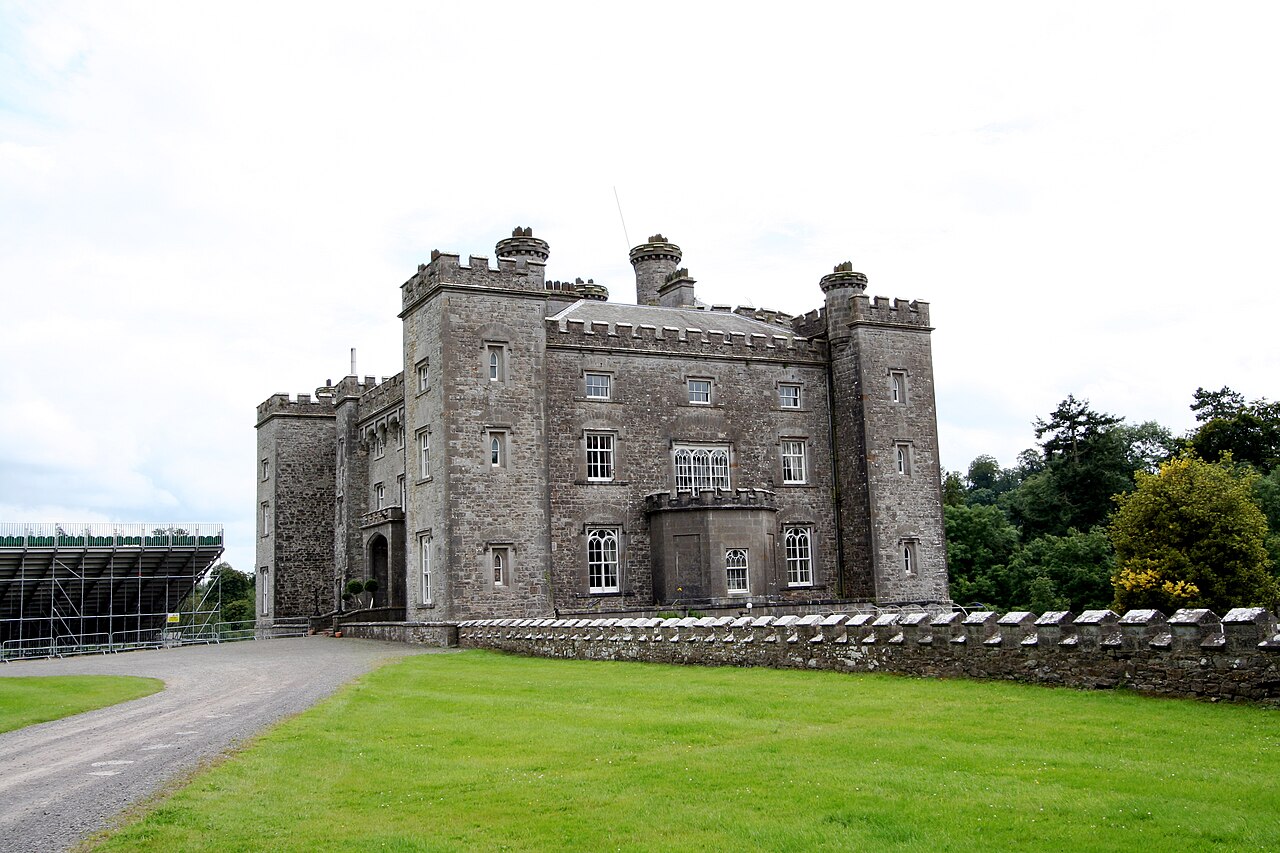
Millmount Fort
Millmount Fort stands prominently on a large mound in Drogheda, Ireland, representing a site of continuous human significance from prehistoric to modern times. This hill castle traces its origins to the early 12th century when the Normans first established a motte and bailey fortification atop what was originally a Neolithic passage grave. The mound’s prehistoric roots highlight the location's long-standing cultural and strategic importance, bridging ancient ritual significance with medieval and later military functions.
The Norman foundation and medieval fortifications
The initial fortification at Millmount was constructed around 1172 by the Norman lord Hugh De Lacy, who governed the Kingdom of Meath under the authority of King Henry II of England. The original earthwork motte and bailey was a typical Norman military strategy to secure newly conquered territories. Over time, this early timber structure was replaced by more durable stone castle fortifications, reflecting advancements in defensive architecture and the need for stronger military presence.
Throughout the medieval period, Millmount Fort played a strategic role due to its commanding position over Drogheda and the surrounding region. Its elevated location allowed for surveillance and defense against potential invaders, contributing to Drogheda’s status as a fortified town.
Millmount Fort during the 17th century conflicts
The fort’s military significance was underscored during the 17th century, particularly during the 1649 siege of Drogheda amid Oliver Cromwell’s conquest of Ireland. The fort was a key defensive position as parliamentary forces sought to capture the town. Despite the eventual fall of Drogheda, Millmount Fort’s role in the siege remains a notable chapter in its history, illustrating the turbulent and violent nature of the period.
18th and 19th century transformations
In the early 18th century, the fort was adapted to serve as Richmond Barracks, with courtyard buildings constructed around 1714. These barracks housed garrisoned troops and reflected the evolving military needs of the British administration in Ireland. The fortifications were further reinforced following the unrest of the 1790s and the political changes brought by the 1800 Act of Union between Great Britain and Ireland.
One of the most distinctive architectural features from this period is the Martello tower, built in the early 19th century as part of the fort’s re-fortification. This small, circular defensive tower, locally nicknamed the "Cup and Saucer", is constructed of thick stone walls designed to withstand artillery fire and provide a strong defensive position. Martello towers were a common coastal defense measure throughout the British Empire during the Napoleonic Wars, and Millmount’s tower is a prominent example of this military architectural style adapted for inland defense.
20th century military use and damage
Millmount Fort continued to hold military importance into the 20th century. During the 1922 Irish Civil War, the fort was occupied by Anti-Treaty forces. It was heavily shelled by Irish Free State troops using British 18-pounder artillery, which caused significant damage to the structure. This conflict marked the last major military engagement at the site and left visible scars that attest to its contested history.
Archaeological and cultural significance
The fort’s location atop a Neolithic passage grave adds a deep archaeological dimension to its significance. This ancient burial mound predates all medieval and modern structures, linking Millmount Fort to Ireland’s prehistoric past. The site is also culturally important in Irish tradition, associated with Amhairgin mac Míled, a mythological figure credited with founding song, poetry, and music in Ireland. This connection imbues the site with symbolic meaning beyond its military function, representing a place where Ireland’s earliest poetic heritage and spiritual identity converge.
Architectural features and surviving structures
The fort complex today showcases a combination of construction phases spanning several centuries. The most visually striking feature is the Martello tower, which dominates the skyline of Drogheda and is a local landmark. Its distinctive shape and robust stone construction demonstrate adaptations in military architecture responding to evolving artillery technology.
Remnants of the 18th-century courtyard buildings remain within the complex, reflecting the fort’s later role as a barracks. These structures illustrate the transition from medieval fortress to a more modern military installation designed to accommodate troops rather than solely to defend territory.
Beneath these later constructions lies the ancient mound, whose original function as a Neolithic passage grave remains a foundational aspect of the site’s identity. Although the burial function has long been superseded by military use, the mound’s prominence continues to define the fort’s commanding position.
Millmount Fort today: museum and heritage site
After years of neglect following the Irish Civil War, Millmount Fort underwent extensive restoration by the year 2000. It now serves as the Millmount Museum, preserving and interpreting its layered history for visitors. The museum houses unique collections, including the only surviving guild and trade banners in Ireland, alongside displays such as an 18th-century folk kitchen, dairy, laundry, and an Irish History Room.
These exhibits provide cultural context within the historic stone and earthwork structures, allowing visitors to explore the fort’s diverse past — from prehistoric ritual site to Norman stronghold, through periods of siege and military adaptation, to its current role as a cultural heritage landmark. The museum and the site’s restoration highlight the importance of preserving Ireland’s multifaceted historical narrative embodied in Millmount Fort.
Visitor experience and educational value
Visitors to Millmount Fort can appreciate not only the impressive military architecture but also the deep historical layers visible in the site’s fabric. The museum’s collections and interpretive materials enrich understanding of Ireland’s social, military, and cultural history. The fort’s elevated position also offers panoramic views over Drogheda and the surrounding countryside, enhancing its appeal as a destination for both history enthusiasts and general tourists.
Frequently asked questions (FAQ)
- What is Millmount Fort?
- Millmount Fort is a historic fortress located in Drogheda, United Kingdom. It was built in the 17th century and played a significant role in various military conflicts, including the Williamite War. Today, it serves as a museum and a prominent landmark, offering insights into the rich history of the area.
- When was Millmount Fort constructed?
- Millmount Fort was constructed in 1690 following the Williamite War as a defensive structure. Its strategic position allowed for control over the River Boyne and the surrounding region. The fort has undergone various modifications throughout its history, reflecting the changing military needs over time.
- Can I visit Millmount Fort?
- Yes, Millmount Fort is open to visitors year-round, providing a unique opportunity to explore its historical significance. Guided tours are available, offering detailed insights into its architecture and the events that shaped its history. Visitors can also enjoy panoramic views of Drogheda from the fort's vantage point.
- What are the opening hours for Millmount Fort?
- Millmount Fort typically opens to visitors from 10 AM to 5 PM, with extended hours during the summer months. It is advisable to check the official website or contact the fort directly for any seasonal changes or special events that may affect opening times.
- Is it possible to access Millmount Fort for those with mobility issues?
- Millmount Fort strives to be accessible to all visitors, but certain areas may present challenges for those with mobility issues due to the fort's historical architecture. It is recommended to contact the fort in advance to inquire about specific accessibility provisions and to ensure a comfortable visit.
- What are the ticket prices for visiting Millmount Fort?
- Ticket prices for Millmount Fort are generally affordable, with discounts available for students and seniors. Children under a certain age may enter for free, making it a family-friendly destination. Check the official website for the latest pricing information and any special offers.
- When is the best time to visit Millmount Fort?
- The best time to visit Millmount Fort is during the late spring and summer months when the weather is typically mild and pleasant. This allows for a more enjoyable experience while exploring the fort and its surroundings. Additionally, special events and activities are often scheduled during these months, enhancing the visitor experience.
- What nearby attractions can I visit while at Millmount Fort?
- While visiting Millmount Fort, you can explore other nearby attractions such as St. Peter's Church, the Boyne River, and the historic town center of Drogheda. Each of these sites offers its own unique history and charm, making for a well-rounded day of exploration. Be sure to check local maps or guides for walking routes between these attractions.
Information
Website
Visit websiteSources & official resources
Verify the information above using these authoritative references.
Loading map...
Visitor reviews
No reviews yet. Been here? Write the first review and help other travelers!
Write the first reviewVisited this castle? Share your experience
Your review helps other travelers and adds first-hand knowledge to our encyclopedia.