Tenby Castle
Tenby Castle stands as a remarkable example of a Norman fortification established in the 12th century on a rocky promontory overlooking the sea in Tenby, Wales. This hill castle was strategically positioned on a headland separated from the town by a narrow isthmus, offering natural defensive advantages that were enhanced by man-made stone walls and towers. Founded during the Norman invasion of West Wales, the castle played a pivotal role in the region's turbulent medieval history, witnessing numerous sieges, battles, and architectural evolutions over several centuries.
Early history and construction
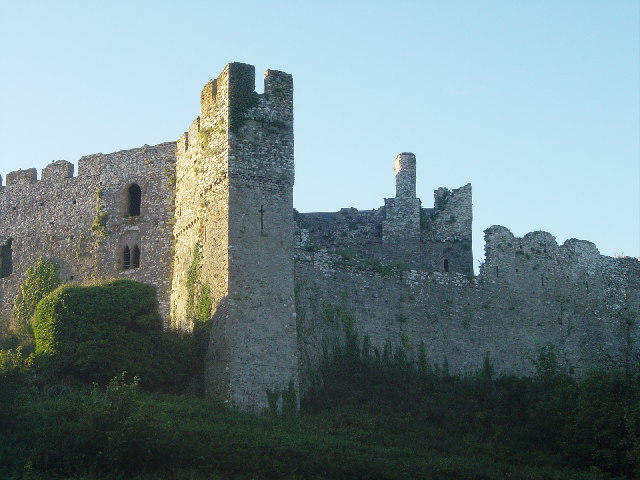
The origins of Tenby Castle trace back to the early 12th century, when the Normans sought to consolidate their control over South Wales. The castle was constructed on the highest point of the headland, featuring a central stone tower or keep, surrounded by a robust curtain wall. This wall enclosed the summit area and was fortified with a gateway and several small towers on the landward side, designed to repel attacks from the mainland. A secondary, lesser sea wall protected the remainder of the site and the adjacent beach to the west, highlighting the castle's dual role in defending both land and sea approaches.
The castle's first recorded major conflict occurred in 1153, when it was captured and destroyed by Welsh forces led by Maredudd ap Gruffydd and Rhys ap Gruffydd, sons of Gruffydd ap Rhys of Deheubarth. This event underscored the ongoing struggle between Norman invaders and native Welsh princes. Subsequent Welsh attempts to regain the site included a siege in 1187. Despite these challenges, the castle remained a formidable stronghold, withstanding attacks including the campaign of Llywelyn ap Gruffudd in 1260, who sacked the surrounding town but failed to capture the castle itself.
Integration into the marcher lordship and town fortifications
By the late 13th century, Tenby Castle and the adjacent town had become part of the Marcher Lordship of Pembroke. The lordship was then ruled by William de Valence, 1st Earl of Pembroke, a French knight married to Joan de Munchensi, heiress of the Pembroke earldom. Under his direction, significant defensive works were undertaken, shifting the military focus from the castle to the town itself.
William de Valence commissioned the construction of extensive stone town walls, which were mostly completed by the early 14th century. These walls featured D-shaped barbicans and towers, including a notable barbican built in 1328 to defend the town's main gate. Additional D-shaped towers were added to the northern and southern sections of the town walls, enhancing the fortifications' ability to provide flanking fire against attackers.
This transition marked a decline in the castle's defensive prominence as the town walls became the primary line of defense. The castle's role evolved from a frontline fortress to a symbolic and administrative center within the fortified town complex.
Decline and refurbishment in the late medieval period
By the 15th century, the direct line of the Earls of Pembroke had died out, and Tenby Castle fell into neglect and partial ruin. However, in 1457, King Henry VI granted the Marcher Lordship and the associated earldom to his half-brother, Jasper Tudor. Tudor undertook a significant refurbishment of Tenby's defenses, sharing the cost with local merchants.
Improvements included widening the dry ditch surrounding the walls to approximately 9.1 meters (30 feet), raising the curtain walls to include a second tier of arrow slits behind a new parapet walk, and adding additional turret towers at the cliff edges. These enhancements reflected the evolving military architecture of the period, aiming to bolster the town's resilience against increasingly sophisticated siege tactics.
Elizabethan fortifications and civil war significance
In the mid-16th century, during the reign of Elizabeth I, fears of a Spanish invasion prompted further defensive upgrades. A large D-shaped tower, known as the "Five Arches", was constructed as part of the town's fortifications. This tower exemplifies the Elizabethan response to the threat of naval attack and the adaptation of medieval fortifications to new military technologies.
The castle and town's strategic importance was again demonstrated during the Second English Civil War in 1648, when Royalist forces under Rice Powell held the refortified Tenby for approximately ten weeks. The defenders ultimately surrendered after a prolonged siege by Parliamentarian troops, marking one of the last episodes of armed conflict at the site.
Architectural features and surviving remains
Tenby Castle occupies a commanding position about 14 meters above sea level on a rocky promontory. The castle's layout integrates natural topography with constructed defenses, including the stone curtain wall that once enclosed the summit. This wall incorporated a main gateway and multiple small towers, enhancing surveillance and defense on the landward side.
The central stone tower at the highest point served as the castle's keep, overseeing both land and sea approaches. The addition of the D-shaped barbican and towers in the 14th century provided extra layers of protection to the town's main gate and walls. The widened dry ditch, raised walls with arrow slits, and new parapet walk from the 15th century reflect the castle's adaptation to changing military needs.
The Elizabethan Five Arches tower remains one of the most prominent surviving features, illustrating the evolution of the castle's defenses into the early modern period.
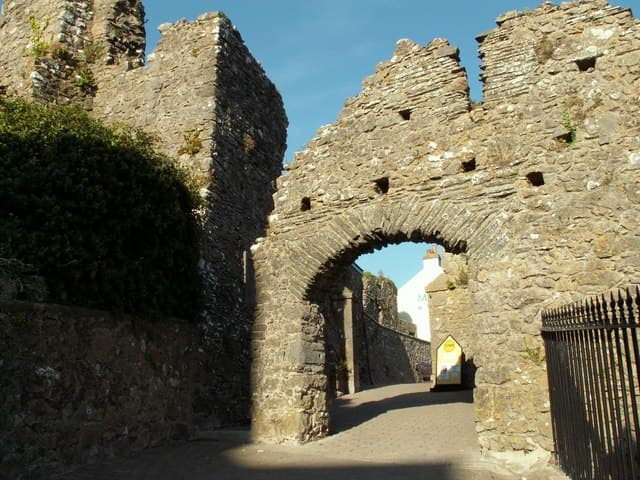
Today, visitors can explore remnants of the medieval castle, including the small summit tower and the main square gateway, which provides access from Tenby harbour. A circular walkway, established in the 19th century, traces the line of the original curtain walls. The Tenby Museum & Art Gallery is located on the site of the castle's former domestic buildings, likely the great hall, connecting the town's cultural heritage with its medieval past.
While the northern town gate was demolished to widen a road, much of the northern town wall remains intact, as do sections of the eastern walls and towers. These preserved elements offer valuable insights into medieval military architecture and the historical significance of Tenby Castle within the context of Welsh and British history.
Cultural and historical significance
Tenby Castle is not only an important military relic but also a symbol of the complex history of Norman-Welsh relations and the shifting power dynamics in medieval Wales. Its successive phases of construction, destruction, and refurbishment reflect broader historical trends, including the Norman conquest, the rise of the Marcher lordships, and the impact of Tudor and Elizabethan military concerns.
The castle's integration with the fortified town walls demonstrates the evolution of defensive strategies from isolated hilltop fortresses to comprehensive urban defenses. Today, Tenby Castle remains a key heritage site, attracting visitors interested in medieval architecture, Welsh history, and coastal fortifications.
Frequently asked questions (FAQ)
- How do I get to Tenby Castle?
- Tenby Castle is located on a rocky headland accessible via a path from Tenby harbour. The castle is within walking distance from the town center, making it easily reachable on foot.
- What is the best time to visit Tenby Castle?
- The best time to visit Tenby Castle is during the late spring to early autumn months when the weather is mild and the coastal views are at their best. Summer weekends can be busy, so visiting on weekdays is recommended for a quieter experience.
- Is Tenby Castle wheelchair accessible?
- Due to its historic nature and rocky terrain, Tenby Castle has limited wheelchair accessibility. Visitors with mobility issues should contact the local tourist information center for specific guidance and assistance.
- Can I visit the Tenby Museum & Art Gallery on the castle site?
- Yes, the Tenby Museum & Art Gallery is located on the castle grounds in the former domestic building area. It is open to the public and offers exhibitions related to the town's history and heritage.
- What remains of Tenby Castle can I see today?
- Visitors can see the small tower on the summit, the main square gateway, and sections of the curtain walls. The 19th-century circular walkway follows the original wall line, and parts of the northern and eastern town walls are still intact.
- When was Tenby Castle built and by whom?
- Tenby Castle was built by the Normans in the 12th century during their invasion of West Wales, serving as a strategic defensive site on a rocky promontory.
- Why was Tenby Castle important in medieval times?
- Tenby Castle was a key defensive stronghold protecting the town and controlling access along the coast. Its fortifications evolved to meet military threats from Welsh princes, Marcher lords, and later Tudor and Elizabethan rulers.
Photo gallery

Information
Current owner
Municipality
Loading map...
Visitor reviews
No reviews yet. Been here? Write the first review and help other travelers!
Write the first reviewVisited this castle? Share your experience
Your review helps other travelers and adds first-hand knowledge to our encyclopedia.