Tátika Castle — Hungary castle

Tátika Castle

Tátika castle: medieval hill fortress in hungary

Tátika Castle is a prominent medieval hill castle situated in western Hungary. Perched atop a steep hill, this fortress was strategically constructed to oversee and control the surrounding landscape, providing a defensive advantage against invaders. The castle's elevated position allowed for extensive visibility of the region, making it a critical military and administrative center during the High Medieval period.

Historical background and significance

The origins of Tátika Castle trace back to the 13th century, a time marked by the widespread construction of fortifications across Europe to consolidate territorial control following the Mongol invasions. The castle was likely commissioned by local Hungarian nobility seeking to fortify their holdings and assert dominance in the region. Throughout the centuries, Tátika Castle played a key role in regional defense and governance, witnessing various sieges and ownership changes that reflect the turbulent medieval history of Hungary.

Architectural features and layout

Tátika Castle exemplifies the typical characteristics of a hill castle with a compact, irregular plan adapted to the natural contours of the hilltop. The fortress originally featured robust stone curtain walls enclosing a series of courtyards and residential buildings. Defensive elements such as towers and battlements were integrated into the walls to enhance protection and provide vantage points for archers and lookouts.

The castle's entrance was fortified with a gatehouse, likely equipped with a portcullis and multiple layers of defense to deter attackers. Inside, the remains of a keep or donjon suggest a central stronghold where the lord and his retinue would have resided and taken refuge during sieges.

Construction materials and techniques

The builders of Tátika Castle employed locally sourced stone, which was abundant in the region, to create thick defensive walls. The masonry techniques reflect the craftsmanship of the High Medieval period, with carefully fitted stones and mortar ensuring durability. Timber was used for internal structures such as floors and roofs, though much of this has not survived.

Decline and current condition

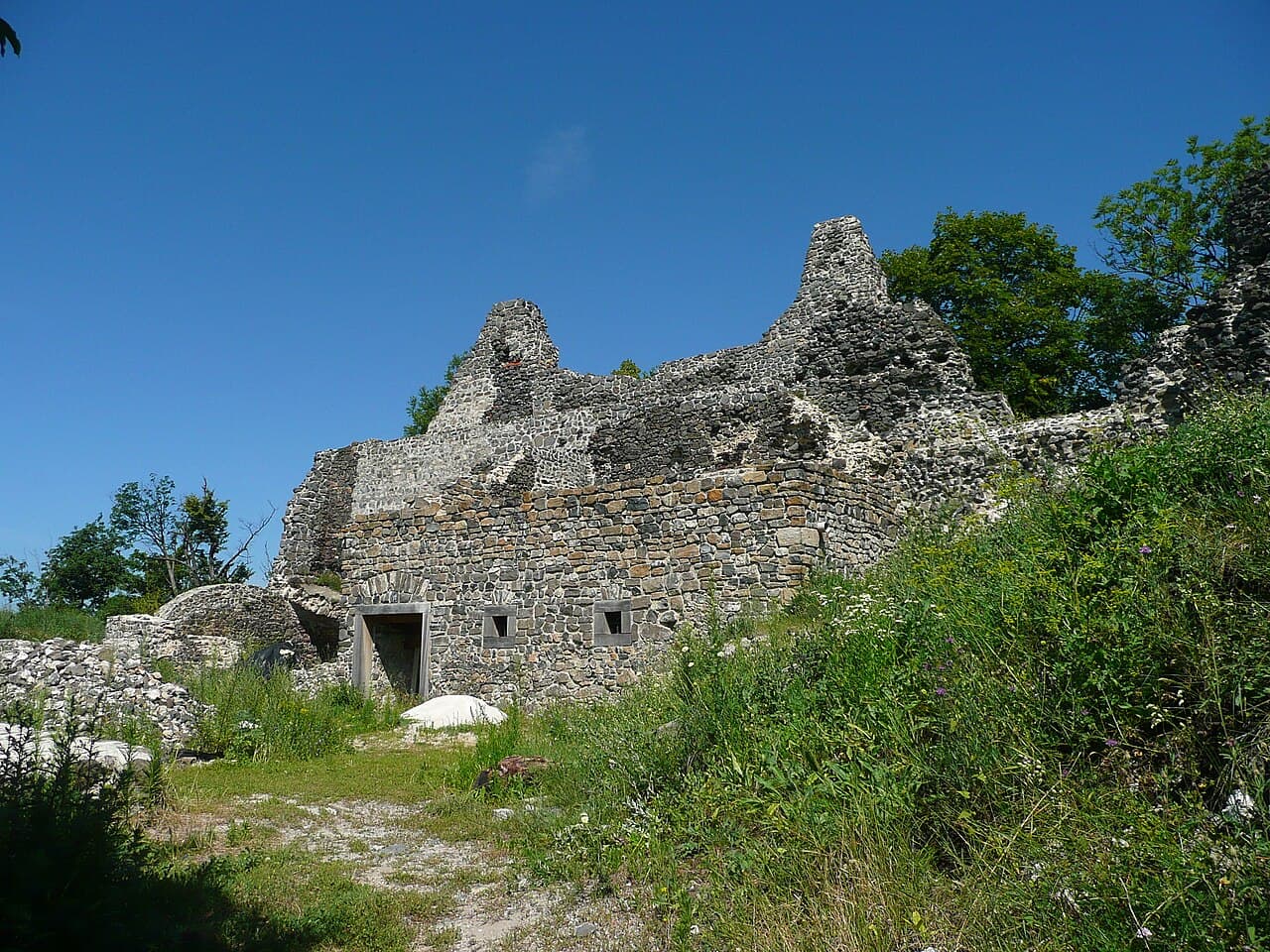
Like many medieval fortresses, Tátika Castle gradually lost its military importance with the advent of gunpowder and changing political landscapes. Over time, it fell into disuse and partial ruin. Today, the castle remains as ruins, with significant portions of the walls and foundations still visible. These ruins offer valuable insights into medieval military architecture and the historical development of the region.

Cultural and touristic aspects

Tátika Castle attracts visitors interested in medieval history, architecture, and hiking, given its scenic hilltop location. The site is accessible by footpaths and offers panoramic views of the surrounding countryside. Efforts to preserve and study the ruins contribute to the understanding of Hungary's medieval heritage.

Frequently asked questions (FAQ)

What is the historical significance of Tátika Castle?
Tátika Castle, built in the 13th century, played a crucial role in defending the region against invasions, particularly during the Ottoman period. Its ruins today offer insight into medieval military architecture and the strategic importance of the castle in Hungary's history.
When was Tátika Castle built?
Tátika Castle was constructed in the early 13th century, making it a significant example of medieval fortifications in Hungary. The castle has undergone various modifications over the centuries, reflecting the architectural trends and military needs of different eras.
Can I visit Tátika Castle?
Yes, Tátika Castle is open to visitors who wish to explore its historical ruins and enjoy the stunning views of the surrounding landscape. Visitors are encouraged to take guided tours to learn more about the castle's history and significance.
What are the opening hours for Tátika Castle?
Tátika Castle is typically open to the public from April to October, with specific opening hours varying by season. It’s best to check the official website or local tourism information for the most up-to-date hours before planning your visit.
Is it possible to access Tátika Castle by public transport?
Yes, Tátika Castle can be reached by public transport, with bus services operating from nearby towns. However, visitors may need to walk a short distance from the bus stop to reach the castle, so comfortable footwear is recommended.
What is the best time to visit Tátika Castle?
The best time to visit Tátika Castle is during the spring and early autumn when the weather is pleasant and the surrounding nature is in full bloom. Additionally, visiting during these seasons can help you avoid the larger crowds typically seen in the summer months.
Are there any nearby attractions to Tátika Castle?
Yes, there are several nearby attractions, including the picturesque village of Kőszeg and the beautiful Örség National Park. These sites offer additional opportunities for exploration and enjoyment of Hungary's natural and cultural heritage.
What are the ticket prices for Tátika Castle?
Ticket prices for Tátika Castle are generally affordable, making it accessible for a wide range of visitors. Discounts may be available for students, seniors, and groups, so be sure to inquire at the ticket office upon arrival.

Photo gallery

Tátika Castle
Click to view

Photo by SamuT•CC BY 3.0

1 photo • Click any image to view in full screen

Information

Hill Castle

Loading map...

Visitor reviews

No reviews yet. Been here? Write the first review and help other travelers!

Write the first review

Visited this castle? Share your experience

Your review helps other travelers and adds first-hand knowledge to our encyclopedia.
Write a review

(5/5)

0/2000 characters

Your review will be visible after admin approval

Nearby castles

4.7 km
Rezi Castle — Hungary castle

Rezi Castle

Rezi, Hungary

Rezi Castle stands as a striking example of a medieval hill castle strategically perched on a dolomite rock outcrop at the northern edge of the Keszthely Plateau in Hungary. Built in the late 13th century by members of the noble Péc family, notably Apor and Lukács, it was established to oversee the lands granted by King Ladislaus IV in 1282. The castle's location offered commanding views over the Szántó Basin, utilizing the natural steep slopes of the rocky promontory as a formidable defensive advantage. Historical significance and ownership through the centuries The castle's history is deeply intertwined with the turbulent feudal conflicts of medieval Hungary. Throughout the 14th and 15th centuries, Rezi Castle changed hands multiple times among prominent noble families and royal authorities. In 1321, it was recaptured from the Kőszegi family by royal forces led by Alexander Köcski, reflecting the ongoing power struggles of the period. Under the reign of King Louis I, the castle came into possession of the Lackfi brothers, influential nobles who played a significant role in Hungarian politics. After the Lackfi family's fall from grace in 1397, control of Rezi Castle reverted to the crown. Subsequently, it was entrusted to various religious and noble figures, including bishops of the Albeni family and later the Pethő family. The Pethő family maintained ownership from the early 15th century until the extinction of their male line in 1729, marking a long period of relative stability for the fortress. Despite occasional interruptions such as a brief Habsburg occupation in 1490 and confiscation during the civil war of 1440, the castle's military importance declined by the mid-16th century. However, its defenses were reinforced in response to increasing Ottoman incursions, especially after raids in 1554. The castle's decline accelerated towards the end of the 16th century. Ottoman forces occupied and set fire to Rezi Castle in 1589. By 1592, official records described the fortress as ruined, noting the deliberate destruction of its two gate towers to prevent further military use. Despite this, the ruins remained a prominent landmark in the region for centuries. Following the extinction of the Pethő family, ownership passed to the Hungarian treasury. In 1741, the estate was acquired by the Festetics family, who retained control until the nationalization of properties after 1945. Between 2000 and 2012, archaeological excavations and restoration efforts stabilized and partially reconstructed the ruins, preserving the castle's historical legacy. Architectural features and defensive design Rezi Castle's design masterfully integrates with its natural setting. The fortress occupies a steep rise of dolomite rock, which provides natural protection through sharply sloping sides that hinder attackers. The castle's defensive system included a deep dry moat excavated around the rock, enhancing its impregnable character. The inner ward was enclosed by a curtain wall fortified with two gate towers, which controlled access and served as key defensive points. The elongated courtyard within these walls contained a prominent residential tower at the rear, which combined both living quarters and defensive functions, forming the heart of the castle's inner defenses. In the late 16th century, the castle underwent fortification enhancements documented by the Italian military engineer Giulio Turco. His illustrations depict the dry moat and the distinctive double-towered curtain walls, highlighting the strategic military adaptations made in response to the Ottoman threat. Ruins and archaeological significance Excavations have revealed the foundations and remnants of the castle's walls and towers, with clear evidence of fire damage and intentional dismantling, particularly the destruction of the two gate towers to prevent reuse. Today, these ruins remain partially preserved and have been stabilized and partially reconstructed to maintain the castle's overall form. The surviving structures rest on the original rocky foundation, showcasing the medieval builders' adept use of natural terrain for defense. While no detailed inscriptions or decorative elements have been found, the site holds significant historical value as a well-defined example of a medieval Hungarian fortress adapted to its landscape. Access to Rezi Castle's ruins is free, allowing visitors to appreciate the site's historical and architectural importance while enjoying panoramic views of the surrounding landscape. Cultural heritage and modern preservation efforts The castle is an important cultural landmark in Hungary, reflecting the region's medieval history and architectural traditions. The long-term stewardship by noble families such as the Pethő and Festetics has contributed to the preservation of its legacy. Modern archaeological and restoration campaigns between 2000 and 2012 have been crucial in stabilizing the ruins and preventing further decay. These efforts have included structural reinforcement and partial reconstruction, ensuring that Rezi Castle remains an accessible and educational site for historians, architects, and tourists alike. Rezi Castle continues to attract visitors interested in medieval architecture, military history, and Hungarian heritage, offering a tangible connection to the past amidst its dramatic natural setting.

Late Medieval (14th–15th c.)
Details
8.6 km
Sümeg — Hungary castle

Sümeg

Sümeg, Hungary

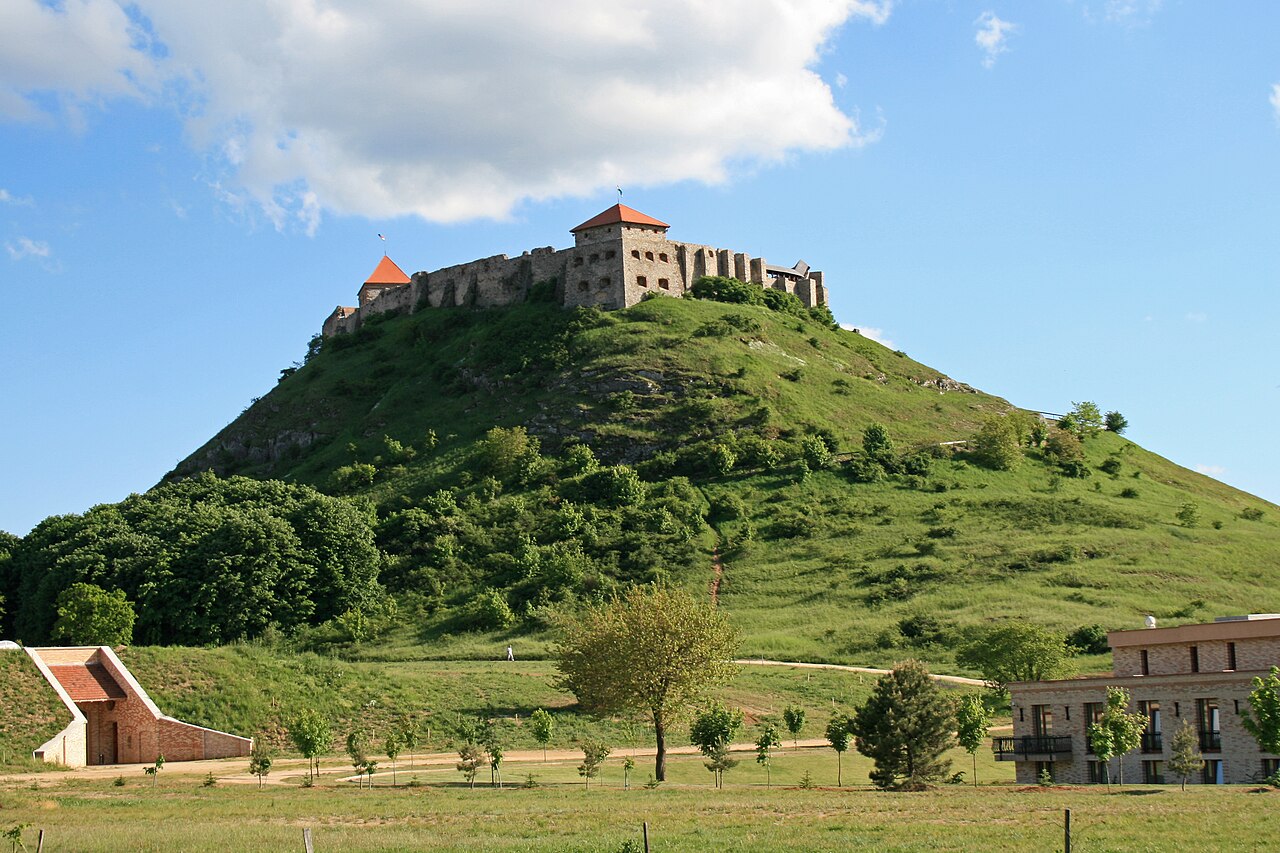
Sümeg Castle stands as one of Hungary's most remarkable medieval fortresses, prominently situated atop the solitary hill known as Castle Hill, overlooking the town of Sümeg in the Somogy region. Its strategic location on a barren hilltop allowed it to control vital trade routes and dominate the surrounding landscape, making it a key defensive stronghold throughout centuries of Hungarian history. The castle's origins trace back to the mid-13th century, commissioned by King Béla IV of Hungary following the devastating Mongol invasion of 1241-42. This period marked a significant shift in Hungarian defensive architecture, as Béla IV initiated a widespread castle-building program to protect the kingdom from future incursions. Sümeg Castle was constructed as a bastioned fortress, a style that evolved to incorporate artillery defense features in response to the increasing use of gunpowder weapons. Initially, the castle featured a massive stone keep or bergfried with walls approximately three meters thick, built on the southern part of the hill. This oldest section, dating to the 1260s, included a rock-cut cistern and a wooden floor tower section, characteristic of early medieval fortifications designed for both defense and habitation. The keep served as the last refuge during sieges and symbolized the lordly power of its occupants. Medieval origins and ecclesiastical ownership In the early 14th century, Sümeg Castle came under the control of the powerful Kőszegi family, a noble Hungarian lineage. However, by the mid-14th century, King Charles Robert reclaimed the fortress and restored it to the Roman Catholic Archdiocese of Veszprém, establishing its role as an ecclesiastical stronghold. This transition marked the beginning of a long association with the church, which influenced both its function and architectural development. Throughout the 15th century, successive bishops undertook significant expansions and fortifications. Notably, Bishop Albert Vetési added outer stone walls and residential buildings, creating a large courtyard enclosed by defensive walls that followed the edge of the hilltop plateau. The entrance was fortified with a gate tower on the southwestern corner, protected by a steep access road along the western wall. These enhancements reflected the castle's dual role as a defensive fortress and a bishop's residence. Renaissance military adaptations and turkish wars The mid-16th century brought new military challenges with the advance of the Ottoman Empire, which captured nearby Veszprém in 1552. Sümeg Castle became the bishops' seat and was extensively fortified to serve as a frontier fortress against Turkish incursions. Under the direction of Bishop András Kövesi, the castle's defenses were modernized with the addition of massive bastions designed to withstand artillery fire, including the notable Kövesi Bastion on the northeast side. The castle's walls were thickened and reinforced with buttresses after suffering damage during the Turkish retreat in 1664, when the army of Wazir Ahmed Köprülü captured the town below and set fire to the fortress. Despite multiple Ottoman siege attempts, Sümeg Castle was never taken, underscoring its strategic and military importance during the turbulent Turkish wars. Role in uprisings and decline Sümeg Castle played a significant role during the Bocskai uprising in 1605 when rebel forces seized it and killed Bishop Miklós Újlaki. Later, during the Rákóczi War of Independence (1703-1711), it served as a key rebel stronghold. Following the defeat of the uprising, the Habsburgs ordered the destruction of rebellious fortresses. In 1713, Austrian troops partially demolished Sümeg Castle's walls and set it on fire, leading to its abandonment and gradual ruin over the next two centuries. Architectural features and layout The castle's irregular triangular layout measures approximately 125 meters in length and 80 meters in width, oriented north to south along the hilltop. The core includes the oldest stone keep from the 1260s, surrounded by successive layers of defensive walls built over the centuries. The outer courtyard was created in the 15th century by enclosing a plateau in front of the main structure with a high defensive wall, forming a spacious area for residential and service buildings. The main entrance is located on the western side, featuring a gatehouse with a drawbridge and a bent passage designed to slow attackers and improve defense. Residential and economic buildings line the walls of the courtyard, maximizing the use of space within the fortress. The southern part of the castle is dominated by the massive square bergfried, which today houses a permanent exhibition of medieval weapons and armor. Visitors can explore rooms decorated to evoke medieval interiors, providing insight into the daily life and defensive strategies of the castle's inhabitants. The Kövesi Bastion on the northeast side exemplifies Renaissance military architecture, with thick walls and artillery embrasures designed to counter the threat of cannon fire. Restoration efforts have preserved this bastion as a key feature illustrating the castle's adaptation to changing warfare technologies. Modern restoration and tourism After centuries of neglect and ruin, archaeological excavations in the 1960s clarified the castle's construction phases and historical significance. Major restoration efforts began in 1989, led by Imre Pappa, who won a heritage protection competition and undertook extensive reconstruction with family support. These efforts enabled the castle to open to the public as a tourist destination. Since then, Sümeg Castle has been continuously renovated and expanded, including projects funded by the Hungarian National Castle Program starting in 2016. These works have restored key structures such as the barracks, castellan's house, medieval kitchen, and defensive galleries, enhancing the visitor experience while preserving historical authenticity. Today, Sümeg Castle stands as a prominent cultural attraction, hosting events, medieval reenactments, and tournaments that celebrate its rich history. Its well-preserved ruins and restored buildings offer a vivid window into Hungary's medieval and early modern past, making it a must-visit site for history enthusiasts and tourists alike.

High Medieval (11th–13th c.)
Details
14.7 km
Batthyány Mansion in Zalaszentgrót — Hungary castle

Batthyány Mansion in Zalaszentgrót

Zalaszentgrót, Hungary

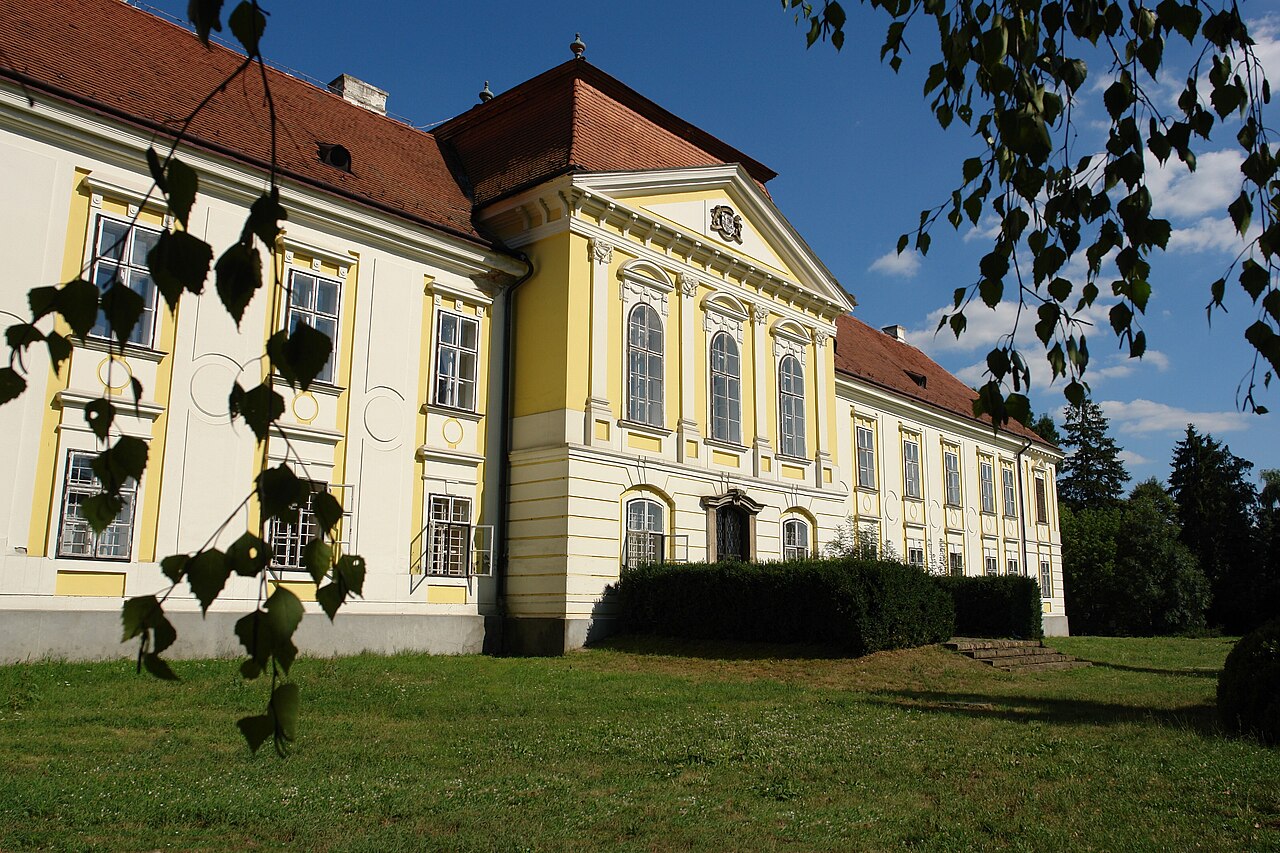
The Batthyány Mansion in Zalaszentgrót, Hungary, stands as an important example of a hill castle with significant historical and architectural value. This mansion is associated with the prestigious Batthyány family, one of Hungary's most influential noble families, whose legacy shaped much of the region's cultural and political history.Constructed primarily in the 18th century, the mansion reflects the architectural trends of its time, blending elements of Baroque style with local Hungarian influences. Its location on a hill provided a strategic vantage point, typical for such noble residences, combining defensive advantages with commanding views of the surrounding landscape.Historical background and significanceThe Batthyány Mansion was built during a period when noble families in Hungary were establishing grand residences that also served as administrative centers for their estates. The Batthyány family, known for their political and military roles, used the mansion as a symbol of their status and power in the region. Over the centuries, the mansion witnessed various historical events and changes in ownership, reflecting the broader shifts in Hungarian history.The Batthyány family legacyThe Batthyány family played a crucial role in Hungarian history, especially during the 18th and 19th centuries. Members of the family were involved in politics, military leadership, and cultural patronage. The mansion in Zalaszentgrót served not only as a residence but also as a hub for managing their extensive estates and local affairs.Architectural features and layoutThe mansion exhibits key characteristics of Baroque architecture, including symmetrical layouts, ornate facades, and grand interiors designed to impress visitors and demonstrate wealth. The building is typically structured with a central body flanked by wings, encompassing various functional rooms such as reception halls, private chambers, and service areas.Exterior and groundsThe exterior of the mansion features decorative stonework, large windows, and a prominent entrance that leads into a spacious courtyard. The surrounding grounds were historically landscaped to complement the mansion, including gardens and possibly auxiliary buildings such as stables or servant quarters.Interior design and decorationInside, the mansion likely included richly decorated rooms with frescoes, stucco work, and period furnishings characteristic of the Baroque era. These interiors would have been designed to reflect the family's prestige and to host social and political gatherings.Preservation and current statusToday, the Batthyány Mansion is recognized for its cultural heritage and architectural significance. While detailed information about its current condition is limited, such mansions often undergo preservation efforts to maintain their historical integrity. The mansion may serve as a museum, cultural venue, or private residence, contributing to the local community's identity and tourism.Visiting and tourismVisitors interested in Hungarian noble architecture and history find the Batthyány Mansion a valuable site. Its hilltop location offers scenic views, and the mansion itself provides insights into the lifestyle of Hungarian aristocracy. Information on visiting hours or tours would typically be available through local tourism offices or heritage organizations in Zalaszentgrót.

Post-Renaissance (17th–18th c.)
Details