Tata Castle
Tata Castle, located on the shore of Lake Öreg in Tatai, Hungary, stands as a remarkable example of a historic water fortress that has evolved through centuries of architectural and cultural transformations. Initiated by the Lackfi family at the end of the 14th century, the castle began as a modest stronghold before becoming a favored royal summer residence and a strategic military site. Its layered history reflects the complex political and military developments of Hungary from the late medieval period through the Renaissance and into the romantic era, making it a significant heritage site today.
Construction of the castle commenced in the late 1300s, with the earliest fortifications likely established between 1397 and 1409 under the reign of King Sigismund of Luxembourg. This initial phase involved building a square fortress with four corner towers and a broad water-filled moat fed by Lake Öreg, enhancing its defensive capabilities. The castle was originally built on the foundations of a smaller L-shaped castle erected by the Lackfi family. A notable feature added during this time was the gate tower near the northern corner, which controlled access to the fortress.
Architectural evolution and renaissance transformation
In the latter half of the 15th century, King Matthias Corvinus, one of Hungary's most famous rulers known for his patronage of the arts and military prowess, undertook extensive renovations of Tata Castle. Between the 1470s and 1480s, he transformed the fortress into a sophisticated Renaissance-style water castle inspired by Italian designs. This included the addition of a two-story cloister around the courtyard, double defensive walls along the moat, and an elegant arcaded terrace overlooking the lake. These enhancements reflected a shift towards combining military defense with residential comfort and aesthetic refinement, making the castle one of Matthias's favored summer residences.
The Renaissance architectural elements introduced during Matthias's reign include intricately carved stonework, door and window frames with Renaissance motifs, and sections of cloister railings. Remnants of stoves and pottery from this period have also been found, attesting to the castle's dual role as a fortress and a noble residence.
Military significance and fortification upgrades in the 16th century
Following King Matthias's death in 1490, the castle passed through various owners, including his illegitimate son Corvin János and King Vladislaus II. During the 16th century, Tata Castle assumed a critical role in Hungary's border defense against the expanding Ottoman Empire. Between 1543 and 1598, the fortress changed hands multiple times amid ongoing conflicts, enduring sieges and partial destruction. The castle was occupied by Ottoman forces from 1558 to 1566 before being retaken by General Salm's troops.
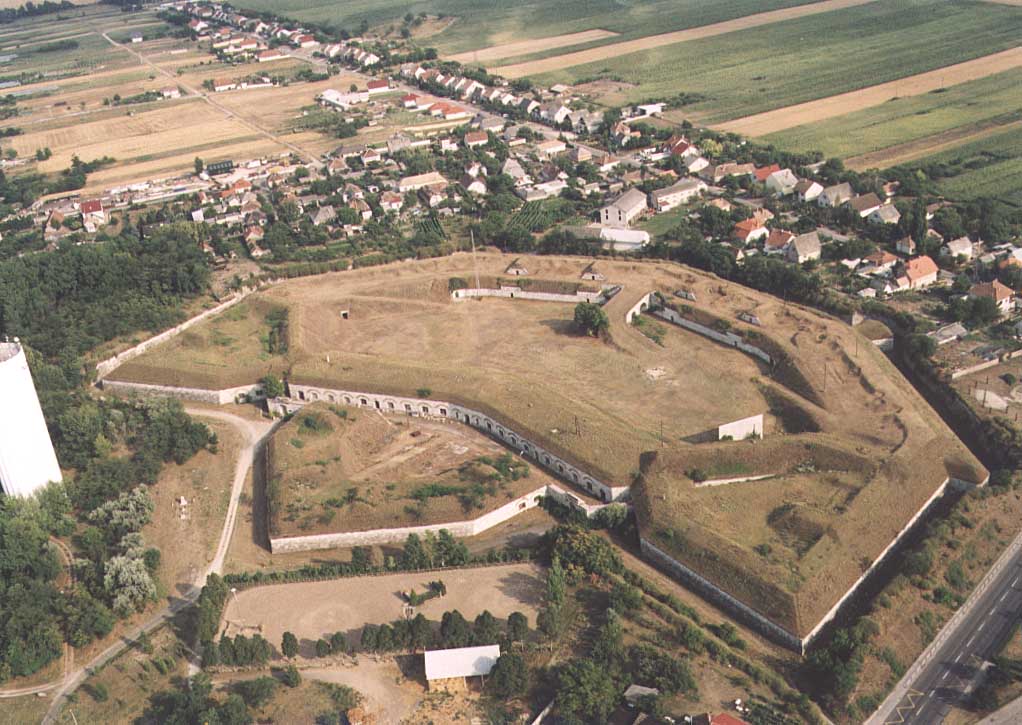
To strengthen its defenses against artillery and modern warfare tactics, Italian military engineers Giulio Turco and Niccolo Angelini were commissioned in the late 1500s to modernize the castle. They introduced the Italian bastion system, constructing angular bastions such as the Ferrando Bastion to the south, the Rosenberg Bastion to the east, and the Kecske Bastion. These bastions featured angled outer walls designed to improve cannon defense. To optimize artillery coverage, most internal towers were dismantled except for the eastern tower. Some planned modifications, like converting a rounded tower into a full bastion, were never completed.
Decline and transformation under the esterházy family
By the 17th century, Tata Castle's military importance diminished due to repeated damage, including an explosion during the Ottoman siege of 1683. The fortress was partly demolished and abandoned by the century's end. In 1727, the Esterházy family acquired the property and maintained ownership until 1945. During their stewardship, the castle underwent significant architectural modifications emphasizing comfort and style over defense.
Notable changes under the Esterházys included the construction of a four-arched stone bridge over the moat in 1755, which remains the main access point today, and a main gate framed in distinctive red marble. The castle also housed a prison complex with cells and a chapel, initially serving inmates until 1848 and later an Anglican congregation from the local English community. The Esterházys contributed romantic-style renovations in the 19th century, adding neo-Gothic window and door frames, a terrace with finely dressed stone cladding, and an enclosed balcony designed by architect Charles Moreau.
Archaeological discoveries and museum establishment
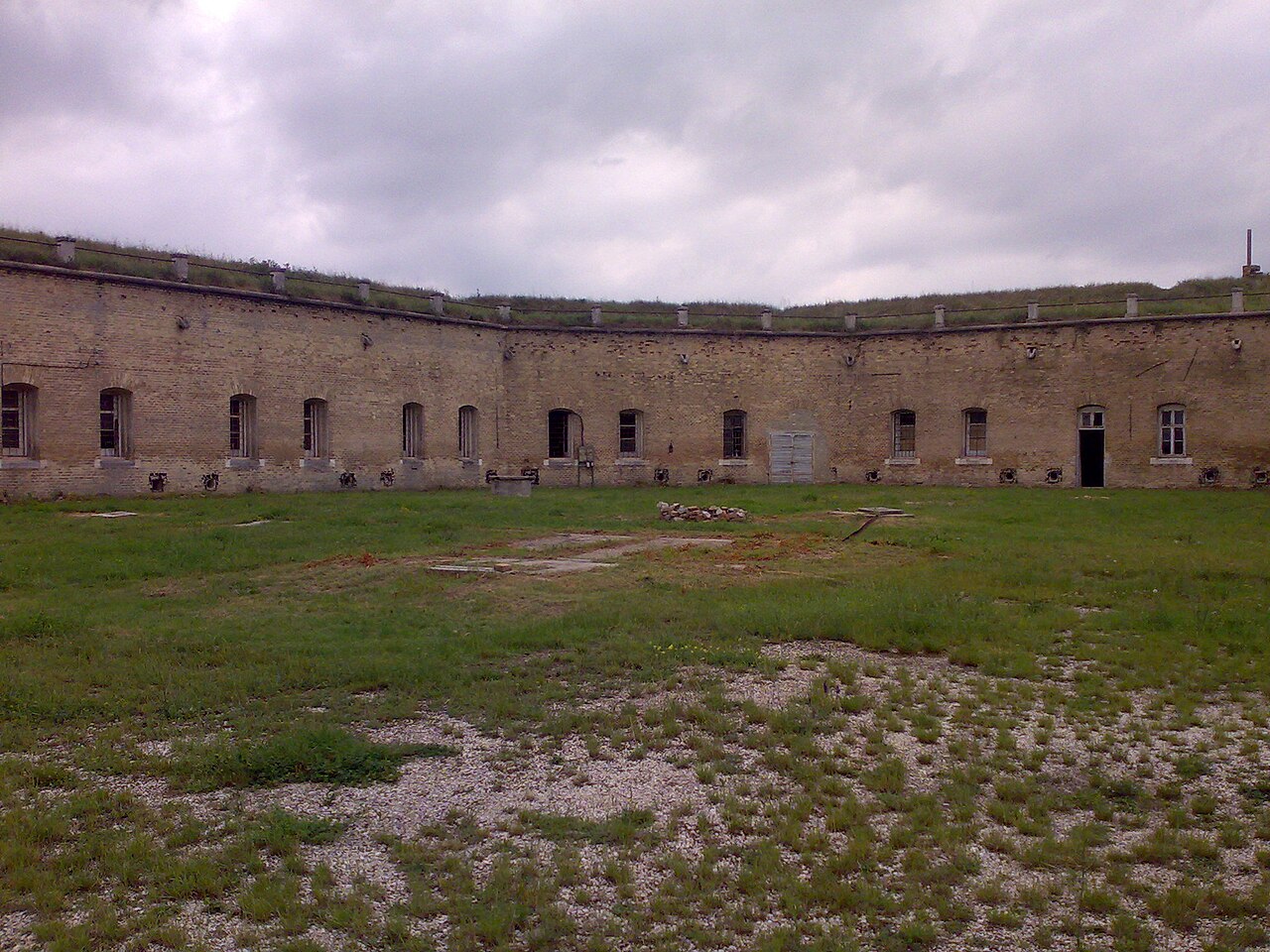
Archaeological interest in Tata Castle began in the 1960s and intensified from 1965 onwards, revealing foundations and architectural elements from various construction phases. Excavations uncovered the moat's water management system, underground casemates, the castle well, and remnants of the original medieval and Renaissance structures. These findings have been crucial in reconstructing the castle's historical footprint and understanding its architectural evolution.
Since 1954, the castle has housed the Kuny Domokos Museum, which showcases a diverse collection of archaeological finds from the Bronze and Roman Ages, alongside exhibits related to natural history, local history, decorative and applied arts, and ethnography. A highlight of the museum is the full-size reconstruction of a Roman frescoed room originally from Brigetio, featuring vivid Pompeian-style wall paintings depicting scenes from ancient Greek mythology. This unique exhibit enriches the castle's cultural significance and offers visitors a glimpse into the artistic heritage of the region.
Architectural remains and visitor experience
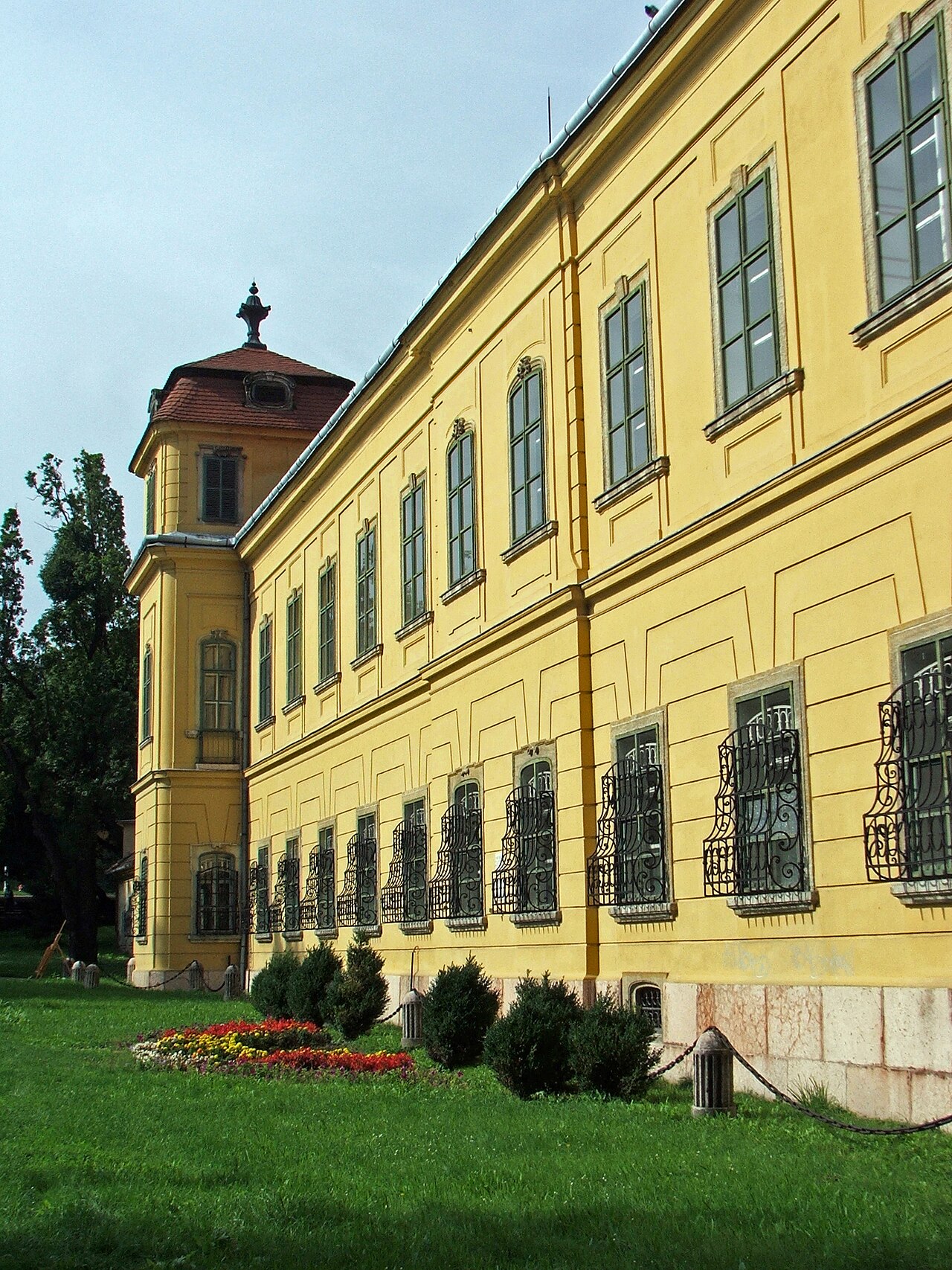
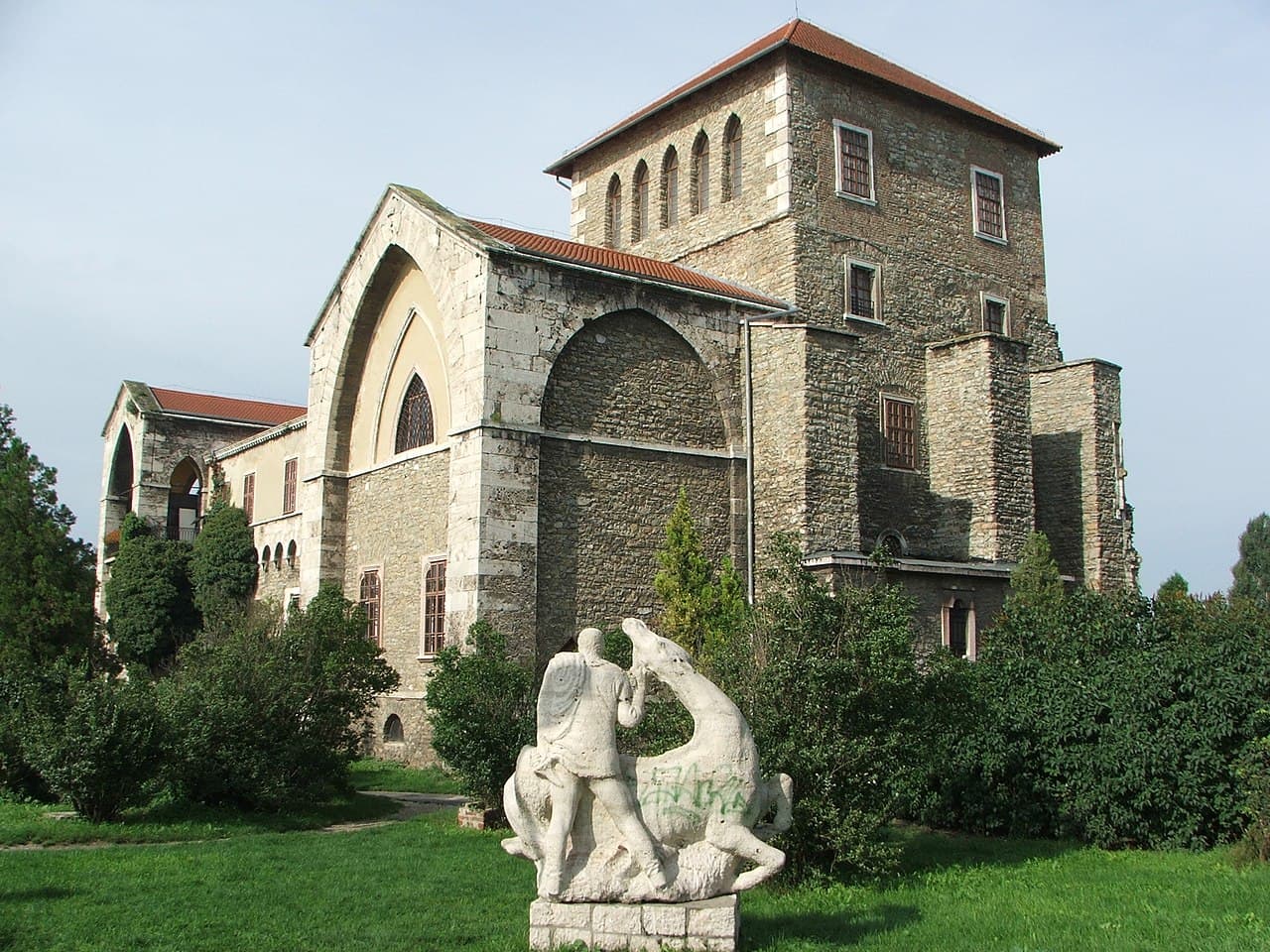
Today, Tata Castle's remains illustrate a complex structure that combines medieval, Renaissance, and 19th-century romantic architectural elements arranged around a central courtyard. The southeastern wing is the only part still standing, while archaeological excavations have uncovered the foundations of the other wings, allowing for accurate reconstructions of the original layout.
The castle's moat, measuring between 12 and 14 meters wide, remains a defining feature, fed continuously by water from Lake Öreg to serve as a natural defensive barrier. The Renaissance-era two-story cloister with arcaded galleries, the double defensive walls along the moat, and the lakeside arcaded terrace reflect the castle's dual role as a fortress and a noble residence.
Visitors can explore the castle museum, which provides insights into the site's rich history and architectural transformations. The romantic-style renovations, including neo-Gothic window frames and the Moreau-designed balcony, add a picturesque quality to the castle's silhouette. The four-arched bridge and red marble gate stand as enduring symbols of the Esterházy family's influence.
Ongoing restoration efforts aim to preserve Tata Castle's historical legacy and enhance its role as a cultural and archaeological monument, inviting visitors to engage deeply with Hungary's medieval and Renaissance past.
Frequently asked questions (FAQ)
- What is the historical significance of Tata Castle?
- Tata Castle, located in Tatai, Hungary, is a remarkable example of medieval architecture with origins dating back to the 14th century. It has played a crucial role in the region's history, serving as a royal residence and a military stronghold during various conflicts. Today, it stands as a symbol of Hungary's rich cultural heritage.
- When was Tata Castle built?
- Tata Castle was originally constructed in the late 14th century, with significant modifications made in subsequent centuries. The castle's architecture reflects various styles, showcasing its evolution from a defensive fortress to a luxurious residence. Its historical layers provide insight into the changing architectural trends of the time.
- Can I visit Tata Castle year-round?
- Yes, Tata Castle is open for visitors throughout the year, although opening hours may vary by season. It is advisable to check the official website for specific visiting times, especially during holidays or special events. Guided tours are available, providing an in-depth look at the castle’s history and architecture.
- What are the opening hours for Tata Castle?
- Tata Castle typically opens to visitors from 10 AM to 6 PM during the peak season, with slightly reduced hours in the off-season. It is recommended to confirm current hours on the castle's official website before planning your visit. Special tours and events may have different timings.
- Is there an entrance fee for Tata Castle?
- Yes, there is an entrance fee to visit Tata Castle, which helps maintain the site and its exhibits. Ticket prices may vary depending on age, student status, or group size, so it's best to check the official website for the most accurate information. Discounts are often available for families and larger groups.
- What is the best time to visit Tata Castle?
- The best time to visit Tata Castle is during the spring and early autumn months, when the weather is mild and pleasant for exploring the grounds. Additionally, these seasons often feature fewer tourists, allowing for a more enjoyable experience. Special events and festivals held during these times can also enhance your visit.
- Is Tata Castle accessible for visitors with mobility challenges?
- Yes, Tata Castle has made efforts to improve accessibility for visitors with mobility challenges. There are designated paths and ramps to facilitate access to various parts of the castle. However, it is advisable to contact the castle staff in advance to confirm specific accommodations for individual needs.
- What nearby attractions can I explore while visiting Tata Castle?
- While visiting Tata Castle, you can explore several nearby attractions, including the picturesque Lake Tata and the charming old town with its quaint streets and cafes. The region is also home to other historical sites and natural parks, making it an excellent destination for a day trip. Don't miss the opportunity to enjoy local cuisine in the surrounding area.
Photo gallery

Photo by No machine-readable author provided. Joxy~commonswiki assumed (based on copyright claims).•CC BY 2.5
Information
Website
Visit websiteSources & official resources
Verify the information above using these authoritative references.
Loading map...
Visitor reviews
No reviews yet. Been here? Write the first review and help other travelers!
Write the first reviewVisited this castle? Share your experience
Your review helps other travelers and adds first-hand knowledge to our encyclopedia.