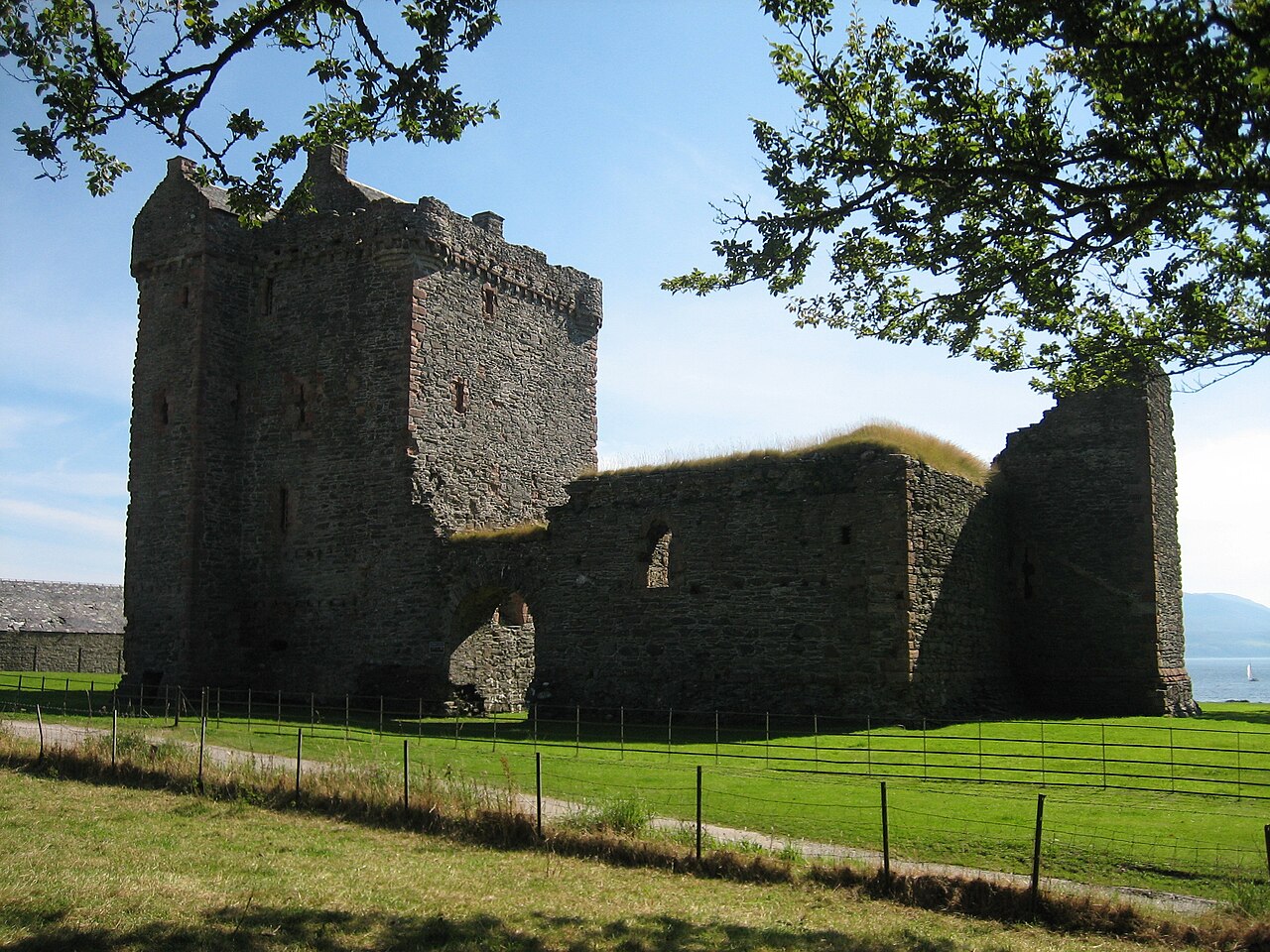
Tarbert Castle Ruins
Tarbert Castle stands as a remarkable example of a late-medieval hill castle strategically positioned to dominate the harbour and surrounding waterways of western Scotland. Located in the town of Tarbert within Argyll and Bute, this fortress has witnessed centuries of turbulent history, royal intrigue, and architectural evolution that reflect its importance in Scottish history. The castle's commanding views over Loch Fyne and the Firth of Clyde underscore its role as a vital maritime and military stronghold.
The early history and strategic significance
The site of Tarbert Castle has been of strategic importance since at least the early medieval period. Historical records recount that the area was attacked and burned twice in the 8th century: first in 712 by King Selbach mac Ferchair of the Cenél Loairn and the kingdom of Dál Riata, and again in 731 by his son Dúngal mac Selbaig. These early conflicts highlight the location's value as a gateway to the western Scottish seaways.
The castle itself, largely constructed in the 13th century, likely originated as a fortified structure intended to secure control over this critical maritime corridor. While the exact founder remains uncertain, it may have been built by the powerful MacDonald clan of Islay or commissioned by Scottish monarchs Alexander II or Alexander III. The castle's position on a natural plateau rising approximately 30 meters above the southern shore of East Loch Tarbert provided a natural defensive advantage and excellent observation points.
Architectural development through the medieval period
13th-century origins and layout
The original 13th-century castle followed a roughly square plan measuring about 41.5 by 37.2 meters. This early phase featured a ring wall enclosing several buildings arranged around an open central courtyard. Archaeological evidence reveals four parallel low earthworks and doorways, with the main entrance likely situated on the northeast side where the terrain is more accessible. This design reflects typical medieval defensive strategies, combining natural topography with man-made fortifications.
Enhancements under Robert the Bruce
During the 1320s, Robert the Bruce undertook significant improvements to Tarbert Castle as part of his efforts to secure the western Highlands against the Lords of the Isles. These modifications included the addition of an outer bailey and two circular towers approximately 8.7 meters in diameter, whose walls still stand to over four meters in height. The new defensive walls enclosed the northeastern part of the rocky plateau, enhancing the castle's ability to withstand sieges and control surrounding territory. Royal records from 1325 to 1326 document expenditures on masonry and construction, underscoring the castle's elevated military and administrative importance during this period. In 1329, Tarbert was granted the status of a royal burgh, further cementing its role as a centre of governance and commerce.
Late 15th-century tower house addition
The castle's most prominent surviving feature is a four-storey tower house constructed in the late 15th century, likely under the reign of James IV of Scotland. This tower was built adjacent to the southeast curtain wall and served both defensive and residential purposes. The tower's entrance faces northeast and includes a vaulted cellar with a well-preserved stone ceiling. Architectural details such as window openings, built-in benches, a fireplace, and horizontal gun loops reflect advancements in military technology and domestic comfort. These gun loops, designed for firing small arms, indicate adaptations to evolving warfare tactics during the period.
A forework was added around the end of the 16th century at the base of the tower, featuring additional gun loops beside what remains a damaged entrance. These additions demonstrate the castle's continued military relevance into the early modern era.
Historical events and ownership transitions
Tarbert Castle played a pivotal role in Scottish history, particularly during conflicts involving the Crown and regional powers. In 1494, James IV captured the castle from John MacDonald of Islay, Lord of the Isles, as part of a campaign to diminish the autonomy of the powerful Lords of the Isles. This event marked a significant shift in control over the western Highlands and reinforced royal authority.
Over subsequent centuries, the castle passed through the hands of prominent Scottish clans, including the MacAllisters, MacLeans, and ultimately the Campbells, Earls of Argyll. In the late 17th century, during the political unrest linked to the Monmouth Rebellion in England, Walter Campbell of Skipness Castle seized Tarbert Castle in support of Archibald Campbell, 9th Earl of Argyll. This skirmish reflects the castle's continued strategic importance even as military technology and political landscapes evolved.
By the mid-18th century, the castle was abandoned as a military and residential site. Today, the ruins are preserved as a heritage site, managed by the Tarbert Castle Trust, allowing visitors to appreciate its layered history and commanding location.
Architectural remains and current condition
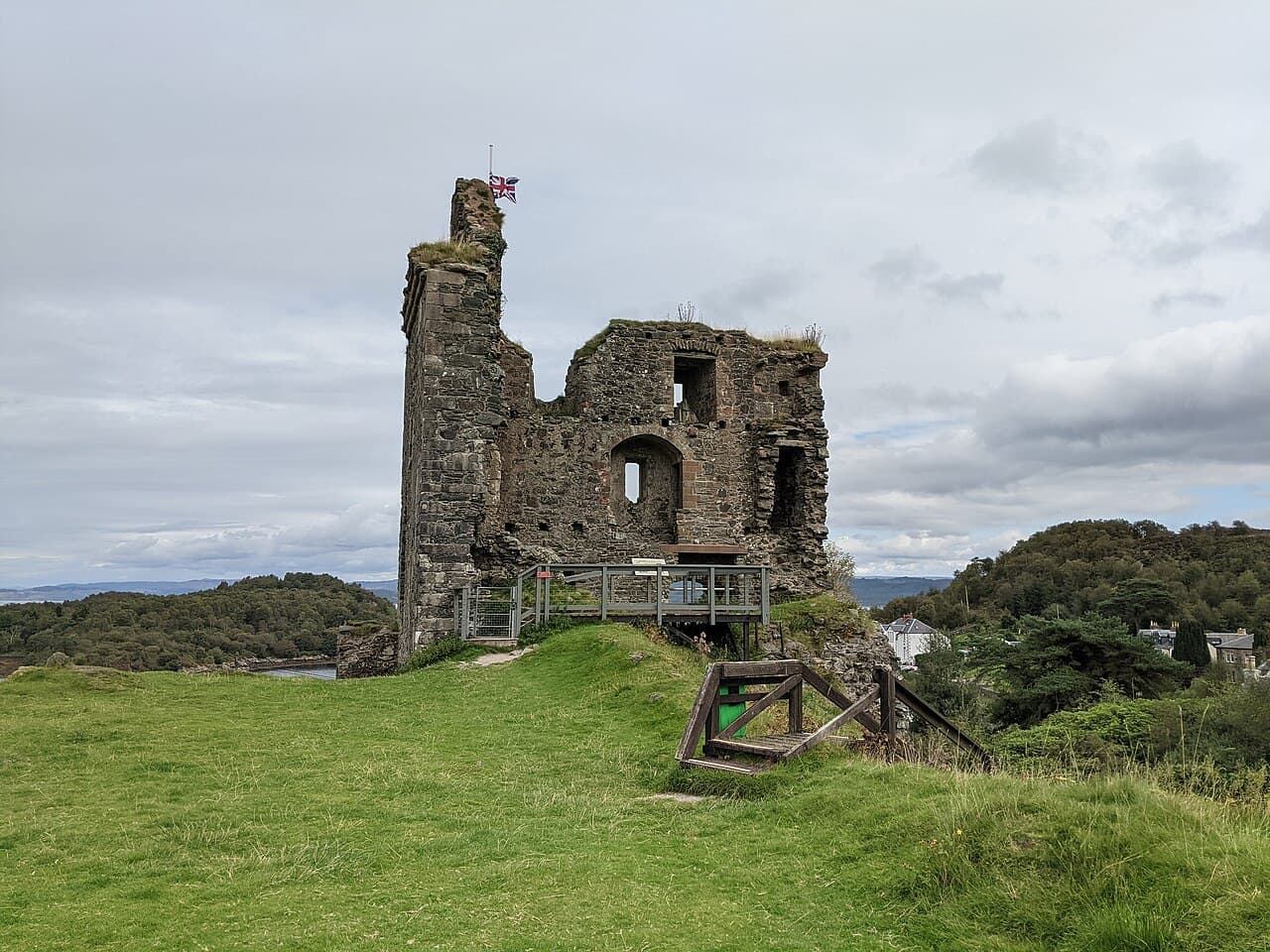
Today, Tarbert Castle is a ruin with only a few standing walls remaining, some of which are considered unstable. The surviving structures provide valuable insights into the castle's architectural phases and defensive features. The original ring wall's earthworks and the two circular towers from the early 14th century remain discernible, offering a glimpse into medieval fortification techniques.
The late 15th-century tower house, although largely ruined, still reveals details such as the vaulted cellar, window openings, and gun loops that highlight the castle's adaptation to changing military needs. The forework added in the 16th century further illustrates the castle's prolonged use and strategic upgrades.
The castle's elevated position affords expansive views over the harbour, Loch Fyne, and the Firth of Clyde, emphasizing its historical role in monitoring and controlling maritime access. Visitors today can explore the site via a steep path from Tarbert's southern quay, experiencing firsthand the commanding vantage point that made Tarbert Castle a formidable stronghold in Scotland's western seaways.
Visiting Tarbert Castle
While the ruins are limited in terms of standing structures, the site offers a unique opportunity to connect with Scotland's medieval past and the complex history of the western Highlands. The castle's location and remaining features make it a compelling destination for those interested in military architecture, Scottish history, and scenic landscapes.
Visitors should exercise caution around the unstable walls and respect the site's preservation efforts. The castle is accessible via a steep path from the town, and its elevated position rewards visitors with panoramic views that underscore its historical significance.
Frequently asked questions (FAQ)
- How do I get to Tarbert Castle Ruins?
- Tarbert Castle Ruins are located in Tarbert, United Kingdom. You can reach the castle by car, with ample parking available nearby, or via public transport with local bus services connecting to the area. The scenic route along the coast offers a beautiful approach to the castle.
- What is the historical significance of Tarbert Castle Ruins?
- Tarbert Castle Ruins date back to the 13th century and played a crucial role in the medieval history of Scotland. It was strategically built to control the sea routes and protect the surrounding lands from invasions. The ruins offer a glimpse into the castle's former glory and its importance in local heritage.
- When was Tarbert Castle built?
- Tarbert Castle was originally constructed in the 13th century, around the year 1200. It was built during a tumultuous period in Scottish history and has witnessed many events over the centuries. The ruins that remain today reflect the architectural styles of that era.
- Can I enter the castle ruins?
- Visitors are welcome to explore the castle ruins; however, please note that safety measures are in place due to the unstable structure. It is advisable to stay within marked areas and observe any posted signs for your safety. Guided tours may be available to enhance your experience.
- Why is Tarbert Castle a popular attraction?
- Tarbert Castle is popular for its rich history and stunning views of the surrounding landscape, including the harbor and the Isle of Arran. The castle's dramatic ruins provide a picturesque backdrop for photography and exploration. Additionally, its historical significance draws history enthusiasts from around the world.
- Is it possible to visit Tarbert Castle with children?
- Yes, Tarbert Castle is a family-friendly site, and children will enjoy exploring the ruins and learning about their history. However, adult supervision is recommended, particularly in areas where the terrain may be uneven or steep. Families can also enjoy a picnic in the nearby park after their visit.
- What are the opening hours for Tarbert Castle Ruins?
- Tarbert Castle Ruins are open to visitors year-round, with hours varying by season. Typically, the site is accessible from dawn until dusk, allowing ample time to explore and enjoy the scenic views. It’s always a good idea to check local listings for any seasonal changes or special events.
- Are there any ticket prices to visit Tarbert Castle?
- Access to Tarbert Castle Ruins is generally free, making it an affordable outing for all visitors. However, donations are appreciated to help maintain the site. If you wish to join a guided tour, there may be a fee associated with that experience.
- What is the best time to visit Tarbert Castle Ruins?
- The best time to visit Tarbert Castle is during the spring and summer months when the weather is milder and the landscape is lush and vibrant. This is also when local events and festivals may be taking place, enhancing your experience. Autumn can also be beautiful, offering stunning fall foliage.
- What nearby attractions can I visit after Tarbert Castle?
- After visiting Tarbert Castle, you can explore the charming village of Tarbert, known for its picturesque harbor and seafood restaurants. Additionally, you can visit the nearby Kintyre Peninsula, which offers beautiful coastal walks and stunning scenery. Other attractions include local museums and hiking trails that showcase the natural beauty of the area.
Photo gallery

Information
Website
Visit websiteSources & official resources
Verify the information above using these authoritative references.
Loading map...
Visitor reviews
No reviews yet. Been here? Write the first review and help other travelers!
Write the first reviewVisited this castle? Share your experience
Your review helps other travelers and adds first-hand knowledge to our encyclopedia.