Skipness Castle Ruins
Skipness Castle stands as a remarkable example of a 13th-century hill castle located in Argyll and Bute, Scotland. Constructed initially by the Clan MacSween in the early 1200s, the castle's strategic position overlooking the Kilbrannan Sound allowed it to control maritime routes between the Kintyre peninsula and the Isle of Arran. Its history reflects the turbulent medieval period of Scotland, marked by clan rivalries, shifting allegiances, and military conflicts that shaped the region's political landscape.
The castle's origins trace back to the early 13th century when the MacSweens, a powerful Scottish family with ties to the Norwegian crown, established the fortress to assert control over western Scotland's coastal waters. After the Battle of Largs in 1263, which ended Norwegian influence in the area, the MacSweens were displaced, and the castle changed hands. By around 1300, the MacDonald clan acquired Skipness Castle, significantly enhancing its defenses with a robust curtain wall featuring narrow arrow slits and fortified towers.
Architectural evolution and defensive features
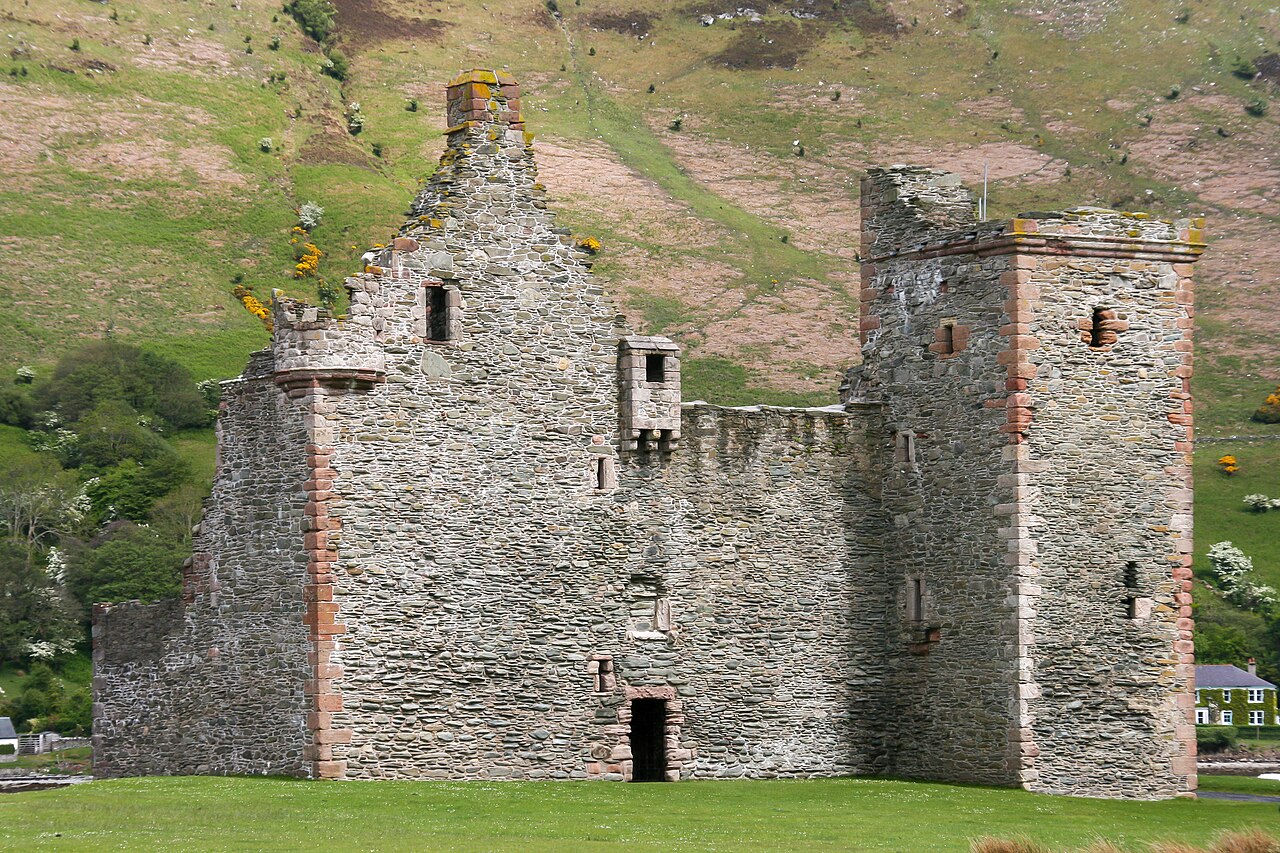
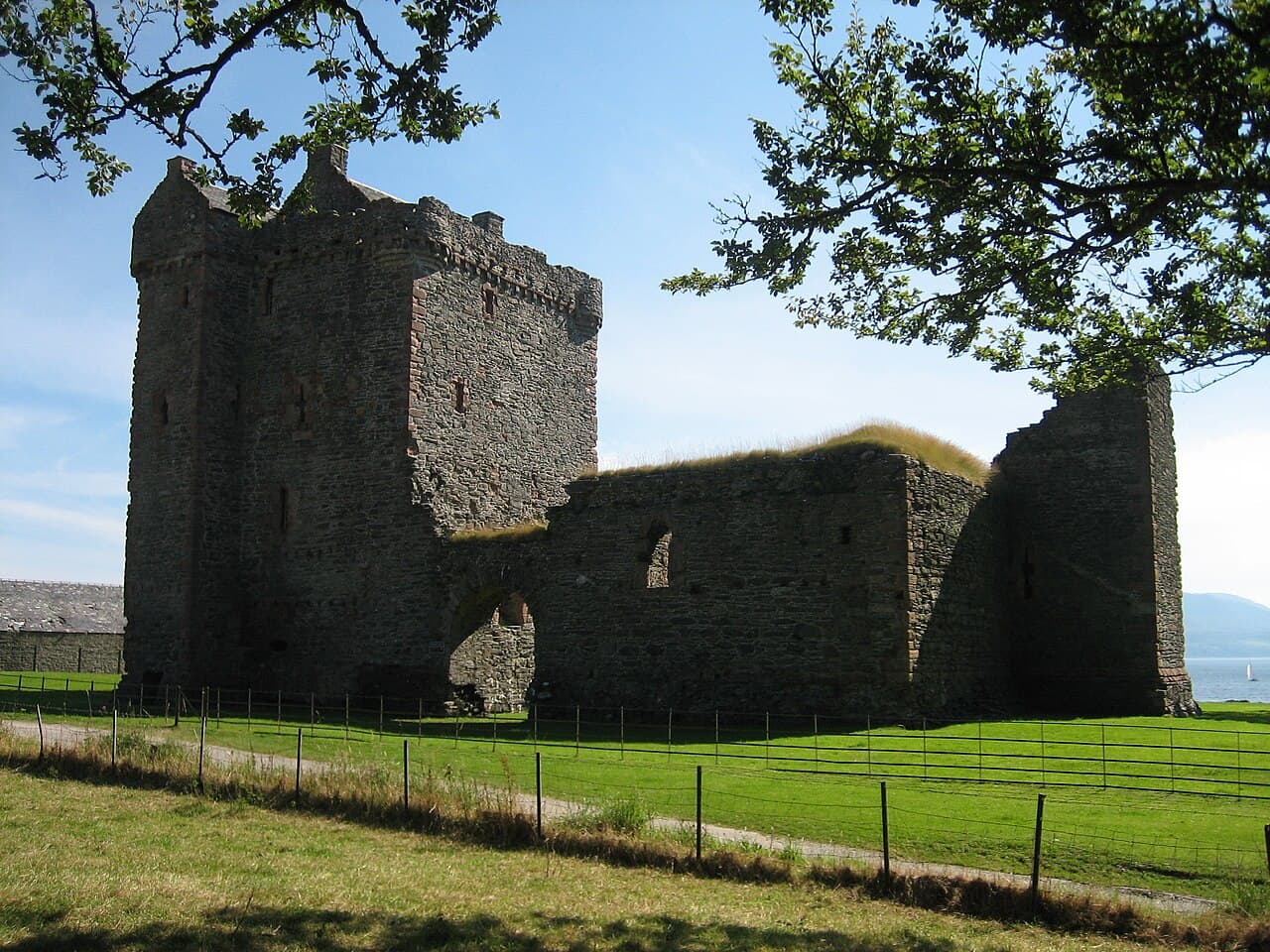
The castle's layout is defined by a roughly rectangular enclosure measuring approximately 24.7 by 36.6 meters, surrounded by a curtain wall constructed mainly from grey mica-schist and red sandstone. This wall, built in the late 13th century by the MacDonalds, is about 1.2 meters thick and topped with a parapet walkway for defenders. The wall's narrow, cross-shaped arrow slits allowed archers to defend the castle effectively against attackers.
At the southeast and northwest corners of the enclosure, towers serve as key defensive positions. The west side features a unique latrine tower, originally serving sanitation needs but later adapted as a dovecote. The main entrance is located in the south wall facing the sea, protected by a heavy portcullis and a projecting gate tower that extends approximately 61 centimeters from the wall, adding an extra layer of defense.
In the 16th century, the Campbell family constructed a four-story tower house in the northeast corner of the courtyard. The lower two floors of this tower date back to the MacDonald period around 1300, while the upper floors and battlements were later additions. An external staircase leads to the second floor, a typical feature of Scottish tower houses from this era.
Historical context and ownership transitions
Skipness Castle's history is deeply intertwined with the complex political dynamics of medieval and early modern Scotland. Initially under the MacSweens, the castle symbolized Norwegian influence in the region. Following the decline of Norwegian power after the Battle of Largs, the MacDonalds took control and fortified the castle further.
In the early 16th century, the Scottish crown confiscated MacDonald lands, and by 1502–1503, the castle was granted to the Campbells, Earls of Argyll. The Campbells made significant architectural enhancements, including the construction of the tower house, reflecting the transition from purely military fortifications to more residential and administrative functions.
The castle played a role during the Wars of the Three Kingdoms in the 1640s. In 1646, it was besieged by forces led by Alasdair Mac Colla, a key figure in the conflict. During this siege, Alasdair's brother, Gilleasbuig Mac Colla, was killed, marking a poignant moment in the castle's military history. Following these events, the castle was gradually abandoned in the late 17th century as its strategic importance waned.
Religious and cultural significance
Adjacent to the main castle structure lies the remains of a chapel dedicated to St. Columba. Although only the south wall survives, incorporated into the curtain wall, this chapel highlights the religious practices associated with the castle's inhabitants. The presence of such a chapel indicates the castle's role not only as a military fortress but also as a center of local spiritual life.
The castle is also steeped in local folklore, notably the legend of the Green Lady of Skipness Castle, said to haunt the ruins. This ghost story adds a layer of cultural intrigue and attracts visitors interested in Scotland's rich heritage of legends and myths.
Later use, decline, and preservation
After its abandonment as a military fortress, Skipness Castle's buildings were repurposed for agricultural use. Some courtyard structures were dismantled during this period, reflecting the site's transition from a defensive stronghold to a farmstead. In the 18th or 19th century, a new entrance was added to the north wall, indicating adaptations to its changing functions.
Conservation efforts began in the late 19th century, recognizing the castle's historical and architectural value. Since 1933, the site has been managed by Historic Scotland, with restoration work extending into the late 20th century to preserve its structural integrity. Today, Skipness Castle is a protected historic monument, offering visitors a well-preserved glimpse into Scotland's medieval past and the architectural evolution of a coastal fortress.
Architectural highlights for visitors
- The robust curtain wall with its arrow slits and parapet walkway.
- The distinctive four-story tower house blending MacDonald and Campbell architectural phases.
- The gatehouse featuring a projecting tower and operational portcullis.
- The remains of the St. Columba chapel integrated into the curtain wall.
- The unique latrine tower later converted into a dovecote.
Strategic location and maritime control
Perched on a hill overlooking the Kilbrannan Sound, Skipness Castle's location was crucial for monitoring and controlling sea traffic. This vantage point provided early warning of approaching vessels, reinforcing its role in regional defense and clan power struggles. Its proximity to the sea also influenced its design, with a strong southern gate facing the water and defensive features tailored to repel seaborne attacks.
Visiting information and cultural impact
Today, visitors to Skipness Castle can explore the ruins and appreciate the layered history embodied in its walls. The site offers insights into medieval Scottish architecture, clan history, and the shifting political landscape of the Highlands and Islands. The castle's haunting legends and scenic coastal views enrich the visitor experience, making it a notable destination for history enthusiasts and cultural tourists alike.
Frequently asked questions (FAQ)
- When was Skipness Castle built and by whom?
- Skipness Castle was built in the early 13th century by the Clan MacSween to control the Kilbrannan Sound in western Scotland.
- What are the main architectural features of Skipness Castle?
- The castle features a rectangular curtain wall with arrow slits, corner towers, a four-story tower house, a gatehouse with a portcullis, and a chapel dedicated to St. Columba.
- What historical events took place at Skipness Castle?
- Skipness Castle was involved in the Battle of Largs in 1263, changed hands from the MacSweens to the MacDonalds, and was besieged during the Wars of the Three Kingdoms in 1646.
- Is Skipness Castle accessible to visitors today?
- Yes, Skipness Castle is managed by Historic Scotland and open to visitors who can explore the well-preserved ruins and learn about its medieval history.
- Why is Skipness Castle historically significant?
- The castle is significant for its role in controlling maritime routes, its association with prominent Scottish clans, and its architectural evolution from the 13th to 17th centuries.
Photo gallery

Photo by Ingo Wölbern•Public domain
Information
Sources & official resources
Verify the information above using these authoritative references.
Loading map...
Visitor reviews
No reviews yet. Been here? Write the first review and help other travelers!
Write the first reviewVisited this castle? Share your experience
Your review helps other travelers and adds first-hand knowledge to our encyclopedia.