Tamworth Castle
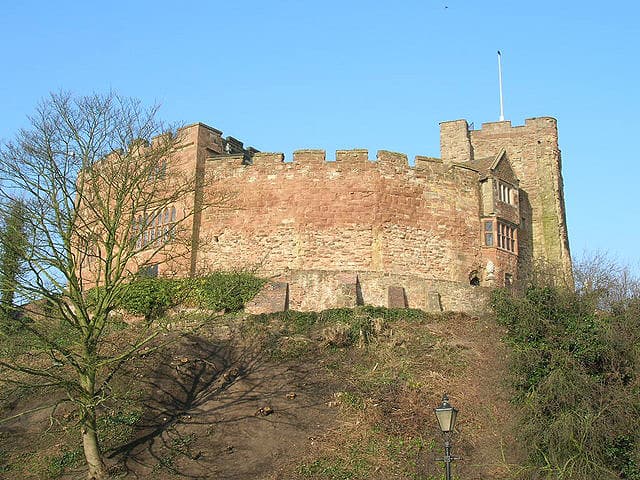
Tamworth Castle stands as a remarkable example of Norman military architecture in England, prominently located in the historic market town of Tamworth in Staffordshire. This Grade I listed building is renowned for its status as one of the best preserved Norman motte-and-bailey castles in the country, featuring the second largest motte in England after Windsor Castle. Its strategic position next to the River Tame and near the confluence with the River Anker has underscored its historical importance from the Anglo-Saxon period through to the modern era.
The castle's origins trace back to the 11th century, when it was constructed by the Normans following their conquest of England. However, the site itself holds a much older legacy, having been a royal residence for the Mercian kings during the Anglo-Saxon period. The powerful ruler Offa of Mercia established a palace here in the late 8th century, issuing official charters from the site starting in 781. Despite its early significance, the settlement suffered devastating damage during Viking raids in the 9th and 10th centuries, particularly in 874 and again in 943.
Anglo-Saxon and early medieval history
Before the Norman conquest, Tamworth was a key political and military center for the kingdom of Mercia. The palace of Offa was an administrative hub, and the town was fortified with an earthen burh by Æthelflæd, Lady of the Mercians, in 913 to defend against Viking incursions. Despite these efforts, the Danes attacked again in 943, causing further destruction. The importance of Tamworth declined as a royal residence after the 10th century, but it retained some significance evidenced by the operation of a mint producing coins under later Anglo-Saxon and early Norman rulers.
Norman construction and Marmion family tenure
Following the Norman Conquest in 1066, William the Conqueror granted the lands around Tamworth to his steward, Robert Despenser. In the 1080s, Despenser established a wooden motte-and-bailey castle on the southwest corner of the earlier burh, marking the beginning of the castle's Norman phase. This fortification was typical of the period, combining a raised earthwork mound with a wooden enclosure to provide a defensible stronghold.
By the early 12th century, the castle passed into the hands of the Marmion family through marriage. The Marmions were prominent nobles and hereditary champions to the Dukes of Normandy and the English crown. Under their stewardship, the castle underwent significant transformation from timber to stone, reflecting the evolving military and residential needs of the medieval aristocracy. The stone shell keep atop the motte was constructed, enclosing a gate tower and residential buildings in an H-shaped plan.
The Marmion era was marked by political turmoil. In 1215, Robert Marmion, the 3rd Baron, defected from King John during the First Barons' War. As punishment, royal forces partially demolished the castle and imprisoned his heir. However, after King John's death in 1216, the Marmions regained control and continued to develop the castle. The north range of buildings, dating from the 13th century, rises three storeys and reflects the castle's fortified residential function.
Later ownership and architectural evolution
After the Marmion male line ended around 1291, the castle passed through inheritance to the Freville family and later to the Ferrers family in the 15th century. The Ferrers introduced notable Jacobean-style expansions in the 17th century, including a three-storey south range that complemented the medieval structures. The Great Hall, dating from the 15th century, connects the north and south ranges and features an impressive oak timber framework, exemplifying the blend of medieval and early modern architectural elements.
A distinctive exterior feature is the herringbone masonry pattern laid diagonally at the base of the causeway leading to the gate tower, a rare and noteworthy detail. Originally, the main entrance faced the town marketplace, though much of this gateway has not survived. By the 15th century, the moat on the town side fell into disuse and was gradually leased to neighboring properties.
Role during the English Civil War and subsequent history
During the English Civil War, Tamworth Castle was strategically important and was captured by Parliamentary forces after a brief two-day siege in 1643. Unlike many castles of the period, it was not deliberately slighted or demolished afterward, allowing much of its medieval fabric to survive. The castle was garrisoned by Parliamentary troops, underscoring its military value during the conflict.
Following the war, the castle passed through various noble families, including the Shirleys of Chartley and the Comptons, who allowed it to fall into some disrepair. Restoration efforts were undertaken by the Townshend family in the 18th and 19th centuries, preserving the castle's structural integrity and historical character. In 1897, the castle was acquired by Tamworth Corporation and opened as a museum, ensuring its preservation and public accessibility.
Architectural features and current condition
Tamworth Castle's layout is centered around its massive motte, the second largest in England, topped by the stone shell keep. The keep encompasses a 12th-century gate tower and residential buildings arranged in an H-shaped plan. The north range, built in the 13th century, rises three storeys and served as living quarters and defensive accommodation. The south range, added in the 17th century in the Jacobean style, also rises three storeys and reflects the castle's adaptation from a purely military fortress to a stately residence.
The Great Hall connecting these ranges is notable for its oak timber framework, a fine example of medieval carpentry. The castle's defensive features include remnants of the moat and the original causeway, with its distinctive herringbone masonry. The 1810 gatehouse at the foot of the Holloway provides access via a carriageway winding up to the castle entrance, illustrating later adaptations to accommodate changing transportation needs.
Today, Tamworth Castle remains in a restored condition, open to the public as a museum and cultural heritage site. Its combination of Norman military architecture and later Jacobean domestic enhancements offers a unique insight into the evolution of English castles from fortresses to residences. The castle grounds have been landscaped to serve as a public amenity, enhancing its role as a community landmark and tourist attraction.
Notable cultural references and legacy
Tamworth Castle has been referenced in literature, notably in Walter Scott's narrative poem Marmion: A Tale of Flodden Field (1808), where it appears as the seat of the fictional lord of Tamworth. This literary connection highlights the castle's enduring place in English cultural history.
The castle's rich history, spanning from its Anglo-Saxon royal origins through Norman conquest, medieval noble residence, civil war fortress, and modern museum, encapsulates the layered narrative of England's past. Its preservation allows visitors to explore centuries of architectural styles, historical events, and social changes embodied within its walls.
Frequently asked questions (FAQ)
- How do I get to Tamworth Castle?
- Tamworth Castle is located in the heart of Tamworth, UK, and is easily accessible by public transport. You can reach the castle via the local train service to Tamworth Station, which is just a short walk away, or by bus, with several routes stopping nearby. If you're driving, there are parking facilities available close to the castle.
- What is the historical significance of Tamworth Castle?
- Tamworth Castle dates back to the 11th century and has a rich history, having served as a royal residence and stronghold throughout the medieval period. It played a significant role during the English Civil War and has connections to notable historical figures, including the Saxon kings. Today, it stands as a testament to the region's heritage and is a significant landmark.
- When was Tamworth Castle last renovated?
- Tamworth Castle underwent significant renovations in the 19th century when it was restored to its current Gothic style. More recent restoration efforts have focused on preserving its historical features and enhancing visitor experience. Ongoing maintenance work ensures the castle remains in good condition for future generations.
- Can I take guided tours of Tamworth Castle?
- Yes, guided tours are available at Tamworth Castle, providing visitors with an in-depth look at its history and architecture. These tours are led by knowledgeable guides who share fascinating stories and insights about the castle’s past. It is advisable to check the schedule in advance, as tours may vary throughout the week.
- Why is Tamworth Castle considered an architectural gem?
- Tamworth Castle is considered an architectural gem due to its well-preserved medieval structure and stunning Gothic details. The castle showcases a unique blend of styles, reflecting its evolution over centuries. Its impressive towers, ancient walls, and beautiful interior make it a captivating place for architecture enthusiasts.
- Is it possible to host events at Tamworth Castle?
- Yes, Tamworth Castle is available for hosting a variety of events, including weddings, corporate functions, and private parties. The castle offers a stunning backdrop and a range of facilities to accommodate different types of gatherings. Interested parties should contact the castle's event team for more details on packages and availability.
- What are the opening hours for Tamworth Castle?
- Tamworth Castle is typically open to visitors from 10 AM to 5 PM, with extended hours during the summer months. It's always best to check the official website for any seasonal variations or special events that may affect opening times. Planning your visit around these hours will ensure you have ample time to explore the castle.
- What are the ticket prices for Tamworth Castle?
- Ticket prices for Tamworth Castle are competitively set, with discounts available for children, seniors, and families. Admission usually includes access to the castle grounds and exhibitions. Check the official website for current pricing, as well as any promotional offers that may be available during your visit.
- When is the best time to visit Tamworth Castle?
- The best time to visit Tamworth Castle is during the spring and summer months when the weather is pleasant, and the gardens are in full bloom. Additionally, many special events and activities take place during these seasons, enhancing the visitor experience. Autumn is also a beautiful time to visit for those who enjoy the changing colors of the foliage.
- Are there any nearby attractions to Tamworth Castle?
- Yes, Tamworth Castle is surrounded by several attractions, including the beautiful Tamworth Snowdome and the historic town center. Other nearby sites include the Drayton Manor Theme Park and the River Anker, offering various activities for visitors of all ages. Exploring these attractions can enrich your visit to Tamworth.
Photo gallery

Information
Website
Visit websiteSources & official resources
Verify the information above using these authoritative references.
Loading map...
Visitor reviews
No reviews yet. Been here? Write the first review and help other travelers!
Write the first reviewVisited this castle? Share your experience
Your review helps other travelers and adds first-hand knowledge to our encyclopedia.