
Takaoka Castle
Takaoka Castle stands as a significant example of a hirajiro, or flatland castle, located in Takaoka, Japan. Constructed in 1609 by Maeda Toshinaga, the castle was intended to replace the earlier Toyama Castle after it was destroyed by fire. Despite its ambitious beginnings, Takaoka Castle was never fully completed and was decommissioned shortly after Toshinaga's death in 1614, following the implementation of the One Castle per Domain law in 1615. This law mandated the reduction of castles to prevent feudal lords from maintaining multiple fortifications, reflecting the Tokugawa shogunate's efforts to consolidate power and stabilize the country during the early Edo period.
The castle's location on flat terrain classifies it as a lowland castle, a type known for its reliance on moats, stone walls, and earthen ramparts rather than elevated natural defenses. Today, the site is preserved as a public park, designated in 1875, offering visitors a glimpse into Japan's feudal past through its remaining defensive structures.
Architectural features and layout
Takaoka Castle is notable for its well-preserved earthworks (dorui), moats (mizubori), and stone-piled walls (ishigaki). These features exemplify the defensive strategies employed in flatland castles during the early 17th century. The castle's layout includes multiple baileys, with the honmaru (main bailey) and ninomaru (second bailey) connected by an earthen bridge flanked by two tall segments of ishigaki. These stone ramparts are particularly impressive, showcasing intricate stonework with visible kokuin—carved impressions on the stones that feature patterns such as the manji (swastika) and kushidango (skewered rice balls).
The castle's moats are a defining characteristic, surrounding the baileys and enhancing the defensive perimeter. Visitors can experience the moat firsthand through boat rides, which provide unique views of the stone walls and water defenses, although the tour is brief and primarily suited for casual visitors rather than detailed architectural study.
Stone walls and kokuin
The ishigaki at Takaoka Castle are remarkable for their size and craftsmanship. The stone blocks are carefully fitted without mortar, a technique typical of Japanese castle construction, allowing for both strength and flexibility against earthquakes. The presence of kokuin adds cultural and artistic value, reflecting the symbolic and aesthetic considerations of the builders. These marks may have served as mason's marks or clan symbols, contributing to the castle's identity.
Historical significance and context
Maeda Toshinaga, the second lord of the Kaga Domain, played a pivotal role in the castle's construction. His decision to build Takaoka Castle was influenced by the need to establish a new administrative center after the destruction of Toyama Castle. However, Toshinaga's death and the Tokugawa shogunate's policies curtailed the castle's development, leading to its abandonment as a military stronghold.
The One Castle per Domain law was a crucial policy that shaped the fate of many castles across Japan during the early Edo period. By limiting each domain to a single castle, the shogunate aimed to reduce the military power of feudal lords and prevent rebellion. This law resulted in the decommissioning of many castles, including Takaoka, which was never fully utilized as a defensive structure.
Post-feudal era and preservation
After centuries of disuse, the castle grounds were transformed into a public park in the late 19th century, reflecting a shift in the site's role from military to cultural and recreational. The park now features various facilities, including a zoo and shrine buildings, which coexist with the castle ruins. While some modern structures obscure parts of the original earthworks, the site remains a valuable historical and natural space.
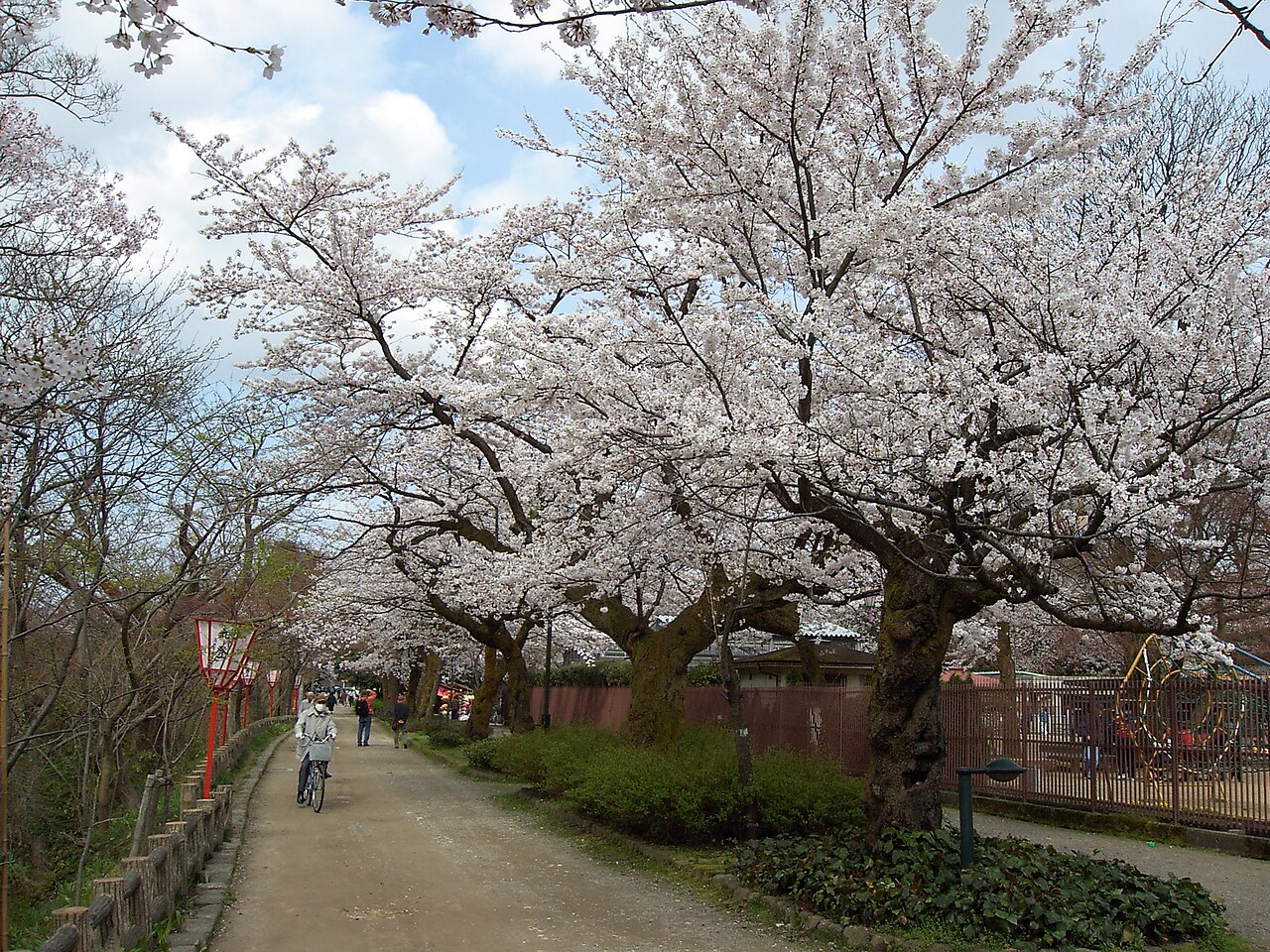
Photo by kahusi (會話) • CC BY-SA 4.0
Visitor experience and current condition
Today, Takaoka Castle is classified as ruins, with significant portions of its defensive structures still visible. The site offers an immersive experience for visitors interested in Japanese castle architecture and history. The extensive earthworks, moats, and stone walls can be explored on foot, with pathways leading around the various baileys and along the outer moat.
The park is particularly popular in spring when cherry blossoms and other flowers bloom, creating a picturesque setting. Birdsong and seasonal wildlife add to the natural ambiance, making it a pleasant destination for families and history enthusiasts alike. The free-access zoo within the park provides an additional attraction, allowing visitors to enjoy both cultural heritage and leisure activities.
Accessibility and amenities
The castle ruins are easily accessible within the city of Takaoka. Visitors can navigate the site independently, with informational signage available to guide exploration. Boat rides on the moat offer a different perspective of the stone walls, although these are brief and more suited for casual observation than in-depth study.
Facilities within the park include walking paths, rest areas, and recreational spaces, making it a well-rounded destination. While some modern developments partially obscure the original castle features, the overall preservation of the ruins allows for meaningful engagement with Japan's feudal architectural heritage.
Cultural importance and legacy
Takaoka Castle represents a transitional moment in Japanese history, bridging the turbulent Sengoku period and the stable Edo era. Its incomplete state and subsequent abandonment illustrate the impact of national policies on regional fortifications. The castle's ruins serve as a tangible reminder of feudal Japan's architectural ingenuity and political evolution.
The site also contributes to the cultural landscape of Takaoka, enriching the city's historical identity and offering educational opportunities. Preservation efforts and public access ensure that Takaoka Castle remains a cherished landmark, connecting contemporary visitors with Japan's rich past.
Frequently asked questions (FAQ)
- When was Takaoka Castle built and by whom?
- Takaoka Castle was built in 1609 by Maeda Toshinaga as a replacement for Toyama Castle after it burned down.
- What remains of Takaoka Castle can visitors see today?
- Visitors can see the castle's earthworks, moats, stone-piled walls, and remnants of the main and second baileys, preserved as ruins within a public park.
- Is it possible to take a boat ride on the moat at Takaoka Castle?
- Yes, boat rides are available on the moat, offering unique views of the stone walls and water defenses, though the rides are brief and primarily for casual visitors.
- Why was Takaoka Castle decommissioned shortly after its construction?
- The castle was decommissioned in 1615 due to the One Castle per Domain law, which required feudal domains to maintain only one castle to limit military power.
- What is the best time to visit Takaoka Castle ruins?
- Spring is the best time to visit when the park is adorned with blooming flowers and cherry blossoms, creating a scenic and pleasant atmosphere.
Photo gallery

Information
Website
Visit websiteSources & official resources
Verify the information above using these authoritative references.
Loading map...
Visitor reviews
No reviews yet. Been here? Write the first review and help other travelers!
Write the first reviewVisited this castle? Share your experience
Your review helps other travelers and adds first-hand knowledge to our encyclopedia.