Taikury Castle
Taikury Castle is a historic hill castle situated in the village of Taikury in modern Ukraine. Constructed at the turn of the 16th to 17th centuries, it was commissioned by Prince Yurii Vishnevetsky, a prominent nobleman of the Polish–Lithuanian Commonwealth. The castle stands as a significant example of early modern military architecture designed to defend the region from frequent incursions, particularly by the Tatars.
Historical background and ownership
The village of Taikury first appears in historical records dating back to 1570. Initially, the land belonged to Kirdei Taikursky, followed by I. Shpanovsky, before passing through marriage to the influential Vishnevetsky family. The original fortification on the site was a wooden fortress, which was soon replaced by a more durable stone castle under the direction of Prince Yurii Vishnevetsky. This transition marked a strategic enhancement in the area's defenses.
Taikury Castle served as the principal fortification for the village and surrounding settlements, its defensive importance underscored by the town’s coat of arms depicting Saint George slaying a dragon, symbolizing protection and military valor. On April 3, 1614, King Sigismund III of the Polish–Lithuanian Commonwealth granted Taikury Magdeburg rights, a legal status that allowed the town to hold fairs and develop economically and culturally. This period saw an influx of Polish settlers and the growth of the Catholic faith, which created tensions with the indigenous Orthodox Ukrainian population.
The castle’s history is marked by conflict, notably during the National Liberation War led by Bohdan Khmelnytsky, when forces loyal to Khmelnytsky attacked and destroyed the castle and its associated town institutions. Despite this destruction, the 1649 Treaty of Zboriv reaffirmed Taikury's place within the Polish–Lithuanian Commonwealth. Ownership of the estate changed hands several times, passing through noble families such as the Sapieha, Cholhansky, Pepłowski, and eventually the Iliński family.
Religious architecture and later history
In 1710, Laurentius Pepłowski constructed a Gothic church dedicated to St. Lawrence near the castle, reflecting the ongoing religious and community development. Unfortunately, this church was later closed and dismantled during the Soviet era. Another religious site, the Pokrova Church, built in 1731, remains active and serves as a testament to the enduring spiritual heritage of the area.
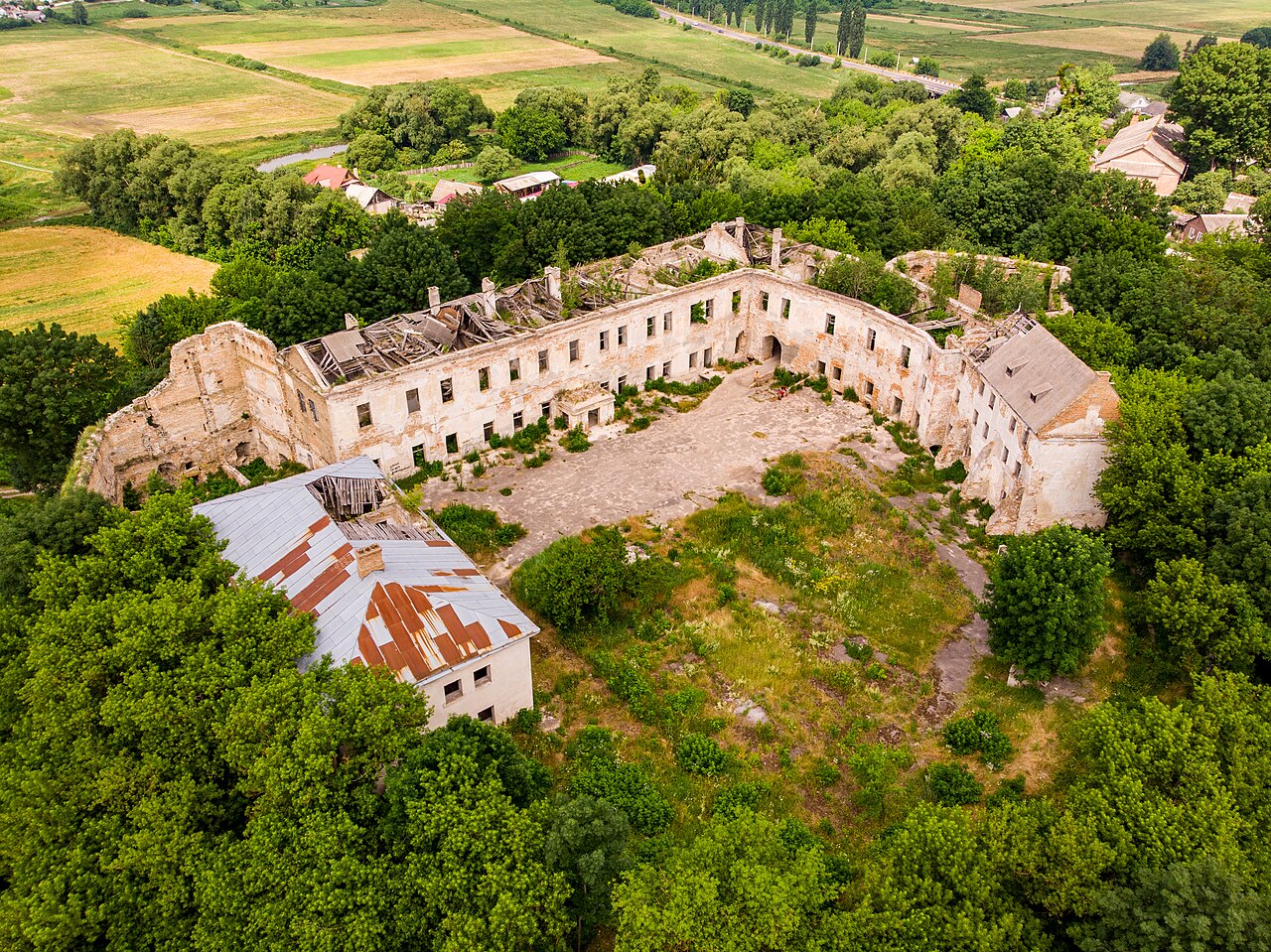
The castle suffered significant damage in a major fire in 1825, which led Count Alexander Iliński, its then-owner, to abandon the fortress. By 1876, the ruined castle was sold to local Jewish owners who dismantled much of the structure for building materials. The site endured further destruction during World War I and has remained in ruins since, with no restoration efforts undertaken.
Architectural features and defensive design
Taikury Castle was built as a stone fortress with a unique plan combining heptagonal and square shapes. It occupied the western part of a small plateau near the now-vanished Soroka River, which once flowed alongside one side of the castle, providing a natural defensive barrier. The castle's layout was quadrangular, fortified by four stone towers at each corner, enhancing its defensive capabilities.
A prominent feature was the gate tower, which served as the main entrance and incorporated a drawbridge mechanism. This drawbridge could be raised to block enemy access across the surrounding moat. The fortress was further protected by semicircular earthen embankments and moats on multiple sides. One moat, about three meters wide, was fed by the Soroka River, while another wider moat spanned approximately 15 meters, both designed to impede attackers.
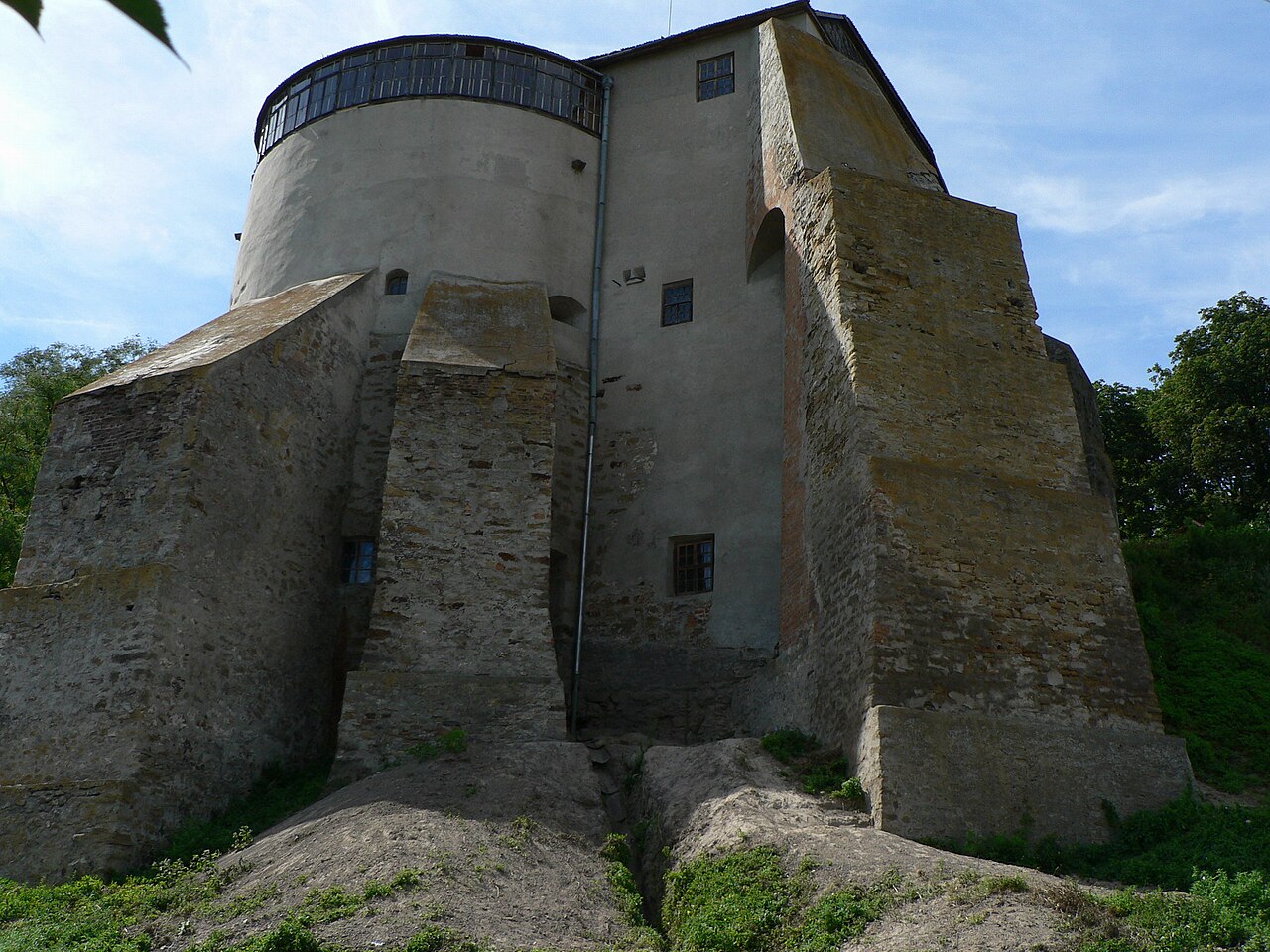
The castle's stone walls formed a stout defensive perimeter with four bastions at the corners, providing overlapping fields of fire and strongpoints for defenders. Inside, a modest courtyard and a deep stone-lined well within the moat ensured a secure water supply during sieges. The southern watchtower, standing approximately 30 meters tall, remains the best-preserved structure and served historically as a lookout point.
Current condition and cultural significance
Today, Taikury Castle exists as a ruin, with only fragments of its walls and the southern tower still visible. The ruins are heavily overgrown, reflecting centuries of neglect and the absence of restoration. Despite its ruined state, the castle remains an important cultural and historical landmark in the region, symbolizing the turbulent history of border defense and noble estates in western Ukraine.
The site offers valuable insights into the military architecture of the late Renaissance period in Eastern Europe, illustrating the adaptation of fortifications to evolving warfare technologies and regional threats. Its connection to notable historical figures and events adds to its significance as a heritage site.
Visitors to Taikury Castle can explore the remains and imagine the strategic importance the fortress once held. The surrounding landscape, including the former course of the Soroka River and the earthworks, contributes to understanding the castle's defensive design. Although no formal visitor infrastructure exists, the site attracts those interested in medieval and early modern military architecture and Ukrainian history.
Architectural details and defensive innovations
The combination of heptagonal and square forms in the castle's plan was unusual and reflected a sophisticated approach to defense, maximizing angles for artillery coverage and minimizing blind spots. The four corner towers provided strong defensive platforms, while the gate tower's drawbridge was a critical feature for controlling access.
The semicircular earthworks surrounding the fortress served to absorb and deflect artillery fire, a common innovation in Renaissance military architecture. The moats, fed by the Soroka River, created natural obstacles that complicated siege efforts and limited the effectiveness of enemy sappers and infantry assaults.
Historical context of construction
The castle's construction during the late 16th and early 17th centuries coincided with a period of frequent Tatar raids and regional conflicts in Eastern Europe. The Polish–Lithuanian Commonwealth invested in such fortifications to secure its southeastern borders and protect its noble estates. Prince Yurii Vishnevetsky, the castle's patron, was a notable military leader and magnate who played a significant role in defending these frontier territories.
Legacy and preservation challenges
Despite its ruinous condition, Taikury Castle remains a subject of interest for historians and conservationists. The lack of restoration efforts has left the site vulnerable to further decay, but it also preserves the authentic traces of its historical fabric. The castle's ruins contribute to the cultural landscape and serve as a tangible link to the complex history of the Polish–Lithuanian Commonwealth and Ukrainian borderlands.
Frequently asked questions (FAQ)
- How do I get to Taikury Castle?
- Taikury Castle is located in the village of Taikury in Ukraine. Visitors typically reach it by regional roads connecting to nearby towns. It is advisable to use local maps or GPS navigation for precise directions, as the castle is situated in a rural area.
- What is the historical significance of Taikury Castle?
- Taikury Castle was a key defensive fortress in the Polish–Lithuanian Commonwealth during the 16th and 17th centuries. It played a crucial role in protecting the region from Tatar raids and was associated with notable noble families such as the Vishnevetskys.
- Can I visit the ruins of Taikury Castle?
- Yes, visitors can explore the ruins of Taikury Castle. However, the site is largely overgrown and lacks formal visitor facilities. Caution is advised when navigating the ruins due to uneven terrain and unstable structures.
- When was Taikury Castle built?
- The castle was constructed at the turn of the 16th to 17th centuries, commissioned by Prince Yurii Vishnevetsky to replace an earlier wooden fortress.
- What architectural style characterizes Taikury Castle?
- Taikury Castle exhibits Gothic architectural features, typical of late medieval fortifications in Eastern Europe, including stone towers, defensive walls, and a gate tower with a drawbridge.
Information
Website
Visit websiteSources & official resources
Verify the information above using these authoritative references.
Loading map...
Visitor reviews
No reviews yet. Been here? Write the first review and help other travelers!
Write the first reviewVisited this castle? Share your experience
Your review helps other travelers and adds first-hand knowledge to our encyclopedia.