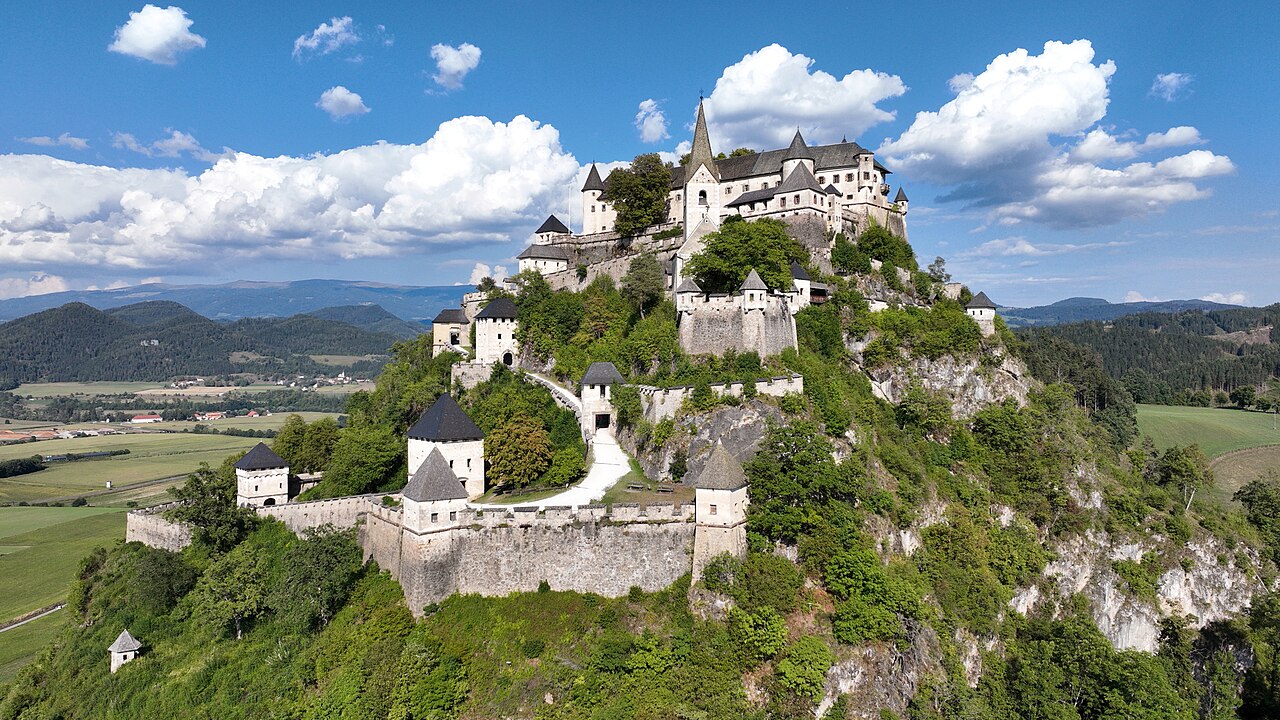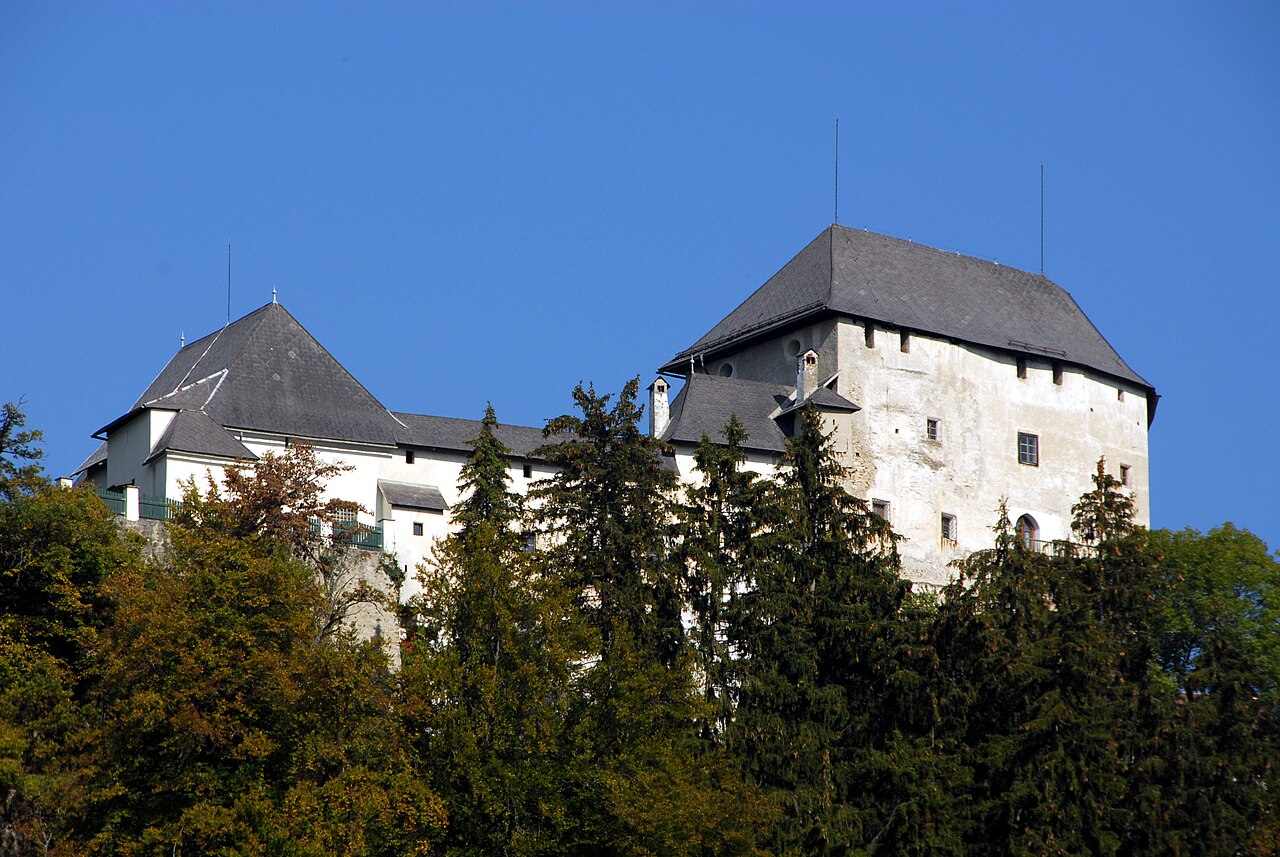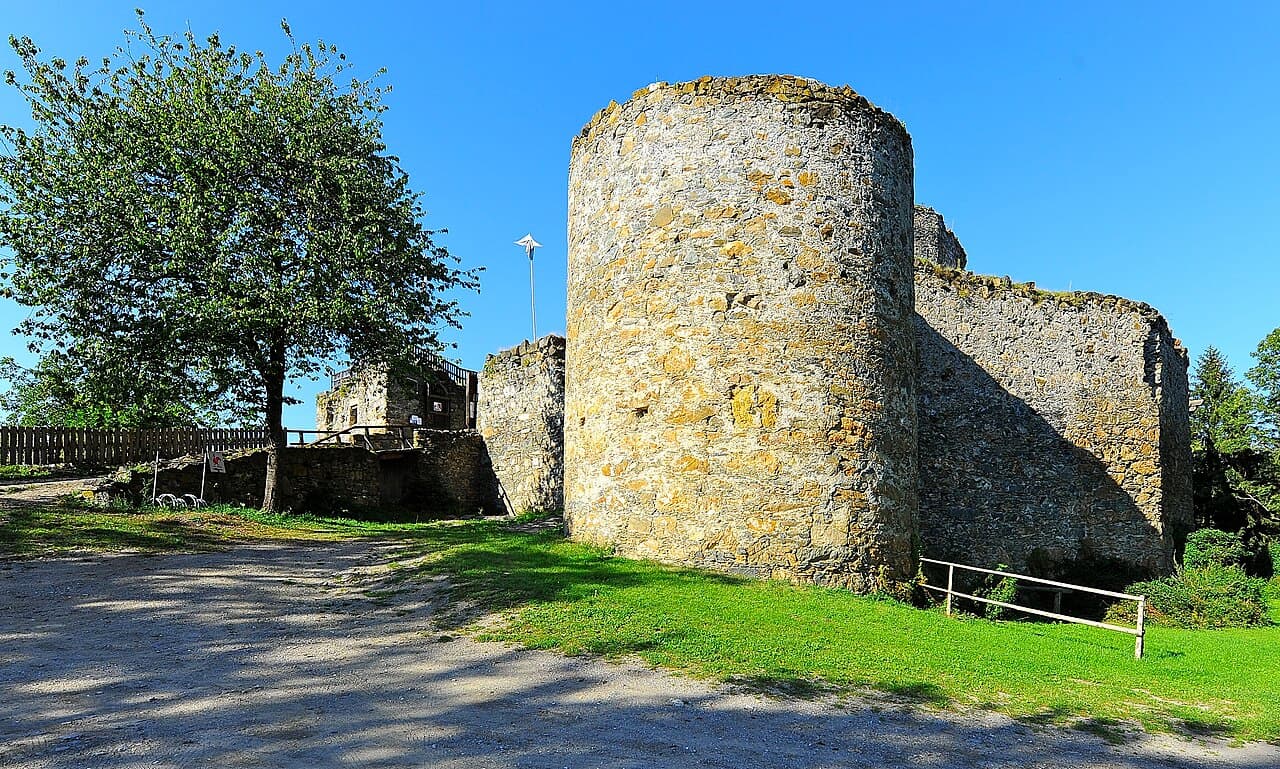
Taggenbrunn Castle Ruins
Taggenbrunn Castle ruins stand as a testament to a remarkable continuum of strategic occupation spanning over two millennia in the region of Carinthia, Austria. Originally established on a Celtic-Roman hillfort settlement dating back to the 6th century BCE, the site evolved into a significant medieval fortress with a complex history of construction, destruction, and restoration. This hilltop castle, first documented in 1142, embodies the layered heritage of military architecture and regional power dynamics from the High Medieval period through to the early modern era.
The early origins and medieval foundation
The location of Taggenbrunn was strategically chosen due to its elevated position, ideal for surveillance and defense. The earliest fortifications were established by the Celts and Romans, whose presence is evidenced by archaeological remains that predate the medieval castle by over a millennium. The medieval castle itself was constructed in the first third of the 12th century by Tagenus von Pongau, a vassal of the Archbishopric of Salzburg. The castle was first mentioned in historical records as Rahuinus de Takkenbrunnen in 1142, and by 1157 it was explicitly recognized as a castle under the name Castrum Takenbrunne.
Throughout the 12th and 13th centuries, Taggenbrunn played a pivotal role in the regional power struggles of Carinthia and Salzburg. The castle was destroyed in 1258 during a rebellion involving Philipp von Spanheim and Bishop Ulrich von Seckau. This event led to intervention by Duke Ulrich III of Carinthia, who oversaw the castle's reconstruction in 1268. The rebuilt fortress resumed its function as a key military and administrative center.
Political significance and conflicts in the late medieval period
Taggenbrunn's importance continued into the late 13th and early 14th centuries. During the 1292 uprising led by Ulrich von Heunburg against Dukes Albrecht I and Meinhard of Carinthia, the castle served as a place of imprisonment for the son of Duke Ludwig, held captive by Archbishop Konrad IV of Salzburg. This episode highlights the castle's strategic value as a stronghold and political asset.
In 1308, the castle became the residence of Otto von Liechtenstein-Murau, appointed governor of Carinthia, from where he administered the region. This period underscores Taggenbrunn's dual function as both a military fortress and an administrative hub.
The castle's military role persisted through the 15th century. In 1479, Archbishop Leonhard von Keutschach permitted Hungarian allies to occupy Taggenbrunn during their conflict with Emperor Frederick III. This alliance provoked a retaliatory attack by imperial forces, resulting in the castle's destruction. The fortress remained under imperial control until 1494, when Emperor Maximilian I restored it to the Archbishopric of Salzburg.
Architectural expansion and transformation (1497–1503)
Between 1497 and 1503, Archbishop Leonhard von Keutschach commissioned extensive expansions and modernization of Taggenbrunn Castle. This phase marked the transformation of the fortress into a more advanced defensive structure, reflecting contemporary advancements in military architecture during the late medieval period. The renovations included the construction of additional buildings adjacent to the main fortress, enhancing its functionality and residential capacity.
The castle's layout from this period incorporated fortified walls, towers, and auxiliary structures designed to withstand evolving siege technologies. Although detailed architectural plans are scarce, surviving elements suggest a well-fortified complex adapted to the defensive needs of the time.
Decline, decay, and modern restoration efforts
Despite its earlier prominence, Taggenbrunn Castle began to decline in the 17th century. By the late 18th century, specifically in 1796, the castle had fallen into ruin. The secularization of Salzburg in 1803 transferred ownership of the site to the Austrian state, and it was subsequently sold to private owners in 1858. Over the following centuries, the castle changed hands multiple times, reflecting shifting attitudes towards heritage and property management.
Since 2011, under the ownership of Alfred Riedl, significant restoration efforts have been undertaken. These include rehabilitating the castle hall and surrounding buildings, transforming parts of the site into cultural venues for music festivals, exhibitions, and multimedia projects focused on ecological themes. A tasting house opened in 2015 complements the development of nearby vineyards, integrating heritage tourism with local viticulture.
Architectural remains and features
The surviving structures of Taggenbrunn Castle offer valuable insights into its architectural evolution. The fortress sits atop the ancient fortified hill, preserving elements from its late 15th-century expansion. Notable among the remains are a granary, caretaker's house, and supply house, which retain their original architectural styles.
The granary is particularly significant for its preservation of a heavy slate roof supported by the original wooden framework, a rare feature in the region that highlights the castle's logistical capabilities. The renovated castle hall now serves as a cultural space, while exhibition rooms, a watch shop, and a bistro have been integrated within the restored buildings, demonstrating adaptive reuse of historic architecture.
Although detailed descriptions of gates, staircases, or decorative elements such as mosaics are lacking, the extant ruins and restored interiors reflect the site's transition from ancient fortification to medieval stronghold and finally to a modern cultural landmark.
Taggenbrunn's cultural and heritage significance
Taggenbrunn Castle ruins represent a unique historical continuum from ancient Celtic-Roman fortifications to a High Medieval hill castle with notable expansions during the late medieval period. Its strategic location in Carinthia and its involvement in regional conflicts illustrate the castle's importance in Austrian medieval history.
Today, the site functions not only as a heritage monument but also as a vibrant cultural venue that fosters community engagement through events and exhibitions. The integration of viticulture and tourism further enhances its appeal, making Taggenbrunn a multifaceted destination that preserves and celebrates its rich historical legacy.
Photo gallery

Information
Website
Visit websiteSources & official resources
Verify the information above using these authoritative references.
Loading map...
Visitor reviews
No reviews yet. Been here? Write the first review and help other travelers!
Write the first reviewVisited this castle? Share your experience
Your review helps other travelers and adds first-hand knowledge to our encyclopedia.