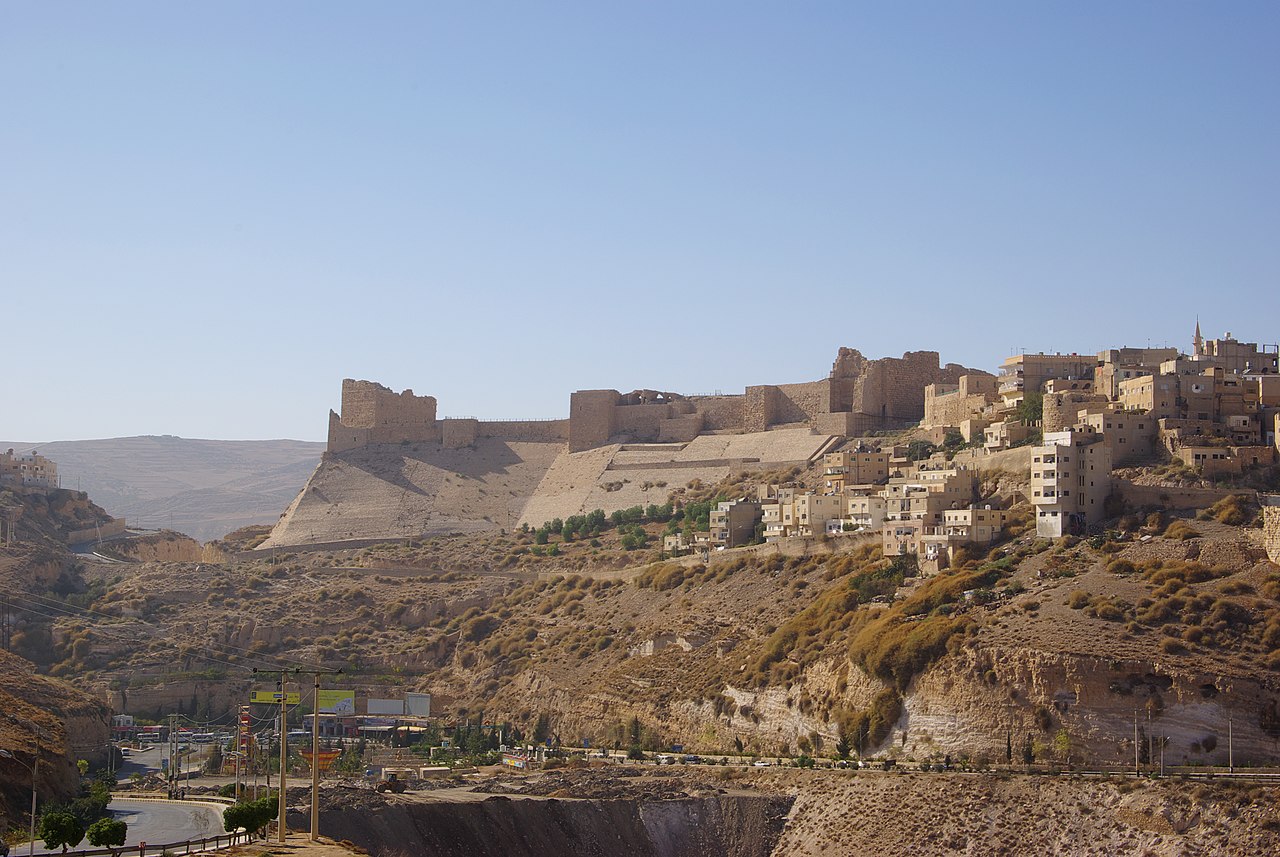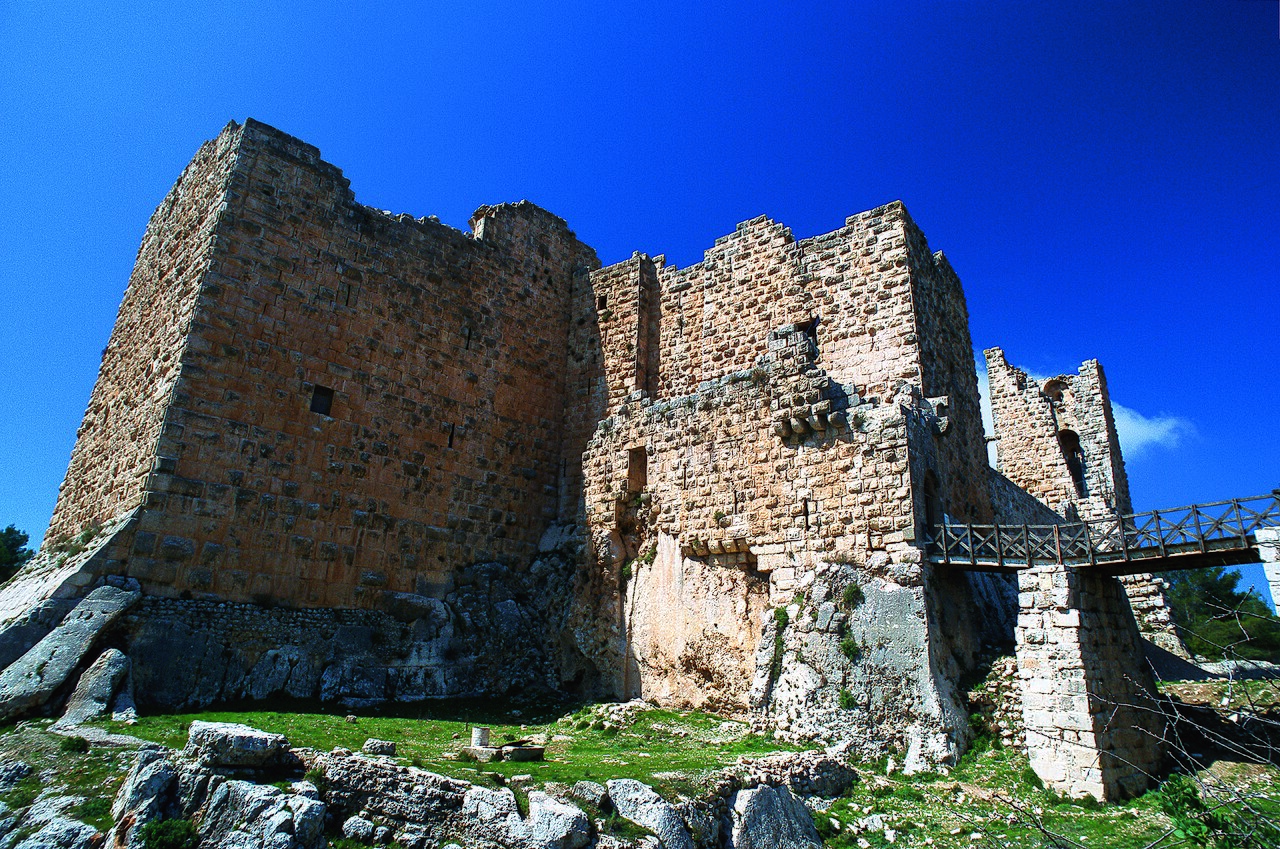
Tafilah Castle stands prominently on a hill overlooking the city of Tafilah in southern Jordan. This historic fortress has roots that likely trace back to the Edomite period, an ancient civilization that flourished in the region during the early first millennium BCE. Although extensive archaeological excavations have yet to confirm its precise founding date, the castle's location and structural elements suggest a long history of strategic military use, evolving through various cultural and political phases over millennia.
Historical significance and evolution
The castle's commanding position on a hilltop provided a critical vantage point for monitoring the surrounding valleys and the mountainous terrain extending towards Hebron. This strategic location made Tafilah Castle an essential military outpost for controlling access routes and overseeing regional movements.
During the Mamluk period (13th-16th centuries), the fortress underwent significant reconstruction to enhance its defensive capabilities in response to changing warfare technologies and regional threats. The Mamluks fortified the castle with thicker walls and adapted its openings to accommodate the use of firearms, marking a transition from traditional archery defenses.
Later, under Ottoman rule (16th-20th centuries), the castle was further strengthened and maintained as part of the empire's broader network of military installations across the Levant. The Ottomans preserved the castle's role as a surveillance and defensive stronghold, continuing to use it to control the western slopes and vital communication routes.
Despite enduring damage from various conflicts and seismic activity, including earthquakes common to the region, Tafilah Castle was repeatedly restored. These restorations underscore the fortress's ongoing importance in local defense and governance throughout its history.
Architectural features and layout
The castle occupies an area of approximately 400 square meters, with dimensions close to 19 by 21 meters. Its design reflects a focus on defense and sustainability, typical of hill castles built to withstand prolonged sieges.
Main entrance and courtyard
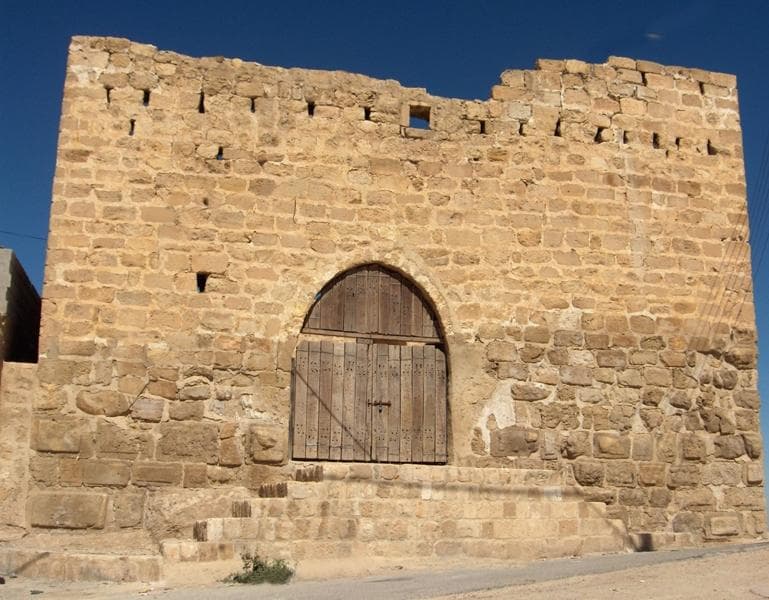
The main entrance, facing east, features a large, robust gate designed to secure the fortress during attacks. This gateway leads into a central courtyard measuring about 9 by 14 meters, paved with large stones to facilitate movement and activities within the castle walls.
Water supply system
A critical feature within the courtyard is a deep water well, essential for sustaining inhabitants during sieges. Additionally, an elaborate network of underground tunnels connects the castle to external water sources, notably the spring at Ain al-Jahir, located roughly 300 meters away. These tunnels allowed safe, concealed access to water, a vital advantage in times of conflict.
Defensive walls and adaptations
The castle's walls rise to about eight meters and are constructed with a stepped layout comprising two levels. This design enabled defenders to move efficiently and position weapons or supplies strategically. The narrow exterior openings initially served archers but were later modified to accommodate firearms during the Mamluk and Ottoman periods, reflecting the evolution of military technology.
Role in the local community and cultural heritage
The fortress not only served military purposes but also influenced the development of the surrounding settlement. Houses clustered near the castle walls, indicating the fortress's central role in protecting the local population and serving as a hub for community life.
Today, Tafilah Castle stands as a testament to the region's layered history, embodying the architectural and strategic adaptations made by successive cultures. Its preservation offers valuable insights into the military architecture of hill castles in Jordan and the broader Levant.
Preservation and current condition
While the castle has suffered damage over time due to warfare and natural disasters, it remains a well-preserved hill castle that continues to attract interest from historians, archaeologists, and visitors. Its enduring structure provides a tangible connection to the ancient and medieval history of Jordan.
Frequently asked questions (FAQ)
- What is the historical significance of Tafilah Castle?
- Tafilah Castle is a strategic hilltop fortress with origins likely dating back to the Edomite period, later enhanced during the Mamluk and Ottoman eras to serve as a military stronghold overseeing key regional routes.
- Can visitors explore the underground tunnels at Tafilah Castle?
- Access to the underground tunnels connecting the castle to nearby water sources is generally restricted for safety reasons, but guided tours may provide information about their historical function.
- When was Tafilah Castle primarily reconstructed?
- The castle underwent significant reconstruction during the Mamluk period to adapt to evolving military technologies and was further maintained during Ottoman rule.
- How does Tafilah Castle's architecture reflect its defensive purpose?
- The castle features thick walls approximately eight meters high, narrow openings for archery and firearms, a stepped interior wall layout for defense, and a secure main gate facing east.
- Is Tafilah Castle accessible to visitors year-round?
- Visiting hours may vary, and it is advisable to check local information before planning a visit, as the castle is an important cultural heritage site in Jordan.
Photo gallery

Information
Website
Visit websiteSources & official resources
Verify the information above using these authoritative references.
Loading map...
Visitor reviews
No reviews yet. Been here? Write the first review and help other travelers!
Write the first reviewVisited this castle? Share your experience
Your review helps other travelers and adds first-hand knowledge to our encyclopedia.