Montreal Castle
Montreal Castle, also known as Qal'at ash-Shawbak in Arabic and historically referred to as Mons Regalis or Mont Real by the Crusaders, is a significant medieval fortress located near the modern town of Shoubak in Jordan. This hill castle was originally constructed in 1115 during the High Medieval period by Baldwin I of Jerusalem as part of the Crusader Kingdom of Jerusalem's efforts to control strategic trade and pilgrimage routes. Perched on a rocky, conical mountain overlooking the Arabah Valley, the castle commanded views over fertile orchards below, offering both military advantage and control over the vital passage between Egypt and Syria.
The castle's location was chosen for its natural defensive benefits, with steep slopes protecting it from siege engines and direct assault. However, one major challenge faced by the Crusaders was the lack of a reliable water source at the summit. This issue was ingeniously resolved through the construction of a tunnel descending 365 steps to reach two spring-fed cisterns within the mountain, allowing defenders to access water safely during sieges. This water system exemplifies the advanced engineering solutions employed in medieval fortifications in arid regions.
Historical significance and military role
Montreal Castle was a key military and administrative center in the Lordship of Oultrejordain, an important Crusader territory east of the Jordan River. Initially retained by the royal family of Jerusalem, the castle became the seat of the lordship in 1142 before the center shifted to the stronger fortress of Kerak. The castle was linked to several notable Crusader lords, including Philip of Nablus, Philip de Milly, and Raynald of Châtillon, who used it as a base to control trade routes and launch raids against Muslim caravans.
The castle's strategic position allowed its holders to levy taxes on traders and pilgrims traveling between the Red Sea and Syria, including those on pilgrimages to Mecca and Medina. Raynald of Châtillon notably used the castle as a staging ground for naval raids on the Red Sea, even planning attacks on Mecca itself, actions that provoked the ire of the Muslim leader Saladin.
Saladin besieged Montreal after his victory at Jerusalem in 1187. Despite the castle's formidable natural defenses, including its hilltop position that prevented the use of siege engines, the fortress fell after a prolonged siege lasting nearly two years in May 1189. Following its capture, Saladin granted the castle to his brother al-‘Adil, who maintained control through the remainder of the Ayyubid period.
Architectural features and construction phases
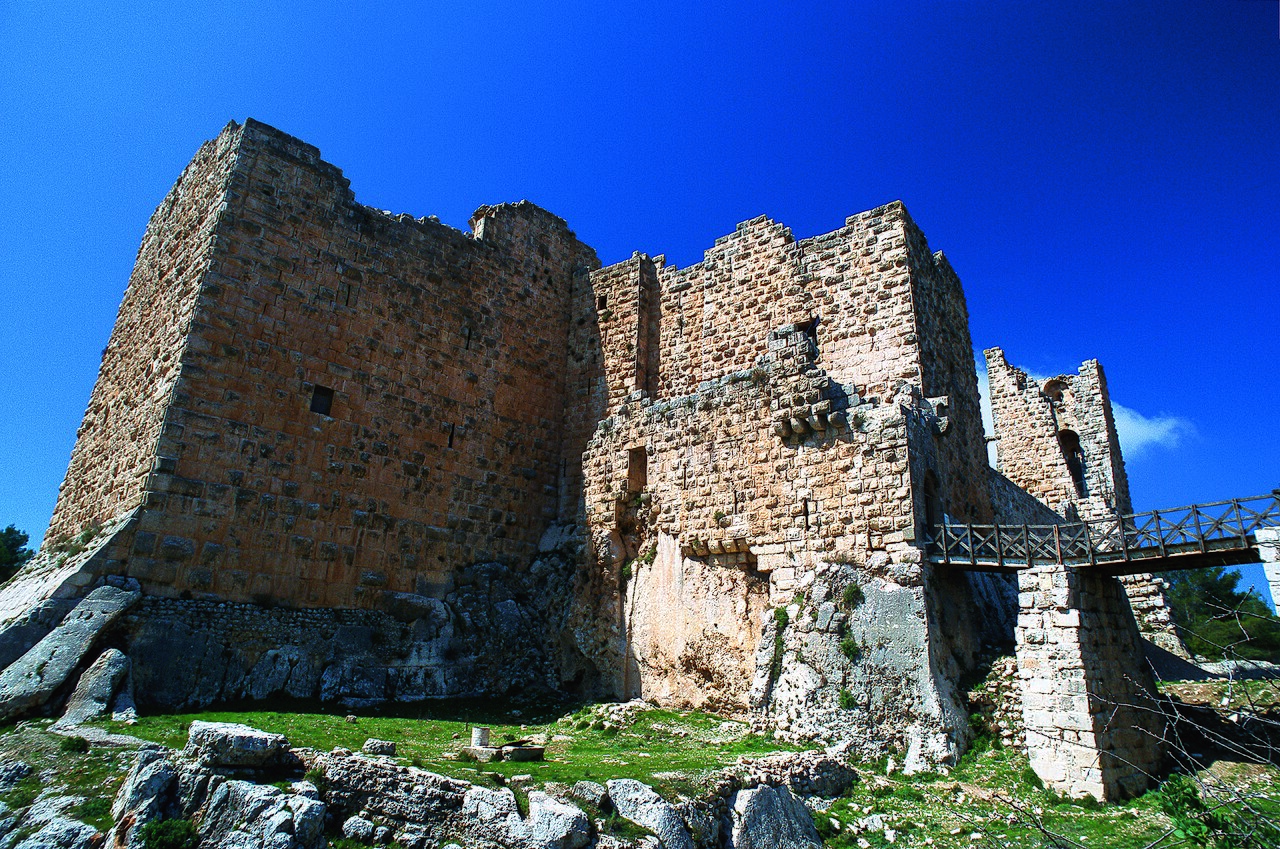
The castle's architecture reflects a blend of Crusader, Ayyubid, and Mamluk influences. Originally, the Crusaders built a complex with three concentric defensive walls, though today only the innermost wall remains largely intact. The fortress's oval layout is defined by a double ring of walls reinforced with projecting bastions and multiple towers, mostly rectangular but including a notable circular corner tower, a rarity among Crusader castles in the region.
The main entrance is located on the eastern side and features a winding passage that turns clockwise, designed to slow attackers and expose their unshielded right side. This gate was secured by two iron locks and a vaulted corridor, emphasizing the strong defensive measures. Inside the walls, the castle contained essential military and religious structures, including a three-aisled church likely dedicated to St. Mary and a smaller chapel that served either local Eastern Christian communities or functioned as a baptismal chapel.
Water management was a critical concern, addressed by the extensive underground tunnel system leading to cisterns fed by natural springs. Additional rock-cut water tanks supported the fortress's ability to withstand long sieges. The castle also contained a palace with four iwans—large vaulted halls typical of Islamic architecture—built during the Ayyubid period, as well as baths, mills, and olive presses, which indicate a degree of self-sufficiency and daily life activity within the fortress.
Mamluk renovations and inscriptions
During the 13th century, the Mamluk Sultan Baybars captured Montreal and undertook significant renovations to strengthen the fortress further. These included the construction of new towers and the reinforcement of existing walls. The Mamluks left carved inscriptions in Kufic script on the towers and walls, marking their patronage and the renovations carried out under Sultan Lajin. These inscriptions are important historical records that illustrate the castle's continued military and administrative importance under Muslim rule.
Later history and archaeological significance
Montreal remained an active military and administrative site through the Ayyubid, Mamluk, and into the Ottoman period. Although its military use declined by the late 17th century, the site continued to be inhabited into the 20th century. Archaeological interest in the castle began in the mid-19th century and has continued intermittently, with modern efforts including detailed 3D geographic information system (GIS) mapping to document and conserve the ruins.
Today, the ruins of Montreal Castle stand as a testament to the complex history of Crusader and Muslim interactions in the Levant. Its combination of architectural styles and strategic location provide valuable insights into medieval military engineering and the cultural exchanges between Christian and Muslim powers in the region. The castle is listed on Jordan's tentative World Heritage list, highlighting its significance as a cultural and historical landmark.
Site layout and surviving structures
The castle crowns a steep hill rising approximately 1382 meters above sea level, with an oval plan defined by concentric defensive walls. The outer walls, constructed with roughly finished local stone, reflect the practical defensive priorities of southern Crusader castles. The moat surrounding the castle and the variety of towers, including the unique circular tower, demonstrate sophisticated defensive design.
Within the walls, the remains of the Crusader curtain wall and two chapels are among the most significant surviving features. The inner courtyard also held a church, palace, and various functional buildings such as mills and baths. The water tunnel and cistern system remain remarkable feats of medieval engineering, enabling prolonged resistance during sieges.
Surrounding the castle were gardens and agricultural estates, some owned by religious institutions like the Templum Domini and the Monastery of St. Catherine of Sinai. These estates supported the castle's inhabitants and contributed to its economic sustainability.
Visitor information and cultural impact
Montreal Castle is accessible to visitors interested in medieval history and Crusader architecture. Its dramatic hilltop position offers panoramic views of the surrounding landscape, including the Arabah Valley and distant mountain ranges. The site serves as an open-air museum preserving the layered history of Crusader, Ayyubid, and Mamluk periods.
Ongoing archaeological research and conservation efforts aim to protect the ruins and enhance understanding of this important fortress. Visitors can explore the remains of walls, towers, chapels, and the water tunnel system, gaining insight into the castle's strategic importance and architectural innovations.
Frequently asked questions (FAQ)
- What is the historical significance of Montreal Castle?
- Montreal Castle, also known as Shoubak Castle, was built in 1115 by the Crusaders as a strategic military fortress. It played a crucial role during the Crusades and is a significant example of medieval military architecture in the region.
- When was Montreal Castle built?
- Montreal Castle was constructed in 1115 AD during the reign of King Baldwin II of Jerusalem. Its establishment marked an important moment in the history of the Crusader states, serving as a defensive stronghold against Muslim forces.
- What are the opening hours for Montreal Castle?
- Montreal Castle is generally open to visitors from 8:00 AM to 6:00 PM, with extended hours during the summer months. It is advisable to check the official website or local information for any changes in hours or special holiday closures.
- Can I take guided tours of Montreal Castle?
- Yes, guided tours are available at Montreal Castle, providing visitors with in-depth knowledge about its history and architecture. Tours often include insights from knowledgeable guides who can share fascinating stories about the castle's past.
- Is it possible to visit Montreal Castle year-round?
- Yes, Montreal Castle is open to visitors throughout the year, making it accessible regardless of the season. However, the best time to visit is during the spring and autumn months when the weather is mild and comfortable for exploring.
- What are the ticket prices for visiting Montreal Castle?
- The ticket prices for Montreal Castle are typically affordable, with discounts available for students and children. It is recommended to check the latest pricing on the official website or at the entrance before your visit.
- How do I get to Montreal Castle from the nearest city?
- Montreal Castle is located near Shoubak, approximately 220 kilometers south of Amman. Visitors can reach the castle by car or bus, with several local transport options available for those traveling from nearby cities.
- What nearby attractions can I visit while at Montreal Castle?
- While visiting Montreal Castle, you can also explore the nearby ancient city of Petra, which is just a short drive away. Other attractions include the stunning landscapes of Wadi Rum and the historic town of Kerak, both offering rich cultural experiences.
- Is Montreal Castle accessible for visitors with disabilities?
- Montreal Castle has made some efforts to improve accessibility for visitors with disabilities; however, the castle's historical structure may present some challenges. It is advisable to contact the site in advance to inquire about specific accommodations and facilities available for disabled visitors.
Information
Loading map...
Visitor reviews
No reviews yet. Been here? Write the first review and help other travelers!
Write the first reviewVisited this castle? Share your experience
Your review helps other travelers and adds first-hand knowledge to our encyclopedia.