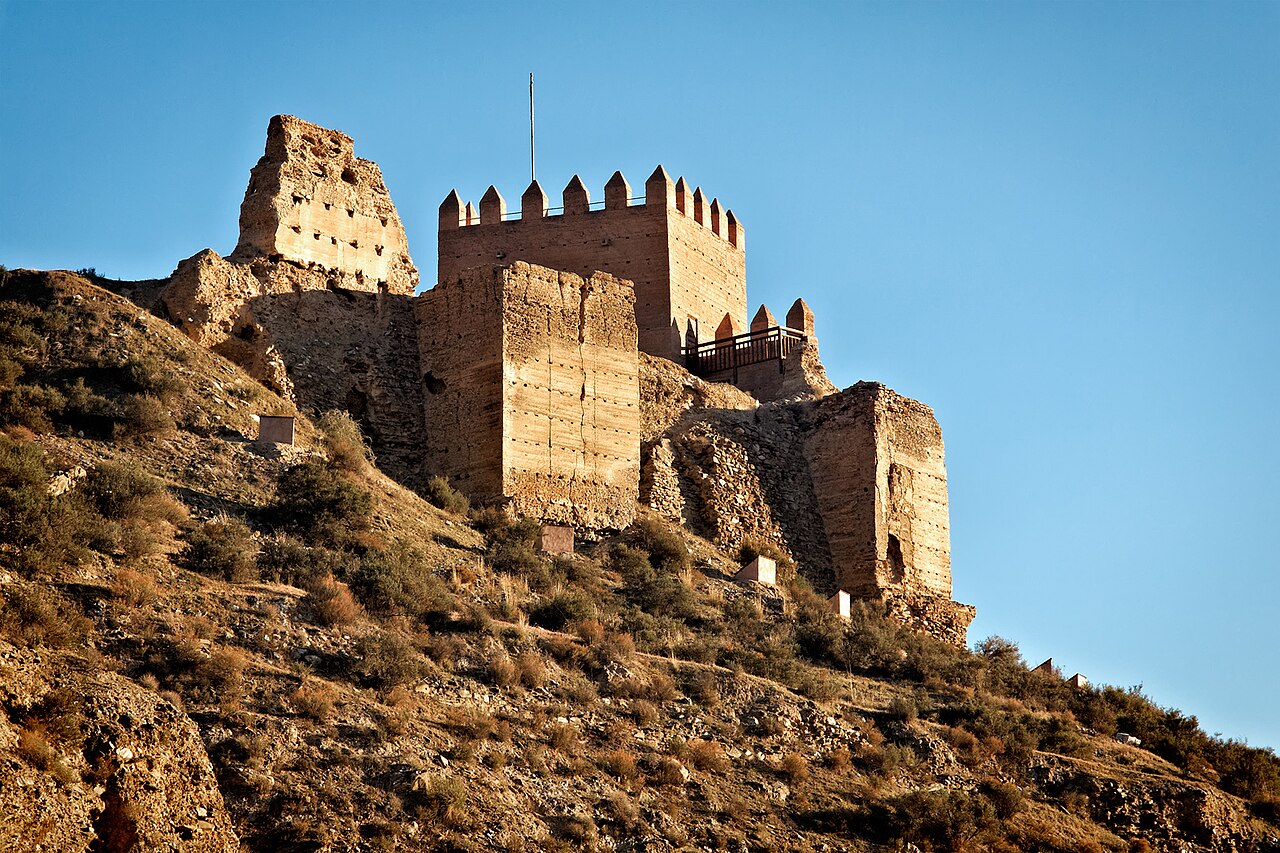
Níjar Tower

Níjar Tower: historic watchtower and coastal defense in Almería, Spain
Níjar, Spain
Post-Renaissance (17th–18th c.)
Well Preserved

Níjar Tower, locally known as Atalaya de Níjar, is a historic round watchtower situated on a hill overlooking the town of Níjar in the province of Almería, Spain. This tower holds a significant place in the region's defensive history, serving as a sentinel over the surrounding landscape and coastline.

The origins of Níjar Tower are somewhat complex, with evidence suggesting that it may date back to 1574. It is believed to be the sole surviving structure of the much older Arabic Níjar Castle, which once dominated this strategic location. Over the centuries, the tower has undergone multiple phases of rebuilding and restoration, particularly following damage caused by neglect and seismic activity in the area.

Architectural features and design

The tower is characterized by its round shape, a common design for watchtowers intended to provide wide-ranging views and improved defense against attackers. Its robust masonry walls were designed to withstand assaults and the harsh coastal weather. The tower's elevated position on a hill enhances its function as a lookout point, allowing clear visibility over the valley below and the nearby coastline.

Structural details

The tower's construction reflects the military architectural practices of the late 16th century and early 18th century, combining elements from its Arabic origins with modifications made during the Post-Renaissance period. It likely features thick stone walls, narrow windows or arrow slits for defense, and a flat roof or battlemented parapet for observation and signaling.

Historical context and strategic importance

In the 18th century, Níjar Tower was integrated into the coastal defense system commissioned by King Charles III of Spain. This system aimed to protect the Spanish coast from pirate raids and foreign invasions, particularly during a period of heightened maritime conflict in the Mediterranean. The tower served as a communication and observation post, relaying warnings to nearby settlements and other fortifications.

Although the tower itself is relatively simple in design, its role within this broader defensive network was crucial for regional security. The tower's location allowed it to monitor both land and sea approaches, making it a vital part of the early warning system along the southern Spanish coast.

Preservation and current status

Today, Níjar Tower is well preserved and accessible to the public without an entrance fee. While the tower's interior is modest and lacks extensive decorative features, visitors are drawn to its historical significance and the panoramic views it offers of the Níjar valley and surrounding countryside.

The tower stands as a tangible link to the region's past, illustrating the evolution of military architecture from the Arabic period through the Post-Renaissance era. Its continued preservation allows for educational opportunities and cultural appreciation of Spain's coastal defenses.

Visiting Níjar Tower

Located behind Calle Atalaya 25 in Níjar, the tower is easily reachable on foot from the town center. Visitors can explore the tower and enjoy the natural surroundings, which include scenic hiking paths and viewpoints. The site is open year-round, making it a convenient destination for those interested in history, architecture, and nature.

Nearby attractions

The town of Níjar itself offers additional cultural experiences, including traditional Andalusian architecture, local crafts, and regional cuisine. The nearby Cabo de Gata-Níjar Natural Park is renowned for its volcanic landscapes, pristine beaches, and biodiversity, providing a rich complement to a visit to the tower.

Frequently asked questions (FAQ)

How do I get to Níjar Tower?
Níjar Tower is located behind Calle Atalaya 25 in the town of Níjar, Almería. It is accessible on foot from the town center, with clear paths leading up to the hill where the tower stands.
What is the historical significance of Níjar Tower?
Níjar Tower served as a coastal watchtower and part of the 18th-century defense system designed by King Charles III to protect against pirate raids and invasions along the southern Spanish coast.
Can I visit the interior of Níjar Tower?
Yes, visitors can enter Níjar Tower freely. While the interior is simple and functional, it offers insight into the tower's defensive purpose and historical context.
When is the best time to visit Níjar Tower?
The tower is open year-round, but spring and autumn offer the most pleasant weather for exploring the site and enjoying the panoramic views.
Are there other attractions near Níjar Tower?
Nearby attractions include the town of Níjar with its traditional Andalusian architecture and the Cabo de Gata-Níjar Natural Park, known for its volcanic landscapes and beaches.

Information

Hill Castle

Address

Behind Calle Atalaya 25, Níjar, Almería, Spain

Loading map...

Visitor reviews

No reviews yet. Been here? Write the first review and help other travelers!

Write the first review

Visited this castle? Share your experience

Your review helps other travelers and adds first-hand knowledge to our encyclopedia.

Write a review

(5/5)

0/2000 characters

Your review will be visible after admin approval

Nearby castles

18.1 km

García Tower

Retamar, Spain

García Tower, locally known as Torre García, stands as a notable example of Renaissance coastal defense architecture from the 16th century. Located near the beach southwest of the village of Retamar in the province of Almería, Spain, this tower was part of a comprehensive network of watchtowers built to protect the Spanish Mediterranean coast from the frequent raids of Barbary pirates. The early 16th century saw a significant threat to the Spanish coastline following the establishment of the Turkish settlement in Algiers in 1516. This event intensified pirate activity, with Barbary corsairs launching attacks that involved looting coastal towns and capturing inhabitants for slavery. To counter this threat, a series of defensive watchtowers were commissioned, initially in 1552 during the reign of Charles V, Holy Roman Emperor. However, the majority of these towers, including García Tower, were constructed or completed under the reign of his son, Philip II of Spain, in the latter half of the 16th century. Historical context and construction García Tower was built between 1571 and 1575, likely on the foundations of an earlier Arabic fortification. This strategic location between the nearby Perdigal and San Miguel towers allowed it to serve as an effective lookout point against naval threats. The tower's primary role was to detect approaching enemy ships and communicate their presence to neighboring towers through a system of signals—smoke by day and fire by night—enabling a coordinated coastal defense. Architectural features The tower is characterized by its round design, a common feature among Renaissance watchtowers along the Spanish coast, which provided better resistance to cannon fire and improved visibility. Its robust stone construction, typical of the period, ensured durability against both natural elements and attacks. The tower's height and placement afforded wide-ranging views of the Mediterranean Sea and the surrounding coastline. Defensive capabilities The tower's design included thick walls and limited entry points to withstand assaults. Its elevated position and circular shape minimized blind spots, allowing guards to monitor the sea effectively. The communication system involving smoke and fire signals was a crucial element of the coastal defense network, enabling rapid alerts across multiple towers. Use and maintenance through the centuries By 1759, García Tower was reported to be in good condition and manned by two guards from the Guardia Civil. It underwent repairs in 1773, reflecting its continued strategic importance. Documentation from 1849 indicates the tower remained well-preserved, with guards residing in a nearby house rather than inside the tower itself. During the 20th century, the tower was abandoned as military needs evolved and the threat of pirate raids diminished. However, in the 1980s, restoration efforts were undertaken to preserve this historical monument. Today, García Tower is accessible to visitors, although the tower's interior is fenced off for protection. Surroundings and cultural significance Adjacent to the tower is a modest hermitage, adding to the site's cultural interest. The location near the beach and the village of Retamar enriches its appeal as a historical landmark within the Almería province. García Tower exemplifies the extensive coastal defense strategy implemented by Spain during the Renaissance to safeguard its Mediterranean territories. As a Renaissance-era watchtower, García Tower offers insight into the military architecture and maritime defense systems of 16th-century Spain. Its preservation and accessibility allow visitors to connect with the region's historical struggles against piracy and the broader geopolitical dynamics of the Mediterranean during that period.

Renaissance (15th–17th c.)
Details
19.2 km
Tabernas Castle — Spain castle

Tabernas Castle

Tabernas, Spain

Tabernas Castle, or Castillo de Tabernas, stands as an evocative ruin atop a prominent hill overlooking the town of Tabernas in the province of Almería, Andalusia, Spain. This 11th-century fortress was constructed during the period of Arab rule in the Iberian Peninsula, embodying the Moorish architectural style prevalent in the region at the time. Its strategic position allowed it to dominate the surrounding landscape and control a vital route connecting the cities of Almería and Murcia. The castle originally occupied the entire summit of the hill, serving as a formidable defensive stronghold and a symbol of power during the High Medieval period. Its design incorporated typical elements of Moorish fortifications, including robust walls, towers, and defensive gates. Though much of the structure has succumbed to the ravages of time, the remaining ruins convey the castle's former scale and military significance. Historical significance and medieval role Tabernas Castle played a pivotal role during the Reconquista, the centuries-long conflict between Christian and Muslim forces for control of the Iberian Peninsula. In 1489, as part of the final stages of this conflict, the castle was surrendered to the Catholic Monarchs, Queen Isabella I of Castile and King Ferdinand II of Aragon, through a treaty with the Emirate of Granada. This handover marked a significant shift in regional power. The monarchs themselves stayed at the castle for several days during their campaign to conquer Almería. Following the successful siege and capture of the city, the formal capitulation documents were signed within the castle's walls. The castle also served as a departure point for the monarchs in 1492 when they proceeded to Granada to negotiate its surrender, effectively ending Muslim rule in Spain. Architectural features and layout Although much of Tabernas Castle lies in ruins today, archaeological studies and remaining structures reveal its original layout and construction techniques. The fortress was built primarily of stone and mortar, featuring defensive walls encircling the hilltop. It included several towers that provided vantage points for surveillance and defense. The castle's gates were designed to resist assault, with narrow entrances and protective battlements. The castle's Moorish style is evident in the use of horseshoe arches and geometric decorative motifs, although much of the ornamentation has been lost. The site included living quarters, storage areas, and water cisterns, essential for withstanding sieges. The extensive footprint of the castle on the hilltop indicates it was a major military installation during its time. Ruin and restoration efforts By the early 16th century, Tabernas Castle had fallen into disrepair. Records from 1522 describe it as already ruinous, reflecting the decline in its military importance following the completion of the Reconquista. In 1560, the city of Almería petitioned Emperor Charles V for funds to repair the fortress. Although minor repairs were undertaken, the castle was largely abandoned by the end of the 16th century. Further damage occurred during the Peninsular War in the early 19th century, when the ruins were partially destroyed. In the 20th century, the castle attracted attention as a filming location; notably, in 1969, it appeared in the movie "Patton," during which a gate was reportedly destroyed for filming purposes. Today, the ruins have undergone some partial restoration. A newly constructed gate, however, contrasts with the historic fabric and appears out of place. Despite this, the site remains freely accessible to visitors, offering a tangible connection to the region's medieval past. Cultural heritage and protection status In recognition of its historical and cultural value, Tabernas Castle was declared a Bien de Interés Cultural monument in 1993. This designation helps protect the site and promotes its preservation as part of Spain's rich architectural heritage. The castle is an important example of Moorish military architecture in Andalusia and serves as a reminder of the complex history of conquest and coexistence in southern Spain. Visiting tabernas castle Visitors to Tabernas Castle can explore the ruins, which offer panoramic views of the surrounding landscape. The site is open to the public without an entrance fee, making it accessible for those interested in medieval history and architecture. While the castle is largely in ruins, its location and remaining structures provide insight into its strategic importance and architectural character. Nearby, the municipality of Tabernas also offers other attractions, including the famous Tabernas Desert, known for its unique landscapes and as a filming location for numerous Western films. The castle's proximity to these sites makes it a worthwhile destination for cultural and historical tourism in the region.

High Medieval (11th–13th c.)
Details
20.3 km

Perdigal Tower

Retamar, Spain

Perdigal Tower, locally known as Torre del Perdigal, is a Renaissance coastal watchtower situated next to the beach southwest of the village of Retamar in the province of Almería, Spain. This tower is part of a network of defensive structures built during the 16th century to protect the Spanish Mediterranean coast from frequent attacks by Barbary pirates. Historical context and strategic importance Following the establishment of the Turkish settlement in Algiers in 1516, the entire Spanish Mediterranean coastline faced a persistent threat from Barbary pirate raids. These pirates regularly landed on the coast, targeting towns and rural settlements, looting property and enslaving inhabitants. To counter this menace, the Spanish Crown initiated a comprehensive coastal defense strategy. In 1552, under the reign of Charles V, Holy Roman Emperor, construction began on a series of watchtowers stretching from Alicante to Cádiz. These towers were intended to serve as lookout points to detect pirate ships early and provide warnings to inland settlements. Most towers were built or completed during the reign of Philip II of Spain in the latter half of the 16th century, reflecting the heightened need for coastal defense during this turbulent period. Architecture and features of Perdigal Tower The Perdigal Tower is a round tower typical of the Renaissance military architecture designed for coastal defense. Its circular shape was advantageous for deflecting cannon fire and providing a 360-degree field of vision for lookouts. The tower's robust masonry construction allowed it to withstand attacks and harsh coastal weather conditions. Strategically located, the tower communicated visually with the city of Almería and the nearby García Tower. This communication was achieved through a system of smoke signals during the day and fire signals at night, enabling rapid transmission of warnings about approaching enemy ships to other towers and settlements along the coast. Possible earlier origins While the tower is generally dated to the end of the 16th century, some historians suggest that Perdigal Tower could have originated as an Arab watchtower from the 13th century. This theory is based on the strategic location and certain architectural elements that may predate the Renaissance reconstruction. However, the predominant historical consensus attributes the current structure to the Renaissance period defensive efforts. Role in coastal defense and historical significance Perdigal Tower played a vital role in the early warning system against Barbary pirate incursions. Its presence helped protect the local population by providing timely alerts that allowed residents to seek shelter or prepare defenses. The network of towers along the Spanish Mediterranean coast represents an important aspect of Spain's military and maritime history during the 16th century. Current condition and visitor information Today, Perdigal Tower stands as a well-preserved Renaissance watchtower open for public visitation. It remains a simple yet evocative structure, offering insight into the coastal defenses of historic Spain. Visitors should be cautious as there have been reports of the tower being inhabited by a vagabond, and the interior is minimal without extensive facilities. The tower's location next to the AL-3113 road makes it accessible for visitors exploring the province of Almería. While it does not have extensive tourist infrastructure, it is an important cultural heritage site that illustrates the military architecture and historical challenges faced by coastal communities in the Renaissance period. Architectural legacy and preservation Perdigal Tower exemplifies the Renaissance military architectural style adapted for coastal defense, emphasizing functionality, visibility, and communication. Its preservation contributes to the understanding of Spain's response to maritime threats during the 16th century and the evolution of coastal fortifications.

Renaissance (15th–17th c.)
Details