Regéc Castle — Hungary castle

Regéc Castle

Regéc Castle: medieval hill fortress in Hungary
Hungary, Hungary
Late Medieval (14th–15th c.)
Partially Restored

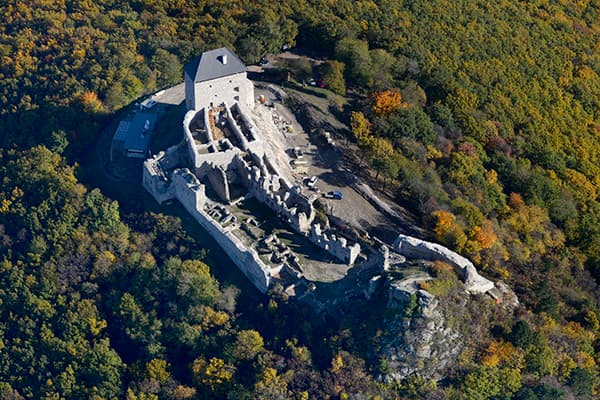
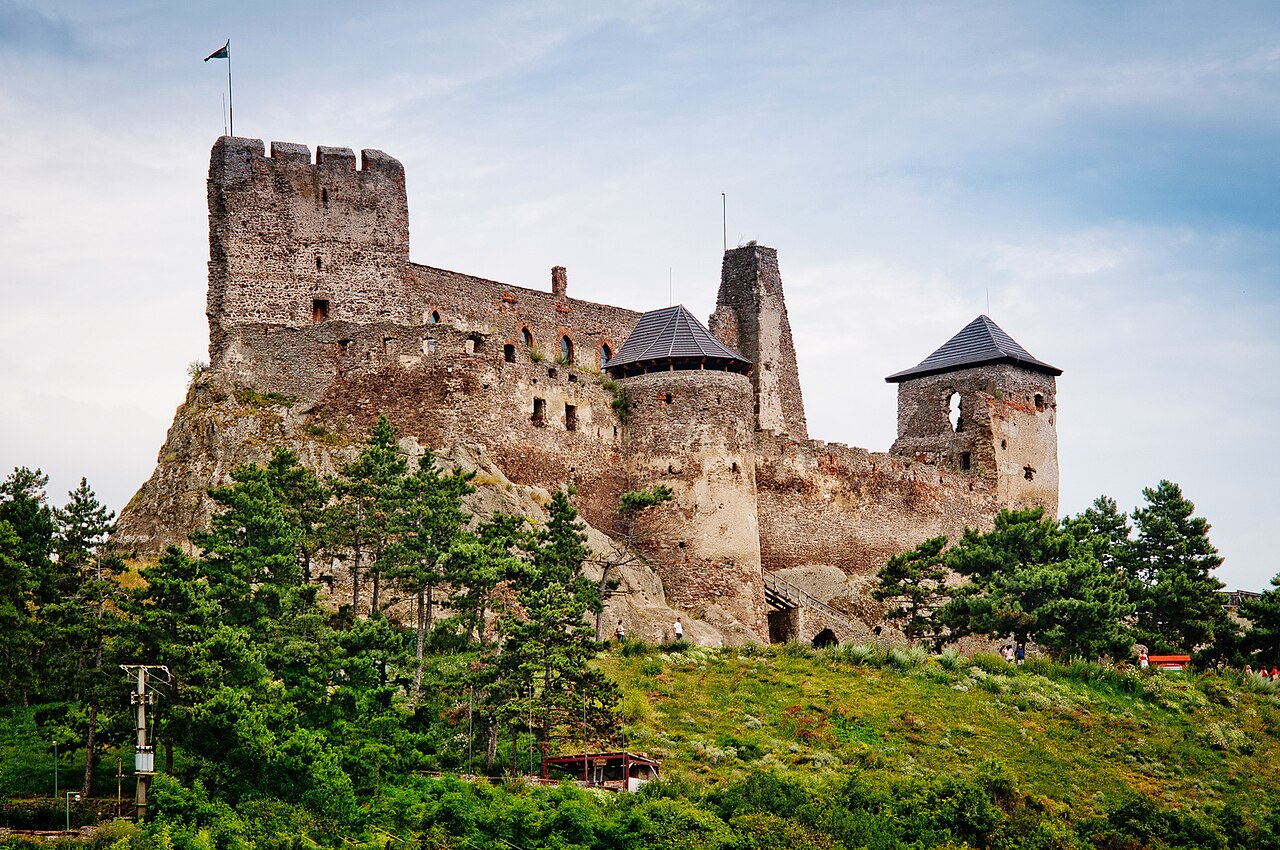
Regéc Castle is a significant medieval fortress located near the villages of Regéc and Mogyoróska in northeastern Hungary. Perched atop a 639-meter-high hill, this castle exemplifies the strategic use of natural elevation in medieval fortifications. Constructed around the early 14th century by the noble Aba clan, Regéc Castle has witnessed centuries of political upheaval, military conflict, and cultural exchange, reflecting the turbulent history of the region.

The castle's earliest documented mention dates to 1307, when Amádé Aba, a prominent nobleman, signed a legal document there, establishing its initial role as a noble seat. Over the next centuries, Regéc Castle changed hands multiple times, reflecting the shifting allegiances and power struggles in medieval Hungary. Its strategic location made it a coveted stronghold during the 14th to 17th centuries, especially amid the Ottoman incursions and the anti-Habsburg uprisings.

Architectural evolution and layout

Initial construction and early features

The original fortress was built on the northern rock outcrop of the hill, occupying a compact footprint designed for defense and residence. Central to this early phase was a robust with walls approximately 2.4 meters thick, constructed from substantial masonry to withstand siege warfare. This tower served as the castle's keep, the last refuge during attacks.

Surrounding the tower was a courtyard enclosed by a curved defensive wall. Within this enclosure, simple wooden buildings likely provided functional spaces for daily life and military needs. The castle’s initial design prioritized defense and practicality, typical of early 14th-century hill castles in Hungary.

Expansion and fortification enhancements

From the late 15th century onwards, Regéc Castle underwent significant expansion, extending southwards to accommodate growing residential and military functions. This period introduced more refined architectural elements, including elegant palace structures and a chapel, reflecting the castle’s role as both a noble residence and a military fortress.

To counter evolving artillery threats, the castle’s defenses were strengthened with the addition of bastions and reinforced walls. These bastions provided improved vantage points for defenders and enhanced the castle’s ability to withstand sieges during the turbulent 16th and 17th centuries.

Notable interior features

Among the castle’s distinguished interior details was a royal reception hall adorned with Turkish-style ceramic tiles known as bokályok. These decorative elements highlight the cultural interactions between Hungary and the Ottoman Empire during periods of conflict and coexistence. Today, a carefully crafted replica of these tiles is exhibited in the nearby town of Sárospatak, preserving this unique artistic heritage.

Historical significance and ownership

Early ownership and political shifts

Originally constructed by the Aba clan, Regéc Castle’s ownership shifted frequently due to the political instability of medieval Hungary. After the 1312 Battle of Rozgony, control briefly passed to the son of Petenye before reverting to royal possession by 1316. In the 15th century, King Sigismund granted the castle as a refuge to Serbian princes fleeing the advancing Ottoman forces, underscoring its strategic and humanitarian importance.

16th and 17th century prominence

During the 16th century, the castle was held by influential noble families such as the Szapolyai, Serédy, and Alaghy. Its prominence peaked in the 17th century when acquired by Miklós Eszterházy in 1635 and subsequently seized by Prince György Rákóczi in 1644. Under the Rákóczi dynasty, Regéc Castle was transformed into a residence and military garrison, becoming the childhood home of the notable Hungarian leader II. Rákóczi Ferenc.

The castle played a crucial role during the Kuruc wars, the anti-Habsburg uprisings of the late 17th century. In 1683, it served as a key supply base fortified by Thököly Imre. However, in 1686, imperial forces under General Caprara, acting on orders from Emperor Leopold I, deliberately destroyed Regéc Castle, reducing it to ruins and ending its military significance.

Decline, ruin, and modern restoration

Post-destruction neglect

Following its destruction, Regéc Castle fell into disuse and neglect throughout the 18th century. Local inhabitants repurposed stones from the ruins for building materials, accelerating its decay. Ownership passed through families such as the Trautsohn and Bretzenheim before the site became state property in 1949.

Archaeological research and conservation efforts

Archaeological investigations initiated in 1999 have uncovered significant insights into the castle’s layout and history. Restoration efforts began in the early 2000s, supported by European and national heritage funds, aiming to preserve and partially reconstruct key architectural elements.

Notable restoration achievements include the rebuilding of the northern bastion in 2003 and the partial reconstruction of the palace wing, including the restoration of historic wooden staircases and ramps. The northern tower, with its thick masonry walls, has been restored to house exhibition spaces across four levels, offering visitors an immersive historical experience.

Visitor experience and accessibility

Today, Regéc Castle is accessible via a moderate hike from the villages of Regéc or Mogyoróska, with a more accessible road leading from Regéc. At the hill’s base, a visitor center built in 2015 provides educational exhibitions, including an animated film narrating the castle’s history, alongside amenities such as a gift shop and café.

The combination of preserved ruins and modern reconstructions allows Regéc Castle to serve as a powerful testament to the medieval Hungarian nobility’s shifting fortunes, military struggles, and cultural exchanges along this historic northeastern frontier.

Frequently asked questions (FAQ)

How do I get to Regéc Castle?
Regéc Castle is accessible by a moderate hike from the villages of Regéc or Mogyoróska. There is also a more accessible road leading from Regéc, making it easier for visitors to reach the site.
What is the historical significance of Regéc Castle?
Regéc Castle played a key role in medieval Hungarian history, serving as a noble residence, military fortress, and refuge during Ottoman advances. It was also the childhood home of the Hungarian leader II. Rákóczi Ferenc.
Can I visit the restored parts of Regéc Castle?
Yes, visitors can explore the partially restored northern tower, which houses exhibition spaces, and the palace wing with reconstructed wooden staircases and ramps. The visitor center at the base offers educational exhibits and amenities.
When was Regéc Castle destroyed and why?
Regéc Castle was deliberately destroyed in 1686 by imperial forces under General Caprara following orders from Emperor Leopold I to prevent its use in anti-Habsburg uprisings.
Are there any cultural artifacts associated with Regéc Castle?
The castle featured a royal reception hall decorated with Turkish-style ceramic tiles called bokályok, reflecting cultural exchanges during conflicts with the Ottoman Empire. Replicas of these tiles are displayed in the nearby town of Sárospatak.

Photo gallery

Regéc Castle
Click to view

Photo by Civertan•CC BY-SA 4.0

1 photo • Click any image to view in full screen

Information

Hill Castle

Current owner

State property

Sources & official resources

Verify the information above using these authoritative references.

Loading map...

Visitor reviews

No reviews yet. Been here? Write the first review and help other travelers!

Write the first review

Visited this castle? Share your experience

Your review helps other travelers and adds first-hand knowledge to our encyclopedia.
Write a review

(5/5)

0/2000 characters

Your review will be visible after admin approval

Nearby castles

9.1 km
Boldogkő — Hungary castle

Boldogkő

Boldogkő, Hungary

Boldogkő Castle stands prominently above the village of Boldogkő in Hungary, perched atop a north-south elongated and irregularly oval-shaped andesite mountain top. This high medieval bastioned fortress was constructed in the aftermath of the devastating Mongol invasion of 1241-42, which left the Kingdom of Hungary in ruins. In response to this calamity, King Béla IV initiated a wide-ranging program to build stone castles to better protect the realm from future incursions. Boldogkő Castle was strategically placed to guard the Hernád valley and the vital road leading to the city of Košice (Kassa), serving as a key defensive stronghold on the edge of the Zemplén foothills. The earliest documentary mention of the castle dates to 1282, identifying it as the property of Tiba from the Tomaj family. By 1295, it appears in records as "castrum Bodua". While the precise builder remains uncertain, recent scholarship suggests that Amadé from the powerful Aba clan may have been responsible for its initial construction. Archaeological investigations have revealed that the original fortification centered on a square defensive residential tower built directly on a steep basalt rock outcrop. This tower measured approximately 5.5 by 5.5 meters internally, with walls up to 2.8 meters thick, demonstrating robust medieval military architecture. Adjacent to this tower, a rock-cut water cistern was carved to provide a reliable water supply, while the rock itself was initially surrounded by a wooden palisade, remnants of which were uncovered during excavations. Medieval expansion and ownership transitions Following the death of Amadé Aba in 1311, his sons rebelled against King Charles I Robert of Anjou but were defeated at the Battle of Rozgony. The king confiscated their lands, including Boldogkő Castle, and granted it to his courtier Philip Drugeth from Naples. Under Drugeth's ownership, the castle underwent significant expansions. A residential building was constructed north of the original tower, alongside a triangular tower adapted to the narrowing rock formation, enhancing the fortress's defensive capabilities. In 1342, when King Louis I of Hungary (also known as Louis the Great) ascended the throne, the castle became royal property. Later, King Sigismund of Luxembourg pawned the castle to Peter Cudar to finance his military campaigns. After Cudar's death, the castle briefly reverted to royal hands before frequently changing ownership in the 15th century, ultimately becoming the property of the Szapolyai family in 1471. 15th-century fortifications and military adaptations The 15th century saw the addition of a lower castle or economic bailey on the western side of the rock. The previous wooden palisade was replaced by stone walls, and the main entrance was fortified with a semi-circular gate bastion equipped with a drawbridge. A bastion designed for firearms was constructed in the southeast corner, reflecting the evolving nature of military technology. A distinctive defensive projection extended along the ridge of the hill for about 20 meters on the southern side, enhancing the castle's ability to repel attackers. Role in 16th and 17th-century conflicts After the death of King Louis II in 1526, Hungary plunged into a dynastic struggle between supporters of John Zápolya and Ferdinand of Habsburg. Boldogkő Castle changed hands multiple times during this turbulent period. In 1542, Ferdinand exchanged the castle for Gyula Castle with Ferenc Patóchy. Through marriage alliances, the castle passed to the influential Bebek family in 1556. Notably, György Bebek was involved in counterfeiting, operating a metal smelting furnace discovered during archaeological digs. Ownership later passed to the Sárközy family in 1560 and then to the Serényi family. In 1612, György Palochay Horváth, owner of Niedzica Castle, acquired Boldogkő. By 1645, the castle was held by George I Rákóczi, Prince of Transylvania. In 1671, it was purchased by György Szelepcsényi, Archbishop of Esztergom. During the Kuruc uprisings of 1674 and 1675, rebel forces unsuccessfully attempted to capture the fortress. However, in 1678, troops loyal to Prince Imre Thököly managed to seize the castle from a garrison of German mercenaries. Following the defeat of the uprisings in 1685, Austrian forces occupied the castle without resistance, and it became property of the Esztergom chapter. Decline and partial demolition Unlike many Hungarian castles destroyed to prevent future rebellion, Boldogkő was spared immediate demolition due to its ecclesiastical ownership. However, rising anti-Habsburg sentiment among the Hungarian nobility prompted Emperor Leopold I to order partial destruction in 1701. The castle's fortifications and residential buildings were partially razed, marking the beginning of its decline. In 1715, the Jesuits of Levoča adapted the ruined castle for use as a grain storage facility with the archbishop's permission. The castle changed hands again in 1753, when royal counselor Gábor Péchy purchased it but chose to reside in a nearby baroque palace rather than the fortress. Fortunately, the ruins were not quarried for building materials, preserving the structure's remains for future generations. Modern archaeological research and restoration Initial archaeological investigations took place in the 1950s, with more extensive excavations during the 1960s uncovering parts of the lower castle. In the late 19th century, the Péchy family undertook restoration efforts in the neo-Gothic style, although some original medieval walls were demolished and openings filled in, somewhat diminishing the site's historical authenticity. Since 2002, a major renovation and excavation project has transformed the castle's appearance. Two towers—the gate tower and the southern tower—were reconstructed, and a 100-meter walkway was installed along the internal courtyard, providing visitors with panoramic views through the arrow slits to the north and west. Another walkway along the narrow ridge of the "Lion's Rock" leads to a spectacular lookout platform. The castle's interior has also been adapted for modern use. The cellar and wine cellar were connected despite a 20-meter elevation difference, allowing visitors to enjoy refreshments after exploring the fortress. The two-story palace within the castle was originally a flat-roofed, concrete slab-reinforced building, but renovations added a higher roof creating a grand knight's hall. This wing now houses an extensive exhibition of thousands of tin and lead soldiers with detailed dioramas depicting key battles in Hungarian history, making it the largest such collection in Central Europe and a valuable educational resource. Architectural significance and visitor experience Boldogkő Castle is an exemplary illustration of medieval military architecture adapted over centuries to meet evolving defensive needs. Its location atop a basalt outcrop provided natural fortification, augmented by thick stone walls, bastions designed for early firearms, and strategically placed towers. The castle's layered history of ownership and conflict reflects the political and military turbulence of medieval and early modern Hungary. Today, the castle is owned and managed by the local municipality and is open to visitors. The combination of well-preserved ruins, reconstructed elements, and engaging exhibitions offers a comprehensive insight into Hungary's feudal past. Visitors can explore the remains of the original 13th-century tower, the 14th-century residential and triangular towers, and the 15th-century lower castle with its gate and bastion. The reconstructed observation turret on the rocky ridge provides stunning views of the surrounding mountains and countryside. Boldogkő Castle remains a significant cultural heritage site and a popular tourist destination, blending historical authenticity with modern amenities and educational opportunities.

High Medieval (11th–13th c.)
Details
16.7 km
Abaúj Castle — Hungary castle

Abaúj Castle

, Hungary

Abaúj Castle is a notable medieval fortress located in the historical region of Abaúj in northeastern Hungary. Although today only ruins remain, the castle once played a significant role in the defense and administration of the region during the High Medieval period. Its remains provide valuable insights into the architectural and military strategies employed in Hungarian castles of the era. Historical background and significance The castle was constructed in the High Medieval period, likely during the 13th century, a time when fortifications were essential for controlling strategic territories and protecting against invasions. Abaúj Castle was part of a network of fortresses in the Kingdom of Hungary designed to secure borders and important trade routes. The castle's location in the Abaúj region, which has a rich medieval history, made it a key stronghold for local nobility and royal authorities. Throughout its history, Abaúj Castle witnessed various military conflicts and political changes. It served as a defensive bastion against invasions and internal disputes, reflecting the turbulent medieval history of Hungary. The castle's decline began in the late medieval or early modern period, leading to its eventual abandonment and deterioration into ruins. Architectural features and layout Although much of Abaúj Castle lies in ruins today, archaeological studies have revealed important aspects of its original structure. The castle was built primarily as a hill castle, utilizing the natural elevation for defensive advantage. Its design likely included typical medieval features such as stone curtain walls, a keep or donjon, towers, and a gatehouse to control access. The castle's walls would have been reinforced with battlements and possibly a moat or ditch to enhance its defense. The interior likely contained residential quarters, storage rooms, and a chapel, which were common in castles of this period. Excavations have uncovered foundations and remnants of these structures, providing a glimpse into the castle's functional layout. Archaeological research and preservation Today, Abaúj Castle is classified as archaeological ruins, with ongoing efforts to study and preserve the site. Archaeologists have conducted excavations to uncover the castle's foundations, artifacts, and defensive features. These findings contribute to understanding the region's medieval history and castle-building techniques. Preservation efforts aim to protect the ruins from further decay while making the site accessible to visitors interested in Hungary's medieval heritage. Interpretive signage and guided tours help contextualize the castle's historical importance and architectural characteristics for the public. Visiting Abaúj Castle ruins The ruins are a point of interest for tourists and historians alike, offering a tangible connection to Hungary's medieval past. Visitors can explore the remains and enjoy panoramic views of the surrounding landscape, which once provided strategic defense advantages. The site is accessible by local roads, and while facilities may be limited, it offers a quiet and evocative experience for those interested in castle archaeology and history. Legacy and cultural importance Abaúj Castle represents an important chapter in the medieval history of northeastern Hungary. Its ruins serve as a reminder of the region's feudal past and the architectural ingenuity of medieval fortifications. The castle's story enriches the cultural heritage of Hungary and contributes to the broader understanding of Central European medieval castles.

High Medieval (11th–13th c.)
Details
17.9 km
Károlyi Mansion, Füzérradvány — Hungary castle

Károlyi Mansion, Füzérradvány

Füzérradvány, Hungary

The Károlyi Mansion in Füzérradvány, Hungary, is a notable example of a historic hill castle that reflects the architectural and cultural heritage of the region. Situated in the picturesque landscape of northeastern Hungary, this mansion stands as a significant landmark within the Borsod-Abaúj-Zemplén County, offering insight into the aristocratic lifestyle and architectural trends of its era. Historical background and significance The mansion is linked to the prominent Károlyi family, an influential noble lineage in Hungarian history. Their estates spread across various regions, and the mansion in Füzérradvány served as one of their country residences. While the exact construction date of the mansion is not precisely documented, it is generally associated with the 19th century, a period when many such aristocratic residences were built or renovated to reflect contemporary tastes and the social status of their owners. The Károlyi family played a significant role in Hungarian politics and society, and their estates often served as centers of local administration and culture. The mansion in Füzérradvány, therefore, is not only an architectural monument but also a symbol of the historical presence and influence of this noble family in the region. Architectural features and style The Károlyi Mansion exhibits characteristics typical of aristocratic residences built on elevated terrain, classified as a hill castle. The mansion's design integrates elements of 19th-century architectural styles, likely incorporating aspects of historicist trends prevalent at the time, which often included a blend of neo-Renaissance and neo-Baroque influences. Architecturally, the mansion features a symmetrical façade, with a central body flanked by wings, large windows, and decorative details that emphasize its grandeur. The use of stone and brick in construction, along with ornamental cornices and pilasters, highlights the craftsmanship and aesthetic preferences of the period. The mansion is typically surrounded by landscaped gardens or parkland, which were essential components of aristocratic estates, providing both aesthetic pleasure and a demonstration of wealth and status. Location and surroundings Located in the village of Füzérradvány, the mansion benefits from its elevated position, offering views over the surrounding countryside. The region is known for its natural beauty, including rolling hills and forests, which complement the historic setting of the mansion. The location within Borsod-Abaúj-Zemplén County places the mansion near other historic sites and castles, making it part of a broader cultural and historical landscape that attracts visitors interested in Hungarian heritage. Current condition and accessibility Information on the current condition of the Károlyi Mansion is limited, but such estates often face challenges related to preservation and maintenance. Depending on ownership and local initiatives, the mansion may be well-preserved, partially restored, or in need of conservation efforts. Visitors interested in exploring the mansion and its surroundings should check local resources for access details, as some historic mansions are privately owned and may have restricted public entry. Cultural and heritage importance The Károlyi Mansion in Füzérradvány represents an important piece of Hungary's aristocratic architectural heritage. It provides a tangible connection to the social and political history of the region, illustrating the lifestyle of the Hungarian nobility during the 19th century. Preserving such mansions contributes to understanding Hungary's historical landscape and offers educational opportunities for visitors and scholars interested in architecture, history, and cultural studies.

Post-Renaissance (17th–18th c.)
Details