Strecno Castle
Strečno Castle is a striking medieval fortress perched atop a steep limestone cliff on the left bank of the Váh river in northern Slovakia. Its commanding position provides sweeping views of the Strečniansky priesmyk mountain pass, the Domašínsky meander, and the expansive Žilinská kotlina basin. The castle’s origins date back to the early 14th century, with the first written mention in 1316, although indirect evidence suggests it may have existed slightly earlier. It was originally constructed to protect and control a toll station at a critical river ford, a strategic point for trade and military movement in the region.
Early construction and medieval development
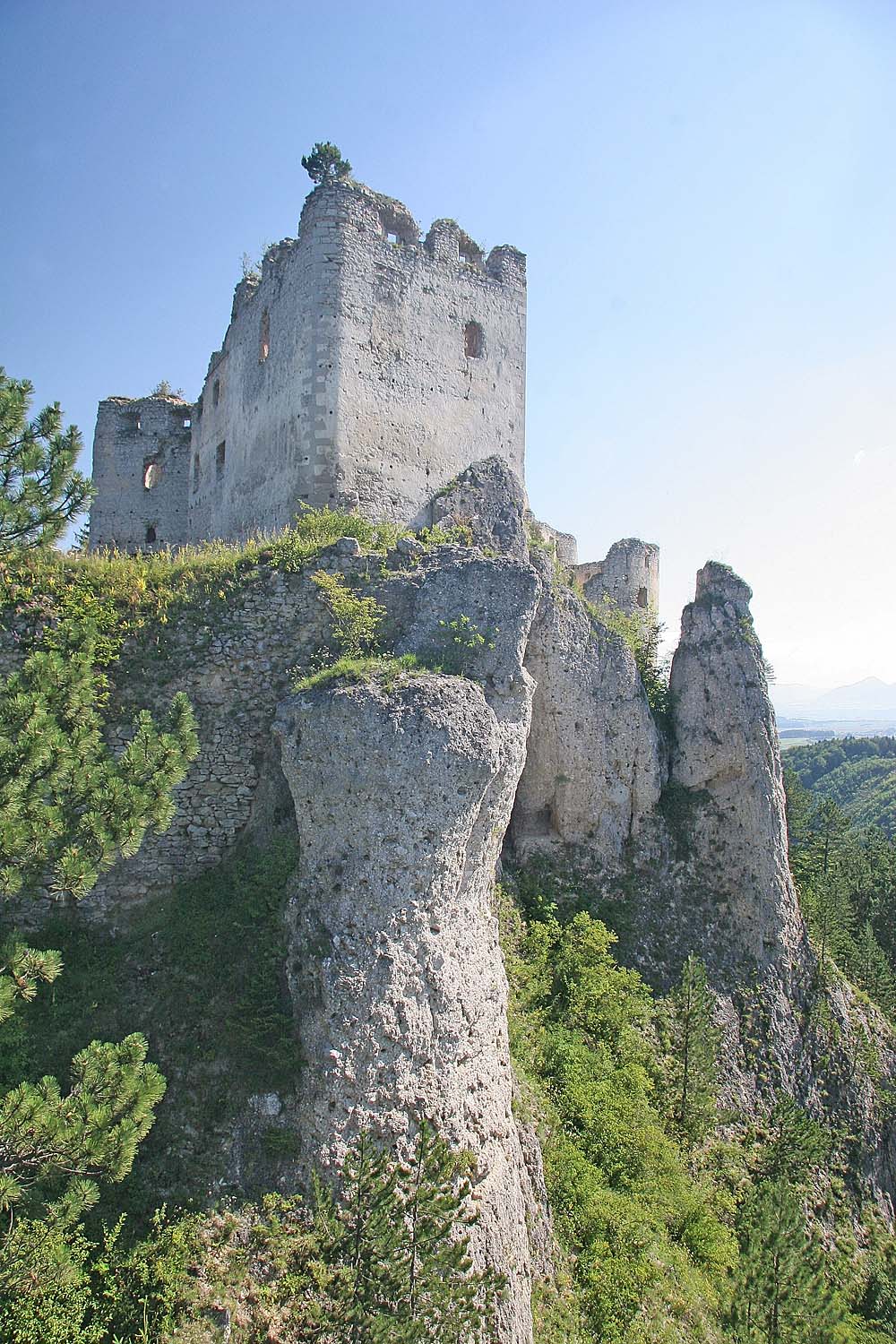
The initial castle was relatively modest, occupying an area of approximately 18 by 22 meters. Its core consisted of a small residential building, a water tank, and a dominant bergfried—a tall, fortified watchtower serving both as a lookout and a last line of defense. This tower, dating from the late 13th to early 14th century, measures around 8 by 8 meters and rises five stories high. The entrance to the bergfried is uniquely positioned on the second floor, accessible via a wooden bridge spanning a Gothic pointed arch. The ground floor contains a deep prison cell carved 8 meters into the stone, highlighting the castle's defensive and judicial functions.
Throughout the 14th and 15th centuries, the castle underwent significant expansion and enhancement. Under the ownership of the Balaš family, the fortress grew to include a forecastle, a northern palace, and a chapel. The chapel, built in the early 15th century during the tenure of Queen Barbara of Cilli, originally featured a simple single-nave design with a wooden ceiling and polygonal apse. It was later upgraded with a stellar rib vault, an architectural detail characterized by wedge-shaped ribs, which was carefully restored in the 20th century to preserve its Gothic character. The chapel is illuminated by two pointed-arch windows on the eastern wall, and its galleries connected to the northern palace and the bergfried, serving as elevated viewing platforms.
Renaissance and baroque fortifications
The castle’s military importance continued into the Renaissance and Baroque periods. Ownership passed through several noble families, including the Pongrác and Dersffy families, who introduced significant architectural and defensive improvements. The Renaissance era saw the addition of new bastions designed to withstand artillery fire, reflecting evolving military technology. These bastions were rounded or rectangular and formed part of a second circuit of walls that enclosed the castle.
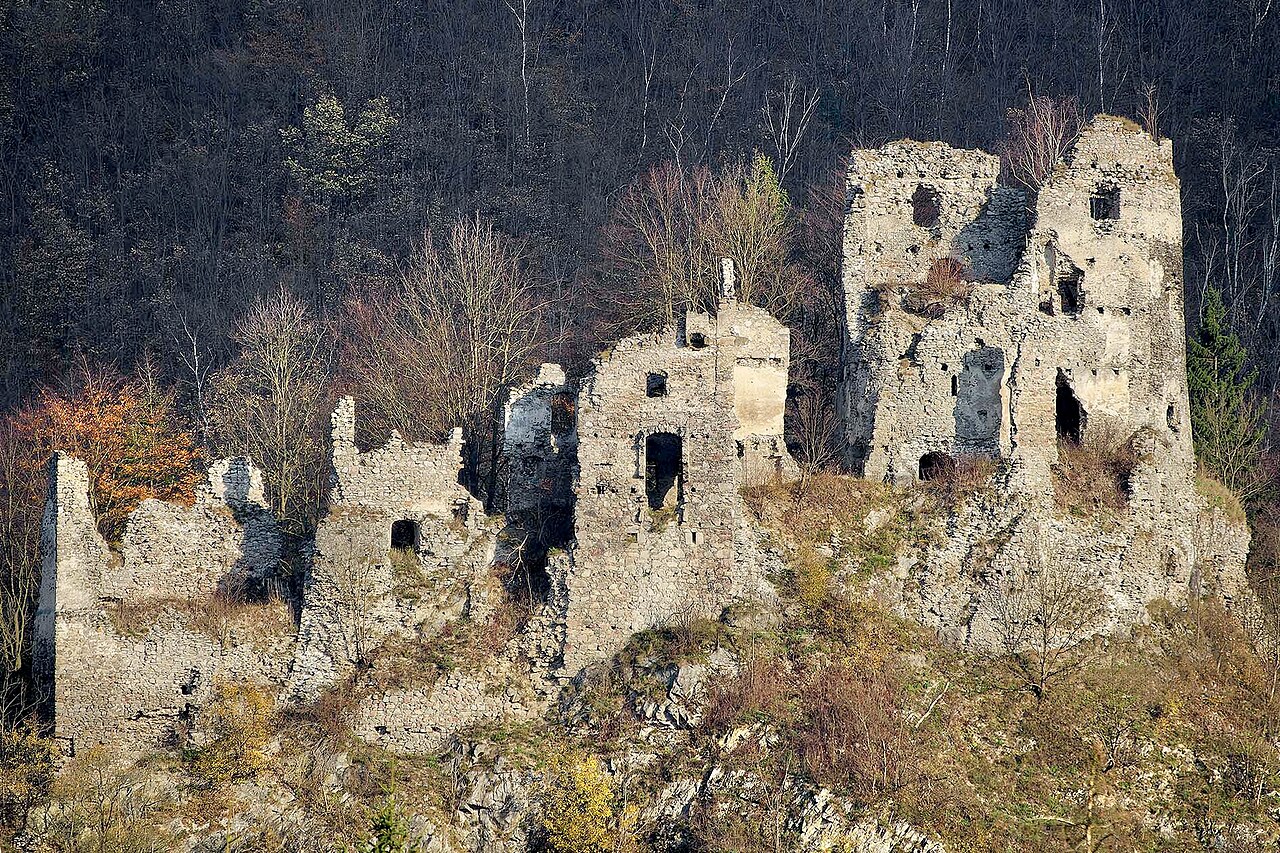
In the 17th century, during the turbulent period of the Wesselényi uprising against Habsburg rule, the castle was further fortified with Baroque-style bastions on its north, south, and west sides. These enhancements made Strečno Castle one of the most formidable fortresses in the Stredné Považie region. However, following the defeat of the uprising, the castle fell into the hands of supporters of Imre Thököly. In 1698, Emperor Leopold I ordered the fortress to be dismantled. This demolition involved destroying the fortifications, filling in the deep well, and removing roofs, windows, and doors, leaving the castle in ruins.
Decline, damage, and modern restoration
After its dismantling, Strečno Castle remained largely abandoned for centuries. It suffered additional damage during World War II from German artillery fire. In the mid-20th century, parts of the castle were quarried for building materials, threatening its complete destruction until intervention by the Catholic Church halted further damage.
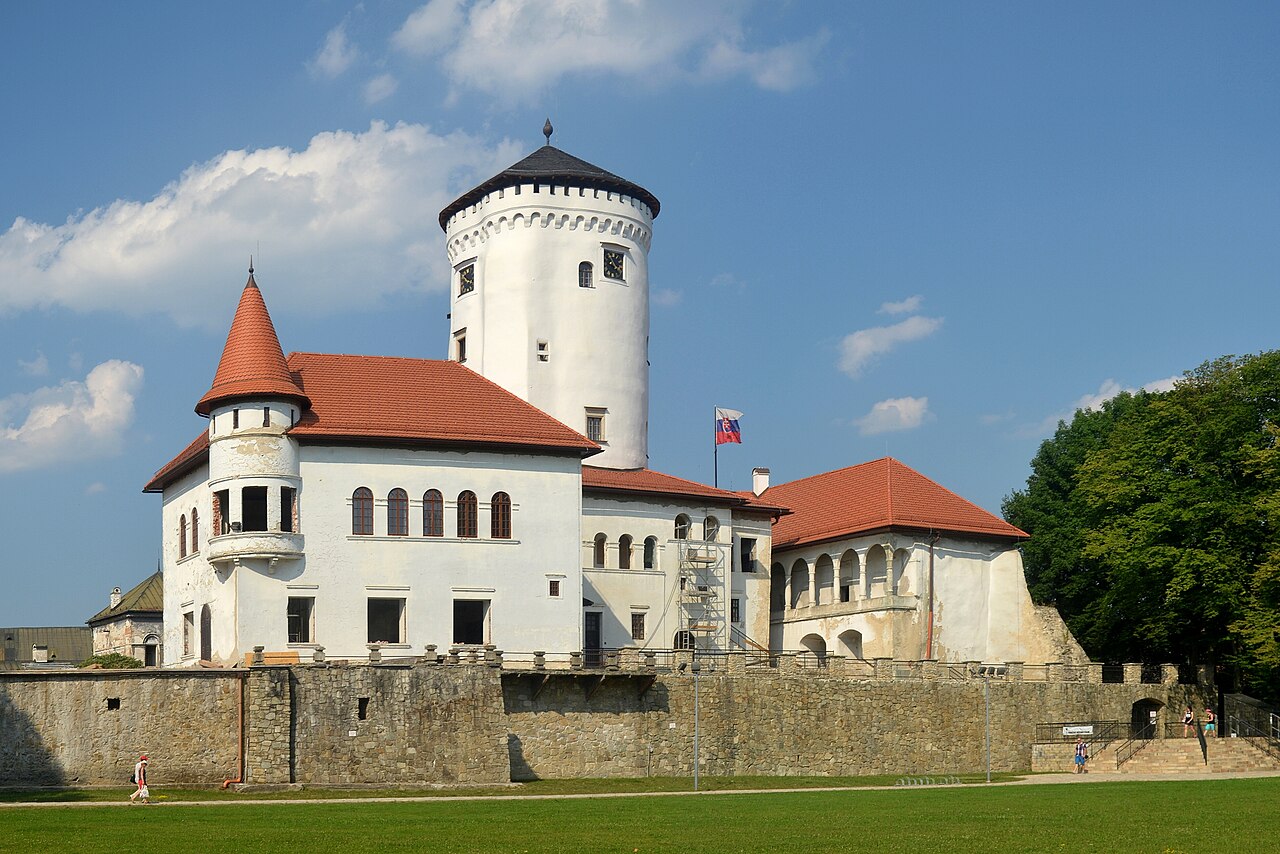
From 1974 onwards, a comprehensive reconstruction and stabilization project was initiated, lasting over two decades. While modern materials like reinforced concrete were used extensively, altering some historic elements, the restoration preserved key structural components and enabled the castle to function as a museum and cultural site by 1995.
Architectural features and layout
The castle’s irregular polygonal layout conforms closely to the shape of the rocky cliff on which it stands. The core compound covers roughly 400 square meters and centers around the bergfried. Adjacent to this tower is the northern palace, a two-level structure with a vaulted ground floor and a wooden-beamed upper floor, which included a medieval garderobe (toilet) and passageways connecting to wooden galleries or matronea within the chapel.
The castle chapel, a highlight of the site, features Gothic architectural elements such as pointed arches and rib vaulting. Beneath the chapel lies a crypt where the remarkably well-preserved remains of Žofia Bosniaková were discovered, making the site significant for both historical and archaeological study.
Water supply was ingeniously secured by two installations: a deep well reaching 88 meters into the rock and a nearby cistern carved into the bedrock, lined with multiple layers of stone blocks and sealed with clay to retain water. These features were critical for sustaining the castle during sieges.
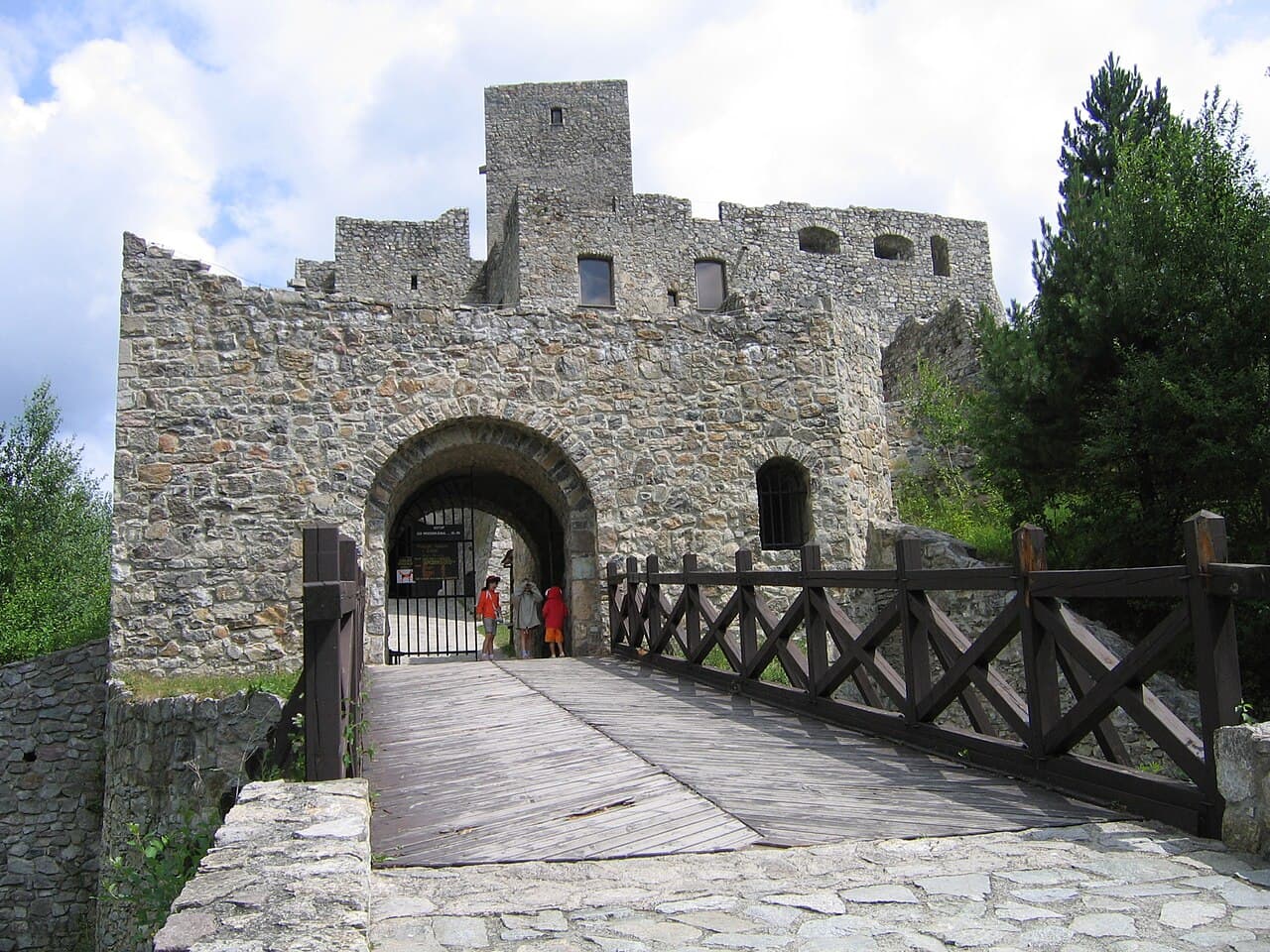
The defensive system evolved over centuries, initially comprising the forecastle and later expanded with a second circuit of walls featuring horseshoe-shaped and oval bastions, including the main gate’s Branska tower. Renaissance and Baroque bastions were added to counter artillery threats, reflecting the castle’s adaptation to changing warfare.
Originally, access to the castle was via a drawbridge crossing a ditch and passing through a fortified gatehouse into the main courtyard. The 1698 demolition removed many of these defensive elements, exposing the ruins to natural decay.
Cultural and historical significance
Strečno Castle has played a pivotal role in the military and political history of the region. It was a key stronghold during various conflicts, including the Slovak National Uprising of 1944. The castle’s strategic location and formidable defenses made it a symbol of regional power and resilience.
Today, the castle stands as a monument to centuries of architectural evolution, military strategy, and historical events. Its blend of medieval masonry, Gothic details, and later Renaissance and Baroque modifications offers rich insights into the changing nature of fortress construction and noble residence in Slovakia.
Visitors to Strečno Castle can explore its well-preserved ruins, enjoy panoramic views of the surrounding landscape, and learn about the fascinating stories embedded in its walls, from medieval toll collection to uprisings and archaeological discoveries.
Frequently asked questions (FAQ)
- What is the historical significance of Strecno Castle?
- Strecno Castle, built in the 14th century, played a crucial role in defending the trade routes along the Váh River. It served as a strategic military outpost and later became a noble residence, reflecting the architectural styles of its time.
- When was Strecno Castle built?
- Strecno Castle was constructed in the early 14th century, with its first documented mention occurring in 1321. Over the centuries, it underwent various renovations and expansions, showcasing the evolving architectural styles of different eras.
- Can I visit Strecno Castle year-round?
- Yes, Strecno Castle is open to visitors year-round, although specific opening hours may vary by season. It’s advisable to check the official website for the most current visiting hours and any seasonal events.
- What are the ticket prices for visiting Strecno Castle?
- Ticket prices for Strecno Castle are generally affordable, with discounts available for children, students, and seniors. A family ticket option may also be offered, making it an economical choice for group visits.
- Is Strecno Castle accessible for visitors with mobility impairments?
- While Strecno Castle offers stunning views and historical insights, its hilly location and steep paths may pose challenges for visitors with mobility impairments. It is recommended to contact the castle staff in advance to inquire about accessibility options.
- When is the best time to visit Strecno Castle?
- The best time to visit Strecno Castle is during the spring and early autumn months when the weather is mild, and the surrounding scenery is at its most beautiful. Additionally, visiting during these times allows you to enjoy various events and activities hosted at the castle.
- What nearby attractions can I explore after visiting Strecno Castle?
- After visiting Strecno Castle, you can explore the picturesque town of Strečno, which offers charming cafes and local shops. Additionally, the scenic beauty of the Váh River and nearby hiking trails make for a perfect continuation of your adventure.
- What architectural styles can I expect to see at Strecno Castle?
- Strecno Castle showcases a mix of Gothic and Renaissance architectural styles, with its original structures reflecting medieval fortification designs. The castle's later renovations introduced elements of the Renaissance, making it a fascinating site for architecture enthusiasts.
- What are the opening hours for Strecno Castle?
- Strecno Castle typically opens to visitors from late morning until early evening, but hours can vary depending on the season or special events. It is advisable to verify the current schedule on the castle's official website before planning your visit.

Information
Website
Visit websiteSources & official resources
Verify the information above using these authoritative references.
Loading map...
Visitor reviews
No reviews yet. Been here? Write the first review and help other travelers!
Write the first reviewVisited this castle? Share your experience
Your review helps other travelers and adds first-hand knowledge to our encyclopedia.