Lietava Castle Ruins
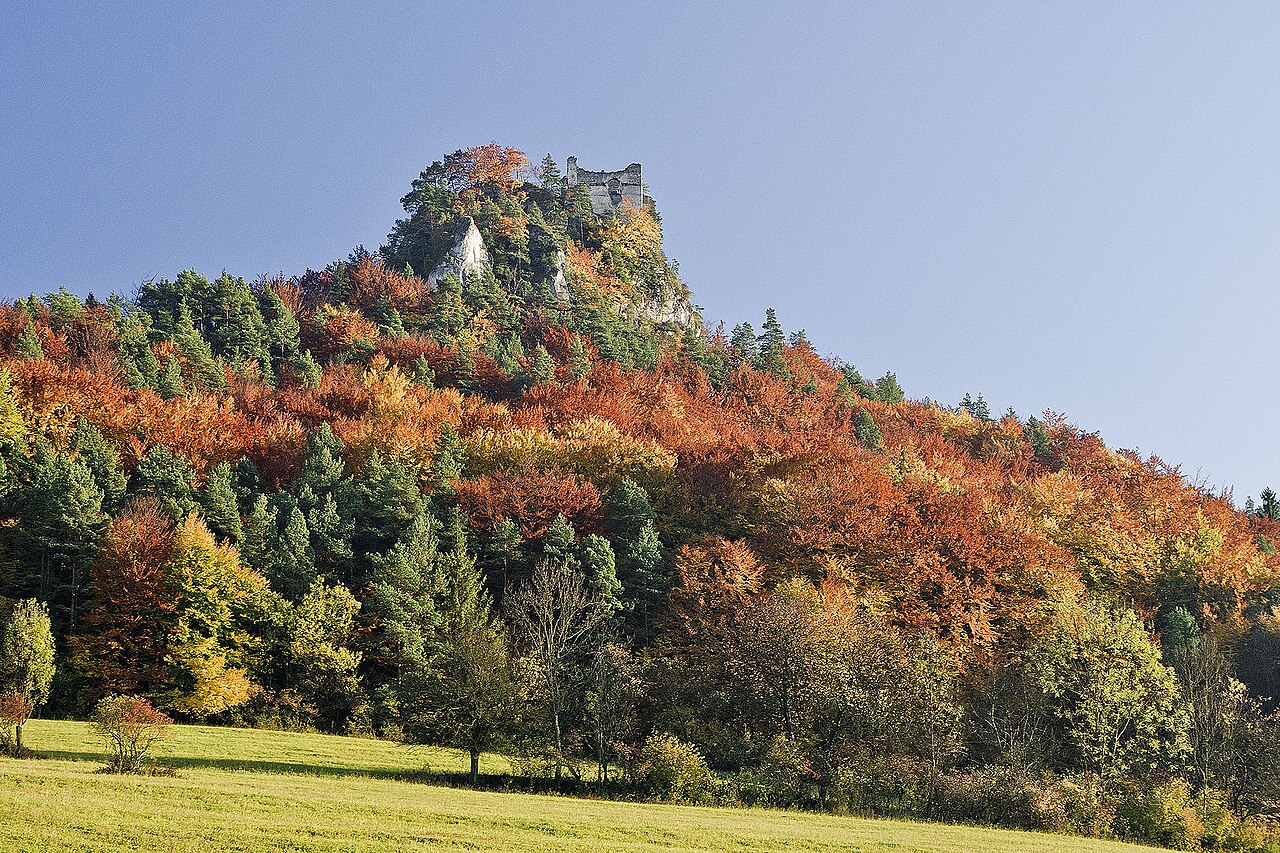
Lietava Castle is a remarkable medieval fortress located near the village of Lietava in northern Slovakia. Perched strategically on a rocky ridge approximately 635 meters above sea level, this hill castle was constructed in the 13th century following the Mongol invasions of 1241, serving as both an administrative center and a military stronghold. Its commanding position provided extensive views over the surrounding landscape, making it a vital defensive asset in the Kingdom of Hungary.
The castle's origins trace back to the noble Balašovci family, who established it to control the nearby trade routes and assert regional power. In the early 14th century, Lietava Castle came under the control of Matúš Čák III, one of the most powerful magnates in the Kingdom of Hungary, known for his semi-independent rule over large territories. After his death in 1321, King Charles Robert of Hungary reclaimed the castle and restored it to the Balašovci family, reaffirming royal authority in the region.
Historical development and ownership
Throughout the 14th and 15th centuries, Lietava Castle changed hands multiple times, reflecting the turbulent political landscape of medieval Central Europe. By the late 14th century, it was under the ownership of King Sigismund of Luxembourg, who further solidified royal control over the fortress. From 1475 to 1494, the castle was held by Pavol Kinižim, who undertook significant repairs to strengthen its fortifications and renovate the residential tower, adapting the castle to evolving military needs.
The early 16th century marked a period of substantial transformation under the ownership of Mikuláš Kostka and later the influential Thurzó family. František Thurzo, son-in-law of Kostka, spearheaded extensive fortification projects, particularly enhancing the second outer bailey and incorporating Renaissance architectural elements such as arcaded attics. These renovations reflected the transition from purely medieval defensive structures to more modern fortifications capable of withstanding artillery attacks.
Military importance remained high during this period, with records from 1530 indicating a garrison of 285 mercenary soldiers stationed at Lietava Castle. The castle even produced its own gunpowder, underscoring its strategic role in regional defense. However, by 1604, the garrison had dwindled to only 12 soldiers, signaling a decline in military significance.
Decline and abandonment
Following the death of Imrich Thurzo in 1621, the castle's ownership was divided among his heirs, leading to inheritance disputes and diminished interest in maintaining the fortress. By 1641, Lietava became part of a joint estate or komposesorát, which further diluted responsibility for its upkeep. A 1698 report described the castle as uninhabited, with only an archive remaining on site. These archives were eventually transferred to Orava Castle between 1760 and 1770.
After the removal of the archives, Lietava Castle was abandoned and gradually fell into ruin. In the late 19th century, the property came into the hands of Baron Popper between 1870 and 1873, but no significant restoration occurred. Only in the late 20th century did preservation efforts begin, led by the Association for the Rescue of Lietava Castle, which has worked since 1999 to stabilize and partially restore the ruins.
Lietava Castle's historical significance was recognized internationally when it was included in the World Monuments Fund's list of the world's most endangered monuments in 2010, highlighting the urgent need for conservation of this important cultural heritage site.
Architectural features and layout
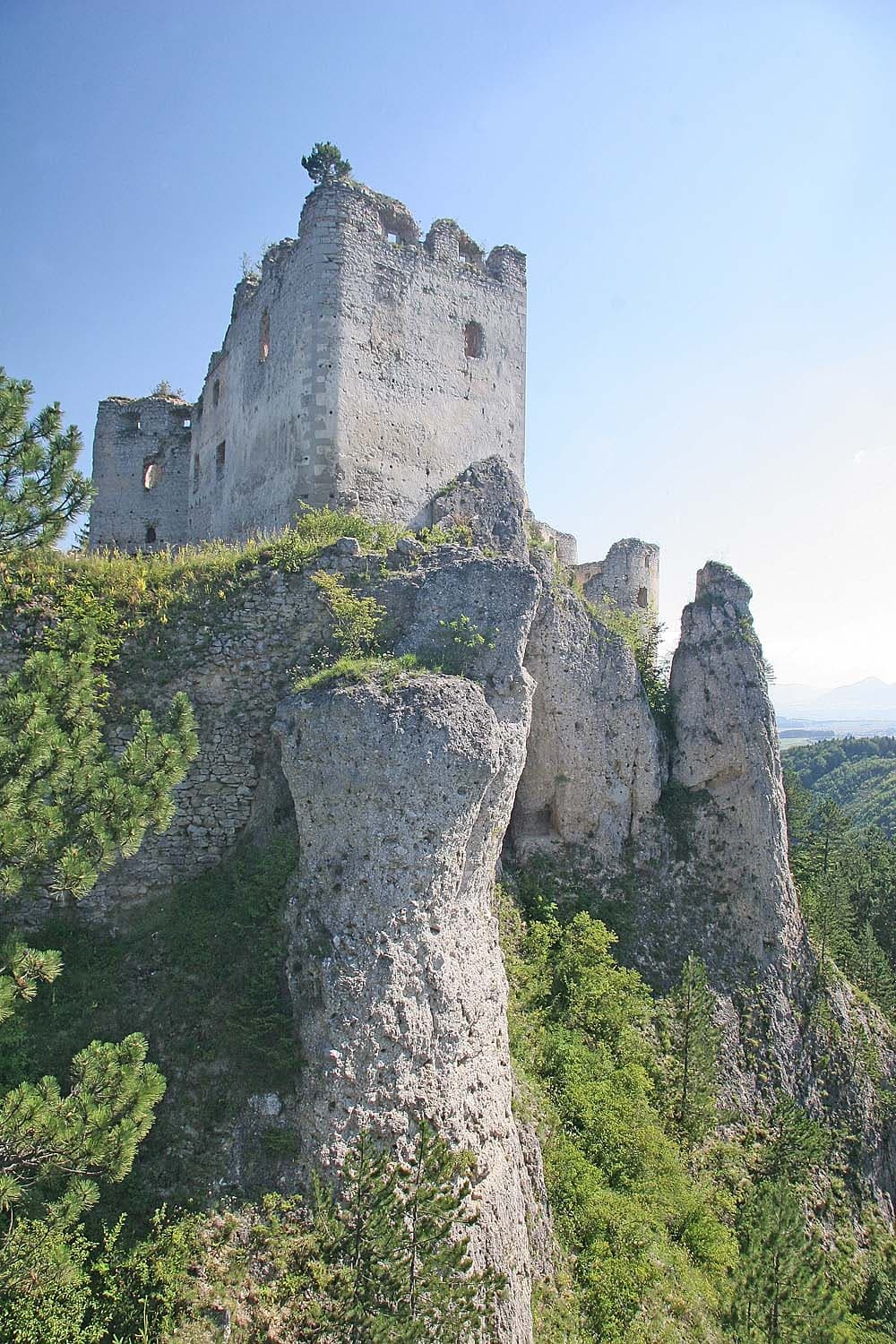
The castle's layout is intricately adapted to the uneven terrain of its rocky ridge location. The core of the fortress centers on a large rectangular tower, prism-shaped and oriented toward the ridge that provides access. This tower served as the main defensive stronghold and residence.
Adjacent to the tower lies the upper castle courtyard, enclosed by robust fortifications. Within this courtyard stands the main palace building along with several auxiliary structures. On the eastern side of the core is a Gothic chapel, notable for its stone springers that once supported rib vaults and fragments of original plaster that survive on the walls, offering insight into the castle's religious functions.
Surrounding the core is the first outer bailey, which encloses the southern and western sides of the castle complex. Entry is granted through a substantial rectangular gate tower equipped with a fortified gate. Near this entrance, a distinguished residential building features a rounded corner framed in stone and adorned with a heraldic relief, exemplifying the castle's noble connections.
The courtyard of the first outer bailey also contains a large round bastion at its northwest corner and a cylindrical tower on the southwest. These defensive structures, together with several residential and economic buildings, supported the castle's daily operations and defense.
The second outer bailey extends protection along the southern and western edges of the castle. Access to this area was controlled by another large rectangular tower that originally featured a drawbridge and was defended by a surrounding moat. Defensive elements here include a polygonal bastion to the northwest and a rounded tower on the southwest, designed to repel attackers from these vulnerable directions.
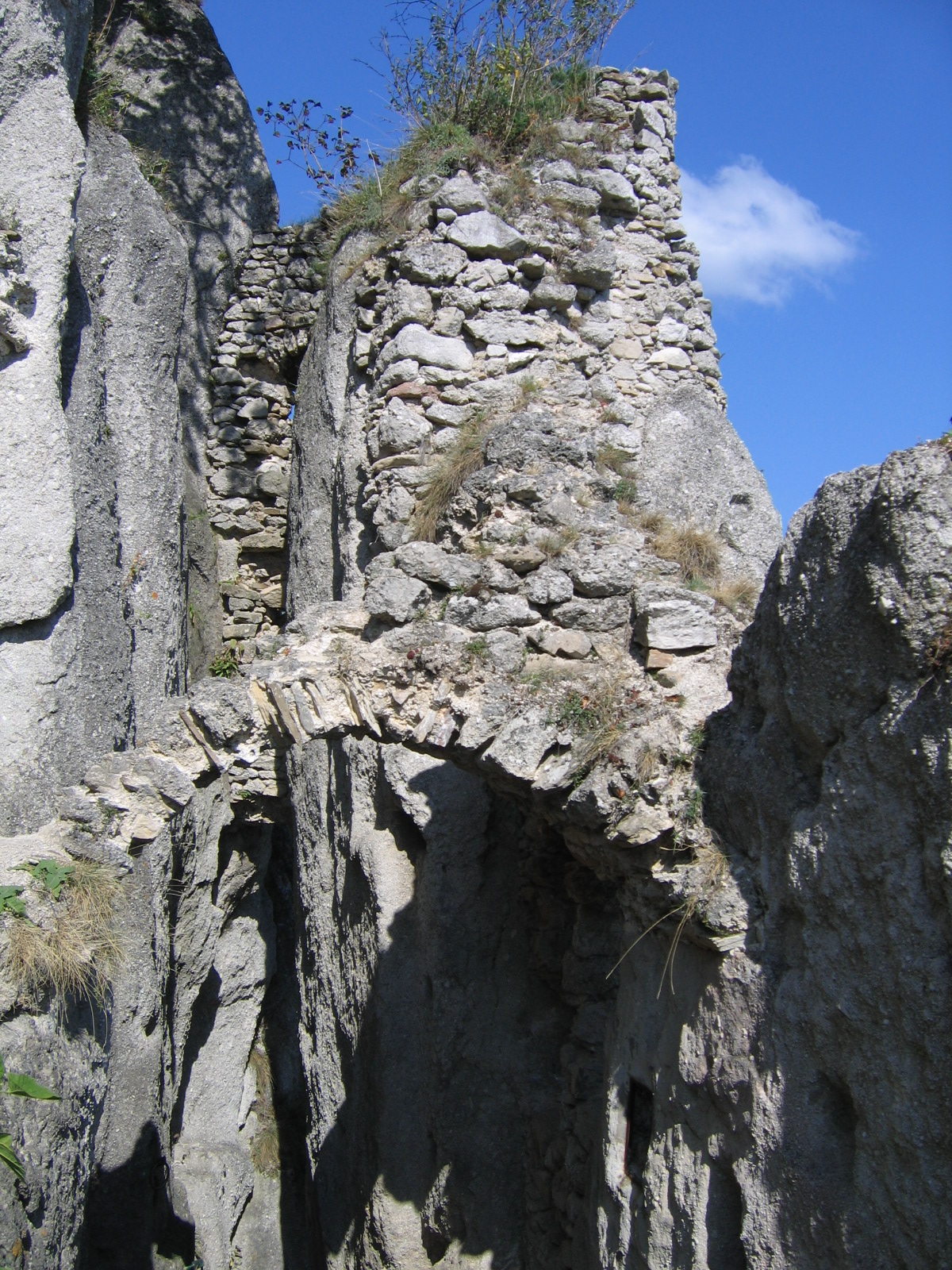
Despite centuries of decay, many walls remain standing to impressive heights, preserving window and doorway openings, stone corbels that once supported oriels (bay windows), and the arcaded attics introduced during Renaissance renovations. The defensive walls feature embrasures shaped for firearms and cannons, as well as profiled reveals framing doors and windows, illustrating the castle's architectural evolution through medieval and Renaissance periods.
The gothic chapel
The former chapel remains one of the most architecturally significant parts of Lietava Castle. Its surviving stone supports for rib vaults reveal the Gothic style prevalent during its construction. The chapel would have served the spiritual needs of the castle's inhabitants and stands as a testament to the integration of religious and military functions within the fortress.
Defensive innovations
Lietava Castle's fortifications evolved to meet the challenges posed by advances in siege technology. The addition of bastions and artillery embrasures during the Renaissance period reflects the adaptation to gunpowder weaponry. The castle's multiple baileys, gate towers, and moats created layered defenses that increased its resilience against attackers.
Conservation and cultural significance
Today, Lietava Castle remains a striking ruin that attracts historians, architects, and tourists interested in medieval fortifications and Slovak history. The ongoing conservation efforts aim to stabilize the ruins and preserve the castle's architectural heritage for future generations. The site offers valuable insights into the military architecture of the High Medieval period and the Renaissance adaptations that followed.
Visitors can explore the extensive ruins, including the towering gatehouses, bastions, and remnants of residential buildings, gaining a tangible connection to the region's turbulent past. Lietava Castle stands as a symbol of the medieval nobility's power and the complex history of Central Europe during the Middle Ages and early modern period.
Frequently asked questions (FAQ)
- What is Lietava Castle Ruins?
- Lietava Castle Ruins is a historical site located in Lietava, Slovakia, known for its striking medieval architecture and rich history. The castle dates back to the 13th century and played a significant role in the region's defense and governance.
- When was Lietava Castle built?
- Lietava Castle was constructed in the second half of the 13th century, with its strategic position chosen to oversee important trade routes. Over the centuries, it underwent various modifications and expansions, reflecting the architectural styles of different eras.
- Can I visit Lietava Castle Ruins?
- Yes, Lietava Castle Ruins is open to visitors year-round, allowing you to explore its remnants and enjoy the scenic views from its elevated location. The site is a popular destination for history enthusiasts and hikers alike.
- What are the opening hours for Lietava Castle Ruins?
- The opening hours for Lietava Castle Ruins can vary by season, but generally, it is accessible from early morning until dusk. It’s advisable to check local resources or tourism websites for the most current information before your visit.
- Is it possible to get guided tours at Lietava Castle?
- While there are no official guided tours available directly at Lietava Castle Ruins, many local tour companies offer guided experiences that include the castle as part of a broader historical tour. These tours can provide valuable insights into the castle's history and architecture.
- What is the best time to visit Lietava Castle Ruins?
- The best time to visit Lietava Castle Ruins is during the spring and early autumn months when the weather is mild and the surrounding scenery is particularly beautiful. This is also when the area is less crowded, allowing for a more enjoyable experience.
- Are there any nearby attractions to visit?
- Yes, there are several attractions near Lietava Castle Ruins, including the picturesque town of Žilina and the scenic Malá Fatra National Park. These locations offer additional opportunities for exploration and outdoor activities.
- What are the ticket prices for Lietava Castle Ruins?
- Visiting Lietava Castle Ruins is generally free of charge, making it an accessible destination for all types of travelers. However, if you participate in a guided tour, there may be associated fees.
- How do I get to Lietava Castle Ruins?
- Lietava Castle Ruins can be reached by car or public transportation from nearby cities like Žilina. There are marked hiking trails leading to the castle, providing a scenic approach to the ruins.

Information
Website
Visit websiteSources & official resources
Verify the information above using these authoritative references.
Loading map...
Visitor reviews
No reviews yet. Been here? Write the first review and help other travelers!
Write the first reviewVisited this castle? Share your experience
Your review helps other travelers and adds first-hand knowledge to our encyclopedia.