Strakonice Castle
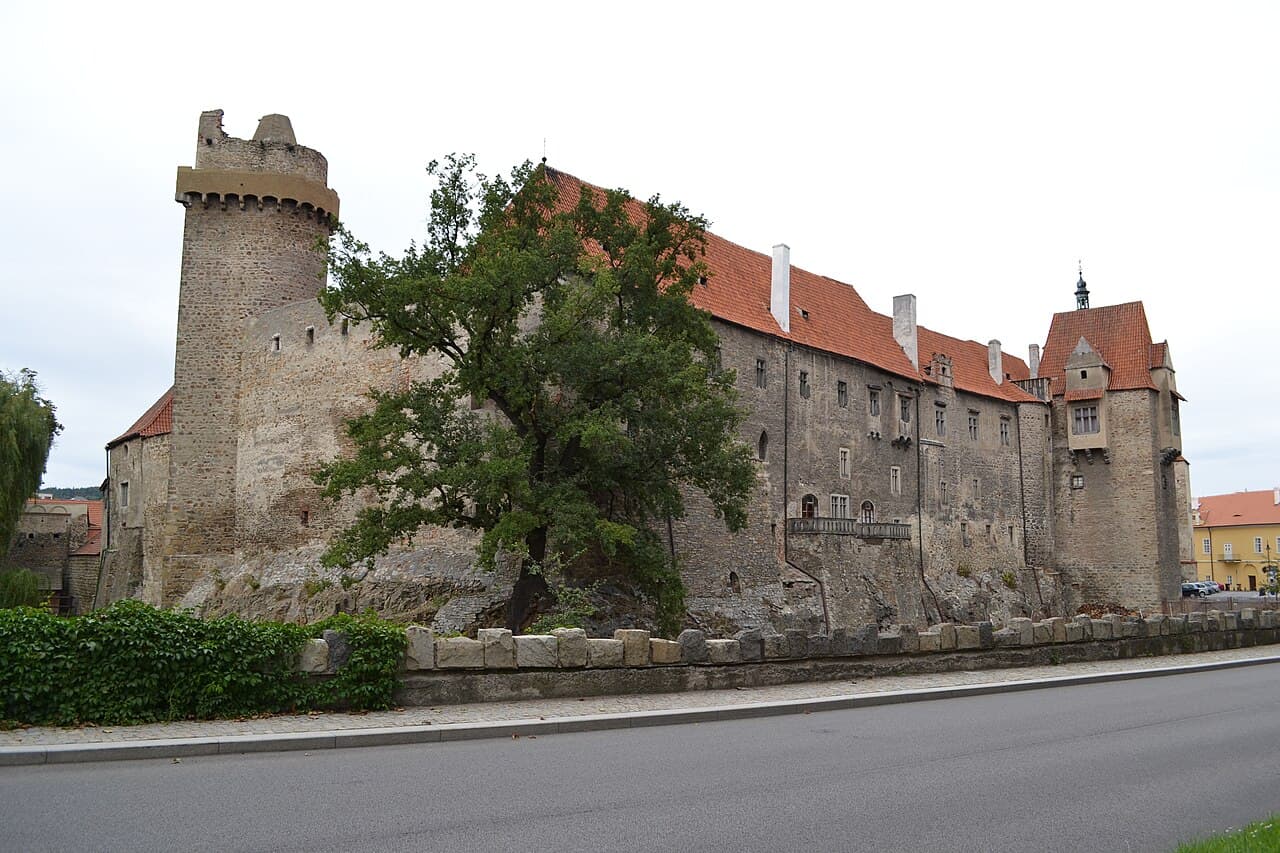
Strakonice Castle stands prominently on a rocky hill at the confluence of the Otava and Volyňka rivers in the town of Strakonice, Czechia. This historic hill castle was founded in the early 13th century by the influential feudal Bavor family, marking it as a significant medieval stronghold in the region. Its strategic location at the crossroads of vital trade routes connecting Prague with Bavaria and Plzeň with Upper Austria amplified its importance both militarily and economically.
The castle's earliest documented mention dates to 1235, linking it to Bavor I of Strakonice. By 1243, Bavor I had donated a substantial portion of the castle's eastern section, including the Church of St. Procopius and surrounding lands, to the Knights Hospitaller, also known as the Order of St. John. This donation established a religious and military commandery at the site, which would become a defining feature of the castle's identity. The Hospitallers expanded their holdings, and by 1402, they had acquired the entire castle, designating it as the seat of the Grand Priory of their Czech Province.
Medieval origins and architectural evolution
The castle's core comprises a remarkable Romanesque complex dating from the 1230s to 1250s, including the Church of St. Procopius, the convent with its chapter hall, and the Bavor Palace. The palace itself integrates two distinct parts: an earlier Romanesque section from the 12th century and a later extension built by the Hospitallers. The southwest corner features a robust three-story tower with a gabled roof, alongside a square hall with four Romanesque arches supported by a central pillar, now repurposed as a wine cellar. This hall notably preserves a circa 1310 fresco known as the "Wheel of Fortune" and a Gothic chapel with pointed windows.
The castle's layout resembles a triangular plan narrowing eastward, with buildings arranged around three inner courtyards. The first courtyard, located on the eastern side, is enclosed by the Grand Prior's former residence, the Church of St. Procopius, and the former brewery building. The second courtyard is bounded by the convent buildings and the imposing Rumpál tower, a 35-meter-high bergfried or defensive fighting tower. The third courtyard includes modern additions such as part of the Šmidinger Library for children, a small zoo, the castle garden, and the moat.
Gothic and renaissance additions
During the 14th and 15th centuries, the castle underwent significant expansions by both the Bavor family and the Hospitallers, which included Gothic architectural elements. The Church of St. Procopius saw Gothic enhancements such as a 40-meter tower and chancel constructed in the 14th century. The main nave received a rib vault with terracotta rosettes in the early 1500s. Renaissance influences are evident in the Knight's Hall with its traditional beam ceiling and the Jelenka tower from the early 16th century, featuring oriel windows and a banquet hall. Wall paintings in these areas include heraldic symbols of the Rožmberk family, connecting the castle to prominent noble lineages.
Religious and military significance
The castle's role as the seat of the Knights Hospitaller's Grand Priory made it a center of religious, military, and hospitable activity. The order operated pilgrim hospitals and maintained a strong defensive presence. The castle's strategic importance was underscored during political upheavals such as the formation of the Strakonice Unity in 1449, a coalition of Catholic nobles opposing King George of Poděbrady.
Strakonice Castle endured military conflict during the Thirty Years' War. It was seized and looted by Mansfeld's forces in 1619 and again by the Swedish army in 1641, who reportedly used a secret passage known as the "Swedish door" to gain entry. These events highlight the castle's continued military relevance into the early modern period.
Baroque renewal and later history
The 18th century ushered in a period of Baroque remodeling under Grand Priors Ferdinand Leopold Dubský and Václav Jáchym Čejka. They commissioned a new palace near the rivers' meeting point, characterized by a two-wing layout and adorned with the Dubský family coat of arms and the order's emblem. The palace originally had two side entrances but was later modified to include a central entrance with a balcony and a clock tower. Interior inventories from 1776 list chambers and halls designed for the Grand Prior and his retinue.
Despite these enhancements, the castle's prominence declined by the late 18th century. Around 1800, Grand Prior Josef Maria Colloredo-Wallsee ordered the partial demolition of a southwest tower. That same year, Emperor Franz I visited the castle, marking a notable historical moment.
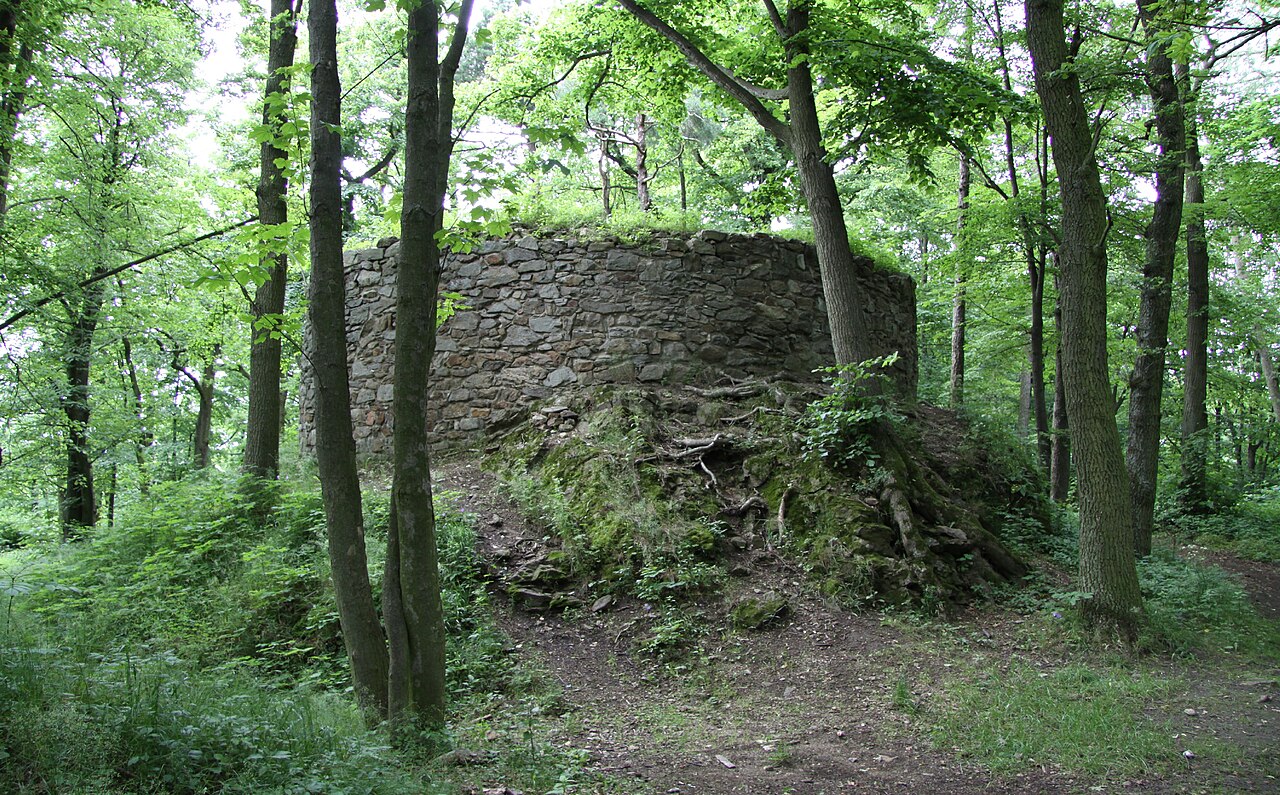
In the 19th century, the castle's surroundings changed with the construction of a two-story private palace by a local Jewish industrialist named Stein. In response, the Knights Hospitaller erected a tall wall with a cylindrical tower, known locally as the "Bastion of Stubbornness", designed to obstruct views toward Stein's residence. The order began divesting much of its Strakonice lands in 1925.
Modern restoration and current status
During World War II, Nazi forces confiscated several properties belonging to the order, including the church and deanery. After the political changes following 1990, negotiations culminated in the return of these properties to the Czech Grand Priory of the Maltese Order in 2008.
Extensive archaeological excavations and restorations from 2005 to 2010 uncovered medieval foundations, a deep rock-cut well, and burials dating back to the 12th century. Restoration efforts strengthened the medieval walls, moat, and interiors, including the castle's library and museum offices. A medieval kitchen exhibition was established in the "Black Kitchen" building, and modern amenities such as a heating system and park area along the moat were added.
Today, ownership of Strakonice Castle is shared among the town of Strakonice, the South Bohemian Region, and a private owner of the castle granary. The castle serves as a cultural and historical hub, hosting exhibitions, concerts, and public gatherings, notably in the former brewery building, which survived a 1932 fire and now features a hall named "U Kata" with stained-glass artwork symbolizing the castle's and town's origins.
Architectural highlights
- The Romanesque core with the Church of St. Procopius and Bavor Palace
- The Rumpál tower, a 35-meter-high bergfried defensive tower
- Gothic rib vaults and terracotta rosettes in the church nave
- Baroque Grand Prior's Palace with family coats of arms and emblematic decorations
- The "Bastion of Stubbornness" wall and cylindrical tower from the 19th century
- The former brewery building used today for cultural events
Cultural significance and visitor experience
Strakonice Castle offers visitors a rich journey through medieval, Gothic, Renaissance, and Baroque architectural styles. Its layered history as a noble residence, religious commandery, and military fortress provides a multifaceted cultural experience. The castle's museum, library, and exhibitions, alongside its picturesque gardens and moat, create an engaging environment for learning and exploration.
The castle's location on a hill with natural water defenses and a deep moat illustrates the strategic considerations of medieval fortifications. The preservation and restoration efforts have maintained much of the castle's historic fabric, allowing visitors to appreciate its architectural evolution and historical context.
Overall, Strakonice Castle stands as a testament to Czechia's rich medieval heritage and the enduring legacy of the Knights Hospitaller in the region.
Frequently asked questions (FAQ)
- What is the historical significance of Strakonice Castle?
- Strakonice Castle dates back to the 13th century and is a prime example of Gothic and Renaissance architecture in Czechia. It played a crucial role in the defense against invasions and has been a center of regional power throughout its history.
- When was Strakonice Castle built?
- Construction of Strakonice Castle began in the early 13th century, with significant expansions occurring in the following centuries. The castle reflects various architectural styles due to the renovations and restorations that took place over the years.
- How do I get to Strakonice Castle?
- Strakonice Castle is easily accessible by public transport, with regular bus and train services connecting it to major cities in the region. If you're driving, there are parking facilities nearby, making it convenient for visitors.
- What are the opening hours of Strakonice Castle?
- Strakonice Castle is typically open to visitors from April to October, with varied hours during the season. It's advisable to check the official website or contact the castle directly for the most current opening hours before your visit.
- Can I take a guided tour of Strakonice Castle?
- Yes, guided tours are available at Strakonice Castle, providing in-depth information about its history and architecture. Tours are led by knowledgeable guides who can answer your questions and enhance your experience.
- Is it possible to visit Strakonice Castle year-round?
- While Strakonice Castle primarily opens for visits during the warmer months, some parts of the castle may be accessible in winter for special events. Always check the website for seasonal updates and special holiday openings.
- What are the ticket prices for Strakonice Castle?
- Ticket prices for Strakonice Castle vary depending on the type of tour and age group, with discounts available for students and seniors. It's recommended to purchase tickets in advance during peak tourist season to ensure availability.
- What is the best time to visit Strakonice Castle?
- The best time to visit Strakonice Castle is during the spring and summer months when the weather is pleasant, and all attractions are fully operational. This also allows visitors to enjoy the surrounding gardens and scenic views.
- Are there any nearby attractions to visit?
- Yes, Strakonice is home to several attractions, including the picturesque Otava River and the historic town square. Additionally, the nearby Šumava National Park offers stunning nature trails and outdoor activities for visitors looking to explore the area.
Photo gallery

Information
Loading map...
Visitor reviews
No reviews yet. Been here? Write the first review and help other travelers!
Write the first reviewVisited this castle? Share your experience
Your review helps other travelers and adds first-hand knowledge to our encyclopedia.