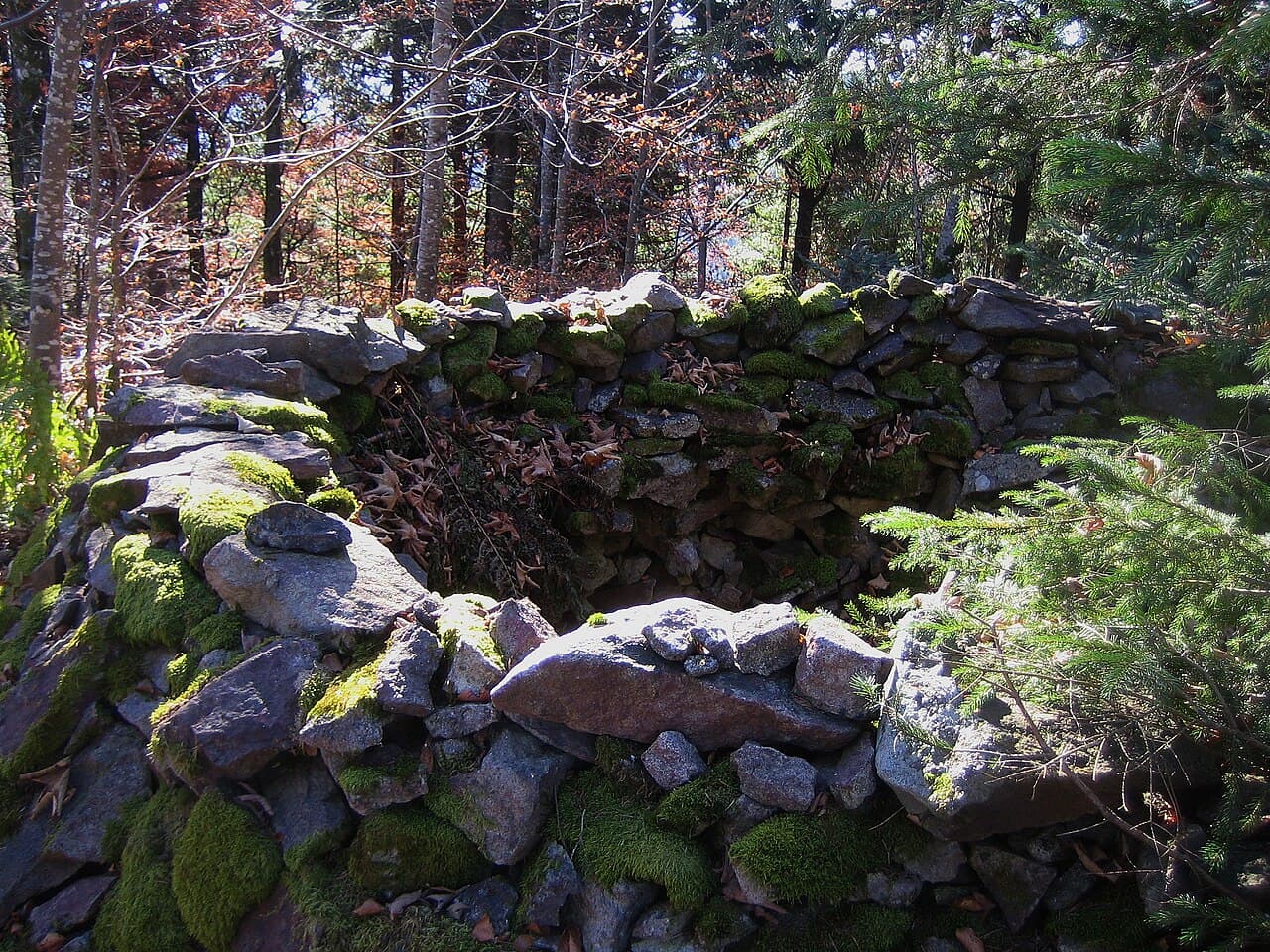
Stockburg — Germany castle

Stockburg

Stockburg castle in Germany
High Medieval (11th–13th c.)

Stockburg castle is a notable example of a hill castle located in Germany, distinguished by its elevated position which provided strategic advantages during its time of use. The castle's exact city location remains unspecified, but its classification as a hill castle indicates it was constructed on a natural elevation, a common medieval defensive practice to oversee surrounding lands and control important routes.

Historical context and construction

Stockburg castle likely dates back to the High Medieval period, a time when many such fortifications were established across Germany to assert control and provide defense against rival lords and invading forces. Hill castles like Stockburg were typically built between the 11th and 13th centuries, featuring robust stone walls and fortified towers designed to withstand sieges.

Architectural features

The castle would have included typical elements of medieval hill castles such as curtain walls, gatehouses, and possibly a keep or donjon as the stronghold's central defensive structure. The elevated site would have been advantageous for visibility and defense, allowing defenders to spot approaching enemies from a distance.

Defensive features likely included battlements and arrow slits, enabling archers to defend the castle while remaining protected. The use of stone masonry would have been prevalent, contributing to the castle's durability and imposing presence.

Strategic importance and role

As a hill castle, Stockburg would have served both military and administrative functions. It likely acted as a local seat of power for a noble family or regional lord, overseeing the surrounding territory and controlling key trade or military routes. Its position would have allowed it to serve as a refuge during conflicts and a base for launching military operations.

Current condition and preservation

The current physical condition of Stockburg castle is not well documented, but many hill castles in Germany have survived as ruins or partially preserved structures. Depending on preservation efforts, the castle may retain significant architectural remnants such as walls, towers, or gatehouses that provide insight into its original design and historical significance.

Visiting and cultural significance

Visitors to Stockburg castle can expect to explore the remains of a medieval hill castle that reflects the military architecture and feudal history of Germany. Such sites often offer scenic views of the surrounding landscape and opportunities to learn about medieval construction techniques and the social history of the region.

While specific visitor information such as opening hours or ticket prices is unavailable, hill castles like Stockburg typically attract history enthusiasts, hikers, and cultural tourists interested in Germany's medieval heritage.

Frequently asked questions (FAQ)

How do I get to Stockburg Castle?
Stockburg Castle is conveniently located in Germany, accessible by both car and public transport. If you're driving, take the A1 highway and follow the signs to the castle. For public transport, check local train and bus schedules that connect to the nearest town.
What is the historical significance of Stockburg Castle?
Stockburg Castle dates back to the 12th century and has played a crucial role in regional defense and nobility. Its rich history includes serving as a residence for various influential families. The castle's architecture reflects the evolution of styles over the centuries, making it a valuable historical site.
When was Stockburg Castle built?
Stockburg Castle was originally constructed in the early 1100s, with several renovations and expansions occurring over the centuries. Its architecture showcases a blend of medieval and Renaissance styles, highlighting its historical evolution. The castle remains a testament to the craftsmanship of its time.
Can I take a guided tour of Stockburg Castle?
Yes, guided tours of Stockburg Castle are available for visitors to explore its fascinating history and architecture. These tours typically include access to both the interior and exterior of the castle, providing insights into its past. Be sure to check the schedule as tours may vary by season.
Why is Stockburg Castle a popular tourist destination?
Stockburg Castle attracts visitors with its stunning architecture, rich history, and picturesque surroundings. The castle offers a unique glimpse into medieval life and serves as a beautiful backdrop for photography. Additionally, its location near other attractions makes it a great stop for travelers.
Is it possible to host events at Stockburg Castle?
Yes, Stockburg Castle is available for private events such as weddings, corporate gatherings, and special celebrations. The scenic views and historical ambiance make it a memorable venue. It's recommended to contact the castle management for details on planning an event there.
What are the opening hours for Stockburg Castle?
Stockburg Castle is typically open to visitors from 10 AM to 5 PM, though hours may vary depending on the season. It's advisable to check the official website or contact the castle directly for the most accurate information before your visit. Special events or holidays may also affect opening times.
Are there any nearby attractions to visit while at Stockburg Castle?
Yes, there are several attractions near Stockburg Castle, including beautiful parks, local museums, and charming villages. Visitors often enjoy exploring the scenic trails and enjoying the local cuisine in nearby restaurants. These attractions provide a wonderful complement to your castle visit.
What are the ticket prices for Stockburg Castle?
Ticket prices for Stockburg Castle are generally affordable, with discounts available for children, students, and seniors. Admission typically includes access to the castle grounds and guided tours. It's a good idea to check the official website for current pricing and any special promotions.

Photo gallery

Stockburg
Click to view

Photo by zieglhar•CC BY 3.0

1 photo • Click any image to view in full screen

Information

Hill Castle

Loading map...

Visitor reviews

No reviews yet. Been here? Write the first review and help other travelers!

Write the first review

Visited this castle? Share your experience

Your review helps other travelers and adds first-hand knowledge to our encyclopedia.
Write a review

(5/5)

0/2000 characters

Your review will be visible after admin approval

Nearby castles

4.2 km
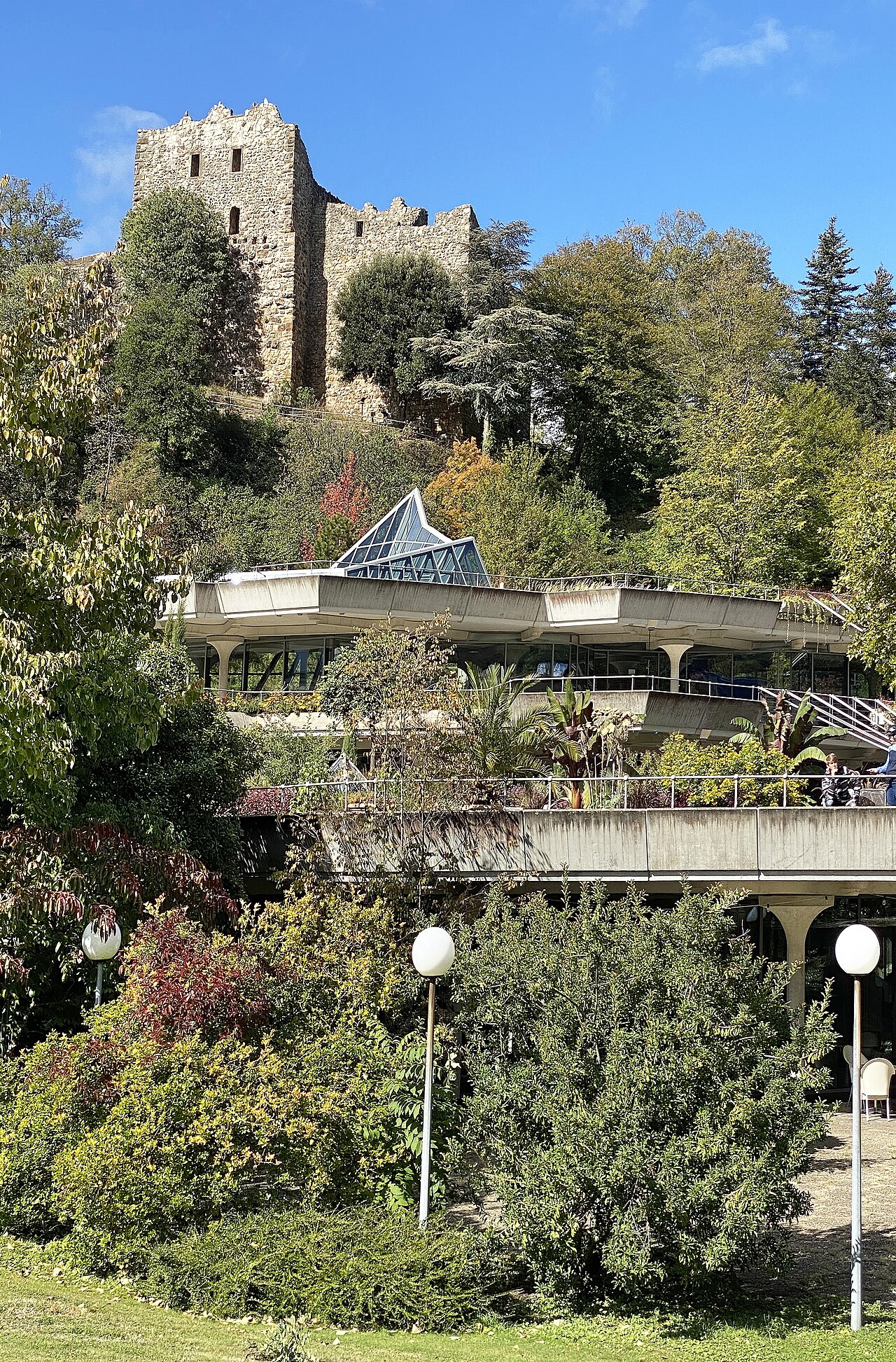
Burg Badenweiler — Germany castle

Burg Badenweiler

Badenweiler, Germany

Burg Badenweiler stands as a striking example of a hilltop castle ruin with a rich history spanning from the Roman period through the Middle Ages to its partial destruction in the 17th century. Located in the spa town of Badenweiler in southwestern Germany, the castle occupies a strategic position approximately 455 meters above sea level, overlooking the Black Forest, the Rhine Valley, and the Vosges Mountains. This vantage point not only provided defensive advantages but also controlled important regional resources and trade routes. The castle's origins can be traced back to a Roman fortification constructed to protect a nearby water facility known as the Aqua Villa. This early military installation laid the groundwork for subsequent fortifications by the Alamanni, a Germanic tribe who established a hill castle on the site. Later, the Franks took control, embedding the location further into the fabric of medieval power struggles in the region. Medieval ownership and strategic importance The first documented mention of Burg Badenweiler dates to 1122, when it was under the possession of the influential Zähringen family. The Zähringens leveraged the castle to protect their valuable silver mining operations nearby, underscoring the castle's economic as well as military significance. Over the centuries, the castle's ownership shifted among several prominent noble families, reflecting the complex political landscape of the region. In 1147, the castle became part of the Welf dynasty through a dowry, illustrating the common medieval practice of using marriage to secure territorial control. By 1157, the castle came under the influence of the Staufer dynasty, a powerful ruling house in the Holy Roman Empire. The castle's lineage continued with the Counts of Freiburg inheriting it in 1268, followed by acquisition by the Counts of Strassberg in 1303 through marriage, and later the princely house of Fürstenberg in 1363. The castle also experienced periods of control by the Habsburgs, highlighting its ongoing strategic and symbolic importance. Military conflicts and decline Burg Badenweiler was not immune to the turbulence of medieval warfare. In 1409, it suffered an attack by troops under Bishop Humbert of Neuenburg from Basel, which caused significant damage. The castle was repaired and continued to function as an administrative center, housing local bailiffs who represented the ruling lords. The castle's military role was revived during the Dutch War in the late 17th century. After the fall of nearby Freiburg in November 1677, French forces under General Joseph de Montclar occupied Burg Badenweiler. However, on April 6, 1678, the retreating French army led by Marshal Créqui deliberately set fire to the castle, causing extensive destruction. This act marked the beginning of the castle's decline, as it was never rebuilt and gradually fell into ruin. Architectural features and ruins The remains of Burg Badenweiler today primarily consist of the stone masonry walls of the castle's palas, the main residential building. This multi-storey structure was divided internally into three sections, with surviving window outlines revealing the complexity of its original interior design. The castle's bergfried, a circular defensive tower, remains a prominent feature. This tower served as a stronghold and observation post, providing commanding views over the surrounding landscape. The castle's outer defenses were expanded in the 14th century to address frequent border conflicts. These fortifications include robust stone walls that protected the inhabitants and the valuable resources within. Access to the ruins is via a steep path lined with retaining walls, enhancing the site's defensibility. Preservation and cultural significance Following its destruction, local residents salvaged building materials from the ruins for other constructions, contributing to the castle's gradual deterioration. In the 20th century, preservation efforts began to stabilize the remaining structures and improve access for visitors. The castle hill is now integrated into the Kurpark spa area, which includes cultural landmarks such as a monument to the renowned Russian author Anton Chekhov, who died in Badenweiler in 1904. Burg Badenweiler remains an important cultural and historical site, offering insights into the region's Roman roots, medieval power struggles, and military history. Its ruins provide a tangible connection to the past, attracting visitors interested in castle architecture, medieval history, and the scenic beauty of the Black Forest region.

High Medieval (11th–13th c.)
Details
4.4 km

Burg Neuenfels

Germany, Germany

Burg Neuenfels stands as a testament to medieval noble life in southwestern Germany. This hill castle, now in ruins, was originally constructed in the early 14th century by the Lords of Neuenfels, a Germanic noble family who established their residence near the town of Neuenburg. Located on a strategic spur castle site atop a 595-meter-high hill, the castle capitalized on the natural defensive advantages offered by steep slopes on three sides and a deeply carved neck ditch on the eastern approach. This positioning reflects the medieval emphasis on integrating fortifications with the terrain to maximize defense. Historical background and ownership The origins of Burg Neuenfels date back to around 1300, with the first clear documentary mention of the castle appearing in 1343. Initially, the castle served primarily as a noble residence rather than a military fortress, emphasizing its role as a manor home for the Lords of Neuenfels. The family held important administrative roles in the region, including positions such as bailiffs and stewards, though they did not accumulate great wealth or political power. In 1346, the castle underwent a significant change in ownership when it was sold to Count Imer of Strassberg, the lord of Badenweiler. Despite this sale, the Neuenfels family retained the castle as a fief, continuing to live there as vassals under the lordship of Badenweiler. This arrangement highlights the complex feudal relationships typical of the period, where ownership and occupancy could be distinct. The castle's decline began in the 16th century. The last known member of the family, Christoph von Neuenfels, sold the surrounding forest lands in 1538 and moved to Freiburg, where he died in 1550. Following his departure, Burg Neuenfels was abandoned and gradually fell into ruin, a fate common to many smaller noble residences that lost their strategic or economic importance. Architectural features and layout Burg Neuenfels was constructed as a spur castle, a design that exploits a natural promontory to enhance defensive capabilities. The castle's rectangular layout measured approximately 30 meters in length and 9 meters in width, with rounded corners that softened the profile of the walls. Unlike many contemporary castles, it notably lacked a bergfried or central keep tower, which was often a dominant feature in medieval fortifications. The castle's defense relied heavily on its robust stone walls, which were generally over two meters thick. The eastern walls, considered the most vulnerable due to the accessible approach, were reinforced with a unique wedge-shaped construction that increased thickness up to 4.5 meters. This feature demonstrates an advanced understanding of fortification techniques aimed at resisting siege engines and attacks. Constructed primarily of stone, the surviving elements of the castle include substantial portions of the curtain walls and the neck ditch. Some wall fragments still rise to heights of up to 12 meters, offering visitors a tangible sense of the castle's original scale and the skill of its medieval builders. Cultural significance and legends The ruins of Burg Neuenfels are steeped in local folklore. A notable 16th-century moritat, a type of ballad, recounts eerie tales of the sudden and mysterious deaths of the noble family and their servants, contributing to the castle's aura of mystery. Additionally, the legend of the "White Lady" ghost is a persistent story associated with the site, inspiring historical novels and attracting visitors interested in the supernatural. Modern preservation and visitor experience Today, Burg Neuenfels exists as a ruined noble residence with significant remnants that highlight its medieval heritage. Conservation efforts have included the restoration of a viewing platform on the remains of the battlements, providing panoramic views over the surrounding Markgräflerland region. From this vantage point, visitors can see other regional landmarks such as Badenweiler Castle and the Blauen mountain, situating the castle within its historic landscape. The castle's location near Badenweiler but within the territory of Britzingen makes it accessible for those interested in exploring medieval architecture and regional history. The site’s preservation as a ruin allows for an authentic experience of medieval castle construction and the lifestyle of the lesser nobility in the High to Late Medieval period. Architectural and historical context Burg Neuenfels exemplifies the characteristics of a hill castle typical of the High Medieval period in Germany. Its design reflects a focus on residential comfort combined with defensive features suitable for a noble family that was important locally but not among the most powerful aristocracy. The absence of a central keep and the emphasis on thick curtain walls suggest a strategic choice to balance defense with habitation. The castle’s history of ownership and eventual decline illustrates the shifting political and social landscape of medieval southwestern Germany. The transition from independent noble residence to a fief under a more powerful lord mirrors broader feudal trends. Its abandonment in the 16th century aligns with changes in military technology and noble lifestyles, which rendered many smaller castles obsolete.

High Medieval (11th–13th c.)
Details
4.8 km

Schloss Bürgeln

Kandern, Germany

Schloss Bürgeln stands as a remarkable example of a hill castle with a complex history stretching back to the early 12th century. Located near Kandern in the Baden-Württemberg region of Germany, this castle has evolved from a fortified medieval complex into a stately Baroque residence, reflecting the shifting religious and political landscapes of the region over centuries. The early origins and monastic control The site of Schloss Bürgeln was first documented in 1125 as a fortified complex with a chapel, established by the local landowner Lord Werner von Kaltenbach. He donated his possessions, including Bürgeln, to the St. Blasien Benedictine monastery, which transformed the castle into the seat of the St. Blasien Provost. This role made Bürgeln the religious and administrative center responsible for overseeing church affairs and collecting taxes from nearby communities such as Sitzenkirch, Obereggenen, and Marzell. During the peasant's revolt of 1525, Schloss Bürgeln was looted, highlighting its significance as a symbol of ecclesiastical authority. Later, in 1556, the introduction of the Reformation by Charles II, Margrave of Baden-Durlach, shifted the religious control of the area. The local communities were freed from the Catholic monastery's dominance, and the castle's role as a provost seat diminished accordingly. Destruction and reconstruction in the Baroque era The castle suffered severe damage during the War of the Spanish Succession in 1689, leading to a period of abandonment between 1692 and 1698. Several restoration attempts were made, but the original medieval structures were eventually demolished in 1762. Over the next two years, Schloss Bürgeln was rebuilt as a Baroque schloss, a stately home designed to assert Catholic power in a predominantly Protestant region. This reconstruction reflected the architectural styles and religious tensions of the post-Renaissance period. The new building emphasized grandeur and authority, with elegant facades and carefully planned gardens, typical of Baroque design. The castle's transformation from a defensive fortress to a symbol of prestige and religious influence marks a significant chapter in its history. Political changes and private ownership At the dawn of the 19th century, the political landscape of Europe was dramatically reshaped by the rise of revolutionary France and the decline of the Holy Roman Empire. The territory including Schloss Bürgeln was secularized, and in 1803, attempts were made to transfer the property to the Catholic Order of Malta. However, resistance delayed this process, and following Austria's defeats at Ulm and Austerlitz in 1805, the region was incorporated into the Electorate of Baden. In 1809, Schloss Bürgeln was sold into private ownership. By the early 20th century, it came into the possession of Richard Sichler, who undertook renovations including the addition of a terrace on the west side. After his death in 1952, the castle was eventually sold to the Schloss Bürgeln Association in 1957, who maintain the property today. Architectural features and current condition Schloss Bürgeln exemplifies the transformation from medieval fortification to a Baroque palace castle. The current structure, built between 1762 and 1764, features elegant facades, formal gardens, and a layout designed for residential comfort and representation rather than military defense. The castle is well preserved and authentically refurnished, offering visitors a glimpse into the lifestyle of the Catholic aristocracy in a predominantly Protestant region. The site includes a restaurant and beautifully maintained gardens, enhancing its appeal as a cultural and historical destination. Its location on a hill provides commanding views of the surrounding landscape, emphasizing its strategic and symbolic importance. Geographical and historical context Situated near the Blauen peak at an elevation of approximately 658 meters, Schloss Bürgeln occupies a strategic position within the mixed forests and mountainous terrain of southern Germany. This location not only provided natural defense advantages but also underscored its role as a regional power center during its monastic and later secular phases. The castle's history is intertwined with the religious and political shifts that shaped the Baden region, including the tensions between Catholic and Protestant authorities, the impacts of the Reformation, and the territorial reorganizations following the Napoleonic Wars. Visitor information and cultural significance Today, Schloss Bürgeln is open to the public and serves as a cultural landmark reflecting centuries of regional history. Its well-preserved Baroque architecture and historical significance attract visitors interested in ecclesiastical history, castle architecture, and the complex heritage of Baden-Württemberg. The presence of a restaurant and the carefully curated gardens provide a welcoming atmosphere for tourists and locals alike, making Schloss Bürgeln a notable destination for those exploring the historical castles of Germany.

Post-Renaissance (17th–18th c.)
Details

