Burg Neuenfels
Burg Neuenfels stands as a testament to medieval noble life in southwestern Germany. This hill castle, now in ruins, was originally constructed in the early 14th century by the Lords of Neuenfels, a Germanic noble family who established their residence near the town of Neuenburg. Located on a strategic spur castle site atop a 595-meter-high hill, the castle capitalized on the natural defensive advantages offered by steep slopes on three sides and a deeply carved neck ditch on the eastern approach. This positioning reflects the medieval emphasis on integrating fortifications with the terrain to maximize defense.
Historical background and ownership
The origins of Burg Neuenfels date back to around 1300, with the first clear documentary mention of the castle appearing in 1343. Initially, the castle served primarily as a noble residence rather than a military fortress, emphasizing its role as a manor home for the Lords of Neuenfels. The family held important administrative roles in the region, including positions such as bailiffs and stewards, though they did not accumulate great wealth or political power.
In 1346, the castle underwent a significant change in ownership when it was sold to Count Imer of Strassberg, the lord of Badenweiler. Despite this sale, the Neuenfels family retained the castle as a fief, continuing to live there as vassals under the lordship of Badenweiler. This arrangement highlights the complex feudal relationships typical of the period, where ownership and occupancy could be distinct.
The castle's decline began in the 16th century. The last known member of the family, Christoph von Neuenfels, sold the surrounding forest lands in 1538 and moved to Freiburg, where he died in 1550. Following his departure, Burg Neuenfels was abandoned and gradually fell into ruin, a fate common to many smaller noble residences that lost their strategic or economic importance.
Architectural features and layout
Burg Neuenfels was constructed as a spur castle, a design that exploits a natural promontory to enhance defensive capabilities. The castle's rectangular layout measured approximately 30 meters in length and 9 meters in width, with rounded corners that softened the profile of the walls. Unlike many contemporary castles, it notably lacked a bergfried or central keep tower, which was often a dominant feature in medieval fortifications.
The castle's defense relied heavily on its robust stone walls, which were generally over two meters thick. The eastern walls, considered the most vulnerable due to the accessible approach, were reinforced with a unique wedge-shaped construction that increased thickness up to 4.5 meters. This feature demonstrates an advanced understanding of fortification techniques aimed at resisting siege engines and attacks.
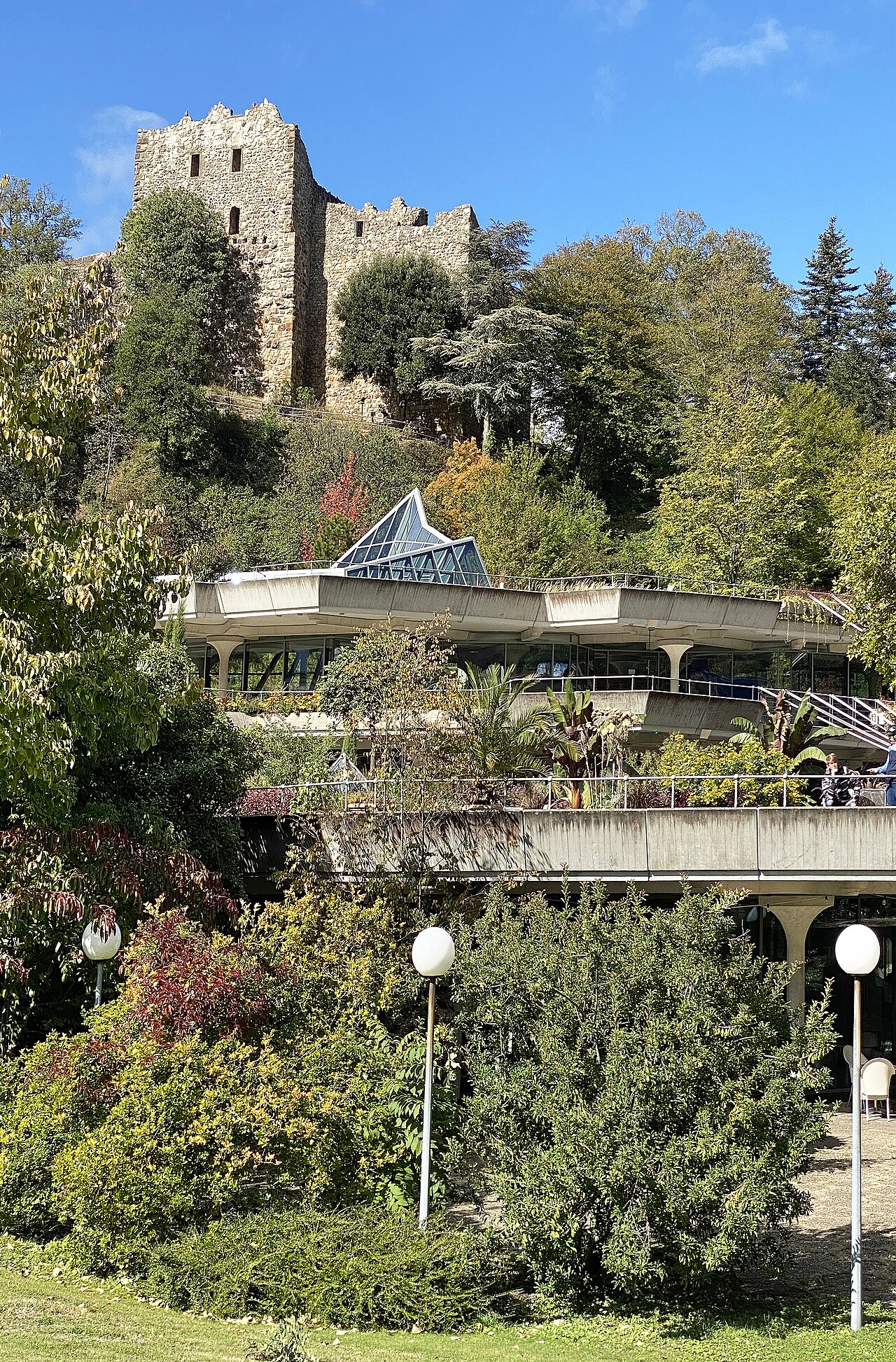
Constructed primarily of stone, the surviving elements of the castle include substantial portions of the curtain walls and the neck ditch. Some wall fragments still rise to heights of up to 12 meters, offering visitors a tangible sense of the castle's original scale and the skill of its medieval builders.
Cultural significance and legends
The ruins of Burg Neuenfels are steeped in local folklore. A notable 16th-century moritat, a type of ballad, recounts eerie tales of the sudden and mysterious deaths of the noble family and their servants, contributing to the castle's aura of mystery. Additionally, the legend of the "White Lady" ghost is a persistent story associated with the site, inspiring historical novels and attracting visitors interested in the supernatural.
Modern preservation and visitor experience
Today, Burg Neuenfels exists as a ruined noble residence with significant remnants that highlight its medieval heritage. Conservation efforts have included the restoration of a viewing platform on the remains of the battlements, providing panoramic views over the surrounding Markgräflerland region. From this vantage point, visitors can see other regional landmarks such as Badenweiler Castle and the Blauen mountain, situating the castle within its historic landscape.
The castle's location near Badenweiler but within the territory of Britzingen makes it accessible for those interested in exploring medieval architecture and regional history. The site’s preservation as a ruin allows for an authentic experience of medieval castle construction and the lifestyle of the lesser nobility in the High to Late Medieval period.
Architectural and historical context
Burg Neuenfels exemplifies the characteristics of a hill castle typical of the High Medieval period in Germany. Its design reflects a focus on residential comfort combined with defensive features suitable for a noble family that was important locally but not among the most powerful aristocracy. The absence of a central keep and the emphasis on thick curtain walls suggest a strategic choice to balance defense with habitation.
The castle’s history of ownership and eventual decline illustrates the shifting political and social landscape of medieval southwestern Germany. The transition from independent noble residence to a fief under a more powerful lord mirrors broader feudal trends. Its abandonment in the 16th century aligns with changes in military technology and noble lifestyles, which rendered many smaller castles obsolete.
Frequently asked questions (FAQ)
- How do I get to Burg Neuenfels?
- Burg Neuenfels is located in Germany, easily accessible by car and public transportation. The nearest major city is Nuremberg, from where you can take a train or drive approximately 30 minutes to reach the castle.
- What is the historical significance of Burg Neuenfels?
- Burg Neuenfels dates back to the 12th century and has played a crucial role in regional defense throughout the medieval period. Its well-preserved architecture offers a glimpse into the feudal past and the strategic importance of castles in Germany's history.
- When was Burg Neuenfels last renovated?
- The last significant restoration of Burg Neuenfels took place in the early 21st century, ensuring the castle's preservation for future generations. This renovation focused on maintaining its historical integrity while improving visitor facilities.
- Can I take guided tours of Burg Neuenfels?
- Yes, guided tours are available at Burg Neuenfels, providing visitors with insights into its fascinating history and architectural details. Tours are typically conducted by knowledgeable guides who bring the castle's past to life.
- Why is Burg Neuenfels a popular tourist destination?
- Burg Neuenfels attracts visitors due to its stunning architecture, rich history, and beautiful surrounding landscapes. The castle's picturesque setting and engaging tours make it a perfect spot for history enthusiasts and casual visitors alike.
- Is it possible to host events at Burg Neuenfels?
- Yes, Burg Neuenfels offers facilities for private events, including weddings and corporate gatherings. The enchanting atmosphere of the castle combined with modern amenities makes it an ideal venue for special occasions.
- What are the opening hours for Burg Neuenfels?
- Burg Neuenfels is typically open to visitors from 10 AM to 6 PM during the summer months and has reduced hours in winter. It is advisable to check the official website for any seasonal changes or special closures.
- What are the ticket prices for visiting Burg Neuenfels?
- Tickets to Burg Neuenfels are reasonably priced, with discounts available for students, seniors, and children. Family passes are also offered, making it an affordable destination for everyone.
- What is the best time to visit Burg Neuenfels?
- The best time to visit Burg Neuenfels is during the spring and early autumn when the weather is mild and the surrounding nature is in full bloom. Visiting during the summer months also allows you to enjoy various outdoor events held at the castle.
- Are there any nearby attractions to explore while visiting Burg Neuenfels?
- Yes, there are several nearby attractions, including picturesque hiking trails and charming villages that showcase traditional German culture. Visitors can also explore other historical sites and museums in the region for a well-rounded experience.
Information
Website
Visit websiteSources & official resources
Verify the information above using these authoritative references.
Loading map...
Visitor reviews
No reviews yet. Been here? Write the first review and help other travelers!
Write the first reviewVisited this castle? Share your experience
Your review helps other travelers and adds first-hand knowledge to our encyclopedia.