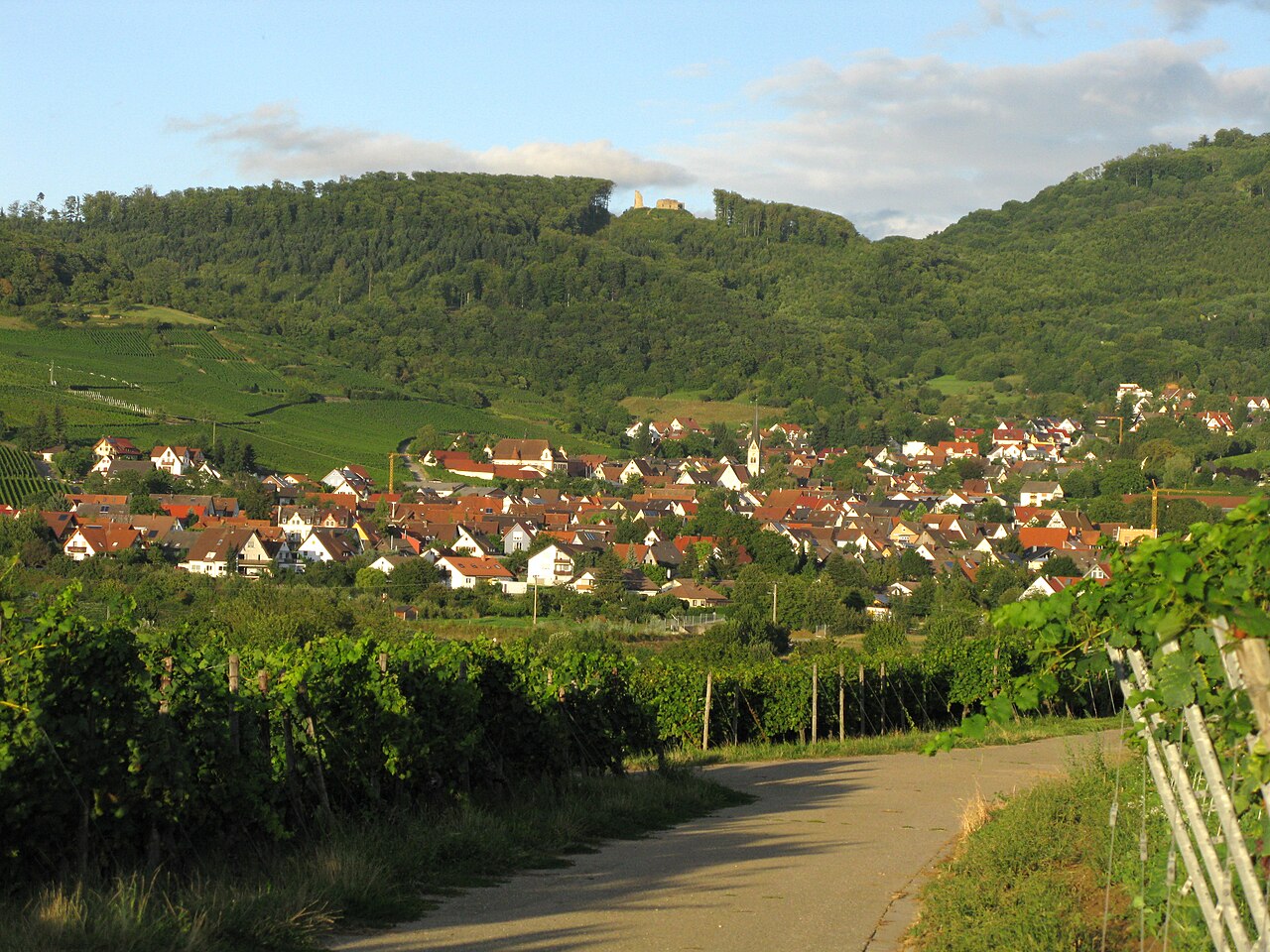
Staufen Castle Ruins
Staufen Castle is a historic hilltop fortress located in Staufen im Breisgau, Germany. Its origins trace back to the 12th century, when it was constructed on the site of an ancient Roman watchtower. This elevated position, approximately 375 meters above sea level, was strategically chosen to oversee the surrounding landscape, including the town and expansive vineyards below. The castle's commanding views and defensive advantages exemplify typical High Medieval hill castle design.
The earliest documented mention of Burg Staufen dates to 1248, although archaeological and historical evidence suggests the castle's main structures were built around the early 1100s by the noble Lords of Staufen. Adalbert von Staufen is credited with erecting the central residential building, marking the castle as a significant feudal residence during the High Middle Ages. The castle remained under the Staufen family's ownership until the 17th century, serving as a symbol of their regional influence.
Historical development and ownership changes
Early history and construction
Initially, the site served as a Roman watchtower, capitalizing on the hill's vantage point. The transition to a medieval castle occurred in the early 12th century, reflecting the era's architectural and military needs. The castle's robust stone walls and elevated position provided defense and control over the surrounding territory.
Financial difficulties and political shifts
By the 14th century, the Lords of Staufen faced financial strain and political conflicts, particularly with the nearby city of Freiburg. These pressures led to Freiburg acquiring shares of the castle in 1327 and 1337. A legal arrangement known as the "opening right" compelled the castle's owners to grant Freiburg's troops access and barred the castle's use against the city, illustrating the complex feudal relationships of the period.
Further changes in control occurred when Otto von Staufen pledged half of the castle and the town to Konrad Schnewlin in 1359. By 1370, the castle fell under the feudal authority of the Counts of Freiburg, and around 1400, it became part of Further Austria, a Habsburg territory. These shifts reflect the castle's strategic importance in regional power dynamics.
Renaissance connections and decline
Association with johann georg faust
During the Renaissance, the castle is linked to the enigmatic figure Johann Georg Faust, an alchemist and healer reputed to have worked for Anton von Staufen. Faust's attempts to produce gold through alchemical processes highlight the castle's role not only as a military stronghold but also as a site of intellectual and mystical pursuits. Faust's death in 1539 due to a chemical explosion in a local inn adds a dramatic chapter to the castle's history.
Final years and abandonment
The Staufen lineage ended with Georg Leo von Staufen in 1602, after which the castle and town reverted to Austrian control. By 1607, the castle was no longer inhabited as a residence. The lordship, including Burg Staufen, was pledged to the Barons of Schauenburg between 1628 and 1722. The castle's military significance had declined, leaving it vulnerable during the Thirty Years' War.
Destruction and preservation
Destruction during the thirty years' war
In 1632, Swedish troops occupied the undefended castle during the Thirty Years' War and set it ablaze, resulting in its ruin. This event marked the end of Burg Staufen as a functional fortress and residence, leaving it a fragmentary ruin for centuries.
Restoration efforts and current condition
The ruined castle passed into the possession of the town of Staufen in 1896, acquired from the Mentzingen family. The town initiated efforts to stabilize and preserve the remaining structures. Restoration work was carried out notably in 1954 and 1960, focusing on the castle's outer defensive walls, known as Umfassungsmauern. These walls, constructed from local stone with medieval masonry techniques, have been preserved to allow visitors to appreciate the castle's original footprint and defensive design.
Architectural features and site layout
Hilltop location and defensive walls
Burg Staufen occupies a prominent hilltop, providing extensive views over Staufen town and the surrounding vineyards. The surviving ruins primarily consist of the castle's outer walls, which formed a protective enclosure. These walls demonstrate the typical construction methods of early 12th-century hill castles, emphasizing defense and control rather than elaborate decoration.
Lack of interior remains and artifacts
While the outer walls remain substantial, little is known about the castle's internal buildings or layout. No specific interior architectural elements such as staircases, gates, or decorative stonework have been documented. Similarly, no archaeological finds like tools or pottery have been reported, limiting detailed understanding of daily life within the castle.
Visitor experience and cultural significance
Today, visitors to Staufen Castle ruins can explore the restored outer walls and enjoy panoramic views of the Black Forest region and the vineyards below. The site offers insight into medieval fortification strategies and the historical evolution of feudal power in southwestern Germany. The castle's connection to figures like Johann Georg Faust adds a layer of cultural intrigue beyond its military past.
The castle remains a notable landmark in Staufen im Breisgau, symbolizing the area's medieval heritage and the complex political history of the region. Its preservation as a ruin allows for reflection on the passage of time and the shifting fortunes of noble families in the Holy Roman Empire.
Frequently asked questions (FAQ)
- How do I get to Staufen Castle Ruins?
- Staufen Castle Ruins is located in Staufen im Breisgau, Germany, accessible by car or public transportation. If you're traveling by train, the nearest station is Staufen, from which you can enjoy a scenic walk to the castle. There are also signposted hiking trails that lead to the ruins, making for a lovely day out.
- What is the historical significance of Staufen Castle?
- Staufen Castle, originally built in the 11th century, played a crucial role in the region's history, particularly during the Middle Ages. It served as a stronghold for the local nobility and witnessed several historical events, including conflicts and sieges. Today, it stands as a testament to the architectural and cultural heritage of the area.
- When was Staufen Castle constructed?
- Staufen Castle was constructed in the early 11th century, with its foundations believed to be laid around 1060. Over the centuries, it underwent various expansions and renovations reflecting the changing architectural styles of the time. The castle was eventually abandoned in the late 18th century, leading to its current ruinous state.
- Can I visit Staufen Castle Ruins year-round?
- Yes, Staufen Castle Ruins are open to visitors year-round, making it a great destination for any season. However, accessibility may vary depending on weather conditions, especially during winter months when snow can make trails slippery. Always check local weather forecasts before planning your visit.
- Why is Staufen Castle a popular tourist attraction?
- Staufen Castle is popular among tourists for its breathtaking views of the surrounding countryside and the historical significance it embodies. The ruins offer a glimpse into medieval life and architecture, alongside numerous hiking trails that attract nature enthusiasts. Additionally, its proximity to the charming town of Staufen adds to its appeal for visitors.
- Is it possible to explore the castle ruins freely?
- Yes, visitors can explore the castle ruins freely without the need for a guided tour. However, many choose to join guided tours to gain deeper insights into the castle's history and architecture. There are informative signs throughout the site that provide context and details about the various structures and their significance.
- What are the best times to visit Staufen Castle?
- The best times to visit Staufen Castle are during the spring and autumn months when the weather is mild and the landscapes are particularly beautiful. Summer can be quite busy with tourists, while winter may present challenges due to weather conditions. Visiting during weekdays can also help you avoid larger crowds.
- Are there any nearby attractions to visit while at Staufen Castle?
- Yes, while visiting Staufen Castle, you can also explore the charming town of Staufen im Breisgau, known for its historic streets and local wineries. The surrounding Black Forest region offers numerous hiking trails and natural attractions, making it a great area for outdoor activities. Additionally, nearby towns like Freiburg and Baden-Baden are worth exploring for their rich history and culture.
- What are the opening hours for Staufen Castle Ruins?
- Staufen Castle Ruins are generally open from dawn until dusk, allowing visitors to enjoy the site throughout the day. However, it is advisable to check local tourism websites or visitor centers for any seasonal changes in hours. Special events may also affect access, so staying informed ensures a smooth visit.
Information
Website
Visit websiteSources & official resources
Verify the information above using these authoritative references.
Loading map...
Visitor reviews
No reviews yet. Been here? Write the first review and help other travelers!
Write the first reviewVisited this castle? Share your experience
Your review helps other travelers and adds first-hand knowledge to our encyclopedia.