Stary Dzierzgon Castle Ruins
Stary Dzierzgon Castle, located in the village of Stary Dzierzgon in Poland, represents one of the earliest fortifications established by the Teutonic Order in the historic region of Prussia. Constructed in 1234 on the site of a former Prussian stronghold, this fortress played a significant role during the early phases of the Teutonic Order's territorial expansion in the High Medieval period.
The foundation and strategic importance
The castle was built as part of the Teutonic Order's efforts to consolidate control over the region. Its location on the site of an earlier indigenous fortification highlights the strategic value of this position. The original Prussian stronghold likely provided a natural defensive advantage, which the Teutonic Knights enhanced with their own construction techniques and fortification principles.
Architecture and fortifications
While no substantial above-ground structures remain today, archaeological evidence and historical records indicate that Stary Dzierzgon Castle featured typical characteristics of early Teutonic fortresses. These included a surrounding moat and earthen embankments designed to impede attackers. The castle's layout would have combined wooden and stone elements, common in the High Medieval military architecture of the Teutonic Order. The defensive works were likely modest compared to later Teutonic castles, reflecting its early construction date and the evolving nature of castle building during the 13th century.
Destruction and abandonment
The castle was devastated in 1243, a mere nine years after its construction. The reasons for this destruction are linked to the ongoing conflicts between the Teutonic Order and local Prussian tribes, as well as the Order's strategic decisions. By 1247, the Teutonic Knights had abandoned Stary Dzierzgon Castle, relocating their seat to a newly constructed fortress in nearby Dzierzgon. This move signaled a shift towards more permanent and robust fortifications as the Order expanded its territorial control.
Current state and archaeological significance
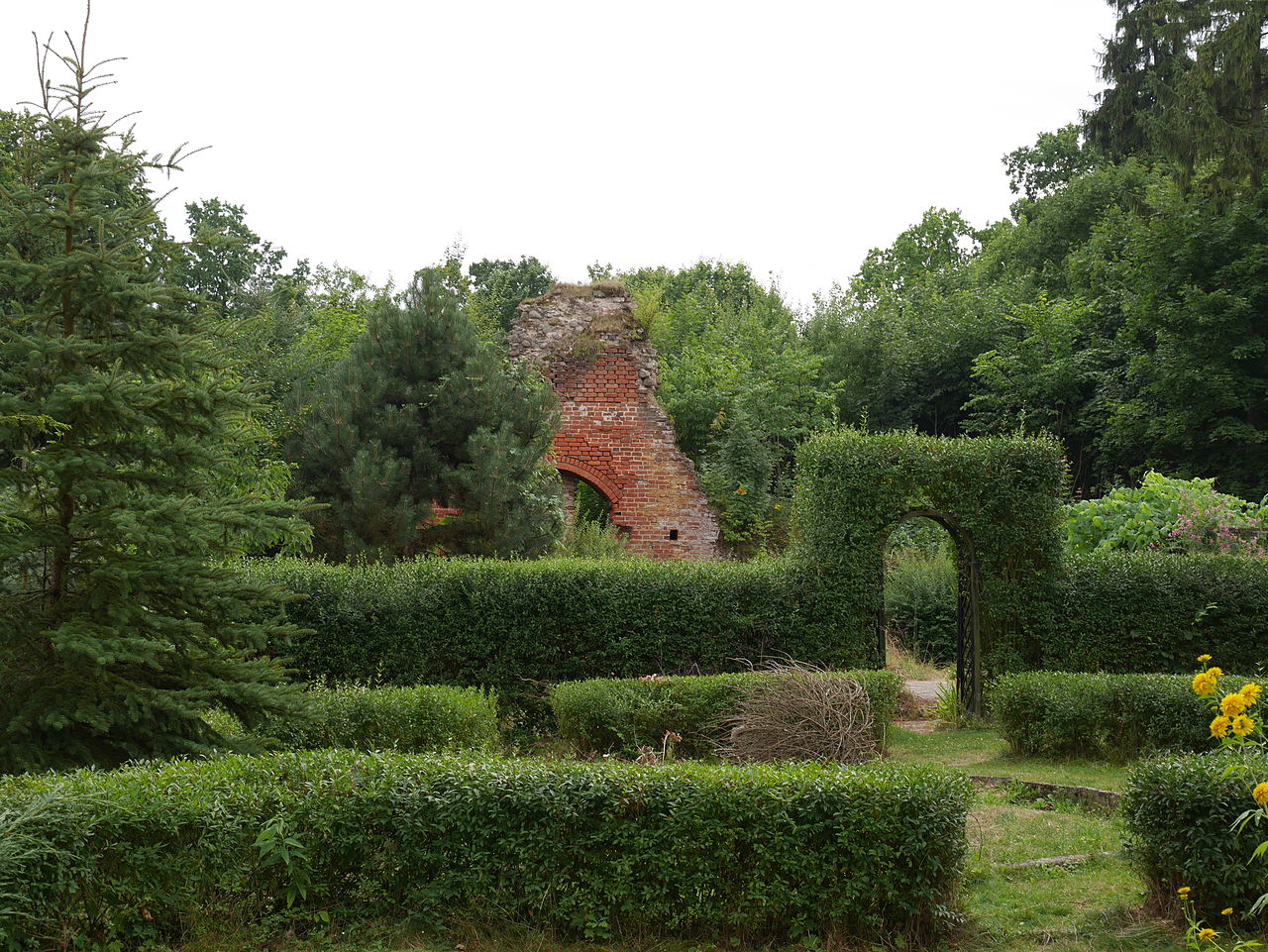
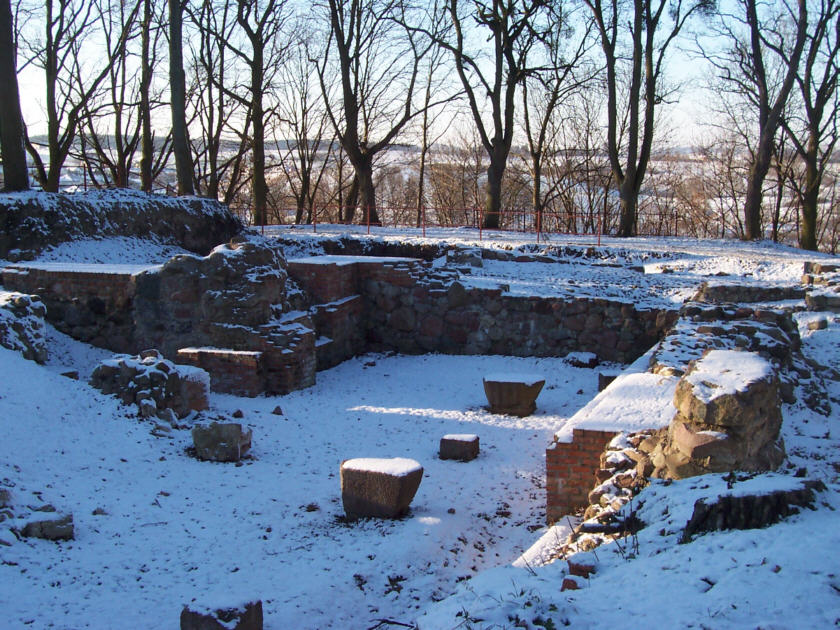
Today, Stary Dzierzgon Castle ruins consist mainly of the outline of the moat and the remaining earthen embankments. These features provide valuable insights into the early defensive strategies employed by the Teutonic Order in the region. Although no standing structures survive, the site remains an important archaeological and historical landmark, illustrating the initial phase of Teutonic military architecture and colonization efforts in Prussia.
Historical context and legacy
The castle's brief existence reflects the turbulent nature of the 13th-century Baltic frontier, where the Teutonic Order sought to establish a stronghold against indigenous populations. The transition from Stary Dzierzgon to the newer castle in Dzierzgon marks an evolution in the Order's approach to fortress construction, emphasizing more durable and strategically placed castles. Stary Dzierzgon thus serves as a testament to the early challenges and adaptations faced by the Teutonic Knights during their conquest and settlement of Prussia.
Frequently asked questions (FAQ)
- What is the historical significance of Stary Dzierzgon Castle?
- Stary Dzierzgon Castle was one of the first Teutonic fortresses built in Prussia, marking the Order's early efforts to control the region in the 13th century.
- Are there any visible remains of the castle today?
- Today, visitors can see the outline of the moat and earthen embankments, which are the only surviving features of the original fortress.
- When was the castle abandoned and why?
- The castle was abandoned in 1247 after being devastated in 1243, as the Teutonic Order moved their seat to a new castle in nearby Dzierzgon for better strategic positioning.
Information
Loading map...
Visitor reviews
No reviews yet. Been here? Write the first review and help other travelers!
Write the first reviewVisited this castle? Share your experience
Your review helps other travelers and adds first-hand knowledge to our encyclopedia.