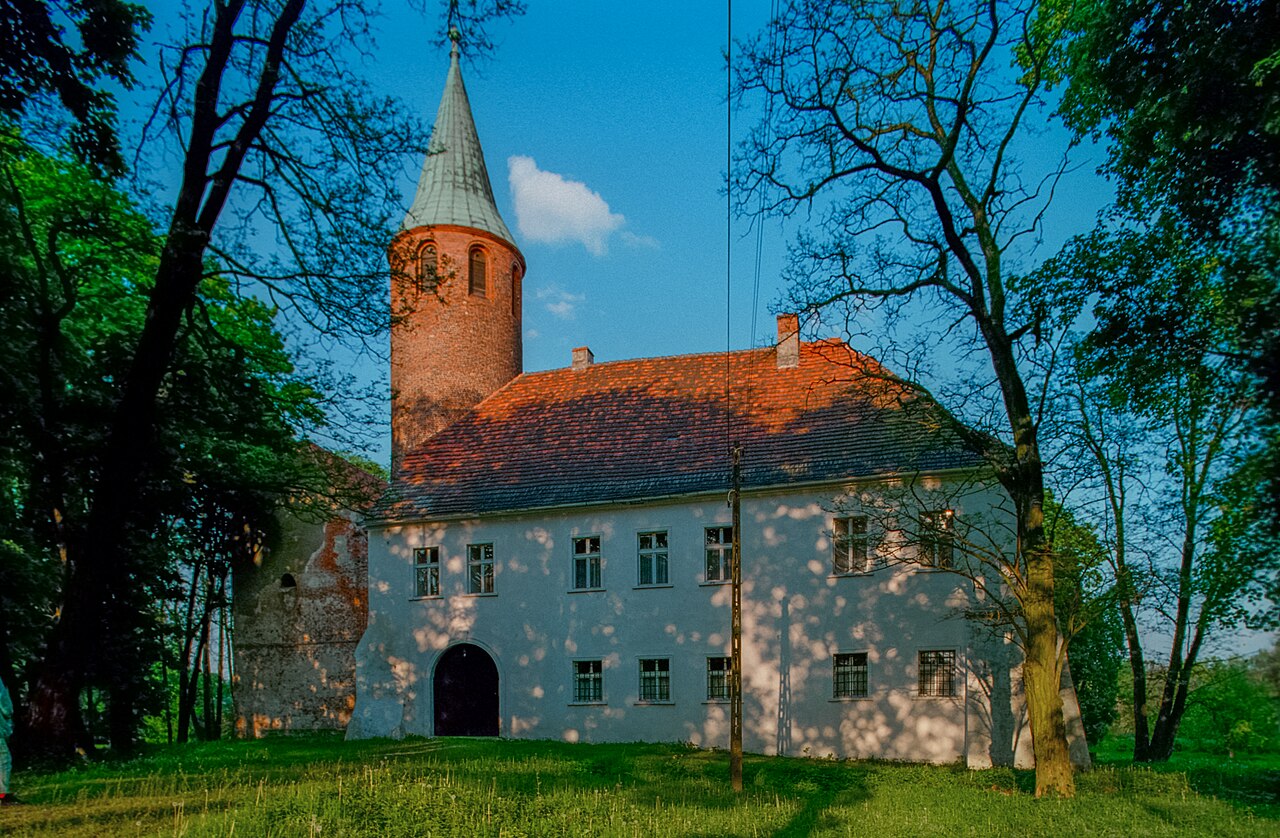
Stare Kolnie Castle
Stare Kolnie Castle is a historic medieval fortress located in the southern part of the village of Stare Kolnie, Poland. Situated strategically between the Stobrawa River and its tributary, the Budkowniczanka Stream, the castle's remains offer a glimpse into the region's high medieval defensive architecture and border control systems. Its origins trace back to the 13th century, with the first recorded mention dating to 1317, underscoring its significance in the territorial and economic history of the Brzeg principality.
Historical role and significance
Stare Kolnie Castle was originally constructed as a hill castle designed to guard the borders of the Brzeg duchy. Its location was carefully chosen for defensive advantages, positioned on elevated ground near water bodies which served both as natural barriers and resources. The castle functioned not only as a military stronghold but also as a customs chamber, controlling trade and collecting tariffs along key routes. This dual role highlights the castle's importance in maintaining the duchy's security and economic interests during the high medieval period.
After 1317, the customs chamber was relocated by Duke Bolesław III of Brzeg to the town of Brzeg, reflecting shifts in regional administrative centers. Subsequently, Stare Kolnie Castle was transferred into private ownership, becoming the property of the Beess family. The Beess family later moved their residence to Karłowice, leading to the gradual decline and neglect of the castle.
Decline and destruction
The castle's decline culminated during the 15th century amidst the turmoil of the Hussite Wars, a series of religious conflicts that swept through Central Europe. Stare Kolnie Castle was severely damaged and ultimately ruined during these conflicts. Unlike many other castles that were rebuilt or restored after such events, Stare Kolnie was never reconstructed, marking the end of its active use and strategic importance.
Architectural features and current remains
Today, the site of Stare Kolnie Castle is marked by only faint traces of its former grandeur. Located within a small grove of trees on the right bank of the Stobrawa River, visitors can observe limited remnants of the castle's stone walls and earthworks. These surviving fragments provide valuable archaeological insight into the castle's original layout and construction techniques typical of hill castles from the high medieval era.
The castle's defensive structures likely included stone curtain walls and earth ramparts, which were common features designed to protect against sieges and attacks. The proximity to the river would have enhanced its defensive capabilities and possibly supplied a moat or water defenses, although no extensive moat remains are visible today.
Cultural and heritage importance
Despite its ruinous state, Stare Kolnie Castle remains an important cultural landmark within the Opole Voivodeship region of Poland. It reflects the medieval history of border defense and trade regulation in Silesia. The site attracts historians, archaeologists, and visitors interested in medieval architecture and the turbulent history of the region. Preservation efforts focus on maintaining the visible relics and promoting awareness of the castle's historical significance.
Visiting stary kolnie castle
Visitors to the site should note that only minimal ruins are visible, with no substantial buildings intact. The castle grounds are accessible for exploration and offer a peaceful natural setting along the Stobrawa River. Interpretive signage or local guides may provide additional context about the castle's history and role in the medieval period.
As the remains are limited to low stone fragments and earthworks, visitors interested in medieval fortifications will find value in the castle's historical narrative and its representation of typical high medieval hill castles in Poland.
Frequently asked questions (FAQ)
- When was Stare Kolnie Castle built and what was its primary purpose?
- Stare Kolnie Castle was built in the 13th century primarily as a border fortress and customs chamber to protect the Brzeg duchy and control trade routes.
- What remains of Stare Kolnie Castle can visitors see today?
- Today, visitors can see only limited ruins, including fragments of stone walls and earthworks, located in a small grove near the Stobrawa River.
- Why was Stare Kolnie Castle never rebuilt after its destruction?
- The castle was ruined during the 15th-century Hussite Wars and was never rebuilt due to the relocation of its owners and changing political circumstances.
- Is Stare Kolnie Castle accessible to the public?
- Yes, the site is accessible for exploration, though it consists mainly of ruins and earthworks without substantial standing structures.
- What is the historical significance of Stare Kolnie Castle?
- Stare Kolnie Castle played a key role in medieval border defense and trade regulation within the Brzeg principality, reflecting the military and economic strategies of the high medieval period.
Information
Loading map...
Visitor reviews
No reviews yet. Been here? Write the first review and help other travelers!
Write the first reviewVisited this castle? Share your experience
Your review helps other travelers and adds first-hand knowledge to our encyclopedia.