Stare Drawsko
Stare Drawsko Castle, also known historically as Burg Draheim, stands as a significant medieval fortress ruin nestled on a narrow isthmus between the lakes Drawsko and Żerdno in Poland. This hill castle was constructed in the 14th century by the Knights Hospitaller and represents a remarkable example of Gothic military architecture adapted to natural defensive advantages. Its strategic location and robust fortifications played a crucial role in the turbulent history of the region, reflecting the complex political and military struggles between the Polish Kingdom, the Margraviate of Brandenburg, and neighboring powers.
Early history and site significance
The castle site originally hosted a Slavic stronghold belonging to the Drawian tribe from the 7th century until the mid-12th century. This early fortification was positioned on an important salt trade route connecting Greater Poland to Pomerania. It was destroyed during the military campaigns of Bolesław III Wrymouth in the early 12th century, marking the beginning of a new era of regional control and fortification development.
In the late 13th century, Duke Przemysł II granted the lands around the Drawa River and Drawsko Lake to the Knights Templar in 1290. The Templars established a commandery at nearby Czaplinek, but following their suppression by Pope Clement V in 1312 under pressure from King Philip IV of France, their properties were transferred to the Knights Hospitaller by 1345. This transition marked the beginning of the construction of the current stone fortress.
Construction and architectural features
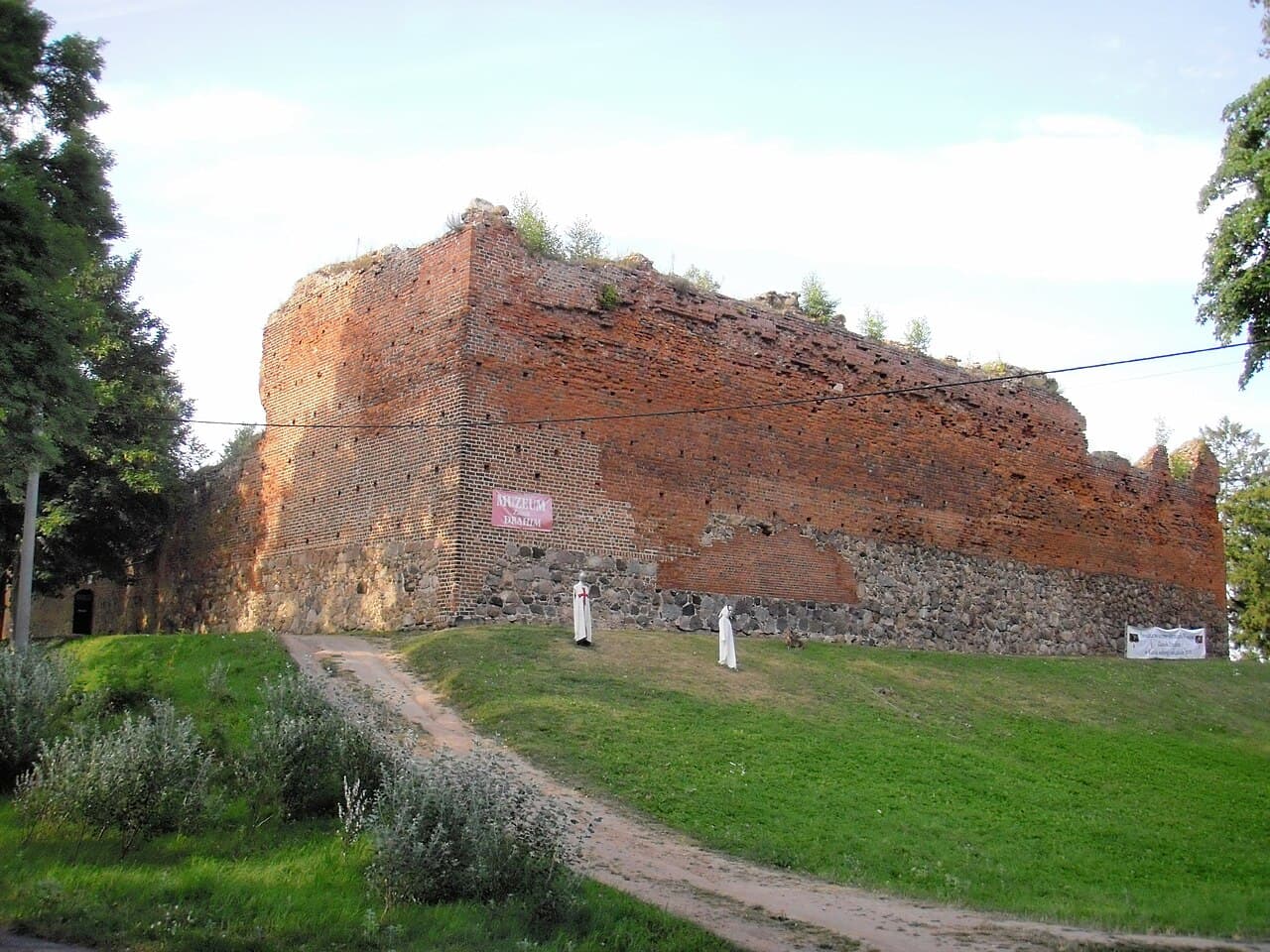
Construction of the castle began around 1360 and was completed by 1366. The fortress was built on an artificially raised mound approximately 6 meters high and roughly 50 by 50 meters in area, forming a near-square plan. The castle’s quadrangular layout measures approximately 41.5 by 46.5 meters. The walls, made of brick on a foundation of granite boulders, reach heights of over 7 meters and are about 2.5 meters thick, crowned with battlements providing defensive positions.
Unlike many medieval castles, Stare Drawsko lacks a central tower, a feature possibly omitted due to the site's natural defensive advantages or financial constraints. Instead, the castle relied on its thick curtain walls, wooden defensive galleries (hoardings), and strategically placed arrow slits for defense. The main entrance was located on the northern wall, protected by a gatehouse and preceded by a drawbridge over the moat.
The southern wing is the largest building within the castle, extending along the southern curtain wall. It likely had three stories: the ground floor served economic functions, the middle floor housed residential chambers and a chapel, and the upper floor was used for storage and included arrow slits for defense. The absence of exterior windows and the lack of cellars—except for a deep, stone-lined dungeon discovered in the southwest corner—reflect the castle’s defensive priorities and the marshy terrain on which it was built.
The courtyard was paved with stone, featuring a centrally located well essential for water supply during sieges. Defensive moats approximately 3 meters wide surrounded the castle on the north and south, fed by lake waters. The slopes and moat banks were reinforced with stone and wooden beams to prevent erosion. A northern outer bailey, accessible via a wooden bridge, provided additional defense and operational space.
Medieval military and political history
Throughout the 14th and 15th centuries, Stare Drawsko Castle was a focal point in the ongoing conflicts between Poland and Brandenburg. After the castle's transfer to the Knights Hospitaller, it served as a commandery seat and a military stronghold under Brandenburg's influence. Despite lacking a central tower, the fortress proved resilient, successfully withstanding attacks during regional skirmishes and maintaining control even when nearby fortresses fell.
In 1368, the Treaty of Drawsko resulted in the Margrave of Brandenburg renouncing claims to the castle in favor of Poland, with the Hospitallers becoming Polish vassals. However, the castle's allegiance and ownership fluctuated amid the complex political landscape, including the rise of the Teutonic Order and the Thirteen Years' War. The castle was briefly seized by Polish forces in 1407 during campaigns against Brandenburg and the Teutonic Knights, forcing the Hospitallers to abandon their holdings.
Following the Second Peace of Toruń in 1466, the castle's military importance diminished, transitioning to a primarily administrative role as the seat of a starosty. It remained a significant local center until the 17th century, when it underwent renovations and expansions under various starosts, including the addition of timber-framed buildings and defensive bastions.
Early modern period and decline
The castle suffered damage during the Swedish Deluge (1655-1660), after which it was pledged to Brandenburg in 1657. Subsequent owners, including the Hohenzollern family, undertook repairs and fortification enhancements, such as wooden corner turrets and bastioned earthworks, reflecting evolving military architectural trends designed to counter artillery.
During the Seven Years’ War in 1758, the castle was defended by a small Prussian garrison but was ultimately captured, looted, and set on fire by Russian Cossacks. This event marked the beginning of its permanent decline. By the late 18th century, parts of the castle were dismantled to provide materials for local construction, including an evangelical church.
In 1818, the ruins and surrounding lands were sold to private owners, and minor conservation efforts occurred in the early 20th century. Archaeological excavations in the 1960s uncovered important features such as a 15th-century illegal mint, providing unique insights into the castle's economic and military history.
Architectural remains and heritage significance
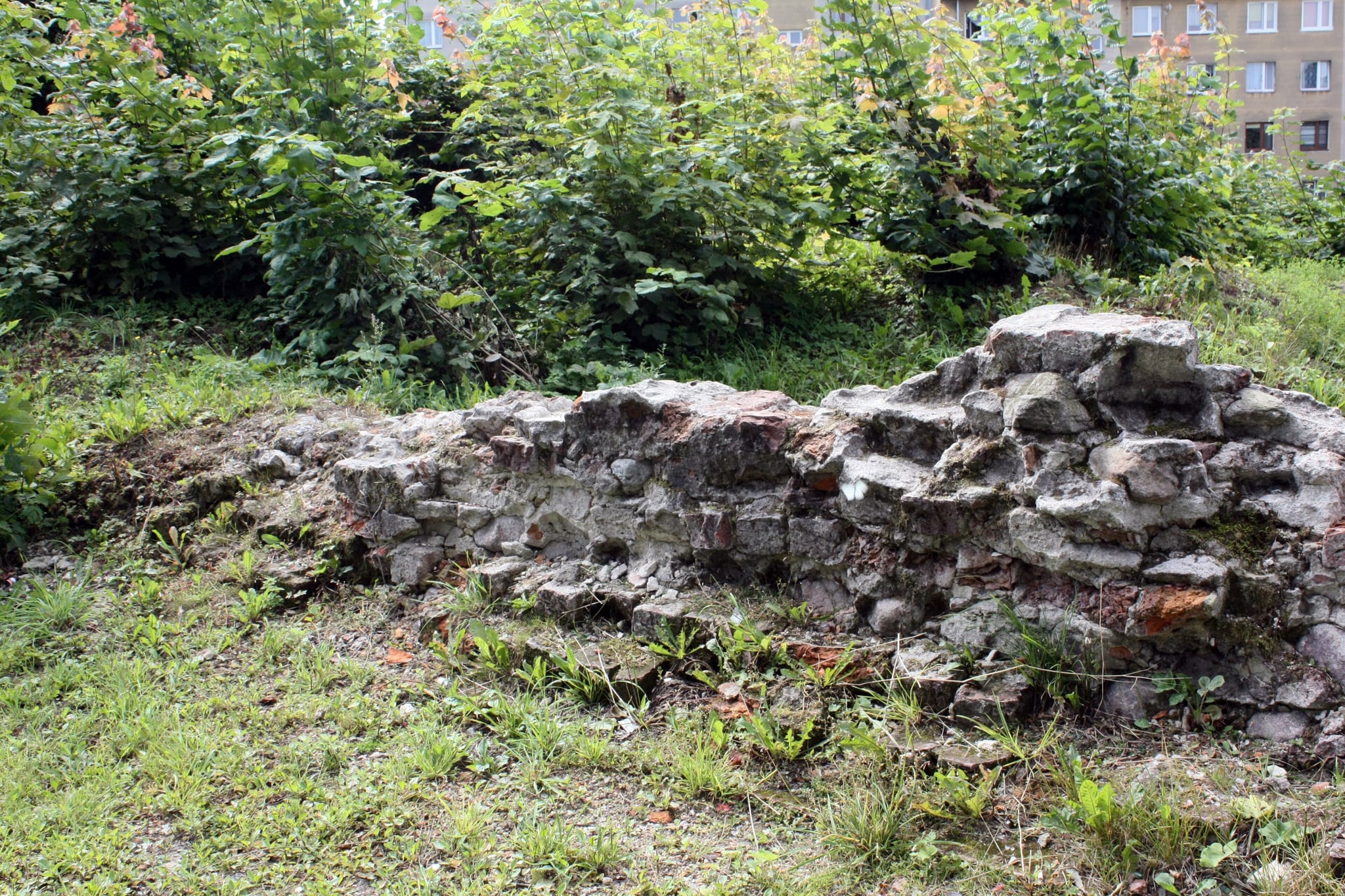
Today, the ruins of Stare Drawsko Castle preserve substantial sections of the curtain walls, the southern wing remains, and earthworks stabilized with stone revetments. The site offers a valuable glimpse into Gothic military architecture and the adaptations of a medieval hill castle to its natural environment. The absence of a central tower distinguishes it from many contemporaneous fortresses, highlighting its unique defensive strategy.
The castle's historical role as a border fortress guarding the Polish realm and its later function as an administrative center underscore its cultural and heritage importance. Since 1994, the site has been privately owned and partially restored, with wooden buildings reconstructed in the courtyard to evoke the castle's former layout and support visitor engagement.
Stare Drawsko Castle remains a poignant monument to the region's medieval past, reflecting centuries of military, political, and architectural evolution. Its ruins continue to attract visitors interested in Gothic fortifications, the history of the Knights Hospitaller, and the complex history of Pomerania and Poland.
Frequently asked questions (FAQ)
- What is the historical significance of Stare Drawsko Castle?
- Stare Drawsko Castle has a rich history dating back to the 14th century, serving as a stronghold for various noble families. Its strategic location made it an important defensive structure during regional conflicts. Today, it stands as a testament to medieval architecture and local heritage.
- When is the best time to visit Stare Drawsko Castle?
- The best time to visit Stare Drawsko Castle is during the spring and early autumn months when the weather is mild and the surrounding landscapes are lush. This period also offers a variety of local festivals and events that enhance the visitor experience. Summer can be busy, while winter is less favorable due to colder temperatures.
- Can I access the castle with a wheelchair?
- Yes, Stare Drawsko Castle is committed to accessibility and offers wheelchair access to certain areas of the castle. However, some parts of the castle may have limitations due to the historical structure. It is advisable to check in advance for specific accessibility options.
- What are the opening hours of Stare Drawsko Castle?
- Stare Drawsko Castle typically opens its doors to visitors from 10 AM to 6 PM during the peak season, with reduced hours in the winter months. It's best to check the official website or contact the castle directly for the most current opening hours before your visit. Special events may also affect these hours.
- How much do tickets cost to enter Stare Drawsko Castle?
- Ticket prices for Stare Drawsko Castle are generally affordable, with discounts available for students and seniors. Children under a certain age may enter for free, making it a great family destination. It's recommended to purchase tickets online in advance to avoid long lines during peak visiting times.
- What architectural features should I look for at Stare Drawsko Castle?
- Stare Drawsko Castle showcases a mix of Gothic and Renaissance architectural styles, which is evident in its impressive towers and fortified walls. Visitors should pay attention to the intricate stone carvings and the layout of the castle grounds, which reflect its historical significance. The castle’s unique design offers a glimpse into the craftsmanship of its time.
- Are there any nearby attractions to visit while at Stare Drawsko?
- Yes, there are several nearby attractions to enhance your visit to Stare Drawsko Castle. The surrounding area includes beautiful nature trails, local museums, and charming villages rich in Polish culture. These sites provide a perfect opportunity to explore the history and beauty of the region.
Photo gallery

Information
Website
Visit websiteSources & official resources
Verify the information above using these authoritative references.
Loading map...
Visitor reviews
No reviews yet. Been here? Write the first review and help other travelers!
Write the first reviewVisited this castle? Share your experience
Your review helps other travelers and adds first-hand knowledge to our encyclopedia.