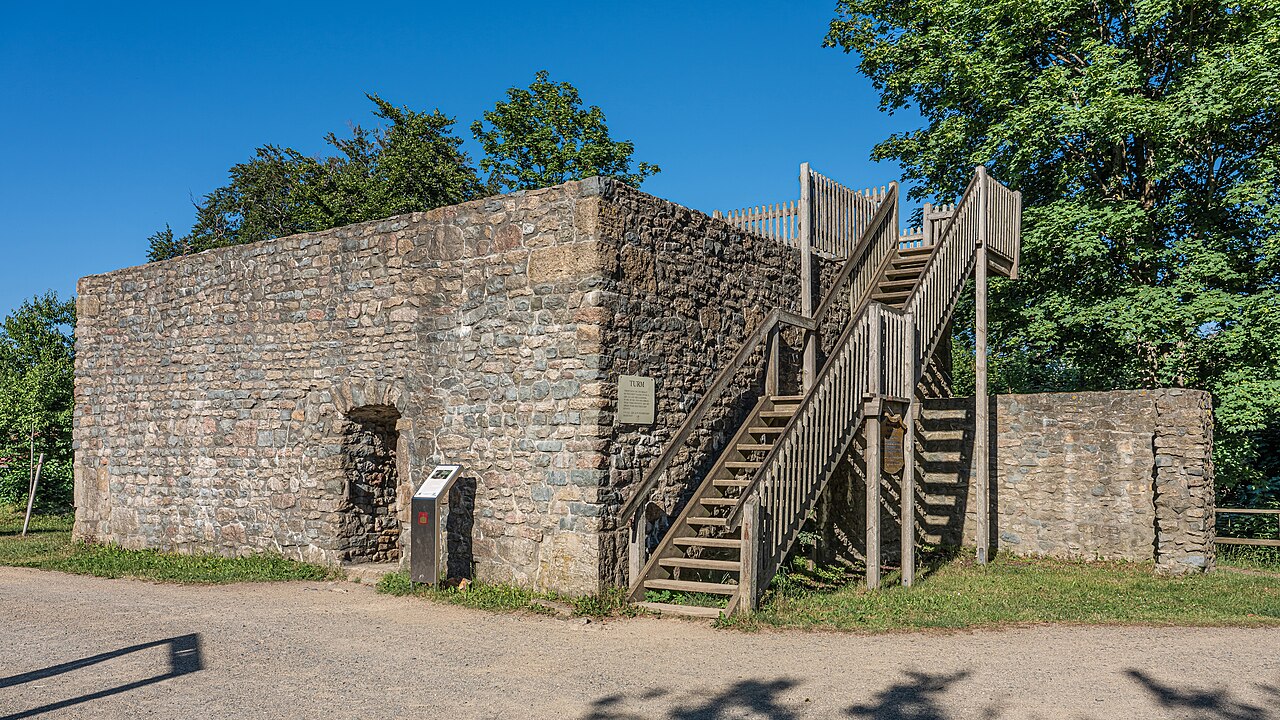
Stapelburg Castle is a significant medieval fortress located atop Burgberg hill within the municipality of Stapelburg, Germany. Established before 1306 by the Counts of Wernigerode, the castle was strategically positioned to secure the northern approaches to the Harz mountains. Its primary role was to guard the vital military road connecting the counts' ancestral seat to the imperial mining town of Goslar and to operate as a toll collection point, underscoring its importance in regional trade and defense during the High Medieval period.
Historical development and ownership changes
Throughout the late 14th and 15th centuries, Stapelburg Castle underwent numerous changes in ownership reflecting the shifting political landscape of the region. In 1394, the castle was pledged and sold to the Diocese of Halberstadt for 600 marks, marking a significant transfer from secular to ecclesiastical control. Over the next decades, it was pledged to various nobles including Count Botho of Stolberg in 1432 and later to Heinrich von Bila. The castle’s ownership was further complicated when, in 1463, Count Henry the Elder of Stolberg received it as a life tenure fief for 200 Rhenish guilders.
By the early 16th century, the castle had fallen into disrepair. In 1509, Count Botho and his heir committed to restoring the fortress within eight years to revive its status as a noble residence. This restoration effort was part of a broader trend of maintaining feudal strongholds during a period of increasing political consolidation.
16th century expansions and settlement growth
The mid-16th century brought renewed activity when Archbishop Sigismund of Magdeburg installed Dr. Heinrich von Bila at Stapelburg Castle in 1559. Von Bila, a former councillor in Halberstadt and associate judge at the Imperial Chamber Court, expanded the fortress and established an estate known as Bilahausen at the hill’s base. This estate became the nucleus for the village of Stapelburg, illustrating the common medieval pattern of castle-centered settlement development.
In 1596, the castle and village were acquired by Statius von Münchhausen for 45,000 talers. However, his bankruptcy in 1619 led to the property reverting to the Halberstadt Cathedral Chapter by 1625. These transitions reflect the economic challenges and political complexities of maintaining such estates during the early modern period.
18th century decline and later preservation efforts
Despite its historical importance, Stapelburg Castle fell into significant disrepair by the 18th century. Reports from 1737 indicate only a single usable room remained, occasionally occupied by members of the Wernigerode court. A devastating fire in 1743 destroyed much of the nearby village, and stones from the castle were repurposed for rebuilding, accelerating the fortress’s decline into ruin.
Interest in the castle’s preservation was minimal until the early 21st century when local initiatives revived efforts to conserve the site. The formation of the Interessengemeinschaft Burgberg e.V. in 2004 marked a turning point, leading to restoration projects such as the adaptation of the castle’s cellar into a public event hall. These efforts have helped stabilize the ruins and promote public engagement with the site’s rich heritage.
Architectural features and site layout
The ruins of Stapelburg Castle occupy a plateau atop Burgberg hill, rising approximately 20 to 30 meters above the surrounding village. The site is encircled by earthworks—artificial mounds and ditches that once formed part of the defensive perimeter. Today, these earthworks support sparse vegetation including fruit trees, providing a natural buffer around the castle remains.
A significant surviving feature is a rubble stone wall along the southern edge of the plateau, which incorporates remnants of window and gate openings. This wall evidences the castle’s fortified enclosure and defensive architecture typical of medieval hill castles. Access to the interior ruins is controlled by a locked door leading to a reconstructed cellar within the original stoneworks. This cellar has been carefully restored and now functions as an event hall, blending historic preservation with contemporary use.
The cellar’s ventilation system includes a cleverly designed shaft resembling a well, which provides airflow while enhancing the historical ambiance. Visitors approach the castle grounds from the village near the local church, passing a World War I memorial and the site of a former large lime tree lost in 2022. The castle’s structure remains stabilized to prevent further collapse but retains a largely ruinous character, which contributes to its evocative medieval atmosphere.
The estate of bilahausen and village development
At the foot of the hill lies the estate known as Bilahausen, founded in the 16th century by Dr. Heinrich von Bila. This outwork played a crucial role in the gradual development of the village of Stapelburg, which grew around the castle and estate. The interplay between the fortress and the emerging settlement exemplifies the typical medieval pattern where castles served as focal points for local communities and economic activity.
Frequently asked questions (FAQ)
- How do I get to Stapelburg Castle?
- Stapelburg Castle is located in the picturesque town of Stapelburg, Germany. The castle is easily accessible by car and public transportation, with nearby train stations providing convenient connections. For those driving, ample parking is available near the castle.
- What is the historical significance of Stapelburg Castle?
- Stapelburg Castle dates back to the 12th century and has played a pivotal role in the region's history. It served as a strategic stronghold during various conflicts and has been well-preserved to showcase medieval architecture. Today, it stands as a testament to the rich cultural heritage of the area.
- When was Stapelburg Castle built?
- Construction of Stapelburg Castle began in the early 12th century, making it one of the oldest castles in the region. Its architecture reflects the defensive needs of the time, evolving over centuries to adapt to changing warfare and residence styles. The castle has undergone several restorations to maintain its historical integrity.
- Can I visit Stapelburg Castle?
- Yes, Stapelburg Castle is open to the public, allowing visitors to explore its fascinating history and architecture. Guided tours are often available, providing in-depth insights into the castle's past and significance. Check the official website for specific visiting details and any special events.
- Why is Stapelburg Castle a popular tourist attraction?
- Stapelburg Castle is a popular tourist destination due to its stunning medieval architecture and scenic views of the surrounding landscape. Visitors are drawn to its rich history and the opportunity to experience a piece of Germany's heritage. Additionally, the castle often hosts cultural events and exhibitions that enhance its appeal.
- Is it possible to host events at Stapelburg Castle?
- Yes, Stapelburg Castle offers facilities for hosting various events, including weddings, corporate gatherings, and private parties. The unique setting and historic ambiance make it a memorable location for special occasions. Interested parties should contact the castle management for more information on bookings and availability.
- What are the opening hours for Stapelburg Castle?
- Stapelburg Castle is typically open to visitors from Tuesday to Sunday, with specific hours varying by season. It's advisable to check the official website for the most current opening times and any holidays when the castle may be closed. Planning your visit around these hours can enhance your experience.
- What are the ticket prices for Stapelburg Castle?
- Ticket prices for Stapelburg Castle vary depending on age and the type of tour selected. Generally, adults pay a standard admission fee, while discounts are available for children, students, and seniors. Special rates may apply for group visits, so it's worth checking ahead for the best options.
- What nearby attractions should I visit while at Stapelburg Castle?
- While visiting Stapelburg Castle, consider exploring the nearby historical towns and natural parks that showcase the beauty of the region. Attractions such as the picturesque village of Wernigerode and the scenic Harz National Park are just a short drive away, offering additional opportunities for exploration and adventure. These nearby sites complement your castle experience beautifully.
Information
Website
Visit websiteSources & official resources
Verify the information above using these authoritative references.
Loading map...
Visitor reviews
No reviews yet. Been here? Write the first review and help other travelers!
Write the first reviewVisited this castle? Share your experience
Your review helps other travelers and adds first-hand knowledge to our encyclopedia.