Sheffield Castle
Sheffield Castle was a significant medieval fortress located in Sheffield, England, at the strategic confluence of the River Sheaf and the River Don. The site likely hosted an earlier Anglo-Saxon long house before the construction of a motte and bailey castle in the century following the Norman Conquest of 1066. This initial wooden fortification was destroyed during the Second Barons' War in the mid-13th century.
In 1270, construction began on a more durable stone castle on the same site, marking the transition from timber to masonry that was common in high medieval castle architecture. This stone castle featured typical defensive elements of the period, including thick curtain walls, towers, and possibly a gatehouse, although no detailed contemporary plans or drawings survive to confirm its precise layout.
Medieval origins and architectural development
The original motte and bailey design would have included a raised earthwork (motte) topped with a wooden keep, surrounded by a bailey enclosed by a palisade and ditch. This design was typical for early Norman castles, emphasizing rapid construction and strategic control. The destruction of this wooden castle during the Second Barons' War (1264–1267) led to the decision to rebuild in stone, reflecting the increasing importance of Sheffield as a regional center and the need for a more permanent fortress.
The stone castle built from 1270 onward represented a significant upgrade, likely including a stone keep or donjon, curtain walls, and defensive towers. The castle's position on a hill overlooking the river confluence provided natural defensive advantages and control over local trade routes. Excavations in the 1920s uncovered the stone foundations of these structures, confirming the site's continuous military importance through the medieval period.
Historical significance and notable events
Sheffield Castle played a notable role in English history, particularly during the Tudor and Stuart periods. One of its most famous associations is with Mary, Queen of Scots, who was held prisoner there intermittently between 1570 and 1584 by George Talbot, 6th Earl of Shrewsbury. The castle was part of a network of estates used to securely detain Mary during her long captivity in England.
During the English Civil War (1642–1651), Sheffield Castle was held by Royalist forces. In 1644, after a brief siege, it surrendered to the Parliamentarians. Following this, the castle was ordered to be demolished to prevent its future military use. This led to the castle's destruction and the loss of much of its above-ground structure.
Archaeological investigations and preservation
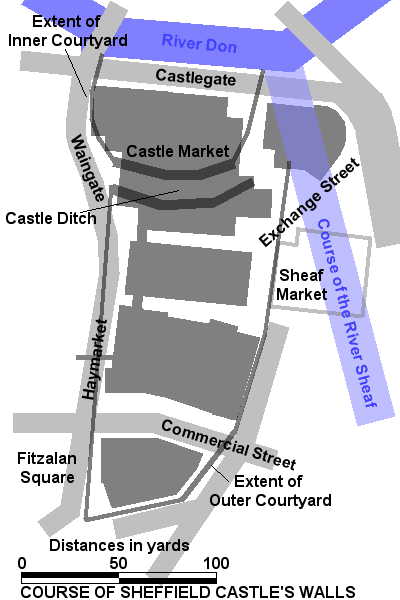
Despite its historical importance, no contemporary illustrations or architectural plans of Sheffield Castle survive. Archaeological excavations in the 1920s revealed the stone foundations of the 13th-century castle and traces of earlier buildings, providing valuable insights into its construction and layout.
Further archaeological work was possible after the demolition of a 20th-century market built over the site in 2015. These investigations have helped to better understand the castle's footprint and architectural features, although much remains to be uncovered.
Today, the site of Sheffield Castle is recognized for its historical and cultural significance. While only ruins remain, it offers a glimpse into medieval fortification techniques and the turbulent history of the region.
Architectural features and castle type
Classified as a hill castle, Sheffield Castle utilized its elevated position for defense and surveillance. The transition from a wooden motte and bailey to a stone fortress reflects broader trends in medieval castle construction, emphasizing durability and enhanced fortifications.
The stone castle likely included key defensive elements such as a curtain wall enclosing the inner ward, towers for flanking defense, and a gatehouse controlling access. The proximity to the rivers would have provided natural moats or water defenses, supplementing the man-made fortifications.
Cultural legacy and visitor information
Although much of Sheffield Castle was demolished in the 17th century, its legacy endures in the city's history and archaeology. The site is of interest to historians, archaeologists, and visitors keen on medieval architecture and English history.
Visitors to Sheffield can explore the castle's remains and learn about its role in significant historical events, including the imprisonment of Mary, Queen of Scots, and the English Civil War. The site is part of Sheffield's heritage landscape and contributes to understanding the city's medieval past.
Frequently asked questions (FAQ)
- How do I get to Sheffield Castle?
- Sheffield Castle is located in the heart of Sheffield, United Kingdom. You can reach it by public transport, including buses and trams, which frequently service the area. If you are driving, there are several parking options available nearby.
- What is the historical significance of Sheffield Castle?
- Sheffield Castle has a rich history dating back to the 12th century, serving as a royal fortress and a strategic military site. It played a crucial role during the English Civil War and is significant for its contribution to the development of Sheffield as a city. Today, it stands as a symbol of the region's heritage and history.
- When was Sheffield Castle built?
- Sheffield Castle was originally constructed in 1130 by Henry I, making it one of the oldest structures in the area. Although much of the castle has since been destroyed, its historical remnants and archaeological sites continue to tell the story of its past. Restoration efforts are ongoing to preserve what remains.
- Can I visit Sheffield Castle?
- Yes, visitors can explore the remains of Sheffield Castle and the surrounding area. Guided tours are often available, providing insight into the castle's history and architecture. Be sure to check the local tourism website for current visiting options and events.
- Why is Sheffield Castle important for architecture enthusiasts?
- Sheffield Castle showcases a blend of medieval and Tudor architectural styles, making it an interesting study for architecture enthusiasts. The castle's design reflects the military needs of its time as well as the aesthetic preferences of later periods. The site's archaeological finds also contribute to understanding historical construction techniques.
- Is it possible to access Sheffield Castle for individuals with disabilities?
- Yes, efforts have been made to ensure that Sheffield Castle is accessible to visitors with disabilities. While some areas may have limitations due to the nature of the ruins, staff are available to assist and provide information on accessible routes. It’s recommended to contact the visitor center for specific accessibility details.
- What are the opening hours for Sheffield Castle?
- Sheffield Castle typically opens to visitors from 10 AM to 5 PM, but hours may vary depending on the season or special events. It is advisable to check the castle's official website or local tourism information for the most current opening times before planning your visit.
- What are the ticket prices for visiting Sheffield Castle?
- Admission to Sheffield Castle is generally free, but special guided tours or events may require a ticket purchase. Check the official website for any updates on ticketing information and special promotions. This makes it an affordable option for history enthusiasts and families alike.
- What are some nearby attractions to visit after Sheffield Castle?
- After visiting Sheffield Castle, you can explore the nearby Sheffield Cathedral, the Winter Garden, and the Millennium Gallery, all within walking distance. Additionally, the vibrant city center offers various shops, restaurants, and parks, making it easy to spend a full day in the area. Plan your itinerary to include these attractions for a comprehensive experience.
Photo gallery

Information
Loading map...
Visitor reviews
No reviews yet. Been here? Write the first review and help other travelers!
Write the first reviewVisited this castle? Share your experience
Your review helps other travelers and adds first-hand knowledge to our encyclopedia.