Srebrna Góra Fortress
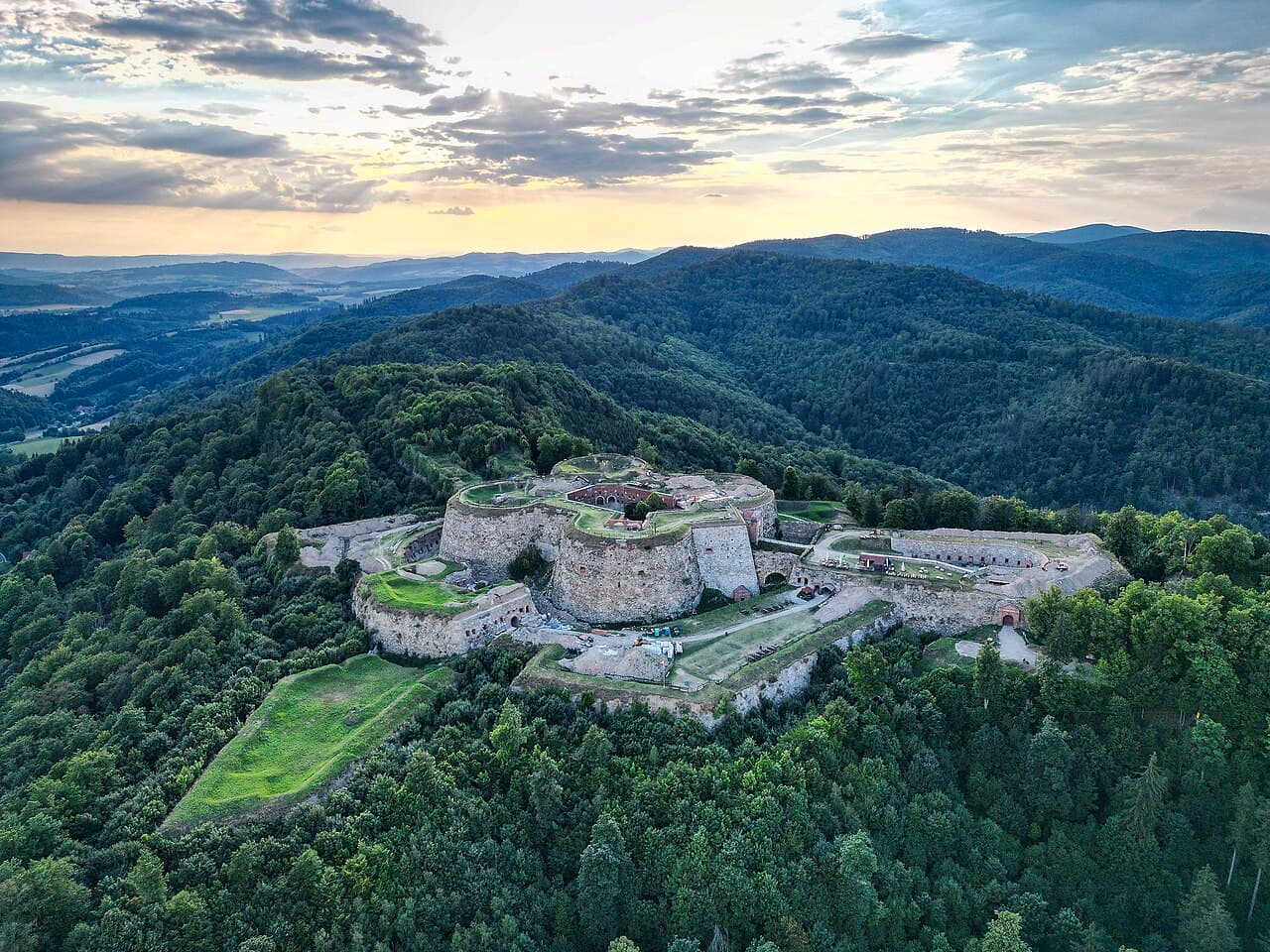
Srebrna Góra Fortress is a remarkable example of an 18th-century bastioned fortress located in the village of Srebrna Góra, in the Lower Silesian Voivodeship of Poland. Constructed between 1765 and 1777 during the period when the area was part of the Kingdom of Prussia, this fortress stands as one of the few surviving mountain strongholds from the post-Renaissance era in Europe. Its strategic position on the heights of the Sudety Mountains allowed it to control the vital passage through the Silver Valley (Przełęcz Srebrna or Silberbergpass), linking Prussian territories with Bohemian lands to the south.
The fortress was commissioned by Frederick II, King of Prussia, and designed by the notable Prussian architect and military engineer Ludwig Wilhelm Regeler, with assistance from several military engineers. The complex was meticulously planned to withstand prolonged sieges and to serve as a formidable defensive stronghold against potential Austrian incursions. The entire fortress complex consists of six forts, multiple bastions, and various defensive elements, with the central and most prominent structure being the Donżon Fort situated atop Warowna Góra hill.
Architectural design and defensive features
The fortress exemplifies the bastioned fortress style characteristic of the post-Renaissance military architecture, which incorporated angular bastions designed to eliminate blind spots and maximize defensive firepower coverage. Built on solid bedrock, the fortress earned the nickname "Gibraltar of Prussia" or "Gibraltar of Silesia" due to its impregnable foundation and robust construction.
The fortress was equipped to shelter a garrison of up to 4000 soldiers and was armed with 264 artillery pieces. Its defenses included thick stone walls, multiple bastions, and strategically placed artillery emplacements designed to cover all approaches. The complex also featured extensive underground passages, storage facilities, and provisions to sustain a year-long siege, reflecting advanced military engineering of the time.
The Donżon Fort and outworks
The central Donżon Fort served as the main defensive and command center of the fortress. It was strategically positioned on the highest point of the Warowna Góra hill, providing commanding views of the surrounding terrain and control over the Silver Valley. Surrounding this core were five additional forts and several bastions, creating a layered defense system that was difficult for any attacking force to penetrate.
Although construction began on a nearby flanked fort to enhance the complex, this project was quickly abandoned, leaving the main fortress largely unchanged since its completion. Minor additional works were carried out in the years following its initial construction but did not significantly alter the fortress's original design.
Historical significance and military role
Srebrna Góra Fortress was primarily intended to guard the southern approaches to Prussian territories and to prevent Austrian advances through the Sudety Mountains. Its strategic importance was underscored during the War of the Fourth Coalition in 1807 when it withstood a siege by Napoleonic forces. This siege was the only recorded active battle involving the fortress, and despite the intensity of the conflict, the fortress was never captured by enemy forces.
By the mid-19th century, advances in military technology and changing strategic priorities rendered the fortress obsolete. In 1860, it was officially declared outdated, and the garrison was gradually reduced. By 1867, the fortress was abandoned as an active military installation.
Later military and civilian uses
After its military decommissioning, the fortress found new roles. It served as a military training ground and became a popular tourist destination by the late 19th century. A restaurant was opened within the fortress walls by 1885, catering to visitors intrigued by its history and imposing architecture.
During World War II, the fortress was repurposed as a prison for Polish officers held by German forces. This dark chapter added to the complex's layered history, reflecting the turbulent events of the 20th century in the region.
Preservation and cultural heritage
Today, Srebrna Góra Fortress is recognized as a national Historic Monument of Poland, a designation it received on May 1, 2004. Its status is maintained by the National Heritage Board of Poland. The fortress has survived with relatively little modernization or damage, preserving its original 18th-century military architecture and layout.
In 1973, a military museum was established within the fortress, offering visitors insight into its history, architecture, and role in European military affairs. The museum displays artifacts, documents, and exhibits related to the fortress's construction, sieges, and later uses.
The fortress's location in the Sudety Mountains also makes it a notable landmark for tourists and history enthusiasts exploring the region. Its combination of natural defensive advantages and sophisticated architectural design exemplifies the military engineering of the post-Renaissance period.
Visitor experience and accessibility
Visitors to the fortress can explore the extensive network of walls, bastions, and underground passages. The site offers panoramic views of the surrounding valleys and mountains, enhancing the understanding of its strategic importance. Guided tours and exhibitions provide detailed information about the fortress's construction techniques, military history, and cultural significance.
The fortress is accessible year-round, with facilities to accommodate tourists interested in military history, architecture, and the natural beauty of the Sudety Mountains. Its well-preserved condition allows for an immersive experience into 18th-century fortification design.
Frequently asked questions (FAQ)
- How do I get to Srebrna Góra Fortress?
- Srebrna Góra Fortress is easily accessible by car or public transportation from nearby cities like Wrocław. There are designated parking areas near the fortress, making it convenient for visitors. Additionally, local buses may provide service to the fortress during peak tourist seasons.
- What is the historical significance of Srebrna Góra Fortress?
- Srebrna Góra Fortress, built in the 18th century, played a crucial role in the defense strategies of Prussia. It was designed to protect the southern borders from invasions and is one of the largest mountain fortresses in Europe. Today, it serves as a testament to military architecture and the region's rich history.
- When was Srebrna Góra Fortress constructed?
- Construction of Srebrna Góra Fortress began in 1765 and was completed in 1777. The fortress was built in response to the threat of Austrian invasions during the Austro-Prussian War. Its strategic location and impressive design reflect the military needs of that era.
- Can I explore the fortress on my own or is a guided tour required?
- Visitors can explore Srebrna Góra Fortress both independently and through guided tours. Self-guided tours allow you to roam at your own pace, while guided tours provide in-depth historical context and insights from knowledgeable guides. It’s recommended to check the schedule for guided tours during your visit.
- Why is Srebrna Góra Fortress considered an architectural marvel?
- The fortress showcases a unique blend of Baroque and military architecture, characterized by its imposing walls and strategic layout. Its construction used local stone, which contributes to its impressive durability and aesthetics. Visitors can appreciate the fortress's intricate design while enjoying panoramic views of the surrounding landscape.
- Is it possible to visit Srebrna Góra Fortress year-round?
- Yes, Srebrna Góra Fortress is open to visitors year-round, although specific opening hours may vary by season. During the summer months, it may have extended hours to accommodate more tourists. It's advisable to check the official website for the most current information on hours and accessibility.
- What are the ticket prices for visiting Srebrna Góra Fortress?
- Ticket prices for Srebrna Góra Fortress are quite affordable, with discounts available for students and seniors. Children under a certain age may enter for free. It's best to check the official site for the latest pricing and any special promotions that may be available during your visit.
- What is the best time to visit Srebrna Góra Fortress?
- The best time to visit Srebrna Góra Fortress is during the late spring and early autumn months when the weather is typically mild and pleasant. These seasons also offer beautiful scenic views of the surrounding mountains and valleys. Additionally, consider visiting during weekdays to avoid larger crowds.
- Are there any nearby attractions to Srebrna Góra Fortress?
- Yes, there are several nearby attractions worth exploring, including the beautiful Sudetes Mountains and various hiking trails. The town of Srebrna Góra itself offers charming cafes and shops. Additionally, you can find other historical sites and cultural landmarks within a short drive from the fortress.
Photo gallery

Information
Website
Visit websiteSources & official resources
Verify the information above using these authoritative references.
Loading map...
Visitor reviews
No reviews yet. Been here? Write the first review and help other travelers!
Write the first reviewVisited this castle? Share your experience
Your review helps other travelers and adds first-hand knowledge to our encyclopedia.