Srebrenik Fortress
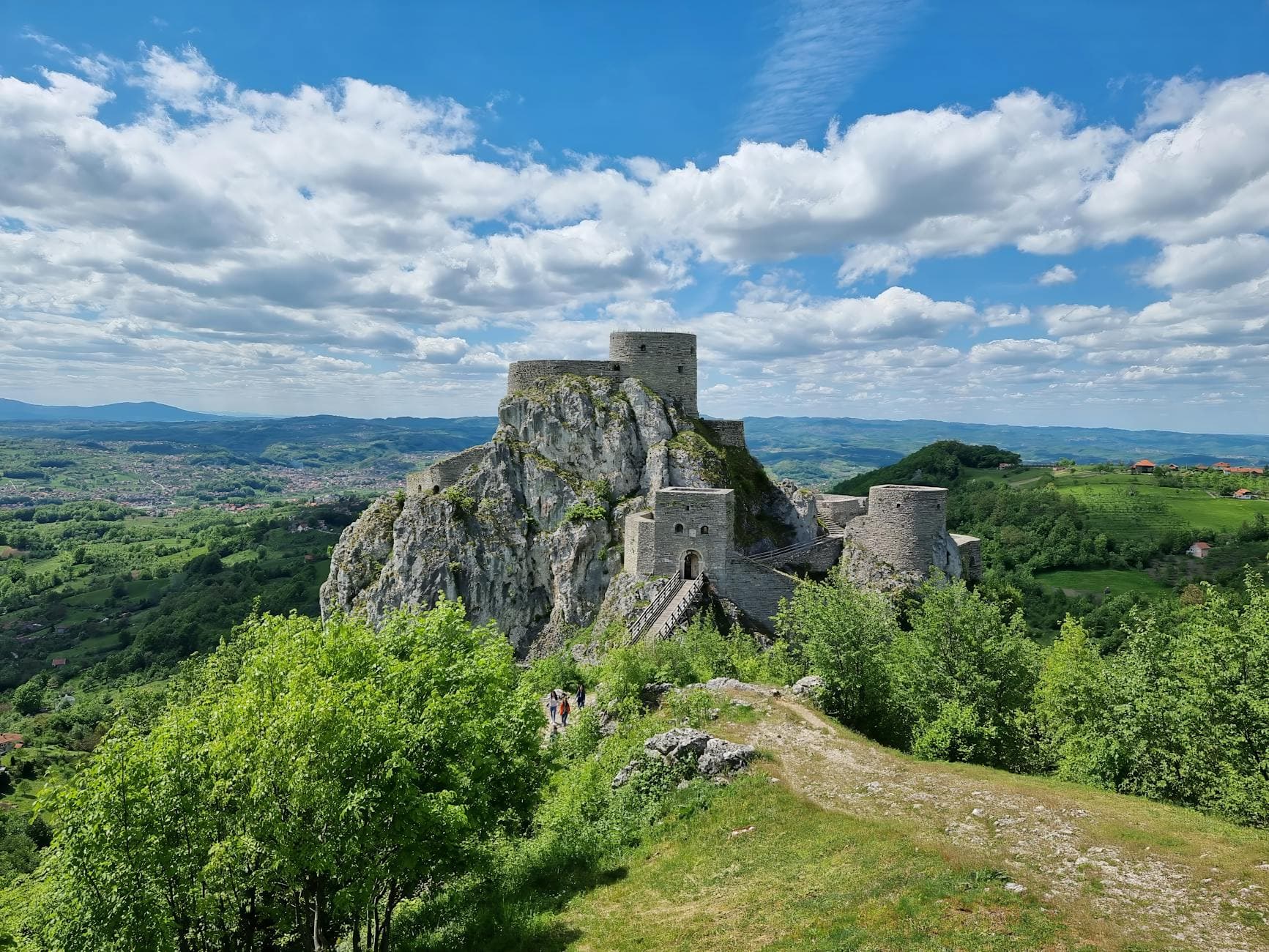
Srebrenik Fortress stands as one of the most significant medieval fortifications in Bosnia and Herzegovina, renowned for its remarkable state of preservation and rich historical legacy. Located on the northeastern slopes of the Majevica mountain range, near the town of Srebrenik, this hill castle was strategically positioned to oversee and control vital military and trade routes in the region. Its commanding location atop a steep rock formation, rising 50 to 70 meters above the valley floor, provided natural defenses that were expertly augmented by its robust architectural design.
Dating back to the early 14th century, with the first documented mention in 1333 during the reign of Ban Stephen II Kotromanić, Srebrenik Fortress played a pivotal role in the medieval history of Bosnia. The fortress was initially constructed to serve as a military stronghold and administrative center for the Bosnian Banate, reflecting the political and military ambitions of the Bosnian rulers to secure their northern borders against neighboring powers.
Architectural features and layout
The fortress complex covers an area approximately 60 by 30 meters and is divided into three main sections, each serving distinct defensive and residential purposes. The Lower Town features a square gate tower and auxiliary buildings designed to control access and provide initial defense. This area likely housed soldiers and support staff essential for the fortress's operation.
Above the Lower Town lies a plateau that includes barracks and storage facilities, crucial for sustaining the garrison during sieges. The Upper Town, or citadel, is the most fortified part of the complex, containing a smaller palace and a large round donjon tower. The donjon, or keep, served as the last line of defense and the residence of the fortress commander or local lord.
The fortress walls are predominantly about 1.5 meters thick, constructed in a single building phase, which is indicative of a well-planned and cohesive architectural effort. Four towers are integrated within the fortress walls, enhancing its defensive capabilities. A notable feature is the cistern, which ensured a reliable water supply during prolonged sieges. The residential building includes a basement, providing additional storage or shelter space.
Access to the fortress is ingeniously designed with a wooden or small bridge spanning a deep trench dug beneath the walls. This bridge could be retracted or removed during attacks, effectively preventing enemy access. Southeast of the main tower, ruins of a detached square tower measuring about 7 meters on each side remain, located roughly 17 meters from the entrance, suggesting an extended defensive perimeter.
Historical significance and military role
Srebrenik Fortress's history is marked by its strategic importance amid the turbulent political landscape of medieval Bosnia and the surrounding regions. Initially under the control of Ban Stephen II Kotromanić until his death in 1353, the fortress was inherited by his relative Danis, who died in 1378, after which the fortress was reportedly abandoned for some time.
Throughout the 14th and 15th centuries, the fortress frequently changed hands among Bosnian, Hungarian, and Serbian rulers, reflecting the contested nature of the region. In 1393, King Sigismund of Hungary captured Srebrenik, and it was retaken multiple times by Hungarian forces in the early 1400s. Serbian despot Stefan Lazarević was granted the fortress, but Hungarian troops maintained control. King Thomas of Bosnia briefly regained it in 1433, only for it to be seized by Serbian ruler Đurađ Branković in 1452, who soon returned it to Hungary.
The Ottoman Empire's expansion into the Balkans brought further conflict. The Ottomans first seized Srebrenik in 1462 but withdrew due to logistical difficulties and an epidemic. Matthias Corvinus of Hungary recaptured the fortress in 1464, establishing the Banate of Srebrenik and granting it to Nicholas of Ilok. The fortress likely fell to Ottoman control again between 1510 and 1519. After this period, its military significance diminished as Ottoman territorial dominance solidified.
Despite its decline, the fortress saw renewed strategic use in the 18th century, with repair efforts beginning in 1756. It remained a military garrison until 1835. An Ottoman mosque constructed within the fortress in the early 16th century was maintained for some time after the fortress ceased active military use, indicating the site's continued cultural and religious importance.

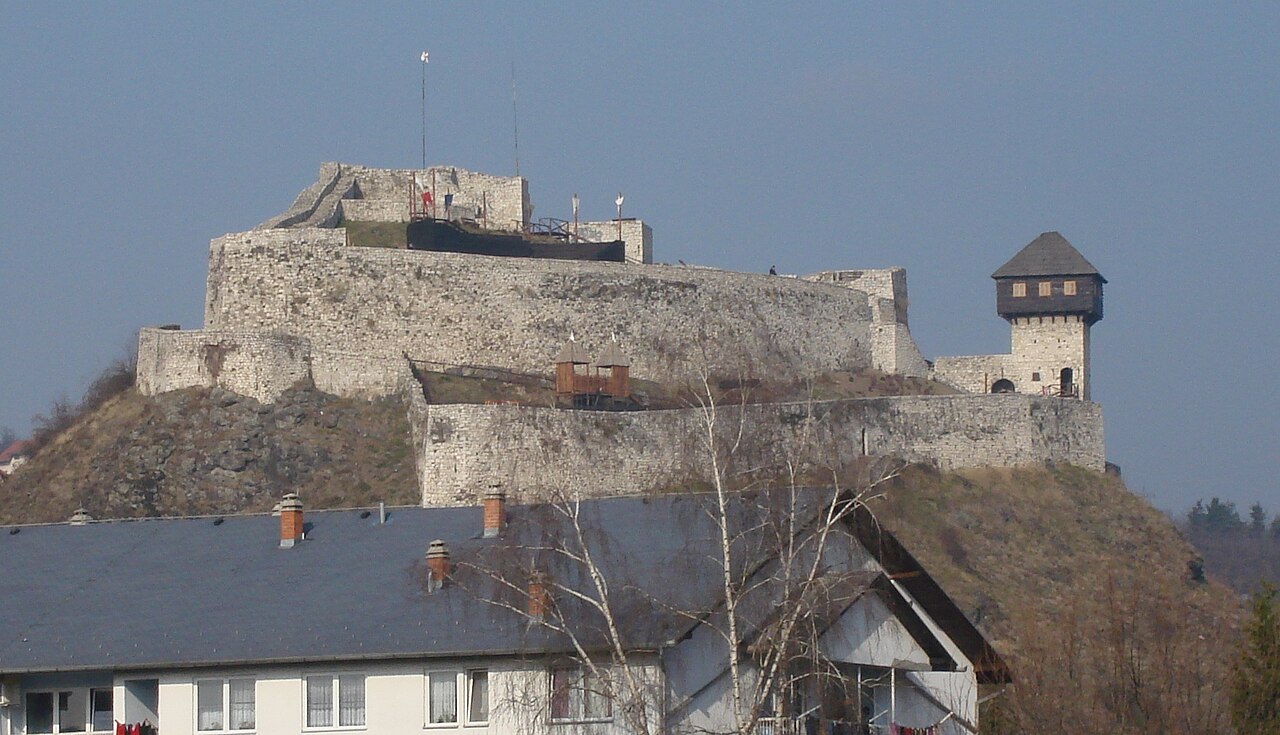
Photo by Martin Brož (CC BY 3.0)
Photo by Martin Brož • CC BY 3.0
Preservation and modern status
Srebrenik Fortress is recognized as Bosnia's best-preserved medieval castle, thanks to extensive conservation efforts. Between 1975 and 1978, thorough restoration work was undertaken to stabilize and preserve the structure. In 2003, a new solid access bridge replaced the older wooden one, improving visitor access while maintaining historical authenticity.
Today, the fortress stands largely intact with no major damage reported, offering visitors a well-preserved glimpse into medieval Bosnian military architecture. Its designation as a National Monument of Bosnia and Herzegovina on 2 November 2004 underscores its cultural and historical significance. The fortress attracts historians, architects, and tourists interested in medieval fortifications and Balkan history.
Visitor experience and accessibility
Visitors to Srebrenik Fortress can explore its multiple defensive sections, including the gate tower, barracks, donjon, and cistern. The elevated position provides panoramic views of the surrounding landscape, enhancing the appreciation of its strategic location. The site is accessible via a modern bridge, making it safer and easier to reach than in previous decades.
The fortress's architecture offers insights into medieval construction techniques, defensive design, and the lifestyle of its occupants. Informative signage and guided tours are available, helping visitors understand the complex history and significance of the fortress within the broader context of Bosnian and Balkan history.
Frequently asked questions (FAQ)
- How do I get to Srebrenik Fortress?
- Srebrenik Fortress is located about 5 kilometers from the town of Srebrenik in northeastern Bosnia and Herzegovina. Visitors can reach the fortress by car or local transport, followed by a short walk to the entrance via a modern access bridge.
- What is the historical significance of Srebrenik Fortress?
- Srebrenik Fortress played a crucial role in controlling key military routes in medieval Bosnia. It was involved in numerous conflicts among Bosnian, Hungarian, Serbian, and Ottoman powers, reflecting the region's turbulent history.
- When was Srebrenik Fortress built?
- The fortress was first mentioned in historical records in 1333 and was constructed in the 14th century during the Late Medieval period.
- Can I explore the interior of the fortress?
- Yes, visitors can explore various parts of the fortress including the gate tower, barracks, donjon, and cistern. The site offers a comprehensive view of medieval fortification architecture.
- Is the fortress accessible for people with mobility issues?
- Due to its hilltop location and historic structure, access involves walking over uneven terrain and crossing a bridge. Visitors with mobility issues should prepare accordingly or inquire about accessibility options in advance.
- What are the opening hours and ticket prices for Srebrenik Fortress?
- Opening hours and ticket prices may vary seasonally. It is recommended to check with local tourist information centers for the most current details before visiting.
Photo gallery

Photo by Goran Rakita
Photo by Goran Rakita


Information
Website
Visit websiteSources & official resources
Verify the information above using these authoritative references.
Loading map...
Visitor reviews
No reviews yet. Been here? Write the first review and help other travelers!
Write the first reviewVisited this castle? Share your experience
Your review helps other travelers and adds first-hand knowledge to our encyclopedia.