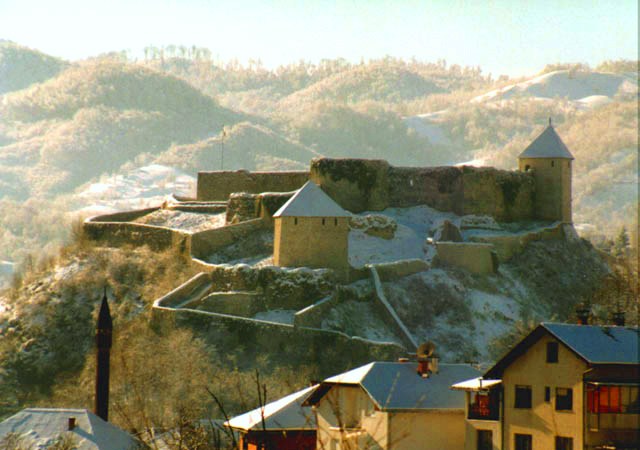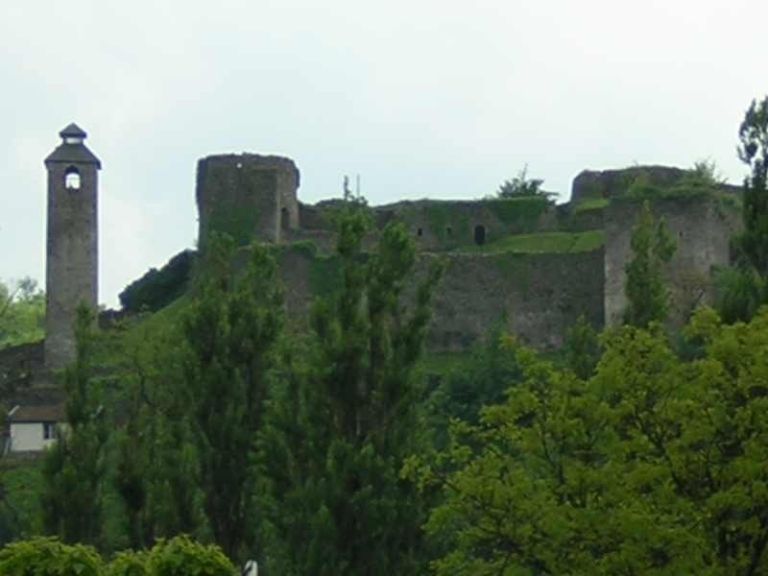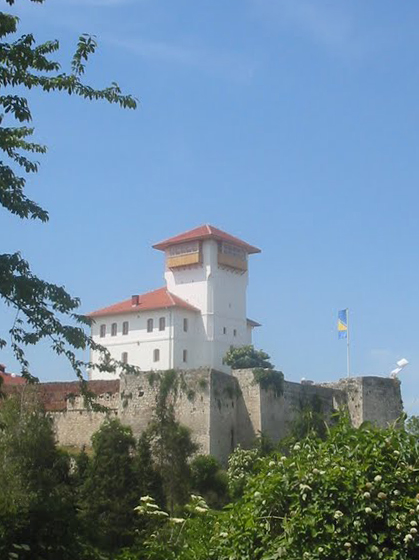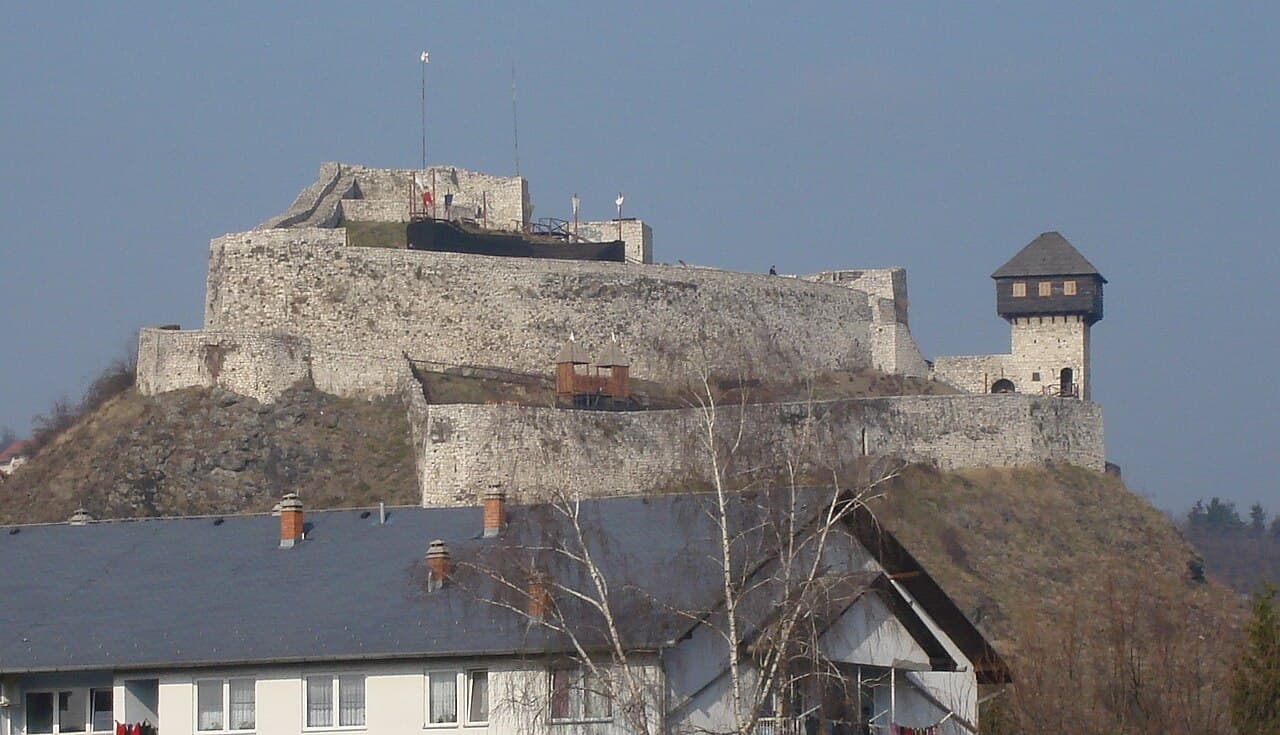
Doboj Castle
Doboj Castle, also known as the Fortress of Doboj, is a prominent medieval hill castle located in the city of Doboj, Bosnia and Herzegovina. This imposing stone fortress, originally constructed in the early 13th century, stands as a testament to the region's turbulent history and strategic importance through centuries of conflict and cultural change. Built on the site of an earlier wooden and clay fortification dating back to the 10th or 11th century, Doboj Castle evolved architecturally and militarily, reflecting the shifting powers and technologies of the High Medieval and later periods.
As one of the key defensive strongholds of the medieval banate and duchy of Usora, Doboj Castle played a crucial role in controlling vital access routes into the Bosnian kingdom. Its commanding position on a hill overlooking the surrounding landscape allowed it to oversee roads leading north toward Croatia, east along the Spreča River, and south following the Usora River. Unlike many castles of the time, Doboj was royal property under the influential Kotromanić dynasty, underscoring its significance as a military and administrative center.
Early construction and romaneseque origins
The original stone fortress was constructed in the 13th century in the Romanesque architectural style. This early phase featured a triangular layout centered around a robust keep or donjon, a five-story tower with thick walls up to one meter on the eastern side, designed to withstand siege warfare. The fortress was initially built to replace the earlier wooden and clay fortifications, providing a more durable and defensible structure suited to the period's military needs.
Architectural features of the original fortress
The core of Doboj Castle was characterized by its triangular shape, surrounded by thick stone walls and fortified by three main towers positioned at the northern, eastern, and southern gates. The southern tower was notably reshaped into a rounded form between 1370 and 1380, an innovative adaptation to better resist the increasing use of cannon fire. The fortress also included a cistern built by engineers from the Republic of Ragusa (modern-day Dubrovnik), ensuring a reliable water supply during sieges.
Gothic reconstruction and military enhancements in the 15th century
In the spring of 1415, Doboj Castle underwent a significant reconstruction that introduced Gothic architectural elements while retaining some Romanesque features. This renovation included reinforcing the main keep with thicker walls, up to approximately one meter, particularly on the eastern side, to enhance its defensive capabilities. The northern tower was augmented with a bastion equipped with six cannons, reflecting the growing importance of artillery in fortress defense.
The captain's tower was transformed into a dominant five-story donjon, becoming a key feature of the fortress's silhouette. Additional outer walls were constructed around the original triangular core, strengthening the defensive perimeter. Three major towers were also reinforced to withstand the evolving threats of siege warfare. This period marked Doboj Castle's peak as a fortified military stronghold during the ongoing conflicts between the Bosnian state and the Kingdom of Hungary.
The battle of doboj and its strategic significance
In August 1415, the fortress was the focal point of military action near the Battle of Doboj, where Bosnian nobles allied with Ottoman forces successfully defeated a large Hungarian army. The battle involved thousands of knights and heavy cavalry, with Ottoman auxiliaries playing a critical role. This engagement underscored Doboj's strategic importance in controlling access to the Bosnian kingdom and its role in the broader regional power struggles of the 13th to early 15th centuries.
Ottoman conquest and modifications
The fortress fell to the Ottoman Empire in 1476, marking a new chapter in its history. The Ottomans undertook extensive reconstruction efforts, notably in 1490, led by master-builder Ibrahim, who added a second outer wall and additional defensive structures. These enhancements transformed Doboj Castle into a more complex fortress capable of withstanding contemporary siege tactics and artillery fire.
Despite brief periods of recapture by Hungarian and Bosnian forces loyal to the Hungarian-backed Jajce Banate, the Ottomans maintained control of Doboj from the early 16th century until 1878. The fortress endured multiple attacks during Austro-Turkish wars, including being sacked and burned by Austrian troops under Prince Eugene of Savoy in 1697 and again in 1717. By 1740, the fortress's military role had diminished, with a small garrison and the addition of a torture chamber reflecting its shift toward policing and administrative functions.
Austro-hungarian and modern military use
In 1878, the Austro-Hungarian army captured Doboj Castle after intense fighting, marking the end of Ottoman control. Although the fortress was strategically obsolete by this time, it remained in military use through World War I. During World War II, the fortress was garrisoned by Croatian Ustasha and German Wehrmacht units, who further fortified the site with bunkers and defensive wire. The fortress saw fierce fighting during the war, notably resisting partisan attacks until its final capture by Yugoslav Partisan forces in April 1945.
Archaeological research and preservation efforts
Doboj Castle has been the subject of archaeological investigations since the mid-20th century, with major excavations in 1962 and renewed digs in 2016-2017. These studies have uncovered a wealth of artifacts, including medieval arrowheads, crossbow bolts, pottery shards, glass fragments, and metalwork, illuminating the daily life and military history of the fortress. The lower layers of the three flanking towers remain under-explored, offering significant potential for future research.
Despite suffering some damage during the Bosnian War in the 1990s and incidents of vandalism in the early 2010s, Doboj Castle remains well preserved. Conservation and restoration efforts have been ongoing to maintain the fortress's structural integrity and cultural significance. Today, it stands as one of Bosnia and Herzegovina's most important national monuments, attracting visitors interested in medieval architecture, military history, and regional heritage.
Architectural highlights and cultural importance
The fortress's architectural evolution from Romanesque origins to Gothic enhancements and later Ottoman modifications reflects the dynamic history of the region. Its massive stone walls, fortified towers, and complex defensive systems illustrate the adaptation of medieval military architecture to changing technologies and threats. The presence of a unique five-story donjon, artillery bastions, and a water cistern highlight the fortress's advanced design features for its time.
Doboj Castle's role as a royal stronghold, military bastion, and cultural monument underscores its enduring significance in Bosnia and Herzegovina's history. It offers valuable insights into medieval fortification techniques, the impact of Ottoman conquest, and the region's strategic importance in European conflicts. The fortress continues to be a focal point for historical research, tourism, and cultural preservation efforts.
Frequently asked questions (FAQ)
- How do I get to Doboj Castle?
- Doboj Castle is located in the town of Doboj, Bosnia and Herzegovina. You can reach it by car or public transportation, with frequent bus services connecting Doboj to major cities in the region. Once in Doboj, the castle is easily accessible on foot from the town center.
- What is the historical significance of Doboj Castle?
- Doboj Castle dates back to the 14th century and played a crucial role in the defense of the region during various conflicts. It has witnessed significant historical events and reflects the strategic importance of Doboj throughout the centuries. The castle is a symbol of the town's rich heritage and offers insights into the medieval history of Bosnia and Herzegovina.
- When was Doboj Castle built?
- Doboj Castle was originally constructed in the late 14th century, with significant renovations occurring during the Ottoman period. Its architecture showcases a blend of medieval and Ottoman influences, making it an interesting site for history enthusiasts. The castle has stood the test of time and remains a prominent landmark in Doboj.
- Can I take guided tours of Doboj Castle?
- Yes, guided tours of Doboj Castle are available, providing visitors with an in-depth understanding of its history and architecture. Tours typically run throughout the day, and it's advisable to check in advance for specific times or to book a tour. A knowledgeable guide can enhance your experience by sharing interesting anecdotes and historical facts.
- Why is Doboj Castle a popular tourist attraction?
- Doboj Castle attracts visitors due to its historical significance, impressive architecture, and panoramic views of the surrounding area. It offers a unique glimpse into the past and serves as a picturesque backdrop for photography. Additionally, the castle's proximity to other cultural and historical sites in Doboj enhances its appeal to tourists.
- Is it possible to visit Doboj Castle year-round?
- Yes, Doboj Castle is open for visits year-round, although hours may vary seasonally. Be sure to check the official website or local tourism information for the most up-to-date opening hours. Visiting in spring or autumn can provide a more pleasant climate for exploring the castle and its surroundings.
- What are the ticket prices for Doboj Castle?
- Entry to Doboj Castle typically requires a small fee, which helps support its maintenance and preservation. Ticket prices are generally affordable, making it accessible for most visitors. Discounts may be available for students, seniors, or groups, so be sure to inquire at the ticket office.
- What is the best time to visit Doboj Castle?
- The best time to visit Doboj Castle is during the spring (April to June) and autumn (September to October) when the weather is mild and pleasant for outdoor exploration. Summer can be hot, while winter may bring cold temperatures, which could affect your experience. Plan your visit during the shoulder seasons for optimal enjoyment.
- Are there any nearby attractions to visit after Doboj Castle?
- Yes, after visiting Doboj Castle, you can explore several nearby attractions, including the historic town center of Doboj, the Old Bridge, and various museums. Additionally, the scenic landscapes surrounding Doboj provide opportunities for hiking and enjoying nature. These nearby sites complement your visit to the castle, offering a fuller experience of the region.
Photo gallery

Photo by Ogidog at English Wikipedia•Public domain
Information
Loading map...
Visitor reviews
No reviews yet. Been here? Write the first review and help other travelers!
Write the first reviewVisited this castle? Share your experience
Your review helps other travelers and adds first-hand knowledge to our encyclopedia.