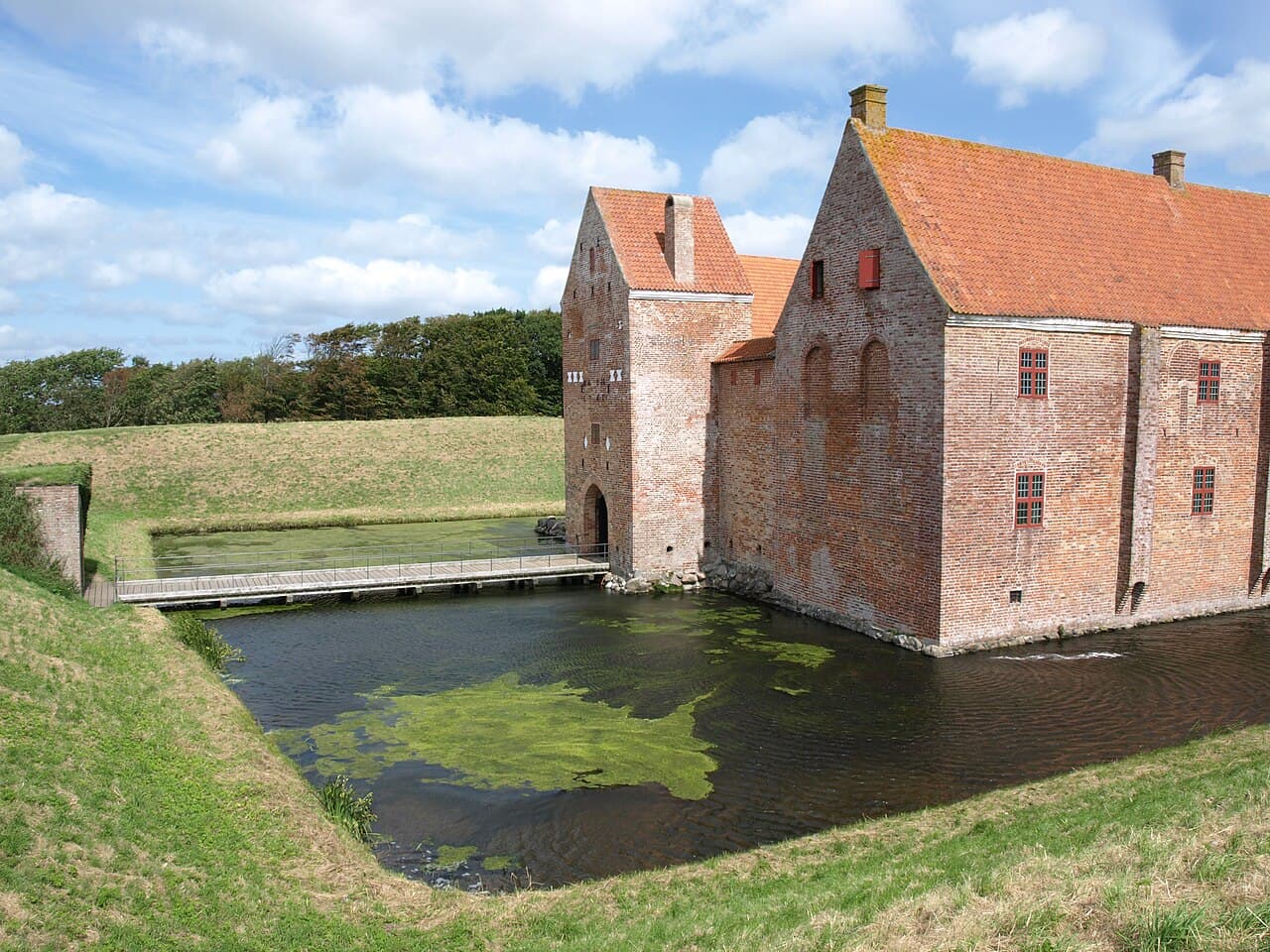
Spøttrup Castle — Denmark castle

Spøttrup Castle

Spøttrup Castle: Denmark's best preserved medieval fortress
Spøttrup, Midtjylland, Denmark
Late Medieval (14th–15th c.)
Well Preserved

Spøttrup Castle, located in the serene countryside of Midtjylland, Denmark, stands as one of the best preserved medieval castles in the country. Dating back to the 15th century, this fortress exemplifies the robust architectural style and defensive ingenuity of the Late Medieval period. Nestled beside the tranquil Spøttrup Lake and surrounded by expansive moats and volde (earth ramparts), the castle offers a vivid glimpse into Denmark's feudal past and its strategic military significance.

The architectural design and fortifications of Spøttrup Castle

Constructed primarily in the 15th century by the bishops of Viborg, Spøttrup Castle was designed as a square-shaped fortress featuring two surrounding moats and a drawbridge that controlled access to the castle grounds. This design reflects the typical defensive priorities of the time, emphasizing water defenses combined with earthworks to thwart attackers. The castle's walls and towers were built to withstand sieges, with thick masonry and limited points of entry.

The castle's layout includes a central courtyard enclosed by robust stone walls, with residential quarters, a great hall, and service buildings arranged around it. The preservation of original medieval features such as arrow slits, battlements, and gatehouses provides valuable insight into the military architecture of the period.

Moats and earthworks

The dual moats around Spøttrup Castle were a critical element of its defense system. Filled with water from the nearby lake, these moats created a formidable barrier against siege engines and infantry assaults. The surrounding volde or earthen ramparts further reinforced the castle's defenses, absorbing artillery fire and preventing undermining of the walls.

Historical significance and ownership through the centuries

The earliest documented mention of Spøttrup Castle dates to 1404, when it was under the possession of the bishopric of Viborg. The bishops constructed and expanded the castle during the 15th century, making it a powerful ecclesiastical stronghold. In 1525, the castle underwent significant restoration, enhancing its defensive capabilities and residential comfort.

During the turbulent years of the Count's Feud (1534-1536), a civil war in Denmark, Spøttrup Castle played a pivotal role. It successfully resisted an attack by Skipper Clement, the leader of a peasant rebellion, demonstrating the castle's formidable defenses and strategic importance in West Jutland. Remarkably, throughout its history, the castle was never conquered by force.

Following the Reformation in 1536, the castle was seized by the Crown, marking a shift from ecclesiastical to royal ownership. In 1577, King Frederik II granted the castle to the nobleman Henrik Below. Over the subsequent centuries, Spøttrup Castle transitioned into a manor house, passing through the hands of various noble families. By the 18th century, the castle began to decline and fell into a state of gradual decay.

The castle in modern times

In the early 20th century, recognizing the cultural and historical value of Spøttrup Castle, the Danish state undertook extensive restoration efforts. These works aimed to preserve the castle's medieval character and structural integrity. In 1941, the castle was officially opened to the public as a museum, allowing visitors to explore its well-preserved halls, towers, and defensive works.

Gardens and cultural heritage

Surrounding the castle are beautifully maintained gardens inspired by medieval and Renaissance horticultural traditions. The gardens are divided into rectangular sections, reflecting Renaissance principles of order and symmetry. Visitors can explore the doctor's garden, where ancient medicinal herbs and plants are cultivated, offering insights into historical botanical knowledge and healing practices.

The picnic area and marina nearby provide peaceful spaces for visitors to enjoy the natural beauty of the castle's setting beside Spøttrup Lake. These features enhance the cultural experience, connecting the historical environment with contemporary leisure.

Visitor experience and significance

Today, Spøttrup Castle stands as a testament to Denmark's medieval heritage, offering a rare and authentic glimpse into castle life during the Late Middle Ages. Its well-preserved defensive structures and historical authenticity make it a key destination for those interested in medieval architecture, Danish history, and cultural heritage.

The castle's museum exhibits include period furnishings, arms, and artifacts that enrich the understanding of its historical context. Guided tours provide detailed narratives about the castle's construction, its role in regional conflicts, and the lives of its inhabitants over the centuries.

Frequently asked questions (FAQ)

How do I get to Spøttrup Castle?
Spøttrup Castle is located in Spøttrup, Denmark, and can be easily reached by car or public transport. If you are driving, take the E45 motorway and follow the signs to Spøttrup. For public transport, check the local bus schedules that connect to the nearby town of Spøttrup.
What is the historical significance of Spøttrup Castle?
Spøttrup Castle dates back to the late 14th century and is one of the best-preserved medieval castles in Denmark. Originally built as a fortress, it played a crucial role in the defense against invasions and has a rich history linked to Danish nobility. Today, it serves as a museum, showcasing its storied past and historical artifacts.
When was Spøttrup Castle built?
Construction of Spøttrup Castle began in 1475, making it a significant example of medieval architecture in Denmark. The castle was completed in the early 16th century, and it has maintained much of its original structure and design over the centuries. This historical timeline adds to its charm and importance as a cultural site.
Can I take a guided tour of Spøttrup Castle?
Yes, guided tours of Spøttrup Castle are available, providing visitors with in-depth knowledge of its history and architecture. These tours often include access to areas of the castle not typically open to the public. It's recommended to check the castle's official website for tour schedules and availability.
Why is Spøttrup Castle considered an architectural gem?
Spøttrup Castle is celebrated for its well-preserved medieval architecture, including its thick stone walls, defensive towers, and picturesque moat. The castle's design reflects the military needs of its time while also showcasing the beauty of medieval craftsmanship. Its unique features make it a fascinating subject for architecture enthusiasts and history buffs alike.
Is it possible to host events at Spøttrup Castle?
Yes, Spøttrup Castle offers facilities for hosting events such as weddings, corporate meetings, and private gatherings. The stunning backdrop of the castle and its grounds provides a unique setting for any occasion. Interested parties should contact the castle administration for more details on booking and services.
What are the opening hours of Spøttrup Castle?
Spøttrup Castle is typically open to visitors from April to October, with daily hours varying based on the season. During peak tourist season, the castle may extend its hours to accommodate more visitors. It is advisable to check the official website for the most current opening hours before planning your visit.
What are the ticket prices for visiting Spøttrup Castle?
Ticket prices for Spøttrup Castle are generally affordable, with discounts available for children, students, and seniors. Family packages may also be offered to encourage group visits. It's best to check the castle's official website for the latest pricing information and any special promotions.
What is the best time to visit Spøttrup Castle?
The best time to visit Spøttrup Castle is during the summer months when the weather is pleasant, and all facilities are fully operational. This season also coincides with various events and activities held at the castle, enhancing the visitor experience. However, spring and early autumn can also be lovely times to explore, with fewer crowds.
Are there any nearby attractions to visit?
Yes, there are several attractions near Spøttrup Castle, including the beautiful landscapes of the nearby Thy National Park and the charming town of Skive. Visitors can also explore local museums and cultural sites that offer insight into the region's history. Combining a visit to the castle with these nearby attractions makes for a fulfilling day trip.

Photo gallery

Spøttrup Castle
Click to view

Photo by Theo•CC BY-SA 3.0

1 photo • Click any image to view in full screen

Information

Hill Castle

Sources & official resources

Verify the information above using these authoritative references.

Loading map...

Visitor reviews

No reviews yet. Been here? Write the first review and help other travelers!

Write the first review

Visited this castle? Share your experience

Your review helps other travelers and adds first-hand knowledge to our encyclopedia.

Write a review

(5/5)

0/2000 characters

Your review will be visible after admin approval

Nearby castles

11.1 km

Højriis Castle

Nykøbing Mors, Denmark

Højriis Castle has origins dating back to the early 15th century, with its first recorded owner being Johan Skarpenberg, a knight serving under Queen Margrethe I. Skarpenberg was a significant landowner, possessing multiple estates including the nearby Spøttrup Castle in Salling. His burial at Viborg Cathedral underscores his prominence in Danish medieval nobility. The estate's long history reflects the evolution of Danish manorial culture and architecture over several centuries.Architectural evolution and 19th-century reconstructionThe current structure of Højriis Castle primarily dates from the 19th century, specifically between 1859 and 1876. This period saw the castle transformed into a three-winged complex built in the Historicist style, which was prevalent in Danish architecture during that era. The north-west wing and the tower were designed by the notable architect Hans Jørgen Holm and constructed in 1859. Later, the north-east and south-west wings were added in 1876 following designs by August Klein. This comprehensive rebuilding gave the manor its current form, blending historical architectural motifs with 19th-century stylistic trends.Historicist style characteristicsThe Historicist style employed at Højriis Castle is characterized by a revival and reinterpretation of earlier architectural forms. This style often incorporated elements from Gothic, Renaissance, and other historical periods to create a romanticized vision of the past. At Højriis, this is evident in the castle's ornate tower, , and the use of decorative brickwork. The castle's layout around a central courtyard and the presence of moats emphasize its manorial and defensive heritage, even if the moats were more symbolic than functional by the 19th century.Historical challenges and preservationIn the 20th century, Højriis Castle faced significant difficulties due to economic hardships that affected many Danish manors. The castle was abandoned and fell into disrepair from 1865 onwards, remaining uninhabited for over a century. This period of neglect led to deterioration of the building fabric and loss of some original interior features. However, the castle's historical and architectural value was recognized by later generations.In 1994, the property was acquired by private owners committed to its restoration and preservation. Since then, efforts have been made to stabilize and restore the castle, respecting its 19th-century Historicist character while ensuring structural integrity. The castle today stands as a well-preserved example of Danish manor architecture from the period, surrounded by its original moats which enhance its historic ambiance.Geographical and cultural contextHøjriis Castle is located in Nykøbing Mors, on the island of Mors in northern Denmark. The region is known for its rich medieval history and numerous castles and manors, reflecting the area's strategic and economic importance through the centuries. The castle's proximity to water and its moat system highlight traditional defensive considerations typical of Danish estates.The castle remains a private property, but its architectural significance and historical associations with figures like Johan Skarpenberg and Queen Margrethe I contribute to its cultural heritage value. Its preservation helps illustrate the transition of Danish noble residences from medieval strongholds to romantic 19th-century country houses.Architectural features and layoutThe castle's three-winged design creates an enclosed courtyard, a common feature in Danish manor houses that provided both security and a private outdoor space. The tower designed by Hans Jørgen Holm is a prominent vertical element, adding to the castle's silhouette and serving as a visual focal point. The use of brick construction and stylistic details like pointed arches and decorative cornices reflect the Historicist penchant for combining functional and ornamental elements.The surrounding moats are integral to the castle's setting, enhancing its imposing appearance and connecting it to the medieval tradition of water defenses, even though by the 19th century such features were largely symbolic. The castle's wings contain various chambers and halls that historically served residential, administrative, and agricultural functions typical of a Danish manor estate.

Modern (19th–20th c.)
Details
44.6 km

Nørre Vosborg Castle

Vemb, Denmark

Nørre Vosborg Castle is a distinguished Renaissance manor located in Vemb, Denmark, with a rich history spanning several centuries. The estate's origins trace back to the 14th century when Niels Bugge was among its earliest known owners. The castle complex as it stands today is a remarkable amalgamation of buildings from four centuries, showcasing five distinct architectural styles that reflect the evolving tastes and functions of its successive owners. Historical development and ownership The original manor suffered a catastrophic setback in 1532 when a massive storm surge destroyed the buildings on the initial site. This natural disaster prompted Knud Gyldenstjerne to relocate the estate inland to a safer location, where the current castle was established. The Gyldenstjerne family played a crucial role in the castle's Renaissance development, with the main residence dating from 1552. Over the centuries, the estate passed through the hands of prominent families, including the Linde Leths (1707–1778) and the Tangs (1783–1946). The Tang family period was notable for hosting many distinguished guests, most famously the celebrated Danish author Hans Christian Andersen. During his stay in the summer of 1859, Andersen engaged in creative pursuits such as writing poetry and tales, cutting silhouettes, and sharing stories about the castle's reputed ghosts, adding a literary dimension to the manor's heritage. Architectural styles and notable buildings The Gyldenstjerne residence Constructed in 1552, the Gyldenstjerne residence is a prime example of Renaissance architecture infused with Gothic elements. Its Gothic garrets are particularly characteristic, and the building has undergone several remodels to adapt to changing needs while preserving its historic character. The ide lange residence Dating from 1642, the Ide Lange residence is a half-timbered structure exemplifying Renaissance style. It is distinguished by its supporting columns made of joined wood, which is among the earliest examples of this construction technique in the region of western Denmark. The de linde residence The De Linde residence, built in 1770, exhibits the Baroque style prominently through its grand stairways. This residence was erected on the foundations of a former carriage house and barn. Remarkably, beneath the house were once several prison cells used to hold detainees awaiting trial at the high court in Viborg, highlighting the manor's role in regional judicial affairs. The tang residence and later additions The Tang residence, constructed in 1839, reflects the New Classicist style. It is connected to the Gyldenstjerne wing by a New Gothic bay room, blending stylistic elements across periods. After a fire, the southern section of the barn complex was rebuilt in 1951, transforming former agricultural spaces into modern facilities such as a foyer, multi-purpose hall with seating for 300, conference rooms, and hotel accommodations. The northern barn section, dating from 1778, retains traditional North Jutland architectural features including burned tiles, hipped thatched roofs, and blue wooden doors. Historically serving as a haymow, bullock barn, horse stalls, and the farm bailiff’s residence, it now houses the hotel reception, a gift shop, additional hotel rooms, and venues for exhibitions and banquets. The gate tower and distinctive features The Gate Tower is a defining symbol of Nørre Vosborg. Built in 1790 by Peder Tang, its design was inspired by Dutch architecture observed during his travels. A unique feature of the tower is its clock face, which intriguingly has only one hand, a detail that captures visitors' attention and adds to the manor's distinctive character. Cultural significance and preservation Nørre Vosborg Castle serves as a tangible record of Danish architectural and social history, illustrating transitions from medieval manorial estates to Renaissance residences and beyond. The complex's preservation allows visitors to explore a variety of architectural styles, from Gothic and Renaissance to Baroque and New Classicist, all within a single estate. Its adaptive reuse of former agricultural buildings into hospitality and event spaces demonstrates a commitment to maintaining the site's relevance and accessibility. The castle's connection to figures like Hans Christian Andersen enriches its cultural narrative, making it a site of literary as well as architectural interest. Today, Nørre Vosborg stands well preserved, offering a multifaceted experience that combines history, architecture, and cultural heritage in the heart of western Denmark.

Renaissance (15th–17th c.)
Details
44.7 km

Hald Castle Ruin

Viborg, Denmark

Hald Castle, located near Viborg, Denmark, is a significant example of a Renaissance period fortress constructed in the early 16th century. Built in 1528 by Bishop Jørgen Friis, the last Roman Catholic bishop of Viborg, the castle originally served both as a residence and a stronghold during a turbulent era marked by religious and political upheaval. The castle's architecture reflects the transitional style of the Renaissance, combining defensive features with the emerging aesthetic sensibilities of the time. Historical context and significance The construction of Hald Castle coincided with the final decades of Catholic dominance in Denmark before the Reformation reshaped the religious landscape. Bishop Jørgen Friis, who commissioned the castle, played a pivotal role in the region's ecclesiastical affairs. Following the Reformation, the castle's function shifted dramatically. It is historically recorded that Bishop Friis himself was imprisoned in the castle’s tower, marking a poignant symbol of the religious conflicts of the period. After the Reformation, the castle gradually lost its strategic importance and was abandoned in the 18th century. Over time, the structure fell into decay, with only parts of the original complex surviving the centuries. Architectural features and layout Hald Castle was originally designed as a fortified residence with typical Renaissance defensive elements. The surviving tower, which dominates the ruins today, was a key defensive and residential feature. Its robust masonry walls, narrow windows, and elevated position provided both protection and status. The castle complex would have included a courtyard, gatehouse, and various ancillary buildings typical of a Renaissance castle. The layout was likely adapted to the natural terrain, enhancing its defensive capabilities. The tower and its restoration By the late 19th century, the castle was largely in ruins, with only the tower remaining prominent. In the 1880s, the owner at the time, Christopher Krabbe, undertook efforts to reconstruct and stabilize the tower. This restoration preserved the tower as a visible landmark and a tangible connection to the castle’s historical past. Current condition and public access Today, the site of Hald Castle is classified as a ruin, with the tower serving as the most intact element. The ruins are freely accessible to the public, offering visitors an opportunity to explore the remains and appreciate the historical significance of the site. The location near Viborg makes it a notable destination for those interested in Danish medieval and Renaissance history. Legacy and cultural importance Hald Castle stands as a reminder of the religious and political transformations that shaped Denmark in the 16th century. Its association with Bishop Jørgen Friis and its role during the Reformation period provide valuable insights into the era's social dynamics. The castle ruins contribute to the cultural heritage of Viborg and Denmark, attracting historians, architects, and tourists alike.

Renaissance (15th–17th c.)
Details

